I’ll look for that video!
Density altitude also affects the bite of the prop and how much load it can provide. I saw lower RPM in cooler temps too.
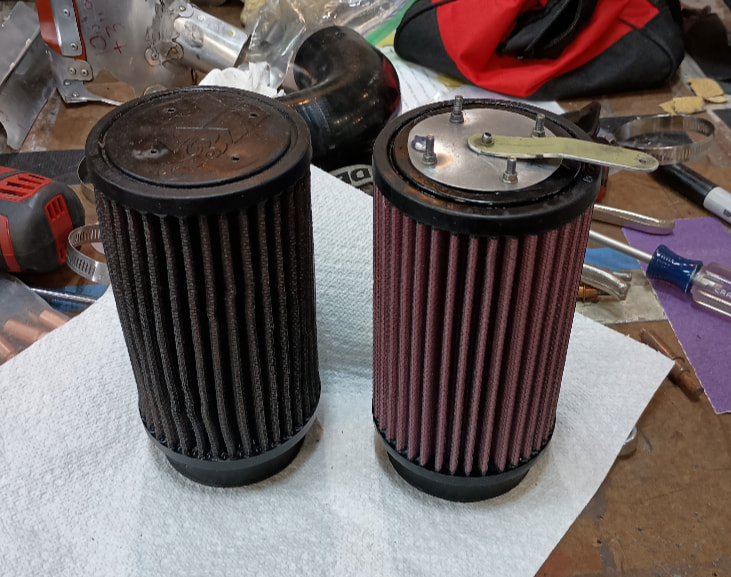
No increase with the new filter. I think I need a VeeCU.
2 Likes
We’ll see how well it works. Getting closer to test flight daily. For me installation is equal parts AeroInjector install, plumbing, and wiring.
2 Likes
So I was running home from KBUU to C77 tonight. Winds calm, perfectly smooth, 3000’. Groundspeed and airspeed were both 130 kts, RPM was 3400. I shut off the secondary and it sounded rich. So I leaned it out, RPMs went over 3400 and were climbing, but then the rear EGTs went stratospheric on me. I am thinking my missing performance is because the front cylinders are drowning in fuel. I’m seeing a 200+F split between the front and rear.
If only there was a way to fix it!
I think everything “simple” has been tried. I have my GPAS intake logs off right now. Here’s how Scott Casler tried to help with the problem.
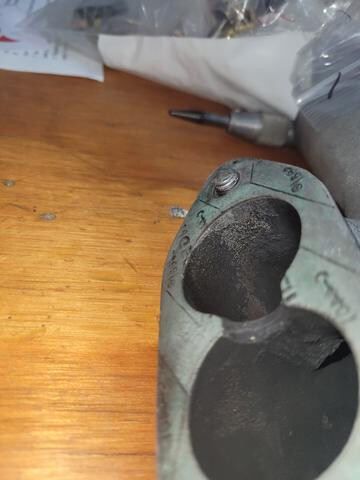
I’ve tried everything short of witchcraft and chicken kill’in. It will require a new manifold design or EFI.
If the VeeCU works as expected, I will have balanced EGTs and, without the spread, should be able to lower my EGT limit to 1300 without loss of power. We’ll see.
Wes
1 Like
I’ve done the same. So did VW.
1 Like
Do you think you had a 15 knot tailwind? I checked the weather that that’s what it looked like to me. If so, sounds like we get about the same speed.
So, I guess that means whatever you figure out will help me too.
With the recent accessibility of metal 3d printing, I think people can experiment with all our wildest intake manifold designs and see if there’s anything to them.
2 Likes
Yes, but in your first post about this 7 days ago you mentioned you used to be able go turn 3600 WOT and no mention of your egt’s going stratospheric, so something has changed. It would be good to figure out what’s changed before changing more things or killing more chickens 
For some reason it sounds like you’re running richer on the front cylinders and leaner on the rears than before. I know it’s very unlikely but could there be a manifold leak at the rears? Maybe the logs have become a bit warped and are leaking at the rear or not sitting level? I know, very unlikely, but…
I found an intake gasket leaking on my Revmaster once by spraying WD40 at the base of the intakes and listening for an rpm change cowl off engine running.
It’s possible - the winds on the ground were calm, but my groundspeed seems low heading to KBUU. I was loafing on the way there though, and I killed some time there in the pattern and getting fuel. I’m always up for a friendly drag race!
When I just had the cowl off, I discovered the #2 manifold bolt was bottomed on the hole and the washer was loose. That’s the front of course. I did sand my manifolds and spacers flat on a granite block. When I first switched to the GPAS manifolds I added the slot and improved the front-rear balance greatly. But since this new set of heads it’s worse again.
1 Like
So… Whats the make / model of the good heads to buy in case I ever decide to race you guys?
Just kidding but I was scratching my head a little as to where your 200 rpm went. I doubt differences in the intake port would make one set not burn the non atomized droplets as well as the other head.
Differences in the combustion chamber shape could certainly cause the issue. Having chambers with a flat area around the outer diameter allows squish which helps combustion. Or, if the other heads were set up with a tighter squush vs the current set, that could explain 200 rpm.
For those non -gearheads - there is a target “squish” range of .040- .050" (edit: for non race engines - air cooled vw street builders commonly use .040) where as the piston rises it causes high velocity charge air to move from the periphery into the central combustion chamber and this acts to mix everything in the combustion chamber. The stock aerovee 7:1 & 8:1 setups do not achieve this as the combustion chamber shape & size are all wrong to achieve squish. (Edit: at 9:1 your squish / quench is in the .100" ballpark so some squish effect could be happening) With most off the shelf VW heads, the combustion chamber volume is too small for 2180’s and you need to shin the heads so high you will never get the squish benefits.
Dave,
My theory (stolen from others) is that both cylinders can burn the non-atomized fuel fine, but the fronts get a lot more of it. The heavy fuel does not turn the corner as well as the lighter air. But eventually it hits the front of the intake manifold and then it has to turn the corner - right into the front intake port.
On the prior set of heads, and with the GPAS manifolds, I had gotten the balance a lot better. I’m not sure what changed. But I did cut the valve seats a lot. The EMPI heads are not the best quality - the pockets for the seats seem too deep. And I could not cut the top angle because the aluminum was in the way. I also did some porting, and that may have screwed things up. I am trying to figure out how to make individual runner manifolds while I wait for Wes to launch the VeeCU.
Both heads were EMPI from Sonex, so pretty identical. I did not try to set squish - just a 9:1 compression ratio.
2 Likes
Do you know if the Revmaster has the same balance issues front to back? The design looks like it wouldn’t have the issue with the corners. There’s some good images here showing how it’s made: SOLD - Revmaster 2300 EFI project engine
I think individual runners will solve the problem.
A recent purchase of mine:
1 Like
The Revmaster I flew behind was a RD2100 which I later increased to a 2180. It used the same intakes as in the listing you noted and did not have balance issues as bad as the Aerovee. There were still some balance issues, but not the severe lean to rich front to back issues as with the Aerovee.
1 Like
I had a coil got out a couple of months ago. Replaced it with new 3 ohm coil. I am thinking of going with 5 ohm coils the next time one goes out. They are suppose to have less electrical draw and consequently run cooler. I would be interested if anyone else has tried them. Will see if engine runs and starts well on those, maybe one at a time.
T Helm, Onex 0137
Hi Tom,
Here is a copy of a previous post. I have tested 5 Ohm coils and expect they should work just fine. In fact, if you read the DynaTek Installation Guide, they recommended the 3 Ohm coil not be used like we use them without a ballast resistor.
Wes
1 Like
Thanks for the response, I think I read this info previously, thus the reason I am considering switching to the 5 ohm coils.
T Helm 0137
2 Likes
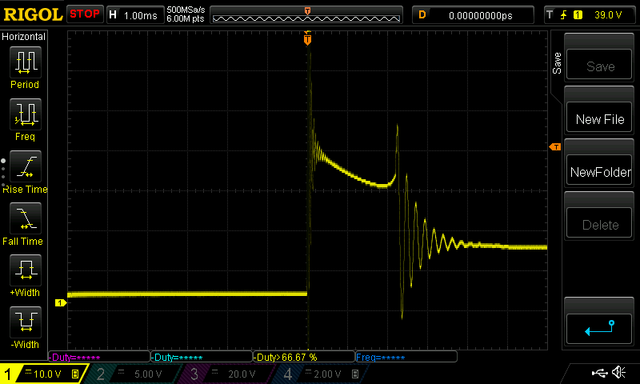
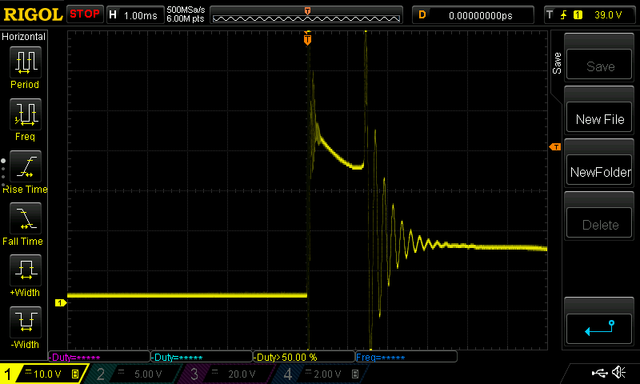
You’re welcome. I looked back and found the scope shots taken when I was testing coils. The burn time (in air) of the 5 Ohm is just about 3/5 of the 3 Ohm burn time. It doesn’t seem to make a difference on a running engine. As long as you get 1 mSec of burn time you’re golden. The scope is set to 1 mSec per division.
3 Ohm @ 13 Volts
5 Ohm @ 13 Volts
Wes
2 Likes