4 GPH (15L/hr) is a good figure but what does this actually mean.
- Is this your average fuel consumed over an entire flight, including take-off & landing ?
- Cruise fuel consumption only?
- At what Cruise Speed?
- With just pilot or + Pax & luggage?
- Fuel type (ULP or AvGas)?

Average from engine start to shutdown. About 120 kts. Pilot and passenger or solo. 100LL.
1 Like
Very nice - I find I have to allow slightly higher fuel consumption. when my Legacy/Rotax 912 ULS is carrying an adult passenger.
I flight plan at 5000 rpm, 130 Knots True, 15L/hr, ULP.
Depending on “mission” average fuel consumption can vary from 14L/hr - causally joy flight around the patch to 16 +L/hr. for a"sorti" involving higher speeds and or multiple climbs
A video of me making titanium brake rotors for my Sonex brakes. I thought the video would have been more popular. Perhaps it’s the auto generated image they use.
What sort of weight savings did you see?
Just got a chance to watch it. That turned out really, really nice. Great job!
Any concern with dissipating heat?
Do you mean for machining or braking? Surfacing the rotors is definitely a bear, I’m not done with that yet. But, it’s an opportunity to buy more tools. Braking should be fine. I also think these rotors may last longer than the stainless ones. I cut both stainless and Ti blanks down to a 5" square using a 4.5" grinder with a cutoff wheel. Sort of the same process as braking but faster and more concentrated. I went through a lot of cutoff wheels on the titanium and it sucked!
With heat during braking, if you have an issue, I would think it would show up on the pads in the form of brake fade or excessive pad wear since they’d be absorbing more heat. But if you’re not doing a ton of braking it may be perfectly fine. If pads are an issue, a different compound may solve it and you already can make them.
I’d probably do a few repeated test stops taxiing and measure temps rotor and caliper temps with an IR thermometer to make sure it’s not going to be an issue right away on landing.
1 Like
Hi Bryan,
He at the airport that i work at in massachusetts… our 100LL is $ 7.35 a gallon and was $6.75 for many years. I love topping the Sonex and only needing 6 or 8 gallons.
1 Like
Which airport in Massachusetts? I learned to fly at MMK in Connecticut and of course flew north a bunch.
I work at KPYM , plymouth Massachusetts.
We are non towered and can be quite busy in the pattern on nice flying days.
1 Like
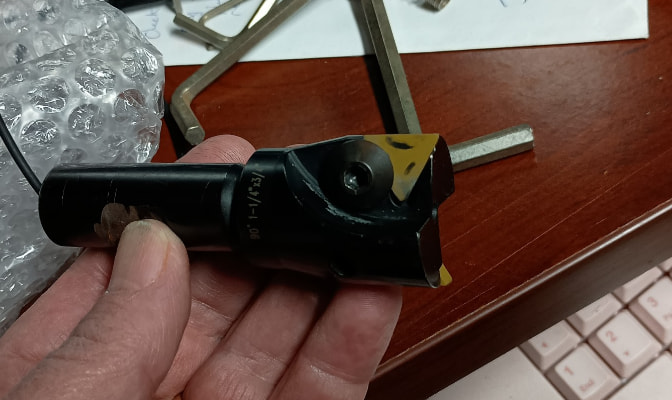
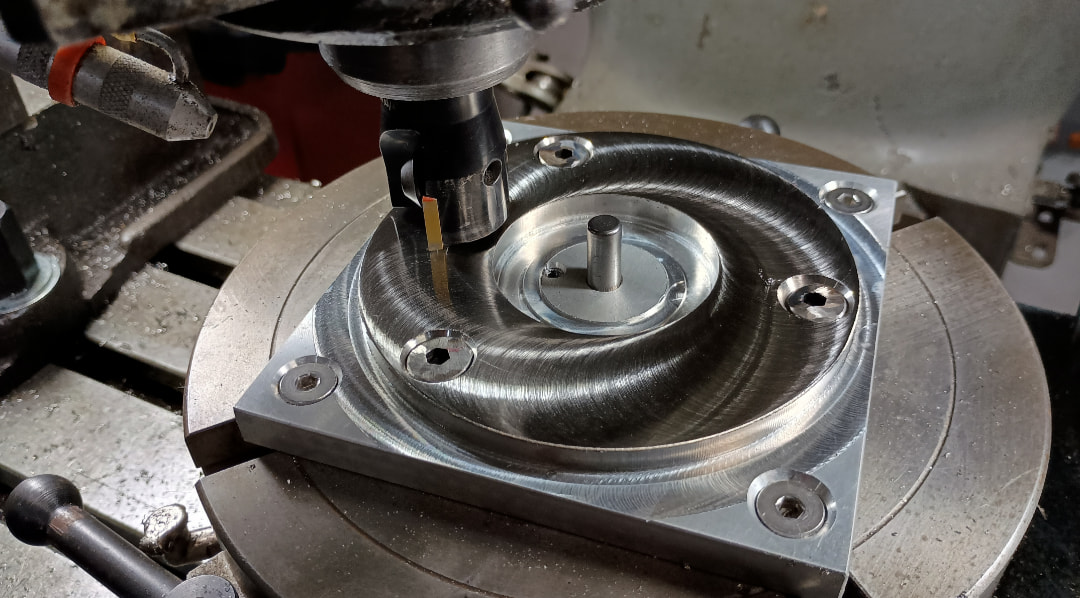
I was not happy with the surface finish of my titanium rotors, especially the second one. The flycutter was getting scary, making big white hot titanium sparks and I was worried about fire. I killed a 1/2" endmill from the collection trying to finish facing the second rotor. I’m not sure if I’ve mentioned it before, but the purpose of the hobby is to buy tools. So, I bought this from eBay, $37.
The cutting diameter is 1.25", just a little bigger than the width of the rotor.
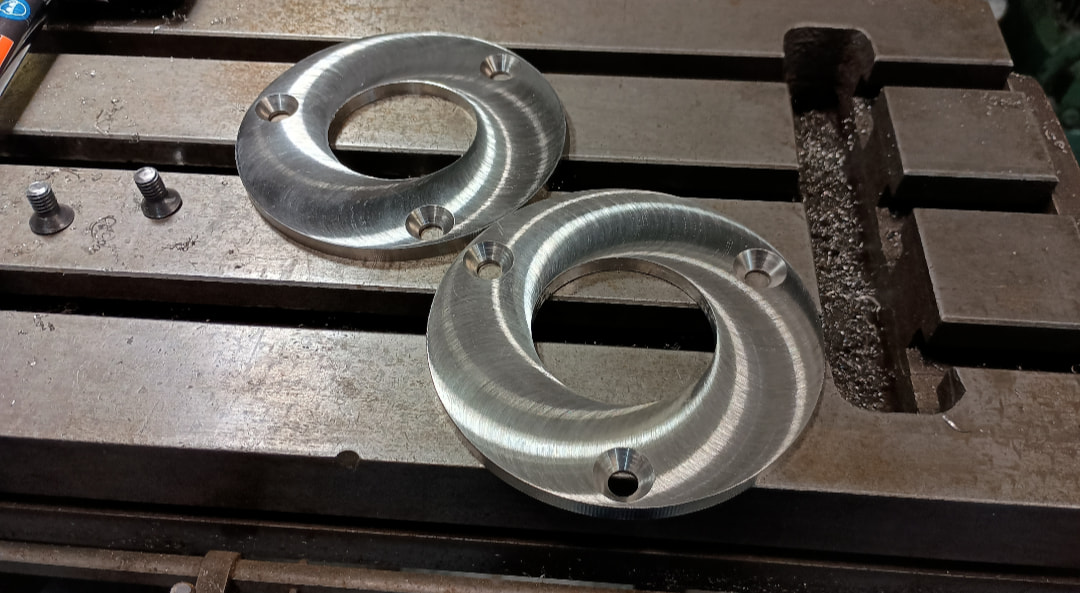
Surface finish came out great, rotor thicknesses are very consistent at 0.243". It’s the right tool for the job.
Plus they look cool with the spiral pattern. I’m coming up on 120 hours on the current set of Chen Shin tires, and am just waiting for the first hint of cords before I change them. That’s when the rotors go on.
I think 120 hours is a personal record.
2 Likes
Yeah, I meant for braking. Titanium doesn’t dissipate heat quite as well as steel does.
I’m sure you’ll be fine with slowing basically once per flight. And this IS experimental aviation after all. I wonder if drilling cooling holes would improve heat dissipation or make it worse on titanium … 
They look really nice, though. Great job on the machining.
1 Like
As a former test engineer, I’ll beat them up with pattern work and see how they do!
Edit: I had considered drilling them, for both cooling and further weight reduction. But as the rotor is cantilevered between the wheel spokes, I wonder if that would be bad.
1 Like
Yeah, good call. I hadn’t even thought about that.
1 Like