Thought I’d post this as a topic for conversation. Aviation is said to be terribly unforgiving of errors and this is absolutely true. Yet sometimes it seems the Good Lord smiles on us and what might cause some bent metal, hurt feelings, and/or wallet damage is allowed to go by.
Here is an example of how the Sonex can be quite forgiving:
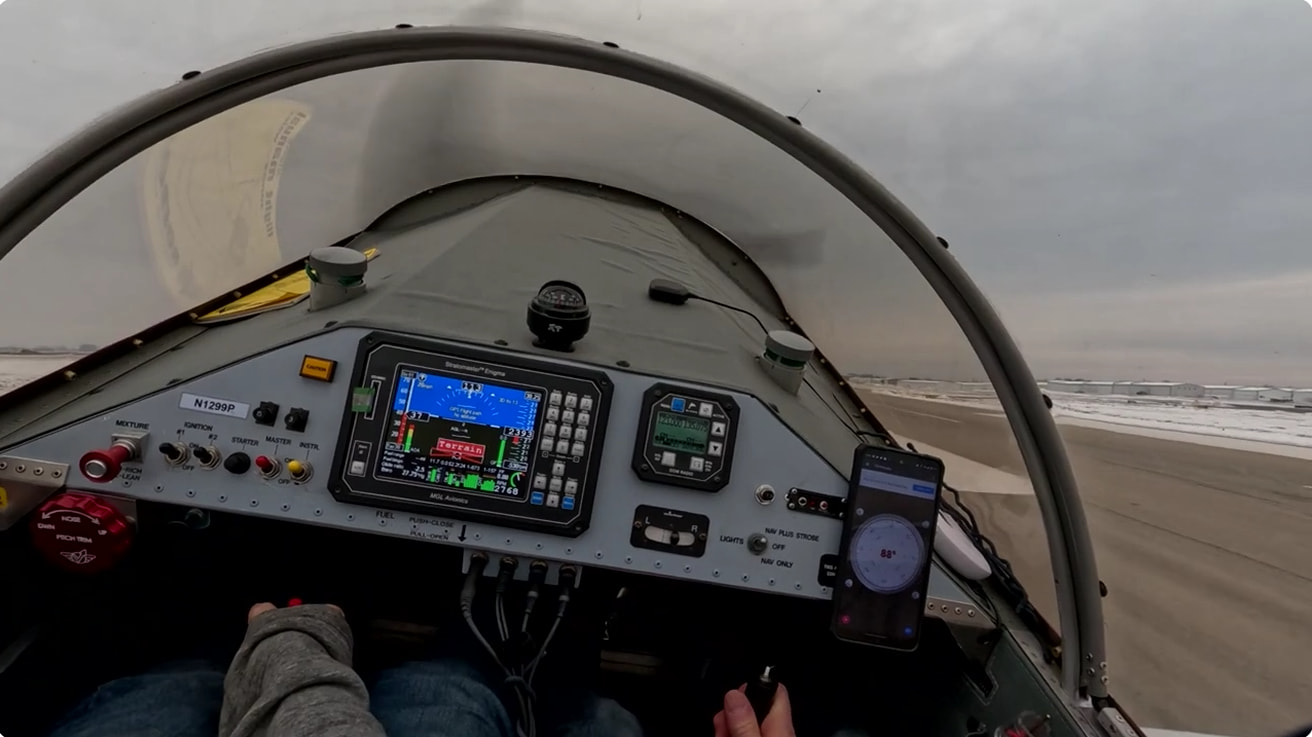
Note the pitch attitude and the airspeed readout. In my flight testing, my Cleanex quit flying and the wheels squeaked on at 37 IAS in ground effect. I know that ASIs are not all reading the same but take a look at the video and see how well this was handled and how the plane just kept flying while the folks in the cockpit kept their cool:
It seems the guy taking off forgot what those things under his feet were for. No harm, no foul. I’ve had a couple of “interesting” take-offs over the years. How about you?
Sadly, this aircraft has since been converted to a nose roller. I think she is instructing and they only have a throttle on the left side.
I’d agree the Sonex is really forgiving. I learned in a PA12 which was less forgiving. During ground instruction one morning, my instructor made the point that if you are in trouble, and can get it off the ground, that makes the problem go away.
So fast forward to a takeoff that I screw up. Pick it up on the mains too fast, get behind on the pedals, and off to the left we go. I get on the pedals, and some right brake but too late. It’s a disaster and I relax figuring this is when the instructor saves me. “GET IT OFF THE ****ING GROUND!!!” That was my instructor yelling at me from the back seat through the ICS. I haul back on the stick, we miss the runway lights, but are flying between the taxiway and the runway over the grass. He calmly says “I’ve got it” and makes a graceful S-turn to put us back over the runway. In hindsight, he was showing me we had plenty of flying speed. He never mentioned it again but it’s a lesson I’ve never forgotten.
Edit: the ground lecture and event were on the same day, about 45 minutes apart, back in 1989.
The best advice the instructor gives is “Your feet will know what to do. Don’t over think it.”
When it came time to fly my Onex it had been about 15 years since I had sold my Sonex. The best I could do to prepare to fly the Onex was to get some serious time with my instructor in his Champ.
It was late Summer, about this time of year. In Texas that means hot, windy, and gusty. I had been struggling with cross wind landings. I kept visualizing cross controlling the airplane to deal with cross winds. What that means is that if you want to move the airplane left to maintain alignment with the runway, you will apply right rudder. I kept visualizing, over and over.
The next lesson, when faced with cross winds, I made a good approach, but when the airplane touched down, I nearly ground looped. Very embarrassing. I went home that evening feeling defeated. I couldn’t figure out what made me misuse the rudder pedals. It sounds corny, but it came to me in a fitful dream that night. I had spent so much time focusing on cross controlling that I failed to switch back too normal control when the wheels touched.
The moral of the story: Don’t overthink it. Straight with your feet. That’s all. My instructor had told me that, but I over thought it anyway.
For those that have never flown a VW or Corvair powered Sonex … notice the prop turns the other way than most aircraft engines. This simply means left rudder is required for take-off.
The 3.0 Corvair is friendly if you “roll the power on” and gradually lift the tail. Get overly aggressive with either or both and you will need to employ the great effectiveness of the Sonex rudder in a hurry.
I’ve had a couple of take-offs where I was quickly reminded that one of the best things to do when it starts to get squirrely is (as Bryan noted) get the thing flying … now!
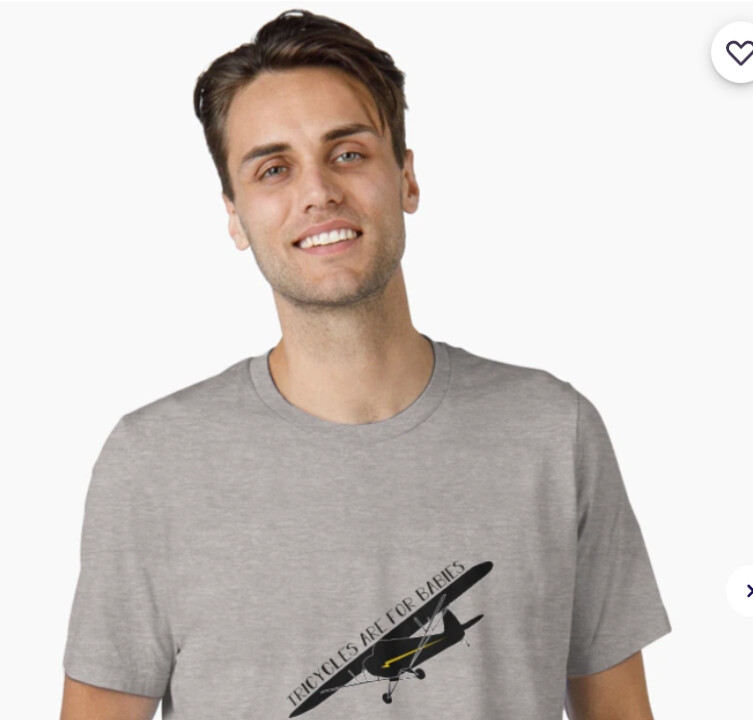
I’m not a great tailwheel pilot by any stretch of the imagination but I’m learning. I’ve always desired to buy one of these T-shirts:
But I’m afraid that would be the one I was wearing when my nose roller friends come to help me retrieve my taildragger from the weeds or the ditch beside the runway.
As far as takeoffs are concerned, I have had two bad ones. One in the Sonex and one in the Onex.
The bad one in the Sonex was my first takeoff. I had trained in a Champ and a friend had performed the first flight. When it was my turn to fly, the test pilot told me to lift the tail, count 10, and rotate. I did that but I over rotated. That led to a pilot induced oscillation. I caught it in time, but it was ugly.
The bad one in the Onex was on a touch and go. I landed, dumped the flaps, zeroed the trim, lifted the tail, and stabbed the throttle. Bad idea. Never stab the throttle with the tail up. Much safer to leave the tail down and ease in the throttle.
I’m a believer in my instructor’s takeoff method. That is accelerate, bring the tail just barely off the ground as soon as possible, keep it there and wait for the airplane to fly. It’s more difficult than fully lifting the tail and then rotating after proper airspeed has been achieved. However, my instructor’s method gets the pilot fully involved in controlling the airplane before ever leaving the ground. Plus, all you have to do to modify the method for soft/short field takeoffs is add a notch or two of flaps.
Hi Wes,
Far from expert but the following comments trouble me: “…on a touch and go. I landed, dumped the flaps, zeroed the trim,…”
I was trained to just add power (smoothly), all the rest, flaps, trim, can be done once posative climb has been established. “… accelerate, bring the tail just barely off the ground as soon as possible, keep it there and wait for the airplane to fly.”
I would have no idea how to do this. I just keep back stick /tail down, until sufficient airspeed for the rudder to be effective (a few seconds). Forward stick, tail up. Sonex continues to accelerate - aircraft leaves the ground. Nose level to gain airspeed. Establish Climb ange/air speed, retract flap.
Seems to work for me.
I don’t understand why/what benefit there is in: “It’s more difficult than fully lifting the tail …”
I use 1 stage (out of 3) for take-off & most landings.
Occassionally 2 stages for a landing. Rarely 3 stages.
Yes I can do a nil flap take-off but ground role is longer/airspeed required higher - no benefit.
I don’t really “rotate” for take-off. The Sonex goes into ground effect - airspeed increases to approximately 70+ knots - flap retracted - initial climb out at 80-90 knots.
When I did the test flying for my Legacy, I found first stage of flap reduced stall speed by about 5 knots. 2 & 3 Flap just added drag (good for steep descent to landing)
In the Waiex, the problem with that is crosswinds will overwhelm the available rudder power. I have to keep my tailwheel planted in a crosswind else I’ll weathervane. I got the weathervane merit badge in the Waiex early on and it was good exercise pulling the aircraft out of the snow. In calm winds or with less than 5kts of crosswind that works. I do miss the rudder power of the Cub family, the Pawnee, and the C140.
Different strokes for different folks, planes, etc.
I have never had a problem with rudder authority in the Onex. I got caught out in some pretty wicked cross winds at a fly in. Pointing the stick into the wind and taking off as I was taught worked perfectly. No transition, just a smooth take off. Maintaining runway alignment was a natural byproduct of the technique. At about 100 ft. AGL, just relax and let it weathervane. I enjoyed the 170 mph return trip
I have a feeling my instructor favors the technique because he lives on a grass strip. I believe Joe Norris teaches that same technique. John Monnett, on the other hand, likes to keep the tail down until the airplane levitates. Like I said, different strokes.
I found the old posts where we were discussing technique.
Posted: Thu Jul 30, 2020 10:34 am
Joe’s post:
by Sonerai13
I find that most pilots raise the tail way too high, and thus extend their takeoff roll unnecessarily. In just about any tailwheel airplane I fly, I raise the tail only enough to get the tailwheel out of the grass and then add stick pressure as needed to maintain that tail-low attitude until the airplane lifts off. Then I will let the plane accelerate to Vx or Vy as desired. With some planes you have to hold the plane in ground effect while accelerating, while others have sufficient performance to go to the desired climb speed right off the ground. In crosswinds I will start with the ailerons ALL THE WAY into the wind, to the stops, and then adjust as I feel the ailerons starting to take effect.
Re: Pattern Work
Posted: Thu Jul 30, 2020 11:12 am
by John Monnett
For Sonex I, I just advance the throttle, steer straight with neutral elevator or slight back pressure until Sonex levitates. No work, best acceleration, no struggling to raise the tail and letting the tailwheel do it’s job with direct steering! That is why the Sonex tail draggers sit with the correct angle of attack to accomplish easy TO and landings. Overthinking the process just makes it harder…