Wes's Onex #89

Wes’s Onex #89

Posted: Thu Oct 24, 2019 1:33 am

by WesRagle

Hi Guys,

Since Bryan pointed out that I had asked too many questions in my “A couple of questions” thread, I thought I’d start a new thread where I could ramble about my build and ask an unlimited number of questions :slight_smile:

I am working my way through wiring the airplane. The wiring is fairly simple because my panel/plane is fairly simple. Today I decided to test the power distribution so I hooked up a bench supply in place of the battery (so I could limit the current) and plugged in the panel and lit it up.

I did have one problem. Not all pins of the GPS push pin connector were making contact. In particular the 12 VDC pins weren’t making contact. I shimmed the top of the connector with a couple of thin washers and that fixed the problem.

I am disappointed with the master relay.

This thing draws about 3/4 of an amp (9 Watts and gets quite hot!). That’s almost twice what the instrument panel draws! I should have read the spec sheet before making a selection.

Forever Forward,

Wes


Re: Wes’s Onex #89

Posted: Thu Oct 24, 2019 8:20 am

by Bryan Cotton

Since Bryan pointed out that I had asked too many questions in my “A couple of questions” thread, I thought I’d start a new thread where I could ramble about my build and ask an unlimited number of questions :slight_smile:

Excellent, I was getting worried that my life had no real purpose.

WesRagle wrote:I am disappointed with the master relay. This thing draws about 3/4 of an amp (9 Watts and gets quite hot!). That’s almost twice what the instrument panel draws! I should have read the spec sheet before making a selection

Wes, very cool you are starting the electrical and smart of you to do a power on test. I selected a zero amp relay which you can find in my build thread. Also Bob Meyers has mentioned he selected a low power relay which was pricey but drew a small amount of amps.


Re: Wes’s Onex #89

Posted: Thu Oct 24, 2019 9:15 am

by WesRagle

Hi Bryan,

Excellent, I was getting worried that my life had no real purpose.

Tuition, books, building use fees, parking … ? Chop chop :slight_smile:

Wes


Re: Wes’s Onex #89

Posted: Thu Oct 24, 2019 1:43 pm

by WesRagle

Hi Guys,

Still working on the wiring. I hooked up the sensors to the EIS. Right now all I can check are the thermal sensors.

A while back we were discussing how sensitive (or not) the Oil Temp sensor is to thermal conditions external to the engine. Not to beat the dead horse too much but…

The Oil Temp sensor has long since been screwed into the engine. A quick 4 second blast with the heat gun resulted in an almost immediate eight Fahrenheit degree increase in reading. Eventually the indication increased 11 degrees before starting to decrease.


Wes


Re: Wes’s Onex #89

Posted: Sun Nov 03, 2019 2:26 pm

by WesRagle

Hi Guys,

Things are getting a bit serious.

I did the fuel flow test. The results were just OK. With the small valve and using #4 fittings forward of the firewall I was getting between 9 and 10 GPH on the last gallon of fuel with a deck angle of 16 Deg.

Image

Firewall forward is pretty much finished. So, I put oil in the engine, oiled the lifters, and spun the engine with the starter. It took between 10 and 15 seconds but I did pick up oil pressure. I let the starter cool and the spun it for another 15 seconds to circulate the oil.

I decided to bring the battery back up to max and put the prop on in preparation for first engine start. I was a little surprised that the Sonex spinner does not allow room for a socket over the bolt heads.?.?

So, what did you guys do? I’m thinking an internal tooth lock washer under the bolt heads.

Anyway, if I can get a good engine run, it will be a race to the finish.

Wing Stubs, Wing Tips, Rig outer wings, Seat Cushion, Baggage compartment, … Getting kind’a close.

Thanks,

Wes


Re: Wes’s Onex #89

Posted: Sun Nov 03, 2019 5:41 pm

by Rynoth

Try a different socket on the heads? I don’t have the plans in front of me but I have no issue getting a deep-socket on my prop bolts through the hub, which AN- bolts did you use? I believe I used AN5-42A with 3 washers (slightly shorter bolt may have also worked.)

I don’t think lock washers are a good idea on the prop bolts, you will be re-torquing them frequently/seasonally and really should get a wrench/ratchet on the bolt heads for this. Don’t forget to add the nylock resistance torque to the recommended torque, and use your torque wrench on the nut-side. I was a bit surprised just how much re-torquing was needed during my first 10 flight hours.


Re: Wes’s Onex #89

Posted: Sun Nov 03, 2019 7:18 pm

by WesRagle

Hi Ryan,

Thanks for the reply.

They are the bolts that came with the prop. AN5 I believe. It took three washers for mine as well. I will re-torque on the nut side of the prop and wouldn’t have lock washers there. I happen to have two spinners, an older solid one and a newer hollow one. Since I didn’t remember any such problem while building the Sonex I went out to the shop and checked, and sure enough, the counter bore in the solid spinner was larger. Presumably the smaller counter bore in the new spinner would allow more material to be removed from the center of the billet.?.?

In the meantime I found an old 1/2" nut driver and ground it down until it would fit the counter bore of the new spinner. Hard to see in pictures, but there is a lot more room for a socket in the old spinner.

Ground down nut driver in the new spinner counter bore:

Ground down nut driver in the old spinner counter bore:

My son says a SnapOn socket would have worked just fine.

Wes


Re: Wes’s Onex #89

Posted: Wed Nov 06, 2019 12:40 am

by WesRagle

Hi Guys,

I was going to run the engine for the first time today just to see it run and to make sure all sensors were working and the readings were in the ball park. However, it was mucky out today so I couldn’t talk myself into it. Maybe in a couple’a three days when the weather clears.

In the mean time I decided to do some of the things I had been putting off.

Installed the map pocket (thanks Graeme). I was also fretting about how to route the headset wires, the antenna wire, PPT wires etc. Wire routing options are limited with no upholstery on the sides. What I ended up doing was just tacking the wires into the crotch of the longerons etc with hot glue. Not really that noticeable. BTW, the hot glue seemed to bond better if I heated the aluminum some where the tack was going to be placed.

Since I’m using a hand held radio, I just purchased a headset extension wire so I could locate the sockets behind me to keep the wires out of my lap. The problem was how to mount the plugs. It turned out to be pretty easy. A bracket with four 1/2" holes, bends in the appropriate place, and notch out the bottom two holes so the wires can slide in. Turned out better than I thought it would. The two small holes were for a zip tie. Turns out I didn’t have to zip tie it. Just over bend it a bit and the sockets snap firmly into place.

I went ahead and wired the PTT switch and put my fancy (wink wink) stick grip in place. Ref. https://www.aircraftspruce.com/catalog/elpages/p1momswitch.php?clickkey=8638. I used the threaded bezel with a red button. The O.D. of the bezel is exactly the O.D. of the stick. I didn’t even have to attach the button to the stick. I just set the button on top of the stick, applied soapy water to the stick and inside of the grip and slid/forced the grip over it. The hole in the end of the grip did have to be enlarged to allow the button to clear it. The button has a good feel. I like it.

I still need some inspiration as far as the baggage compartment is concerned.

Forever Forward,

Wes


Re: Wes’s Onex #89

Posted: Wed Nov 06, 2019 4:08 am

by dirkverdonck

Hi Wes,
I fabricated a removable bagage compartment in Alu sheet that is attached to the frame with nutplates. The bottom is in plywood and can be easily lifted to inspect the elevator idler system.
This way, I maximised the bagage space and the weight of it is relatively low.
(To be done before you close up the floor of the aft fuselage!!)


Re: Wes’s Onex #89

Posted: Wed Nov 06, 2019 4:06 pm

by WesRagle

Hi Dirk,

OK, I’m in. If you have any more pics It would be appreciated. I don’t know how to apply nutplates to the main cross tie box. I haven’t riveted the bottom on yet. I will wait to fabricate the baggage box until after I build the wing stubs just to make sure I don’t interfere with the rear spar.

Anyway, any more details you can share would be great!

Thanks a Bunch,

Wes

Re: Wes’s Onex #89

Posted: Fri Nov 08, 2019 1:29 pm

by dirkverdonck

Hi Wes,
I installed nutplates in the main cross tie box before closing it up and also a row on the top of the first cross member. I then measured and cut the forward and rear sheets, adding a lip to the top and bottom facing opposite directions; the top lip to the outside of the box so the box ‘hangs’ on the lips and is secured in place with the nutplates, the bottom lip will hold the plywood bottom plate. On the vertical side, I folded lips to the inside of the box and added nutplates to the back of them to hold the sideplates.
I then measured the size of the sideplates and added a large lip on top folded to the outside to close the gap between the sidewall and the box and lips on the bottom side facing inwards to hold the bottom plywood sheet.
Once all for side are installed, you will have four bottom lips surrounding the box that will hold your plywood sheet in which I drilled a hole and inserted a piece of rope with a nut underneath to pull the sheet upward for inspection purposes.
As my box is already installed and I have no more pics available, this is the only information I can add.
Make sure you measure at least four times before you cut any metal as the box is not square but has a conical shape!


Re: Wes’s Onex #89

Posted: Sat Nov 09, 2019 12:28 am

by WesRagle

Hi Dirk,

Thanks a lot. I have read and will re-read. I’ll improvise and adapt to fit my situation.

Speaking of measure trim remeasure and trim again … I’m still doing little things that I’ve been putting off.

I decided long ago that I wanted to try and streamline the landing gear. I did that but…, I have been ignoring the fact that the fairing just ended at the upper bend in the landing gear. Today was the day of reckoning.

I spent almost all day going from this:

To this:

Times two.

It’s a little bit cheesy but I had to do something. I’m still not finished but getting close. Even when I’m finished I won’t be finished :slight_smile: I need to make a small fiberglass fairing to cover the intersection of the two sheet metal fairings. I’m getting a bit weary of my “good ideas”.

I also installed the NACA duct for cabin air and plumbed it to the eyeball. The NACA was fitted long ago just not installed.

Forever Forward,

Wes


Re: Wes’s Onex #89

Posted: Sat Nov 09, 2019 9:02 am

by Bryan Cotton

Wes,
Nice. You are as nuts as I am!


Re: Wes’s Onex #89

Posted: Sat Nov 09, 2019 11:58 am

by inventor

I have my landing gear bolted on too but now have to remove to rivet the wing skins.


Re: Wes’s Onex #89

Posted: Sat Nov 09, 2019 1:46 pm

by lgsievila

Seems like a lot of work to pull the gear off for 6 rivets-3 on each side. You might consider as Wes mentioned to put the rivets at the gear location in backwards(heads inside the wing rib). One other consideration might be structural epoxy like 3M 2216 in that location. I am using 2216 on a current build as recommended by the designer and it is used in many structural connections with no other mechanical fasteners.


Re: Wes’s Onex #89

Posted: Sat Nov 09, 2019 2:20 pm

by inventor

There is always another way to skin a cat. I am going to remove my gear though and take advantage of the opportunity to counter bore the gear bolt holes that don’t seat down flush because of interference with the web of the attachment angles. Thanks for the suggestions.


Re: Wes’s Onex #89

Posted: Sat Nov 09, 2019 4:50 pm

by WesRagle

Bryan Cotton wrote:Wes,
Nice. You are as nuts as I am!

Thanks Bryan,

The whole time I was working on the fairings I kept thinking of Bryan’s Bane :slight_smile:

Hi “Inventor”

inventor wrote:I have my landing gear bolted on too but now have to remove to rivet the wing skins.

For me, not this side of eternity. It may be my just reward but I have a little time left. I have considered back riveting but I need to borrow (or buy) a double offset back set rivet set. Anything but remove the gear (again).

inventor wrote:There is always another way to skin a cat. I am going to remove my gear though and take advantage of the opportunity to counter bore the gear bolt holes that don’t seat down flush because of interference with the web of the attachment angles. Thanks for the suggestions.

Counter boring into the fillet of a major structural member of the fuselage doesn’t sound like a very good idea to me. Much easier (and better?) to bevel some washers to conform to the fillet.

And no offense, really, but I wish folks would always use their real name. I keep feeling like I should end this message with 10-4 good buddy.

Wes


Re: Wes’s Onex #89

Posted: Fri Nov 15, 2019 4:29 pm

by WesRagle

Hi Guys,

Well, it was one of those red letter days for me. Finally pulled the Onex out of the shop, tied it to a tree and fired it up.

Haven’t adjusted the jets yet, just wanted to see all indications behave normally so I can start covering up the front of the airplane. With the main jet at it’s “default” setting of 3 1/2 turns out and WOT I was seeing 3180 RPM and EGT of about 1350 with a Prince P-Tip 54-50. I feel pretty good with that.

I did do a quick check of the Carb Heat and got about 25 Fahrenheit Deg. rise @ 2800 RPM. The flapper couldn’t seal all the way with a thermocouple stuck in the front but 25 Deg is probably close. Hope to get another 25 at cruise power with the engine cowled up. We’ll see.

With all wiring/sensors tested, I can finally put the glare shield on so I can put the windshield on, so I can put the …

Forever Forward,

Wes


Re: Wes’s Onex #89

Posted: Fri Nov 15, 2019 5:17 pm

by Rynoth

Congrats Wes! Glad you didn’t put out too much power and uproot the tree on your head =D. So satisfying when you fire the thing up and it WORKS!


Re: Wes’s Onex #89

Posted: Fri Nov 15, 2019 9:19 pm

by Bryan Cotton

Awesome!

Re: Wes’s Onex #89

Posted: Fri Nov 15, 2019 10:06 pm

by WesRagle

Thanks Guys,

Very motivating to hear real airplane noises.

I took care of one more thing I have been putting off.

Pretty terrifying, but in reality not bad at all.

I cut two over-sized holes in a towel, clamped the lexan in place, medium speed and light pressure and voila. I polished the opening with 600 grit.

The most painful part was paying for the hole cutter :slight_smile:

Wes


Re: Wes’s Onex #89

Posted: Sat Nov 16, 2019 10:53 am

by bvolcko38

Where does that oil line go to coming from the oil pump cover?


Re: Wes’s Onex #89

Posted: Sat Nov 16, 2019 2:03 pm

by lgsievila

Hi Wes,
If only you had known-

The most painful part was paying for the hole cutter :slight_smile:

I would have carried one down in my suitcase when I come down to your hood to visit my daughter for Thanksgiving.
See you soon my friend!


Re: Wes’s Onex #89

Posted: Sat Nov 16, 2019 6:08 pm

by WesRagle

lgsievila wrote:Hi Wes,
If only you had known-

The most painful part was paying for the hole cutter :slight_smile:

I would have carried one down in my suitcase when I come down to your hood to visit my daughter for Thanksgiving.
See you soon my friend!

Hey Loren,

Well, I didn’t think of that :slight_smile: Looking forward to your visit.

bvolcko38 wrote:Where does that oil line go to coming from the oil pump cover?

Hi Bill,

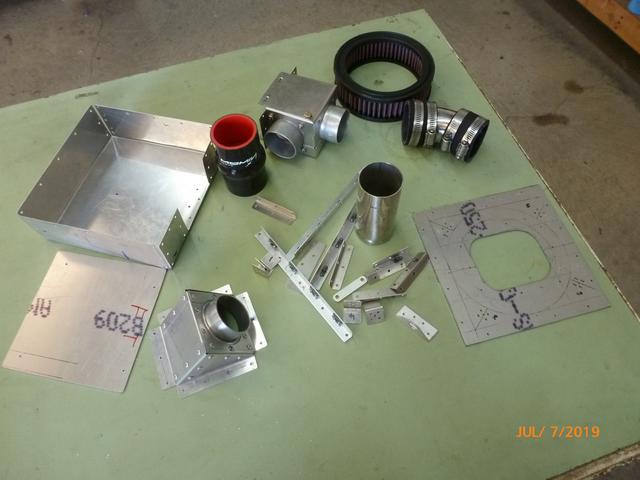
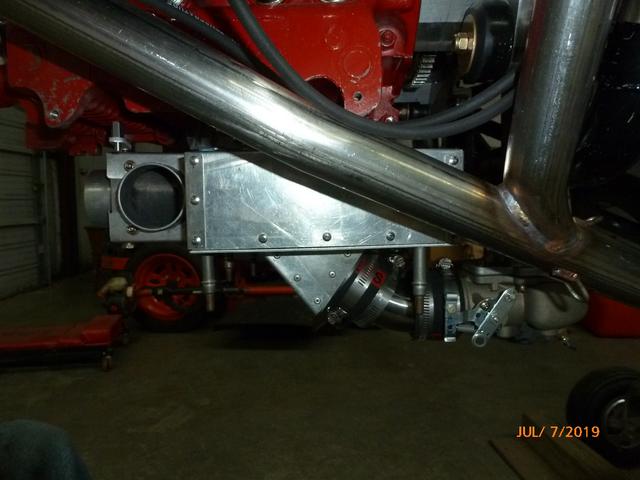
The line runs to the bottom of a firewall mounted oil cooler. Had I explained to Scott what my plans were, before he built the engine, I think I could have had a neater installation. However, I didn’t think far enough ahead so I just gritted my teeth and made the necessary run. The air to the oil cooler will be supplied by a NACA vent on the cowl side. I’ll use the exhaust of the oil cooler for cabin heat.

Preliminary firewall layout. It didn’t end up this way but you can see how the oil cooler is mounted.

Oil cooler as mounted.

This pic shows the air supply for the oil cooler.

A similar setup worked well on the Sonex so I expect it to work well again. We’ll see.

I wish one of the guys that live in the permafrost region, and is having trouble getting enough cabin heat in the winter, would give this a try. And, instead of blocking off part of the oil cooler in the winter, just plum in a heat muff ahead the oil cooler.

Different subject:

I think I have an interference problem with my induction system :slight_smile:

Seriously, I have a question: Do any of you guys have a good feel for how much the front of the engine moves around?

Thanks,

Wes


Re: Wes’s Onex #89

Posted: Sat Nov 16, 2019 7:50 pm

by Bryan Cotton

Seriously, I have a question: Do any of you guys have a good feel for how much the front of the engine moves around?

I don’t yet. I suspect I’ll know by how much damage my baffles take while running.


Re: Wes’s Onex #89

Posted: Mon Nov 18, 2019 12:05 pm

by inventor

Did you build the oil cooler or is it an off the shelf unit?


Re: Wes’s Onex #89

Posted: Mon Nov 18, 2019 2:26 pm

by WesRagle

inventor wrote:Did you build the oil cooler or is it an off the shelf unit?

Who’s asking?

Ref. http://sonexbuilders.net/ucp.php?i=profile&mode=signature

Wes


Re: Wes’s Onex #89

Posted: Wed Nov 20, 2019 9:42 pm

by WesRagle

Hi Guys,

I’m still moving along (at a glacial pace).

I covered and installed the glare shield and fuel vent. I may regret the covering the first time I spill fuel but I shall endeavor not to spill.

I also did some final trimming on the cowl. Since nobody would venture a guess as to the movement of the engine relative to the cowl, I made a guess. 1/4" top and sides and 1/3" on the bottom for a firm landing. I’ll just have to keep an eye on it to see if that’s adequate. I will attempt a jam seal (form the back) around the induction tube using a block of foam. If that doesn’t work I’ll come up with something else. Maybe try a more refined approach once the plane is flying and I need something to do.

I need to order fasteners. I prefer quarter turn fasteners. I’m thinking of these https://store.skybolt.com/phillips-sk28s3-series-c1207.aspx. Any advice appreciated.

BTW, UPS just delivered a sheet of 0.016. Now I have no excuse not to attack the baggage compartment.

Thanks,

Wes


Re: Wes’s Onex #89

Posted: Thu Nov 21, 2019 12:10 am

by wlarson861

When I changed engines and cowl I used the Skybolt fasteners. The adjustable receiver is worth the higher price. I have had to replace a couple of the cams. The locking pin fell out of two of them, one I found and re-staked it in the cam and it has held. suggest buying a couple extra along with a good supply of the retainer rings as they will pop off from time to time.


Re: Wes’s Onex #89

Posted: Thu Nov 21, 2019 1:16 am

by WesRagle

Hi Bill,

Thanks for the reply.

I have a couple of questions.

In a recent “Shop Talk” article Robbie Culver stated:

I used SkyBolt fasteners, which were not cheap but certainly are high-quality
quick removal fasteners for the cowling. I was slightly disappointed at the
supporting documentation for these, as installation instructions were a bit less
than expected. I figured it out, but not very quickly. There are specialized tools
required also, so anyone going this route please reach out to me for loaners.

That leaves me a little concerned.

Also, in the “Engine Swap” podcast Robbie said that his cowl spit out one of the fasteners in flight which he speculated was the cause of a ding he got in his prop.

Questions:

  1. What are the specialized tools that are required for installation?
  2. Which retainers should be used with the Phillips SK28S3 Series studs (ref: https://store.skybolt.com/retaining-rings-c1213.aspx)?
  3. The thickness of the cowl haves is pretty uniform along the sides (where most of the fasteners go). So, what is the advantage of adjustable receivers?
  4. When you say “the locking pin” are you referring to the pin in the end of the stud?

Thanks for Your Time,

Wes

Re: Wes’s Onex #89

Posted: Thu Nov 21, 2019 1:17 pm

by Onex107

WesRagle wrote:Hi Guys,

I’m still moving along (at a glacial pace).

I covered and installed the glare shield and fuel vent. I may regret the covering the first time I spill fuel but I shall endeavor not to spill.

I also did some final trimming on the cowl. Since nobody would venture a guess as to the movement of the engine relative to the cowl, I made a guess. 1/4" top and sides and 1/3" on the bottom for a firm landing. I’ll just have to keep an eye on it to see if that’s adequate. I will attempt a jam seal (form the back) around the induction tube using a block of foam. If that doesn’t work I’ll come up with something else. Maybe try a more refined approach once the plane is flying and I need something to do.

I need to order fasteners. I prefer quarter turn fasteners. I’m thinking of these https://store.skybolt.com/phillips-sk28s3-series-c1207.aspx. Any advice appreciated.

BTW, UPS just delivered a sheet of 0.016. Now I have no excuse not to attack the baggage compartment.

Thanks,

Wes

Don’t joke about spilling fuel. The smallest drop on your windshield will cause it to crack. Take every precaution to prevent spills. I have added a peel and stick black plastic cover around the hole to catch drips. I use car gas and have added a battery powered pump to transfer gas to have more control. I have a major crack next to the hole and the windshield needs to be replaced. If you spill enough to cause it to run down around the glare shield, it will cause many small cracks in the edge of the windshield. Nasty problem. This should be printed in red in the instructions.


Re: Wes’s Onex #89

Posted: Thu Nov 21, 2019 2:28 pm

by WesRagle

Hi Maurice,

Onex107 wrote:Don’t joke about spilling fuel.

I wasn’t joking. I’ve already bought my first fuel transfer system. I knew I needed one and just went ahead and bought it to help with the fuel flow test and fuel level calibration. Gordon Baxter suggested it. Thanks Gord.

Future plans include a fuel transfer tank mounted in the back of my old pickup. That will require some thought to do it right :slight_smile:

I am curious if the crazing/cracking of lexan is related to how well the cut edges are polished out. I think I’ll take a little more time and polish the hole and cut edges down to 2000 grit.

BTW, I read your article in Air Facts (Ref. https://airfactsjournal.com/2019/11/escape-from-the-jaws-of-imc/).

Excellent article. I admire folks who can write. I majored in engineering just because it required one less semester of English. Another indication that I don’t always think things through all the way :slight_smile:

Thanks,

Wes


Re: Wes’s Onex #89

Posted: Thu Nov 21, 2019 4:47 pm

by WaiexN143NM

Hi wes,
The skybolt fasteners are great. dont forget the special tools you will need from them for install. inside alum backing plates inside really stiffen up the joint. I prefer to use pan head rivets on the cowl instead of countersunk. Also i used contego fire barrier(aircraft spruce) on the inside of cowl. looks and smells like white latex paint. with a fire barrier additive.
You’ve got a nice quality build. Keep plugging away!

WaiexN143NM
Michael


Re: Wes’s Onex #89

Posted: Thu Nov 21, 2019 5:20 pm

by Sonex1517

Hello

Since I was quoted here, I will chime in.

I used the following parts:

SK213-2 Receptacle

ZG28S3-2 fastener

SK2600-LWS fancy washer (Bill is correct. Buy extras)

4P3-T26 Stupid expensive tool to push fancy expensive washers onto fasteners

SK245-PK silly expensive tools used to fuss with fancy expensive washers and receptacles

I am willing to LOAN them with the clear understanding they are to be returned.

As far as what happened to my prop - no idea what actually happened, but it is likely a fastener popped a fancy expensive washer and flew out into the rear face of my prop. That or a rock on the runway.


Re: Wes’s Onex #89

Posted: Thu Nov 21, 2019 9:35 pm

by WesRagle

WaiexN143NM wrote:Also i used contego fire barrier(aircraft spruce) on the inside of cowl. looks and smells like white latex paint. with a fire barrier additive.
You’ve got a nice quality build. Keep plugging away!

Hi Michael,

Thanks. I hope the build turns out good. I have already sealed the inside of the cowl with resin. I have the contego sitting on the shelf. I will wait until after the cowl is painted before applying it so I don’t have to worry about over spray.

WaiexN143NM wrote:I used the following parts:

SK213-2 Receptacle

ZG28S3-2 fastener

SK2600-LWS fancy washer (Bill is correct. Buy extras)

4P3-T26 Stupid expensive tool to push fancy expensive washers onto fasteners

SK245-PK silly expensive tools used to fuss with fancy expensive washers and receptacles

I am willing to LOAN them with the clear understanding they are to be returned.

As far as what happened to my prop - no idea what actually happened, but it is likely a fastener popped a fancy expensive washer and flew out into the rear face of my prop. That or a rock on the runway.

Thanks Robbie. The part numbers are what I was looking for. I appreciate the generous offer but I already have SK245-PK silly expensive tools used to fuss with fancy expensive washers and receptacles. I can spring for 4P3-T26 Stupid expensive tool to push fancy expensive washers onto fasteners and SK245-PK silly expensive tools used to fuss with fancy expensive washers and receptacles.

I do wonder how the stud managed to depart the cowl if it had a fancy expensive washer pushed onto it?

With enough prodding I’ll get this figured out.

Thanks Again,

Wes


Re: Wes’s Onex #89

Posted: Thu Nov 21, 2019 10:35 pm

by Sonex1517

Hi Wes

Glad to help.

I have wondered since the prop ding how it happened. I had less than two hours on the prop. That was really tough to stomach.

I have seen the fancy and frustrating expensive washers just work loose and allow the fastener to come out. Now I check them regularly. As Bill said, there is a pin in the base that is the locking part of the fastener. I have bent two, lost one, and in general found these things to be a necessary evil.

As far as why we need adjustment, just my thoughts. Each install is slightly unique and the adjustment allows for variances in the fit. In other words, since my work was far from perfect, it allowed me to finish the darned thing and eventually fly.


Re: Wes’s Onex #89

Posted: Fri Nov 22, 2019 12:03 am

by WesRagle

Hi Guys,

OK, I think the fog is starting to clear.

Here are the things that were confusing me.

  1. Every time I looked at a document that explained how to use the 4P3-T26 tool they started talking about installing studs into grommets.
    As I now understand it, that does not apply to the Phillips SK28S3 Series fasteners. Correct?

  2. I kept thinking that the the “split washer looking” retainers, the ones that allow the fastener to “float” would be a good answer for our application.
    As I understand it now, those retainers do not apply to the SK28S3 Series fasteners either. With the SK28S3 series we use the SK2600-LW retaining rigs or nothing at all. Nothing at all might be the right answer where the upper cowl and lower cowl can’t be flexed apart with the cowl in place. Correct?

  3. I now know what the special tools required are.

  4. The adjustable receptacles are causing failures.
    My concerns about the failures that Robbie and Bill mentioned have nothing to do with the adjustable receptacles but the retaining rings and the retainers themselves.

  5. Selecting the proper grip for the fasteners. I keep trying to find the table that correlated retainer grip to dash number. I know it’s buried in there somewhere. I just haven’t found it.

I think I’m getting close to placing an order.

Thanks,

Wes


Re: Wes’s Onex #89

Posted: Fri Nov 22, 2019 12:45 am

by wlarson861

I am curious if the crazing/cracking of lexan is related to how well the cut edges are polished out. I think I’ll take a little more time and polish the hole and cut edges down to 2000 grit.

No matter how well you polish the edges of the Lexan, a few drops of auto fuel will cause it to crack, Take a scrap piece of Lexan(trimmings from the windshield) and bend it to a radius similar to the windshield and have someone pour a little auto gas on and watch it crack everywhere the fuel touches. Winter blend auto fuel is the worst because of all the extra solvents they add in the winter time.


Re: Wes’s Onex #89

Posted: Sat Nov 23, 2019 4:51 pm

by WesRagle

Hi Bill,

wlarson861 wrote:Take a scrap piece of Lexan(trimmings from the windshield) and bend it to a radius similar to the windshield and have someone pour a little auto gas on and watch it crack everywhere the fuel touches.

I’ll just do my best not to spill. At some point I’ll try it.

I’ve been working on my rendition of Dirk’s baggage compartment. Getting used to working with 0.016 (tin foil). Just about have to pieces fitted. There are a lot of weird angles involved. I only made one unintended piece of scrap so far. I decided to use the inside of the formers as a dimension. Took it almost all the way to the floor. I’ll velcro a thin piece of plywood to the floor to keep from “point loading” the tin foil. I’ll also add a thin lexan access/inspection panel for the idler. I’m not sure this is worth the effort, but it’s now or never.

Wes


Re: Wes’s Onex #89

Posted: Sun Nov 24, 2019 5:43 am

by dirkverdonck

Hi Wes,
This looks very much like my bagage compartment, takes a while to cut and bend all the bits but the end result will be a large and solid storage area.

Re: Wes’s Onex #89

Posted: Sun Nov 24, 2019 10:55 pm

by WesRagle

dirkverdonck wrote:Hi Wes,
This looks very much like my bagage compartment, takes a while to cut and bend all the bits but the end result will be a large and solid storage area.

Hi Dirk,

It’s only a cheap imitation, but suitable to its purpose. Now I’ll have a Onnebego :slight_smile:

It’s a bit flimsy using 0.016 but the weight of the aluminum is less than 3 lbs.

Wes


Re: Wes’s Onex #89

Posted: Thu Nov 28, 2019 2:48 pm

by WesRagle

Hi Guys,

OK, the stupid expensive fasteners should be here tomorrow. And yes, it was hard to press the “Place Order” button.

While waiting (and trying to figure out what to order) I decided to build the flaps and ailerons so I could check the fit of the wing tips. Here is where things went south. I pulled out the aileron skins and for the first time really took a good look at them. They are so old that the protective plastic film has become one with the aluminum. I tried to remove the film with a heat gun and a hardwood scraper, no joy.

So, if you are planning on picking up an old kit, check the plastic covering to see if it will come off.

I quickly gave up and, in the words of my Dad, I “whipped it with cash”. Incredibly enough, the new skins were on my doorstep in less than a week (Ref. https://www.kitplanes.com/this-puddle-we-play-in/).

Anyway, the flaps and ailerons are now built. I pulled out the outer wing panels, attached the aileron, put the wingtip in place, and it looks like they will fit well. A lot of fiber glass hanging off the end of the wing.

Forever Forward,

Wes


Re: Wes’s Onex #89 (SkyBolt Fasteners)

Posted: Tue Dec 03, 2019 6:41 pm

by WesRagle

Hi Guys,

Well, I got the SKYBOLT fasteners/receptacles/retainers and today was the day to try them out. Since there was quite a bit of confusion on my part as I researched these fasteners I thought I would post a little information about them.

Thanks to Robbie Culver, David Amsler, et.al for help clearing the fog. As David pointed out, the printed catalog is a much better reference than just poking around on the SkyBolt web site (Ref. http://skybolt.com/wp-content/uploads/2019/04/Skybolt-Catalog-v5.1_Print-aerospace-fasteners-1.pdf).

I chose to use one of the “CLoc 2000 Series Common Sets” (SK28S3-SET1). Here are the parts, less rivets, that make up the set.

A stud, a retainer, and an adjustable receptacle.

Here are the tools to work with the set.

The pliers and the drill jig will be familiar to anyone who has worked with CamLoc fasteners. The pick is used to assist with adjusting the receptacle once the “tang” is removed or to re-insert the tang (Ref. http://skybolt.com/wp-content/uploads/2017/08/Instructions-SK213-SK215-SK245.pdf). The other tool is used to press the retaining washers onto the studs.

Here is a pic of one of the receptacles as I installed them.

I used solid rivets so the tang had to be removed to squeeze the rivets. The tangs went back in place easily using the pick.

If you are used to working with standard receptacles the adjustable ones look a little clunky. But, on the up side, you won’t end up with a box full of unused studs that have the wrong grip :slight_smile: That is unless you bought the wrong studs.

The set I chose includes the SK8S3-2S stud. Here is a pic of some scrap held in place with one of the studs.

I like the look, but I don’t really like the stud. The studs require a counter sink/dimple be applied to the 1/4" hole the stud fits in. And, as you may know, 1/4" fasteners are “self retaining”, and floating, as long as the hole is no larger than 1/4". Since the cowl flanges aren’t very thick, by the time the counter sink is deep enough for the stud to sit flush, the 1/4" hole has been enlarged. There goes the self retention. Even if the material is thick enough that the hole is not enlarged, the fiberglass around the edges of the hole will be so thin that it is guaranteed to enlarge over time.

Pic of hole before and after counter sink is applied.

Pic of how the stud self retains.

So, I’m thinking about using one of the protruding head studs with a SS washer between the cowl and the stud. Kind of like this one only with a phillips head.

EDIT: That gives me an idea. Instead of using the supplied retaining washers I could use a thin 1/4" washer (AN960-416L) on the back side of the stud. Seems that would allow the stud to “float” and ensure stud retention even if the hole was slightly enlarged. Hmm… Also, I see that split ring retainers are available.

It won’t look as good, but I think it would perform better.

I don’t know. Still over thinking it.

Wes


Re: Wes’s Onex #89

Posted: Sat Dec 07, 2019 2:26 am

by WesRagle

Hi Guys,

Ok, hopefully this is the last of my SkyBolt posts :slight_smile:

From my previous post:

EDIT: That gives me an idea. Instead of using the supplied retaining washers I could use a thin 1/4" washer (AN960-416L) on the back side of the stud. Seems that would allow the stud to “float” and ensure stud retention even if the hole was slightly enlarged. Hmm… Also, I see that split ring retainers are available.

Since I seldom have a totally original idea, I started poking around and found a similar suggestion on the SkyBolt website (Ref. http://skybolt.com/wp-content/uploads/2017/08/Instructions-SK2600-SW-Retainer.pdf).

Here’s where I am, and probably where I’ll stay, with this encounter with quarter turn fasteners.

I decided to use protruding head fasteners since I wouldn’t have to counter sink and weaken the fiberglass around the fastener stud hole.

One of the fasteners I will use installed:

If you look closely you can see a thin #10 washer behind the fastener. That’s because the back side of the stud isn’t flat as shown in this pic.

I don’t want the stud eating into the fiberglass from the outside.

Here is a pic of the back side of the stud as installed.

The studs will have a #10 thin washer on the back side and a SK-2600-SW retainer keeping every thing in place. That is about as durable of a floating quarter turn fastener installation as I can come up with. Hopefully it will work well in service. We’ll see.

Foot note:
The last pic also shows a SK-2600-SW retainer and a larger standard split ring retainer side by side. What ever alloy SS the SK-2600 is made of is very soft. I bent the one in the picture with my bare hands. There is no spring to the washer. The instructions SkyBolt supply even include a step to “bend back to flush-flat condition” after the retainer is installed. Kind of flimsy. The regular steel split retainers spring back after installation. They may provoke some profanity while installing them but they seem more substantial.

Wes


Re: Wes’s Onex #89

Posted: Tue Jan 14, 2020 5:23 pm

by WesRagle

Hi Guys,

Well, I’m almost finished with the wings. But, I ran out of rivets and I need another set of hands to help drill the second wing stub skin in place. Hopefully I’ll have both missing components soon and can wrap it up. In any event, the Onex is looking more and more like an airplane.

While waiting on finishing the wings I’m working on some details. One detail was the retention of the hing pins on the cowl bottom. I don’t know how most folks do this but this is what I did.

It’s easy and works well. Just a single hinge loop with a #4 washer between the loop and the skin. Apply lithium grease to all surfaces before riveting. The loop can be rotated by hand. It helps to bend the “handle” of the hinge pin a little to allow it to slip in the loop better. The loop has to be far enough from the hinge to allow the pin to flex so the handle can be inserted in the loop.

Forever Forward,

Wes


Re: Wes’s Onex #89

Posted: Tue Jan 14, 2020 9:56 pm

by Onex107

Wes, I went that way with the bottom cowl pins until I removed the cowl the first fifty times. Putting those bottom pins in was a pain. Then I drilled a small hole in the outside of the cowl and inserted the pins from the outside in with no locking clips. Sure the handles hang out but who cares. I’ll never win trophies but it’s much easier to work on. Much easier to install and now all the bottom cowl pins are the same length. No need to keep them separate, and the bottom pins, inserted from the outside, haven’t moved in 285 hours.


Re: Wes’s Onex #89

Posted: Wed Jan 15, 2020 2:09 am

by WesRagle

Hi Maurice,

I see your point. I’ve had the bottom cowl on and off 6 or 7 times today. It does get old lying on your back to insert those pins. I might try changing after I have the plane flying but right now it’s “forever forward”.

Wes


Re: Wes’s Onex #89

Posted: Wed Jan 22, 2020 10:55 pm

by WesRagle

Hi Guys,

My Daughter came to visit and agreed to work the “rib stick” so I was able to get the second wing stub skin drilled. Hope to finish the second wing in the next couple of days.

As first flight draws nearer I’m thinking more and more about pre-flight check list etc. Since I live in dirt dauber territory I need to make sure the fuel vent doesn’t get clogged. I intend to use a pipe cleaner stuck in the fuel vent while hangared and remove it as part of pre-flight. Is there a better way? Is there a way to one way vent the fuel cap to eliminate this single point of failure? Keep in mind that the Onex has the fuel cap in the cockpit.

Wes


Re: Wes’s Onex #89

Posted: Thu Jan 23, 2020 1:16 pm

by Onex107

Wes, to reply to your vent concerns. I run my vent line into a catch jar and measure the blow by volume as a measure of cylinder health. It’s a one pint mason jar with the regular two piece lid. The vent line goes through the center into the jar and is surrounded by six or eight vent holes to let the air out. The underside of the lid has a stainless steel scrubber attached to filter and condense the oil. The jar is calibrated in ounces and I keep a record of each 25 hour oil change. Works very well. You can loosen the outer ring of the lid, loosen the hose clamp the holds it to the firewall, and empty the jar. At 285 hours I typically see 7 to 10 ounces during 25 hours. The blow by volume and the oil added volume are nearly identical. The Cessna experts did not advocate running it back into the engine due to the acids generated by water and NOX gases. Of course my Cessna engine had a higher volume of blow by due to the normal usage of a quart of oil in 10 hours. I’m not used to an aircraft engine that uses so little oil.


Re: Wes’s Onex #89

Posted: Thu Jan 23, 2020 3:13 pm

by inventor

That is an interesting idea. I never thought of catching blow by oil and I can see why it is an indicator of engine health. I had a Chevy pickup with a 6 cylinder engine that suddenly started using huge amounts of oil. It turned out to be a clogged filler cap so the oil was discharged through the vent pipe.

Re: Wes’s Onex #89

Posted: Fri Jan 24, 2020 11:01 am

by WesRagle

That is interesting. I had never considered trending blow by as a health indicator.

I was really thinking about the fuel vent though. Performing the leak test on the OOPS fittings highlighted how tightly the fuel cap seals. And, around here critters will seal a fuel vent in a heartbeat. C-150 guys usually change out to vented fuel caps.

Wes


Re: Wes’s Onex #89

Posted: Sun Jan 26, 2020 11:53 pm

by WesRagle

Hi Guys,

A quick update.

Second wing stub finished. Flaps and ailerons F9 polished. Ailerons hung and rigged. Anti-skid applied.

First set of wing locks built. Second set tomorrow.

Forever Forward,

Wes


Re: Wes’s Onex #89

Posted: Fri Feb 07, 2020 10:08 pm

by WesRagle

Hi Guys,

Well, I cleaned up the polish job and removed some of the assembly scratches. Far from perfect but good enough for now.

I’ve been fretting over paint ever since I started this project. I had just about convinced myself to rattle can all the fiberglass parts but couldn’t stop thinking about alternatives. Last week I took the parts out and got estimates from a couple of paint and body shops. That was less than gratifying. Then, with a little poking around on the internet I found this:

https://www.youtube.com/watch?v=QtD0wvNAjD0

Anybody else tried this method of painting? Looks promising to me.

Wes (So near and yet so far) Ragle


Re: Wes’s Onex #89

Posted: Sat Feb 08, 2020 9:19 am

by DCASonex

Polish job looks nice, Watched the video but the thing that kept crossing my mind is that there is very little flat area for the roller to be effective on the fiberglass parts. If they were flat, they would probably be made from of aluminum sheet.

David A.


Re: Wes’s Onex #89

Posted: Sat Feb 08, 2020 11:01 am

by builderflyer

Hi Wes,

Also, with this product we are back to working with a hazardous material as compared to Dupli-color acrylic enamel (although it isn’t apparent that the presenter is particularly concerned about it, i.e. no respirator). You seem to have done a good job with the Dupli-color…why are you still unhappy with it???

Art,Sonex taildragger #95,Jabiru 3300 #261


Re: Wes’s Onex #89

Posted: Sat Feb 08, 2020 3:53 pm

by WesRagle

Hey Guys,

DCASonex wrote:kept crossing my mind is that there is very little flat area for the roller to be effective on the fiberglass parts.

I understand your point but it seems to me that the Onex wing tips are all flat except at the seam at the very tip. The cowl is pretty flat from side to side except at the inlet. The wheel pants, now that a different story. Might be able to tip it (brush it) in the difficult areas. Don’t know.

builderflyer wrote:Also, with this product we are back to working with a hazardous material as compared to Dupli-color acrylic enamel (although it isn’t apparent that the presenter is particularly concerned about it, i.e. no respirator). You seem to have done a good job with the Dupli-color…why are you still unhappy with it???

If the product is rolled, that is the product is not airborne, and you work in a well ventilated/large area it doesn’t seem like a respirator would be needed.

I am not unhappy with the Dupli-color, I just have some reservations as to whether or not I will be able to get nice results on large, relatively flat surfaces. I also worry that once the enamel is applied there is no backing out. Can I switch to a two part product without removing the enamel first? Don’t know for sure.

Since the Alexseal cures very hard and can be wet sanded/buffed it gives me some confidence that even if I get orange peal I can fix it. My experience with Dupli-color is a little mixed in that regard. I was able to buff the tail tips which had cured for months. I painted the fairings and tried to buff one after only a month or so and quickly burned through. I know, sloppy technique, but that’s what you get when your an armature:-) And with a two part process I feel confident that If I totally mess it up I can sand it and switch back to enamel with no problems. I’m thinking that by using a two part paint I’m giving myself two chances to get decent results. If the Alexseal doesn’t work out all I’ve done is wasted time and money. Now there’s something I am good at :slight_smile:

Wes


Re: Wes’s Onex #89

Posted: Tue Feb 11, 2020 10:47 am

by builderflyer

WesRagle wrote:Hey Guys,

I am not unhappy with the Dupli-color, I just have some reservations as to whether or not I will be able to get nice results on large, relatively flat surfaces. I also worry that…

Wes

I worry too, Wes. But what I can say is that the Dupli-color is not easily buffed away if there have been enough coats applied. My skill at applying paints is similar to my skill at working with fiberglass…that is to say I over apply each and then sand away what is not needed. The concern you have regarding “hardness”, however, is a valid one. The acrylic enamel will never be as durable as the polyurethane and that’s it’s major shortcoming.

Good success with whatever you do,

Art,Sonex taildragger #95,Jabiru 3300 #261


Re: Wes’s Onex #89

Posted: Wed Feb 12, 2020 3:52 pm

by WesRagle

Hi Art,

Yea, there are pluses and minuses to every paint process. The Alexseal rolling process appears to be a medium cost alternative between rattle can and spraying polyurethane. I’m going to try it. Like I said, if it doesn’t work out I can always go back to Dupli-color.

In the mean time I finally got around to installing the baggage compartment. It still needs a little trim before I put the bottom (3/32" plywood) in.

I was waiting on installing the baggage compartment until I painted the former just behind the cockpit. After watching Ben’s video on vinyl wrap I couldn’t resist dipping a toe. So, I use 3M 2080 vinyl instead of paint. The 2080 has a thin plastic film on the outside to prevent damage during installation. You can see the film still (somewhat) attached. The stuff is pretty awesome. I probably should have gotten a less stark white but, aside from that, it’s great. Easy install, easy clean up, and the dry time is very fast :wink:

The paint should be here tomorrow. I’ll report on my experience, good, bad, or indifferent.

Wes


Re: Wes’s Onex #89

Posted: Thu Feb 13, 2020 12:28 am

by WesRagle

Hi Guys,

Just about finished with the baggage compartment. The flash makes the material look grey, but it’s really black. Under normal lighting you can’t see anything at all. Just solid black back there.

Inspection/access panel for the idler. The protective plastic still on the Lexan.

Working on closing up the bulkhead just aft of the baggage compartment.

I still haven’t riveted the forward edge of the baggage compartment. I really can’t do that until I figure out how the sling and seat back tie in. I have a template of the rivets holes to use when the time comes.

I’m happy with it. It’s made of 0.016 6061 T-6 with a thin piece of plywood on the bottom to prevent “point loads”. It’s all covered with glued on fabric. Probably weighs about 5 lbs. Not suitable for anvils or bowling balls but it’s plenty large for bulky items.

Forever Forward,

Wes


Re: Wes’s Onex #89

Posted: Thu Feb 27, 2020 2:26 am

by N21X

Hi Wes, I really like how your documenting your project, NICE job with your build! If its ok with you I’d like to also document the same way. I fly into Dallas often and would love to swing by and check out your project.

Michael K

Re: Wes’s Onex #89

Posted: Thu Feb 27, 2020 2:53 am

by N21X

inventor wrote:Did you build the oil cooler or is it an off the shelf unit?

Im interested in the question aswell…


Re: Wes’s Onex #89

Posted: Thu Feb 27, 2020 6:50 pm

by WesRagle

Mycool wrote:Hi Wes, I really like how your documenting your project, NICE job with your build! If its ok with you I’d like to also document the same way. I fly into Dallas often and would love to swing by and check out your project.

Michael K

HI Michael,

I enjoy the forum so posting pics and progress is fun. And, it reminds me that I am making progress even when things are going slow :slight_smile: I would be happy for you to come by any time. PM me when you are going to be in the area.

As for the oil cooler, it’s a Niagara. I think it’s the smallest one they make. It’s for O-200s and such. I made the plenums. The inlet and outlet are 2.5" That is connected to the little cabin heat flapper with a 2.5" to 2" 45 Deg. silicon elbow.

Wes


Re: Wes’s Onex #89

Posted: Thu Mar 05, 2020 12:26 am

by N21X

You did a great job, Ill definitely be hitting you up soon. Be on the lookout for N21X.


Re: Wes’s Onex #89

Posted: Mon Mar 23, 2020 11:17 pm

by WesRagle

Hi Guys,

Well, after a little burn out break, I’m back at it.

I applied all the fasteners to the cowl, attached the canopy, popped the wing tips in place, and screwed the wheel pants on for the first time ever.

Oh yea, I also pinned the rudder, attached the rudder cables and tail wheel push rod complete with cotter pins.

Tomorrow I’ll rig the flaps and piddle with some fairings.

The punch list is down to about a dozen items. The big hurdle is still going to be the seat cushions.

Forever Forward,

Wes


Re: Wes’s Onex #89

Posted: Tue Mar 24, 2020 4:42 am

by dirkverdonck

Hi Wes,

What kind of wheelpants have you installed, they’re not the stock Sonex ones, are they?


Re: Wes’s Onex #89

Posted: Tue Mar 24, 2020 7:38 am

by GraemeSmith

WTG Wes! Looking good.


Re: Wes’s Onex #89

Posted: Tue Mar 24, 2020 3:01 pm

by WesRagle

Hey Guys,

Thanks Graeme!

Dirk,

Those are RV-6A nose wheel pants.

IMHO the Onex landing gear, with some fooling around, provides a significant opportunity for aerodynamic clean up. So, I wrapped the gear with sheet aluminum (Sonex style) and used pressure recovery wheel pants. These wheel pants eliminate the un-faired acute angle where the gear leg meets the wheel pant. Also, I think they look cool :slight_smile:

Wes


Re: Wes’s Onex #89

Posted: Wed Mar 25, 2020 4:20 am

by dirkverdonck

These look good, might give it a try next winter.


Re: Wes’s Onex #89

Posted: Wed Mar 25, 2020 8:48 am

by WesRagle

Hi Dirk,

If you get the urge to try it, and your handy with fiberglass (I’m not), take a look at how Art did it. Looks pretty slick.

Ref.
http://sonexbuilders.net/viewtopic.php?f=21&t=4550&hilit=art&start=10#p35242

Wes


Re: Wes’s Onex #89

Posted: Wed Mar 25, 2020 9:12 am

by Matt541

Wow! Nice work Wes, looking great.

I am also considering some extra fiberglass work on mine…

Re: Wes’s Onex #89

Posted: Wed Mar 25, 2020 1:26 pm

by builderflyer

Hi Wes,

How did you modify the RV nose wheel pant to be able to remove it from the wheel? On my Sonex it was necessary to move the pant joint backwards to the axle location. That alone was quite a bit of work but it also allows for removal of the front part of the pant while the back part of the pant remains attached.

Art,Sonex taildragger #95,Jabiru 3300 #261


Re: Wes’s Onex #89

Posted: Wed Mar 25, 2020 3:58 pm

by WesRagle

Hi Art,

builderflyer wrote:How did you modify the RV nose wheel pant to be able to remove it from the wheel?

I used a very thin cut off wheel on the dremel tool and cut from the gear leg opening to the flange of the aft half of the pant. The pant can then be flexed and pulled on from the back. This method might work better on a Onex than on a Sonex.

The screws on the nose and the fairing hold the slit closed.

There are a lot of screws to fuss with but minimal fiberglass work.

And Art, you need new tires :wink:

Wes


Re: Wes’s Onex #89

Posted: Thu Mar 26, 2020 9:34 pm

by WesRagle

Hi Guys,

I’m working down the punch list. One of the items is the rudder cable fairings. I ordered some fairings a long time ago. Never really gave them much thought.

Here they are:

I don’t understand. How does that work :slight_smile: Am I supposed to force the clevis on the rudder cable end through the yet to be made opening in the fairing? Has anybody used the ABS cable fairings? Picture?

EDIT:

That’s going to work just fine.

Thanks,

Wes


Re: Wes’s Onex #89

Posted: Fri Mar 27, 2020 5:35 pm

by WesRagle

HI Guys,

Ok, I’m just about out of anything to do. Just piddling with all the little things I’ve been putting off. Just realized that I need a data plate.

Installed the pitot-static probe.

Painted the wing lock indicator.

Fitted and painted the rudder fairings. I’ll wait until tomorrow to pop them on.

Image

Squirted some paint in the aft end of the wing tip where I forgot to paint.

Image

I went ahead and added a blast tube that points in the general direction of the coils. Figured it couldn’t hurt.

So the list looks something like this.

Just realized I misspelled pitot. Oh well, I caint spell noth’in.

Can’t put seating off any longer. I’m short in the torso. And due to that genetic defect, have no arse at all. So, sitting in the Onex with factory cushions feels like sitting in a hole on a rock. I’ll figure something out.

EDIT: I have this:

You don’t think they’ll sue me do you?

Forever Forward,

Wes


Re: Wes’s Onex #89

Posted: Sat Mar 28, 2020 7:26 pm

by WesRagle

Hi Guys,

I’ve been crawling in and out of the cockpit trying to get comfortable. I want to sit as high as possible. Here is what it took to lift me out of the Onex seat hole:

I’ll probably have to slump just a little on bumpy days but I’m OK with that.

The factory seat cushions have velcro sewn onto them but the opposing velcro doesn’t have any adhesive. How am I supposed to use it? Advice?

Any advice on drilling the hole in the wing lock handle for tie down purposes? At first glance it looks like I should drill the holes as high as possible to cut down on the leverage the tie down has on the handle.

Funny side note. I got in the cockpit, put the headsets on, and of course the first thing I noticed was the button on top of the cap. So, I went looking for a “flying hat”. I don’t know about you guys, but ball caps seem to breed in my closet.

Out of all those caps I could find only two caps without a button on top. An old EAA chapter hat and an AOPA hat. Just proves it’s been way to long since I’ve been flying.

Thanks,

Wes


Re: Wes’s Onex #89

Posted: Sun Mar 29, 2020 12:01 am

by wlarson861

You can stick the Velcro down with contact cement. I would also add a few spaced rivets through the Velcro to keep it from pulling away. An alternative is to buy some "industrial " Velcro, it has a pretty strong adhesive and has held my seat cushions in since 2012.


Re: Wes’s Onex #89

Posted: Sun Mar 29, 2020 4:24 am

by dirkverdonck

Hi Wes, I didn’t like the idea to put stress on the handle and bolted an attachment bracket to the main spar using some of the bolts already installed before skinning the inner wings.
Probably too late for your project!


Re: Wes’s Onex #89

Posted: Sun Mar 29, 2020 9:55 am

by Bryan Cotton

I bought some industrial stick-on velcro based on recommendations from one of the guys here. Worked great.

I always rip the buttons off my caps. Squash them with pliers and they won’t put up much of a fight.


Re: Wes’s Onex #89

Posted: Sun Mar 29, 2020 10:45 am

by Rofomoto

Hey Wes. What ever you do get rid of that cowboys hat!!! Lol
Nice job!!!


Re: Wes’s Onex #89

Posted: Tue Mar 31, 2020 7:21 am

by WesRagle

Hi Guys,

OK, I’ll get some “Industrial Velcro” and drill the tie down high on the handle and hope for the best.

Rofomoto wrote:What ever you do get rid of that cowboys hat!!!

Hey Billy, you do remember the 90’s? The days of Emmit Smith, Troy Aikman, Michael Irvin, Jay Novacek, and Daryl “Moose” Johnston. Every year It only seemed natural to garb up for the next Super Bowl party.

A hat and T-shirt that have never been worn:

Hope springs eternal :slight_smile:

Wes

Re: Wes’s Onex #89

Posted: Tue Mar 31, 2020 7:57 am

by WesRagle

Hi Guys,

I’ve been nervous about the W&B of my Onex for a long time now. I used a heavier engine, a heavier landing gear, a PC680 battery, long wing tips, Installed a baggage compartment, … All but the wing tips and baggage compartment were forward weights on a plane that is already tilted toward forward CG to accommodate large pilots. Yesterday was the day of reckoning. Scales, plumb bobs, fuel supply, etc.

How bad is it?

Empty weight 638 lbs.
CG is 58.71" aft of the spinner tip which works out to 7.835" aft of the leading edge or 15.67 % wing cord.
Lightest possible pilot with full fuel and no baggage ~ 150 lbs.

Pretty porky and a bit forward on the CG but no worse than I expected. It is comforting to know that there is no aft CG danger with me (~ 190 lbs) at the controls.

Forever Forward,

Wes


Re: Wes’s Onex #89

Posted: Tue Mar 31, 2020 8:05 am

by Rofomoto

Nice job Wes!


Re: Wes’s Onex #89

Posted: Tue Mar 31, 2020 10:14 am

by XenosN42

Hey Wes,

The empty weight of my OneX is 627 pounds, which includes the weight of the vinyl wrap covering. So you are a bit on the heavy side.


Re: Wes’s Onex #89

Posted: Tue Mar 31, 2020 4:12 pm

by WesRagle

Hey Guys,

Rofomoto wrote:Nice job Wes!

Thanks Billy! No comment on the T-Shirt :slight_smile:

XenosN42 wrote:The empty weight of my OneX is 627 pounds, which includes the weight of the vinyl wrap covering. So you are a bit on the heavy side.

Hi Michael. Yea, you really need to think about it before messing around with the plans very much. The main things that cost me were using a pre-assembled VW and the aftermarket landing gear, and now I’m a porkster.

The Home Built Help videos that came with my Onex kit showed Jan Eggenfellner helping the “Home Built Help” guy with a Onex build. During the latter portion of the build it could be seen that they had hung a Viking engine on the nose. A Onex with that engine showed up years after the video was made, partially assembled, on Barnstormers. In the pictures you could see that the prop was way close to the ground. Also, back in the early days of the Onex, Jan was showing a Viking cowled up on a Onex (tri-gear none the less) on his web site. Again, I’ll bet it was the same plane. I’ll lay odds it never flew with that engine. Based on my experience it would be a real chore to get the CG in line with a Viking. Were talking a lot of ballast or the battery strapped to the tail post :slight_smile: Then, with a tri-gear, the first bump you hit you could buy a new prop. Just my 2 cents, and worth every penny.

Wes


Re: Wes’s Onex #89

Posted: Tue Mar 31, 2020 6:37 pm

by Rofomoto

WesRagle wrote:Hey Guys,

Rofomoto wrote:Nice job Wes!

Thanks Billy! No comment on the T-Shirt :slight_smile:

Lol. Just saw it!!! Typical cowboy fan living in the ancient past


Re: Wes’s Onex #89

Posted: Wed Apr 01, 2020 12:44 am

by tom0nex74

Wes
0nex 74 empty wt. 630. (remote oil filter & heater), long tips..pilot 160lbs. I fly with 6to 8 gallons of fuel no baggage for best performance.
Tom Ryan. 0nex 74


Re: Wes’s Onex #89

Posted: Thu Apr 02, 2020 3:48 pm

by WesRagle

Hi Guys,

Well, I was trying to clean shop yesterday. I kept staring at the pile of boxes, crates, and pallets left over from the build. Where I live it’s cool and damp. Rained a lot the last of Winter but hasn’t rained for a few days. Perfect weather to burn brush. So …, I gave it all to the inferno.

Forever Forward,

Wes


Re: Wes’s Onex #89

Posted: Sat Apr 04, 2020 6:14 pm

by WesRagle

HI Guys,

Been doing more hangar flying. Of coarse for airplane builders that has a whole different connotation. So, in and out of the cockpit trying to make everything right.

Still fiddling around with seating ideas. I convinced myself that I couldn’t properly check seating height without getting a good site picture over the nose in the three point stance. Finally a good excuse to pull the protective covering off of the wind shield. Very motivating. I like it!

While flying around I moved the controls through their full range of motion. The handles on the forward hinge pins in the seat pan would stand up after a few trips in and out of the cockpit so I trimmed those so that they wouldn’t interfere with the stick.

Then I strapped in and found the next problem. The crotch strap interfered with the stick. If things worked out such that the stick moved past the strap it could be captured to one side. I need to fix that while I’m at it. I think some folks have moved the strap to the back of the spar and brought it through the seat pan. I’ll give that a shot. Advise welcome.

I have one of those three layer stack up of confor-foam left over from a previous life. I think I’ll try to make that work for the seat bottom. It was still comfy after 30 min.

Wes


Re: Wes’s Onex #89

Posted: Sat Apr 04, 2020 8:37 pm

by 13brv3

Sounds like you’re getting down to the last few items.

If you get a chance, could you measure (estimate) the thrust line height relative to that long row of rivets on the top of the side skins? In other words, if you could extend a straight line (string perhaps) along that top row of rivets, how far below that is the nose of the spinner?

Thanks,
Rusty (mentally working on the 912 mount)


Re: Wes’s Onex #89

Posted: Sat Apr 04, 2020 9:08 pm

by WesRagle

Hi Rusty,

13brv3 wrote:If you get a chance, could you measure (estimate) the thrust line height

The thrust line is given on ONX-P01.

Wes

Re: Wes’s Onex #89

Posted: Sat Apr 04, 2020 11:47 pm

by 13brv3

Thanks. Must have skipped over that.


Re: Wes’s Onex #89

Posted: Mon Apr 06, 2020 5:39 pm

by WesRagle

Hi Guys,

I moved the crotch strap to the back of the spar. I used the same attach point, just switched sides as others have done. Much much better. No more crotch strap messing with the control stick with full up elevator. I used a piece of plastic cutting board for the feed through on the seat pan. The piece of plastic is large enough to spread the load. As it turns out, the geometry is such that there really isn’t much load on the seat pan though.

I know I’m spending too much time on this but I really want to be comfortable in the cockpit. Anyway, I finally have a foam stackup that feels right when I’m strapped in. The piece of foam holding up the seat back will be the lumbar support. I’ll run some strips of velcro up and down on the seat back such that I can get the lumbar support exactly where I want it.

Now if I can just find someone to cover the bottom I’ll be in good shape.

Forever Forward,

Wes


Re: Wes’s Onex #89

Posted: Tue Apr 07, 2020 3:10 am

by dirkverdonck

Hi Wes,
Good work, make sure you add extra padding in the seat-back to support your shoulders and back. I did but not enough and it starts hurting after a while.


Re: Wes’s Onex #89 (All dressed up and no place to go)

Posted: Tue Apr 21, 2020 1:42 pm

by WesRagle

HI Guys,

So, I’m held up with paper work and flight training. I’m running out of anything to do on the project.

What’s left:

  1. Data Plate
  2. N-number
  3. Experimental Sticker
  4. Riveting the bottom skin.

I’ll get the Data Plate and N-number when the trophy shop opens back up from the virus. I have the experimental sticker I just haven’t put it on.

So, I’m thinking of riveting the bottom skin. I can’t think of a reason not to. I’ve checked the torque on the bolts in the tail for the second last time. I dug up the two little spacers that I’ve had to keep up with for what seems like years.

So why not go ahead and rivet the bottom? Somebody stop me.

Wes


Re: Wes’s Onex #89 (All dressed up and no place to go)

Posted: Tue Apr 21, 2020 4:30 pm

by Rynoth

WesRagle wrote:So why not go ahead and rivet the bottom? Somebody stop me.
Wes

Ultimately when I riveted the bottom skin, the only thing that worried me from that point on was access to to my antennae on the top of the turtledeck, so I triple+ checked that they were secure with lock nuts.

I’m not going to stop you.


Re: Wes’s Onex #89

Posted: Tue Apr 21, 2020 6:35 pm

by WesRagle

Hi Ryan,

Rynoth wrote:The only thing that worried me from that point on was access to to my antennae.

Mine is belly mounted and accessible beneath the seat. I think tomorrow I’ll just do it. Then I won’t be thinking about it and can better focus on training :slight_smile:

Thanks,

Wes


Re: Wes’s Onex #89

Posted: Wed Apr 22, 2020 8:15 pm

by WesRagle

Hi Guys,

OK, to late to turn back now.

The reflection of a concrete floor doesn’t look like much, but it is polished :slight_smile:

Wes


Re: Wes’s Onex #89

Posted: Tue May 05, 2020 6:50 pm

by WesRagle

Hi Guys,

Checked with the upholstery guy today. New target date for seat completion is Thursday.

Meanwhile I took care of the last two things needed before inspection.

N-number:

Dataplate:

The registration came in the mail today. Airworthy inspection as soon as the DAR spins back up.

Just as a side note, there is no need to wait to get your registration. Due to unexpected circumstances it took me about three months to clear that one piece of paper work. I should have started earlier to cover the unexpected.

Wes


Re: Wes’s Onex #89

Posted: Tue May 05, 2020 7:05 pm

by Sonex1517

Excellent Wes! Looking forward to hearing about a successful DAR sign off!


Re: Wes’s Onex #89

Posted: Tue May 05, 2020 7:38 pm

by Rynoth

WesRagle wrote:Just as a side note, there is no need to wait to get your registration. Due to unexpected circumstances it took me about three months to clear that one piece of paper work. I should have started earlier to cover the unexpected.
Wes

I definitely agree with this. I got my registration more than 4 years before actually having my airworthiness inspection, mainly because the hangar I wanted to rent required it. There is no harm in getting your registration early (other than the tax man.)

I’ll add to this, there’s no reason to wait to apply for your Repairman’s Certificate right after your airworthiness inspection is done. It’s likely that you already have all your paperwork in order to apply, so contact your FSDO and get the ball rolling on it as soon as your inspection is complete. It’s easy to miss this step (I did) because your focus naturally shifts to first flight.

Re: Wes’s Onex #89

Posted: Tue May 05, 2020 8:55 pm

by WesRagle

Hi Robbie,

Sonex1517 wrote:Excellent Wes! Looking forward to hearing about a successful DAR sign off!

Thanks. I’m gettin’ stoked. Right now it’s all about getting ready.

I have a great instructor. He has a lot of corporate time, trains in a Champ, has a nice T-210M for when he wants to travel, and is building a Thatcher CX4.

Looks like the weather is good for another hour in the Champ tomorrow. We’re going to take the 210 out next week just for fun a little change of pace. It’s a lot of fun working my way back.

Forever Forward,

Wes


Re: Wes’s Onex #89 (A good Day!)

Posted: Sat May 30, 2020 2:09 pm

by WesRagle

Today Onex #89, AKA N151NX, AKA Black Max, became an airplane.

A good day!

Forever Forward,

Wes


Re: Wes’s Onex #89

Posted: Sat May 30, 2020 2:24 pm

by Rynoth

CONGRATS WES! WooHooo!!!

(O)ne (N)ovember (X)-Ray.


Re: Wes’s Onex #89

Posted: Sat May 30, 2020 5:41 pm

by Sonex1517

Congratulations Wes! Way to go!


Re: Wes’s Onex #89

Posted: Sat May 30, 2020 8:29 pm

by Rofomoto

Nice job!!


Re: Wes’s Onex #89

Posted: Sun May 31, 2020 9:14 am

by 13brv3

Well done Sir!


Re: Wes’s Onex #89

Posted: Sun May 31, 2020 11:20 am

by WesRagle

Hi Guys,

Thanks! Won’t be long now. The next big adventure will be getting the airplane to the airport. I’ve decided first flights will be at KONY. I have access to a hangar there and there are a couple of nice long runways. Very little traffic and relatively flat terrain surrounds the airport. That’s about 90 miles by road from home but still within my test area. I’m thinking I’ll load the plane up on a low boy and drive 30 MPH leaving at 3 A.M some day next week. We have a trailer house 20 miles west of there so I can hang out with the plane.

Anyway, still working on the pilot but it’s starting to look promising :slight_smile:

Wes


Re: Wes’s Onex #89

Posted: Mon Jun 01, 2020 4:49 pm

by XenosN42

WesRagle wrote:I’m thinking I’ll load the plane up on a low boy and drive 30 MPH leaving at 3 A.M some day next week.

When I moved my OneX from my home to the airport I used a trailer and drove it at highway speeds. No problem at all. Of course the outer wing panels were removed. Don’t even consider moving a OneX far with the outer panels installed.


Re: Wes’s Onex #89

Posted: Mon Jun 01, 2020 11:15 pm

by WesRagle

Hey Michael,

XenosN42 wrote:Don’t even consider moving a OneX far with the outer panels installed.

I understand that that removing the outer wing panels would probably be best, but I have to ask, why the stern warning?

Why did I make these things?:

I thought if I tied it down good, secured the stick, stabilized the ailerons, and drove slow on smooth roads I’d be OK.

And what about Leonard Schmader? He wrote “The plane gets 58 road miles on it for each flight.”

I really really don’t want to pull the wing panels :frowning:

Wes


Re: Wes’s Onex #89

Posted: Tue Jun 02, 2020 4:06 am

by dirkverdonck

I made the clamps as well for the main and aft spar, removed the relatively heavy wingtips, (they are fitted with bolts and nutplates), blocked ailerons and elevator and moved the Onex on a trailer to the airfield for first flight and afterwards back and forth to the paint shop. No harm done if you drive carefully but wouldn’t do it on a regular basis.

Re: Wes’s Onex #89

Posted: Tue Jun 02, 2020 8:47 pm

by WesRagle

HI Guys,

Today was the day to tune the Zenith carb that came with my Hummel 2400 engine. Since this is a new engine I really wanted to tune it as rich as possible without rough running. Turns out that the jetting won’t allow the carb to be set rich enough to cause the engine to run rough. So, I just set the carb as rich as possible.

With a Prince P-Tip 54x50, WOT static RPM is 3200, the hottest EGT is 1300, and FF registers 7.5 GPH. I jammed the throttle from idle to simulate a go around and the engine didn’t hesitate. And BTW, I really didn’t like the little button lock cable I installed for a throttle cable. That was a little too cheesy even for me. So, I replaced it with a friction lock cable. Much better.

Image

I could run high power only for about 1 minute without the cowl on before the hottest cylinder registered 350 and I had to shut down and grab the leaf blower.

The engine is cowled up now and I’ll try and get 10 more minutes of ground running tomorrow and call it good.

One bad thing I discovered is that the secondary ignition generates radio noise. I have to turn the squelch up to 11 (out of 15) to silence it. No noise at all from the slick impulse mag. Any advice on that problem would be appreciated.

Image

Forever Forward,

Wes


Re: Wes’s Onex #89

Posted: Wed Jun 03, 2020 3:37 am

by dirkverdonck

Hi Wes,
It might be a little late but I completely seperated all radio stuff from the rest of the electrical equipment to avoid interference.
Two seperate ground bus bars and two seperate positive busbars. The only connect at the battery, the negative ones do not connect to the fuselage and all are physically seperated.

Looking forward to see the video of your first flight!


Re: Wes’s Onex #89

Posted: Wed Jun 03, 2020 8:51 pm

by WesRagle

Hey Dirk,

dirkverdonck wrote:Hi Wes,
It might be a little late but I completely seperated all radio stuff from the rest of the electrical equipment to avoid interference.
Two seperate ground bus bars and two seperate positive busbars. The only connect at the battery, the negative ones do not connect to the fuselage and all are physically seperated.

My radio is a handheld so I tested for conducted emissions by simply unplugging the power and running on battery. No difference. Don’t know but I assume that there is some RF being generated somewhere. As an aside, the radio runs on a switching power supply that is plugged into the avionics power buss. After finishing up the ground running today I pulled the cowl and one of the secondary plug wires felt like it wasn’t fully seated on the plug. I haven’t run the engine again since re-seating it.

Wes


Re: Wes’s Onex #89

Posted: Wed Jun 03, 2020 9:16 pm

by WesRagle

Hi Guys,

Finished up the prescribed ground running of the engine today. Even with the cowl on I could only run the engine at full power for about two minutes before the CHTs hit the 350 mark. At that point I shut down and grabbed the leaf blower. 10 minutes with the leaf blower going brought CHTs down to the 150 mark and I could run again.

The mixture is set up rich and the engine runs like it :slight_smile: Advancing the throttle slowly there are points at which the engine loads up some but it clears as the throttle is added. I did my best to get the engine to die by rapidly adding and removing throttle. I never acted like it wanted to die. Every time the throttle was advanced full the RPMs shot right back to 3200.

Here is what the exhaust looked like after the runs.


My hottest cylinder is the right rear. CHT is about 25 F. Deg hotter than the others. EGT was a bit higher as well. I checked the valve lash on that cylinder and the exhaust valve was a little tight. So, maybe … In any event, the hottest EGT was just over 1300.

Oil pressure was right at 80 psi with an oil temperature of about 160.

I re-torqued the prop. I’ll try to apply the leading edge tape tomorrow.

I also purchased a CO sensor/meter. I was concerned that since the fresh air vent is directly behind where the valve cover sticks out of the cowl I might be picking op some CO. I held the meter directly in front of the air vent and it registered 10. In fact, it registered 8-10 everywhere in the cockpit. I may try to improve that but it’s not very threatening.

So, I think I’m good to go for first flight. I’ll get a few hours on the engine and then revisit tuning the carb to a more reasonable mixture.

Forever Forward,

Wes


Re: Wes’s Onex #89

Posted: Thu Jun 04, 2020 4:32 am

by dirkverdonck

Hi Wes,
Looks good! Don’t forget to install the wheel pants because you’ll need every extra knot in flight to cool the engine, particularly in the beginning of the tests. (dixit John M…)
I had a hard time to keep the CHT’s in the green during the first couple of hours, it’s kind of normal but it gets better after a while!
I recommend climbing at at least 80 kias and not to lean during the first couple of hours.

After about 150 hrs I still climb at 80 kias or higher at a slow climb rate, in cruise I see 160 -170°C on the CHT and I lean for the EGT to be around 630°C, which is over 100°C under the stated limit. Oil temps vary between 70°C in wintertime and 90°C in summertime.


Re: Wes’s Onex #89

Posted: Thu Jun 04, 2020 5:35 pm

by WesRagle

Hi Dirk,

dirkverdonck wrote:After about 150 hrs I still climb at 80 kias or higher at a slow climb rate, in cruise I see 160 -170°C on the CHT and I lean for the EGT to be around 630°C, which is over 100°C under the stated limit. Oil temps vary between 70°C in wintertime and 90°C in summertime.

I definitely be climbing at 100+ MPH after the first minute.

Those are some cool temperatures your running. Me, I just hope to never see over 400 F CHT or 1400 F EGT. Hopefully much cooler once past break in. I will run the engine pretty hard at first, as recommended by Scott, just being careful not to overtemp anything. Scott also says to run full throttle occasionally while breaking the engine in. That should be exciting the first couple of times :slight_smile:

Any way, my hope is to never overtemp the engine. We’ll see how it goes.

Wes


Re: Wes’s Onex #89

Posted: Thu Jun 04, 2020 8:49 pm

by n502pd

Hi wes, call me about your radio noise!!


Re: Wes’s Onex #89

Posted: Sat Jun 06, 2020 6:32 pm

by WesRagle

Hey Joe,

n502pd wrote:Hi wes, call me about your radio noise!!

Thanks for the advice. Once the airplane is at the airport I think pulling one plug wire at a time on the secondary ignition, starting the engine and checking for the absence/presence of noise will give me a good idea of whats going on.

Wes


Re: Wes’s Onex #89

Posted: Sat Jun 06, 2020 7:15 pm

by WesRagle

HI Guys,

Millie and I made a road trip to Olney Municipal Airport today. Most folks who need hangar space will know that it’s not always easy to get. So, sometime back when we noticed that they were building some new enclosed Ts at Olney we snagged one as soon as they were finished. The task today was to start getting the hangar set up to support the first 20 hours of Onex flying.

This is the nicest hangar I’ve ever rented. An end hangar with folding doors, a human door on the end, good lighting, facing into prevailing summer winds, and best of all, an insulated roof :slight_smile:

I enjoyed removing and replacing the top of my main build table.

We were there for about 4 hours today and two aircraft landed. One Bellanca and one Air Tractor.

I walked the runways. 17/35 looked and smelled like it had been resurfaced and remarked yesterday. 4/22 wasn’t as nice but still OK. 13/31 is no longer maintained and is in bad shape. The only other folks at the airport were a man and his wife collecting about 100 round bails off the infield. So it’s nice and mowed for the time being.

Felt kind of lonesome but probably the best place to perform initial testing.

BTW, if anyone is close to KONY and needs a place to perform initial testing, I could use some company out there :slight_smile:

Forever Forward,

Wes


Re: Wes’s Onex #89

Posted: Sun Jun 07, 2020 11:28 am

by WesRagle

Hi Guys,

Got up early this morning and re-installed the gear leg fairings. It’s a real pain. I’ll probably live to regret the fairings but I really like the look.

During ground running we noticed a little oil on the wing. I pulled the valve cover and found this:

Replaced it with a new one. I consulted Scott Casler and he said he prefers cork to silicon. He just considers the gaskets a consumable and buys them in bulk. I ordered 20. They are about $1.25 each. I do find myself wondering if I should drill and safety the bolts holding the valve cover on.

I gathered up oil, TCP, the torque wrench, a funnel, … Every thing I could think of. It’s about time to go.

Wes

Re: Wes’s Onex #89

Posted: Sun Jun 07, 2020 11:33 am

by Rynoth

How tight did you snug the valve cover bolts? They don’t need to be (and perhaps shouldn’t be) torqued. I just go hand snug with a wrench, if the cover starts distorting inwards it’s already plenty tight.. I’ve never seen a cork gasket deform quite like that.


Re: Wes’s Onex #89

Posted: Sun Jun 07, 2020 11:49 am

by WesRagle

Hi Ryan,

No specific torque, but apparently too tight :wink: It kind’a goes with the safety wire question. I don’t want them to come loose. The valve covers have been on and off a lot of times. The rockers were removed to mark the cut out on the cowl. Scott says he uses the gaskets twice and then replaces them.

Wes


Re: Wes’s Onex #89

Posted: Sun Jun 07, 2020 12:31 pm

by Rynoth

I just recently replaced my first set of valve covers, I’d guess they had been on an off 2 dozen or more times. I think the rubber grommets under the screws do a good enough job of keeping the bolts from backing out, there’s no rotational force being applied there. But the gaskets are definitely cheap and no harm in replacing them frequently.


Re: Wes’s Onex #89

Posted: Sun Jun 07, 2020 12:42 pm

by gammaxy

Not sure what the advantage of the cork gasket is over these silicone ones:
https://vwparts.aircooled.net/SILICONE- … vw-1fr.htm

I somehow managed to fold a cork gasket when reusing it and leaked a decent amount of oil before realizing my mistake. Years later, these silicone gaskets are just as good as the day I installed them.


Re: Wes’s Onex #89

Posted: Sun Jun 07, 2020 1:30 pm

by WesRagle

gammaxy wrote:Not sure what the advantage of the cork gasket is over these silicone ones:
https://vwparts.aircooled.net/SILICONE- … vw-1fr.htm

Hi Chris, Probably no advantage. I asked Scott specifically if there were some better silicon gaskets to which he replied “I prefer cork”. He said that the silicon gaskets sometimes squish out of place. Scott applies a thin bead of grey RTV on the valve cover side of the gasket to hold it in place. I personally had a silicon gasket squish into the rocker area on my AeroVee. Probably my fault, but it happened. I noticed the ones you linked to said they were “Non-Slip”. That’s probably the ticket.

I just ordered 500 Hrs worth of cork for 25 bucks. If they don’t cause me any problems I’ll just use them up. If they do cause problems I’ll try the ones you linked to.

Thanks,

Wes


Re: Wes’s Onex #89

Posted: Sun Jun 07, 2020 6:36 pm

by WesRagle

What could possibly go wrong :slight_smile:

Looks like tomorrow night, from 2:00 AM to 5:00 AM there will be quite the spectacle rolling down some hopefully empty highways.

Forever Forward,

Wes


Re: Wes’s Onex #89

Posted: Mon Jun 08, 2020 7:01 am

by GraemeSmith

WesRagle wrote:What could possibly go wrong :slight_smile:

Gawd - I hope you don’t get any bugs on that shine while towing it down the road. That’s very purty looking.


Re: Wes’s Onex #89

Posted: Mon Jun 08, 2020 9:10 am

by DCASonex

I assume you have checked to make sure the wing tips clear the overhead door. :slight_smile:

David A.


Re: Wes’s Onex #89

Posted: Mon Jun 08, 2020 4:50 pm

by WesRagle

Hey Graeme,

GraemeSmith wrote:Gawd - I hope you don’t get any bugs on that shine while towing it down the road. That’s very purty looking.

Thanks! It is purty ain’t it? But, the plane will never look as good as it does the day of the airworthiness inspection. I hope bugs on the leading edges is soon an everyday occurrence.

Hi David,

DCASonex wrote:I assume you have checked to make sure the wing tips clear the overhead door. :slight_smile:

I backed it in so I assume it will pull out OK. There is a 1x2 clamped in the roller channel of the overhead door so it won’t come down at the wrong time.

I would have posted a pic of the loading process but it would probably have drawn too much ridicule. I backed the trailer half way up the approach. Then I put some ramps behind the rear tires of the pickup, put’er in 4 WD and backed up the ramps. That raised the front of the trailer and lowered the back of the trailer to level with the shop floor. An easy one man pull onto the trailer.

I’m still trying to think of all the “stuff” I’ll need to support this effort. I’m sure I’ll forget something.

Wes


Re: Wes’s Onex #89

Posted: Tue Jun 09, 2020 1:09 am

by WesRagle

Detailed Forecast

Tonight Clear, with a low around 74. South wind 10 to 15 mph, with gusts as high as 20 mph.

Tuesday Sunny, with a high near 89. Windy, with a west northwest wind 15 to 20 mph increasing to 25 to 30 mph in the afternoon. Winds could gust as high as 40 mph.

Tuesday Night Clear, with a low around 58. Breezy, with a northwest wind 15 to 25 mph decreasing to 5 to 15 mph after midnight. Winds could gust as high as 35 mph.

Wednesday Sunny, with a high near 89. West wind 5 to 10 mph becoming north in the afternoon.

Wednesday Night Clear, with a low around 63. East southeast wind around 5 mph.

Looks like I have to scrub the trip until Wednesday night. I’m going to turn the alarm off and get some sleep.

Oh Well,

Wes

Re: Wes’s Onex #89

Posted: Tue Jun 09, 2020 4:00 am

by sonex1566

Hi Wes,
Since you’re clever enough to own a Onex, do you theoretically just have to lower the wings and you are good to go? I fluffed around for days plugging wings and getting it all hooked up correctly. I don’t ever want to put the flap bolts in again…ever. I just don’t fit in there! Good luck mate, I can feel your excitement building from the other side of the world. If it makes you feel better about forgetting stuff, I went to a model aircraft competition once without my transmitter. I have never been accused of being the smartest tool in the drawer!


Re: Wes’s Onex #89

Posted: Tue Jun 09, 2020 11:28 am

by n502pd

Do what is safe. No hurry for sure! Let us all know how you do!! Very nice looking polish job, and if there are never bugs on it, folks will accuse you of not flying it. I leave a couple on mine just to keep the friends quiet!!!


Re: Wes’s Onex #89

Posted: Tue Jun 09, 2020 12:01 pm

by WesRagle

Hi Guys,

Yea, the wings are the easy part for a Onex. The hard part is getting it to the Airport. We were all set for a 3 hour slow crawl in the middle of the night but the wind forecast kept getting worse and worse. I didn’t want to get caught on the road (or at the airport for that matter) with the sails up, on a trailer, and the winds acting up. After all, this is supposed to be fun.

I have battery powered flashers taped on the plane. We dug out the coffee thermos and made sausage and biscuits and were just going to set the cruise control for 30 mph and ride it out.

I pulled the trailer out of the shop and managed to navigate the trees and point the truck toward the road. It’ll just have to sit there for a couple of days. There is no way I can back that route.

I’m free to think about other things for a bit. I’m going to listen to “SonexFlight Episode 73 - Project Closeout”. Need to get an engine log book. I need some check lists, I need …

Forever Forward,

Wes


Re: Wes’s Onex #89

Posted: Wed Jun 10, 2020 1:43 am

by lgsievila

Wes,
I have been hauling my Onex back and forth several times with the wings attached for 6 years now. I have a hangar that is about 14 miles from my house but I find it easier and more comfortable to do annuals etc at my home shop where it is warm and I have all my tools. I have supports for main and aft spar and just use one piece of painter’s tape at the aileron/wingtip interface to keep them from flapping around. And of course I take the back road and keep my speed around 30 mph. Never had a problem. I converted a boat trailer that has a ramp built in and can load/unload by myself in about 15 minutes including a 5 point tie down. Sorry I couldn’t be there for your first flight


Re: Wes’s Onex #89

Posted: Thu Jun 11, 2020 5:07 pm

by WesRagle

Hi Loren,

WesRagle wrote:Sorry I couldn’t be there for your first flight

Yea, me too :slight_smile: See ya next time.

Wes


Re: Wes’s Onex #89

Posted: Fri Jun 12, 2020 1:07 pm

by WesRagle

HI Guys,

Just back from Olney Muni. We made the trip trip in the middle of the night (2:15 AM - 5:30 AM) at 30 mph night before last. Every thing went fine.

I put the plane back together yesterday and performed the first taxi tests. The idle was too high which required constant braking. The idle screw isn’t accessible with the cowl on so I pulled the cowl and adjusted the idle down to about 1050. Much better now.

Got up early this morning and put the cowl back on (I’m getting pretty good at that now). Taxied some more and then headed back home.

Forever Forward,

Wes


Re: Wes’s Onex #89

Posted: Sat Jun 13, 2020 6:20 am

by dirkverdonck

Hi Wes,
It’s of course up to you to choose your idle rpm but I have mine at about 900 and this is ok for proper landings.


Re: Wes’s Onex #89

Posted: Sat Jun 13, 2020 9:30 am

by DCASonex

Wes,

From look of that photo, if your plane could talk it would be saying I want to fly.

Hope all goes well.

David A.


Re: Wes’s Onex #89

Posted: Sat Jun 13, 2020 12:51 pm

by WesRagle

Hi Dirk,

dirkverdonck wrote:Hi Wes,
It’s of course up to you to choose your idle rpm but I have mine at about 900 and this is ok for proper landings.

Right now I have a mile of runway and a new tight engine. I will turn the idle down some once things are broken in.

Hi David,

DCASonex wrote:Wes,

From look of that photo, if your plane could talk it would be saying I want to fly.

Hope all goes well.

David A.

Thanks for the well wishes.

Wes


Re: Wes’s Onex #89

Posted: Sat Jun 13, 2020 3:42 pm

by lgsievila

Hey Wes,
The plane looks great! Sorry I couldn’t get down there for the fun. Grandson graduates today at the high school football field. Good luck!

Re: Wes’s Onex #89 (Time to Trim)

Posted: Sat Jun 27, 2020 9:58 pm

by WesRagle

Hi Guys,

Well, I made it past first flight!! (Ref. http://sonexbuilders.net/viewtopic.php?f=23&t=5722#p43247)

Now, if the wind ever dies down a little I hope to get some more time on the plane. Since it seems senseless to fly it again without making improvements I intend to try to improve the out of rig conditions before flying again.

Of course any observations made during the first few minutes of flight are suspect. There’s just too much adrenaline and too much going on. However, I do know that the left wing was heavy. Just how heavy I don’t know. So, I’ll apply a very slight squeeze to the right aileron before further flight. That should make the plane easier to fly and land while determining just how much more is needed.

I suspect I need some rudder trim but won’t be sure until I fly level and get my feet off the peddles. I’m not too worried about the rudder trim. Based on what others have posted it’s easy enough to fix with various trim tab designs using VHB tape. An easy fix and easy to change. I could mess with the rudder return springs but I don’t fit under the fuel tank very well.

So here are the questions: How much interaction is there between rudder and aileron trim? Does it make sense to fix the roll and then fix the yaw or should it be an iterative process, sneaking up on straight and level?

Thanks,

Wes


Re: Wes’s Onex #89

Posted: Sun Jun 28, 2020 4:33 am

by dirkverdonck

Hi Wes,
During the build, I installed a slightly shorter rudder spring on the left to create sort of a pretension as you’ll need left foot most of time the engine is producing power. I also experimented with a fixed rudder trim tab that was initially taped and later riveted to the rudder. Both make that in cruise at 2900 revs, I can leave my feet on the ground with the ball centered.
For the heavy left wing, I taped a trim tab to the left aileron that I adjusted and later riveted to the aileron. It took most of the left roll tendency away but there is still some left…

For those who are still building, you may consider to install inspection panels on each side of the cockpit front area to have access to your pedals, springs and fuel system on a later date…


Re: Wes’s Onex #89

Posted: Mon Jun 29, 2020 9:24 am

by Gordon

Onex Trim

Wes…
I had the same trim conditions that you describe with my Onex on the first flight. The left heavy wing and the ball off center.

I squeezed the right aileron trailing edge (a Van’s trick) and there was a slight improvement but not enough. Next I tapped an 8" long piece of “balsa trailing edge” material (model airplane store) to the BOTTOM side of the RIGHT aileron at the trailing edge. I still had a slight roll to the left.

I re-checked my flaps and found the right flap was down about 3/8" from “trail” (zero degrees). I changed the flap linkage to get it to zero degrees and shortened the balsa wedge to 6"…now the airplane flies level…hands off.

The ball was still off center so I tapped a 5" long piece of balsa trailing edge material to the RIGHT side of the rudder (at the trailing edge) near the bottom. The ball is now centered.

Now that the airplane flies straight and level I will make aluminum wedges to duplicate the balsa material and rivet them on.

You may want to try adding spring tension to the rudder pedals and aileron controls similar to the Van’s manual aileron trim kit you can buy from Van’s (had that on my RV-7) …but this also works well.

Remember…KISS. Congrats again on your first flight.

Gordon…Hummel 2400…Onex 0024…Hobbs 26 hours


Re: Wes’s Onex #89

Posted: Mon Jun 29, 2020 10:55 am

by Onex107

My Onex is a nose dragger and does not have the original rudder cable springs. Just the two small springs where the cables attach to the nose wheel steering. But, I noticed a “keep the ball in the center” problem also and decided to install rudder and elevator gap fairings/covers. My thinking was that the rudder gap un-balanced the rudder to one side. It’s a simple installation and had a definite effect on the tail end. I went ahead with the elevator gaps on the bottom and the first flight required a large trim change which leads me to believe that the down force was being reduced by the gaps also. Ain’t EXPERIMENTAL a great way to fly.


Re: Wes’s Onex #89

Posted: Tue Jun 30, 2020 8:41 am

by inventor

I have been thinking about doing what you are talking about. Would you be able to send me some pics of your configuration?

Richard


Re: Wes’s Onex #89

Posted: Tue Jul 07, 2020 7:36 pm

by WesRagle

Hi Guys,

Thanks for the trim ideas. And sorry for the late reply, I’ve been camped out with the Onex without a keyboard.

At this point in my Onex bonding process I need perfect flying conditions. Around here (North Central Texas) this time of year that only happens sometimes in the morning. So, I’ve only gotten in a couple of flights since first flight. This morning was to be the third but … while the winds were calm there was fog and light drizzle.

Anyway, as far as the trim is concerned, I probably didn’t ask the question very clearly. What I really wanted to know is where to start and how to attack the process of trimming the airplane. After some fooling around and some thought this is what I came up with.

Step One is to check the rigging. When I rigged the flaps and ailerons I simply lined them up with each other and with the wing tips. Turns out that wasn’t very smart. My left wing tip is about 1.5 Deg. out of rig, re-flexed, or up. I’ll just live with that for now but those who haven’t attached the tips yet you would do well to check them and nudge them into rig if possible. I did re-adjust the flap to proper rig.

Step Two will be to fly the airplane straight and level with aileron and rudder. I will attempt to “fix” the heavy wing by squeezing the trailing edge of the light wing’s aileron while still applying rudder as necessary to fly straight and level. I’ll repeat this process until only rudder is needed to fly straight and level.

Step Three will be adding rudder trim as necessary until I can fly straight and level and drop the stick and put my feet flat on the floor and it stays put.

I really don’t have a good feel as to whether or not the trim will be speed sensitive/dependent. I guess I should pick the anticipated cruse speed and perform all tests at that speed and just hope the trim is OK at other speeds.

Another problem showed up. I didn’t think about it while building the fuse, but I placed my fresh air vent directly behind the left valve cover. While taxiing with the canopy cracked open the air coming in between the windshield and the canopy is noticeably cooler than the air coming through the fresh air vent. I thought it strange that the valve cover could warm the air to the point that I could feel the difference. The air continued to feel too warm throughout the flight. Then another observation: I had a small oil leak at the left valve cover gasket (the one that I didn’t replace a couple of weeks ago). The flange of the valve cover is inside the plane of the cowl side yet the oil didn’t show up inside the cowl. It showed up as streaks down the side of the airplane. The streaks are centered about the fresh air vent. Although the valve covers are on the low pressure side of the baffling it appears that cylinder cooling air is being sucked out around the cutouts in the cowl sides. Not good. I should point out that my cowl exit isn’t per plans. That’s a side effect of my Hummel installation. I have no idea if the same situation exists with the standard cowl exit.

A pic of the cutout showing the valve cover flanges inside the cowl:

A pic showing the oil streaks down the fuse side:

After I get the airplane trimmed out I’ll work on the geometry of the cowl exit and see if I can get enough suck to keep the cylinder head cooling air out of the cockpit. In the mean time I have installed a CO sensor and a “Slip/Skid” to the instrument panel to support further testing. I have a manometer on order to test various cowl exit geometries.

More fancy instruments :-):

Forever Forward,

Wes


Re: Wes’s Onex #89

Posted: Wed Jul 08, 2020 9:38 am

by Gordon

Hey Wes…lots of stuff to figure out with a new airplane.

I had the same oil leaks (seepage?) along the sides of the fuse on my Onex. After a close look I discovered it was coming from those 2 bolts holding on the valve covers. It was not leaking at the big cork valve cover gaskets.

I removed the bolts (one at a time), cleaned the area around the bolt head, run a fine line of Ultra Black RTV gasket maker under the bolt head and re-installed.

That was the end of the oil down the side of the fuselage. That might be something to try.

Gordon…Hummel 2400…Onex #0024


Re: Wes’s Onex #89

Posted: Wed Jul 08, 2020 12:58 pm

by WesRagle

Hi Gord,

Thanks for the tip. I haven’t noticed any oil around the bolts or on the valve cover but .. I will certainly add some sealant when I remove the covers for the 10 Hr. head torque and oil change.

Wes


Re: Wes’s Onex #89

Posted: Thu Jul 09, 2020 3:29 am

by dirkverdonck

Hi Wes,
I installed O-rings under the bolt heads, no leaks. Just replace them every time you remove the cover.


Re: Wes’s Onex #89

Posted: Thu Jul 09, 2020 8:16 am

by GraemeSmith

dirkverdonck wrote:Hi Wes,
I installed O-rings under the bolt heads, no leaks. Just replace them every time you remove the cover.

Me too. The VW part is not worth much. Cuts very easily. Can’t be reused.

I keep a big pack of assorted Nitrile O Rings and fit three of reducing size in a taper over the bolt under a washer. It snugs nicely into the recess in the cover. Also don’t over-torque to try and get the perimeter gasket to seal. Then it leaks out the bolt head.

Re: Wes’s Onex #89

Posted: Thu Jul 09, 2020 7:40 pm

by WesRagle

HI Guys,

I haven’t seen any oil seeping from around the bolt head. There is evidence that Scott put a bead of grey RTV under the bolt when he assembled the engine. It’s still on there and seems to be sealing.

Wes


Re: Wes’s Onex #89

Posted: Mon Jul 20, 2020 3:11 pm

by WesRagle

Hi Guys,

I’ve been in the boonies bonding with my new airplane. My intent was to get the airplane trimmed up for straight and level flight. However it’s been 80 Deg. F. at morning civil twilight for some time now. That’s 15 to 20 degrees hotter than it was for my first flight. So, those temps that were OK on first flight turned RED with the ambient temperature increase. Suffice it to say that I got ahead of myself. The first step with a VW conversion is getting the temps under control :wink:

I’m on my third revision of the outlet “scoop”. This one seems to be working pretty good. The hottest CHT stays below 375 at WOT and runs about 350 in cruise. The coldest CHT (front cylinder) is right at 300 in cruise. I think I can improve a bit more but not sure I should.

Oil Temp has been a problem. I have only been able to climb 2000 ft., level off, and fool around for about 10 minutes before the Oil Temp hits 230. I have a firewall mounted oil cooler that will also provide cabin heat. The cool air is provided by a NACA vent on the side of the cowl.

I was sure that the little cabin heat flapper valve was too restrictive causing my oil temp problems. So …, I tried to make the output less restrictive by drilling holes in the output plenum the appropriate size for snap plugs. That would allow me to regulate the oil temp as necessary by removing or replacing snap plugs.

That had zero effect. Nothing, nada …

So, it must be the input air supply. I had a small piece of aluminum and some double sided tape at the hangar so I tried this ..

Presto … a 25+ deg drop in oil temperature. I was able to get in a 45 min flight this morning with oil temperature never busting 215 and holding about 205 in cruise.

I’ll try to refine the scoop so it doesn’t look quite so cheesy. It might become a part of my summer running gear but I’ll make it removable since it probably won’t be needed in the winter months.

The VW only has 5 hours of combined flight and ground running so I expect the temps to come down some. We’ll see.

Forever Forward,

Wes


Re: Wes’s Onex #89

Posted: Mon Jul 20, 2020 11:56 pm

by wlarson861

With a new vw engine you should expect high heat until it breaks in. I had high temps (CH) until I hit about 30 hours then they started getting cooler as i built a few more hours. The biggest effect was getting the electronic ignition dialed in.


Re: Wes’s Onex #89

Posted: Tue Jul 21, 2020 11:47 pm

by WesRagle

Hi Bill,

wlarson861 wrote:The biggest effect was getting the electronic ignition dialed in.

Scott set the timing. I haven’t messed with it. I will check it in cruise next time up.

Thanks,

Wes


Re: Wes’s Onex #89

Posted: Wed Jul 22, 2020 8:50 am

by Gordon

Hummel Engine Timing…

Just to add to Wes’s comment on ignition timing…“Scott set the timing”.

Scott Casler in Arizona is the builder of the Hummel engines and he runs every engine on a test stand BEFORE shipping to the customer.

The ignition timing should be correct.

Gordon…Hummel 2400…Onex C-IODB


Re: Wes’s Onex #89

Posted: Sun Jul 26, 2020 7:10 pm

by WesRagle

Hi Guys,

I made some minor mods to the Onex cooling systems and flew for a couple more hours. Since I think of the Onex as the Harley I never had, it doesn’t bother me too much to hang little shiny metal things off of it :slight_smile:

I refined the oil cooler scoop a little:

I enlarged the outlet scoop and truncated the bottom sooner to allow for a less cluttered path for exit. I also ran the sides all the way to the firewall. Maybe that will keep outside air from filling the low pressure area.

It’s not quite as gaudy as it looks in the pic but it is pretty big. Both of these mods are easy to undo/change as needed after break in.

I also made an attempt to seal the valve cover cutouts. Not a perfect seal but pretty good.

I ran manometer tubes through the cabin heat flapper and out a recently acquired hole in the oil cooler plenum :slight_smile: The high pressure tube was routed through a blast tube and taped flat to the rear bulkhead of the baffling. The reference tube was taped to an oil cooler hose and basically just dangling in space behind the engine.

Took it up for a test flight yesterday. I climbed to 2000’ AGL (~5000 ft DA), leveled off and throttled for 3000 RPM cruise. I let everything stabilize for about 4 minutes and then noted temperatures. Oil Temp 197, hottest CHT 327, EGTs in the mid 1200’s, and pressure drop across the baffling 6.5 in. H2O. 6.5 is what Capt. Google says is needed to cool an O-360. BTW, I do have the CHT probes as close to the spark plug as I could possibly get them.

There was one disappointing number. I pulled the high pressure tube off of the manometer to get a reading of cockpit pressure relative to forward of the firewall. It was negative 1.2 in. H2O. I was hoping it would be positive. Oh well, the CO sensor in the cockpit has never come off of zero. I’m not going to worry about that.

This morning I took another 1 hour flight. I was able to do 4 full stop landings and taxi back without temps being the least bit threatening.

I can quit worrying about temps for now and get back to rigging issues and learning how to fly this airplane.

It’s way too early to report much performance data. However, I can report one number. I have been able to regulate climb speed on takeoff very close to 100 MPH indicated. RPM locks in on 3400 and the GPS vertical speed reports anywhere from 950 to 1050 ft. per min. 3400 is where the engine makes peak power so that would explain (what I consider to be) the excellent climb rate. And I did verify again that WOT in level flight will blow right through 3600. I’m obviously under propped but right now I don’t think I care. With this prop I’m set up for maximum T&G/Hr. That is touch and goes per hour. A very important performance parameter for this airplane.

Forever Forward,

Wes


Re: Wes’s Onex #89

Posted: Sun Jul 26, 2020 10:44 pm

by lgsievila

Glad things are working for you Wes-I told you the Onex would be a blast. Good numbers for the heat in Weatherford!


Re: Wes’s Onex #89

Posted: Mon Jul 27, 2020 6:56 pm

by WesRagle

HI Loren,

Good to hear from you. Yes, this is a lot of fun. I do have to remind myself that while “First Flight” is a major milestone, it’s not the end of the project.

lgsievila wrote:Good numbers for the heat in Weatherford!

Actually, the airplane is in Olney Tx. right now. Usually just me and the crop dusters next door. A good place for me to work my way back to proficiency.

Wes


Re: Wes’s Onex #89

Posted: Tue Jul 28, 2020 11:25 pm

by flyingbear

Neat idea WES. My R2300 has almost 1000 hours on it and I still add no oil between changes. Mine is on the belly though…a little bit every flight, mostly from push rod tube seepage.
Glad things are going well for you
Glen ONEX 131


Re: Wes’s Onex #89

Posted: Wed Jul 29, 2020 7:21 am

by WesRagle

Hey Glen,

flyingbear wrote:Neat idea WES. My R2300 has almost 1000 hours on it and I still add no oil between changes. Mine is on the belly though…a little bit every flight, mostly from push rod tube seepage.
Glad things are going well for you
Glen ONEX 131

What’s a neat idea? The edging on the valve cover cutout?

Wes

Re: Wes’s Onex #89 (Small world)

Posted: Sun Aug 02, 2020 10:26 am

by WesRagle

Hi Guys,

Got in another 45 min. flight yesterday. I intended to get some serious pattern work in. After the third landing I noticed some oil on the right side of the canopy. The right valve cover gasket was cut again :frowning: Since my engine has close to 10 hours on it I decided to go ahead and change the oil, torque the heads, set the valve lash, and change the gasket. In the middle of the the process I realized I had left the gaskets at home, I didn’t have any anti-seize, I forgot the adapter for the torque wrench, … So I’m back home for supplies. I also ordered the gasket that Chris suggested earlier. Maybe that will be the end of that :slight_smile:

While I was working someone said “Hello, anybody home?”. A couple came in and we started talking about the Onex. After a few minutes the lady showed me a pic of the gentleman’s airplane. Lo and behold it was Kenneth Hollrah, owner and pilot of SubSonex 0008. I’m sorry, I forgot the lady’s name (Dee?). Anyway, what a delightful couple. We talked for a good hour before they headed back to Oklahoma. They were just out cruising looking for historic airports on a beautiful Saturday morning.

There I was at KONY, the loneliest airport in the world, and …

Wes


Re: Wes’s Onex #89

Posted: Sun Aug 02, 2020 2:20 pm

by sonex1374

Ken and Dee are both pilots, and top-notch people as well. It’s amazing how interconnected we all are in aviation. Like you said - small world!

Jeff


Re: Wes’s Onex #89

Posted: Mon Aug 03, 2020 12:25 pm

by flyingbear

The oil scoop and edging.
glen


Re: Wes’s Onex #89 (Rookie Mistake)

Posted: Mon Aug 03, 2020 6:29 pm

by WesRagle

HI Guys,

Well, I made it back to KONY yesterday to finish the 10 hour maintenance on the Hummel. While pulling the right valve cover I was puzzling over why I keep cutting gaskets. Most of the forward edge of the gasket was outside. Just kinda hanging there. I pulled the cover and when it puked the residual oil I heard a “tick”.

This is what it was:

See that little square piece of metal?

Here is where it is supposed to be:

Seems that all this time I have been careless while replacing the covers and havn’t centered them properly. I don’t think I’ll have any more problems now. The silicon gaskets have been ordered and I’ll try those next oil change but I don’t think they are necessary if the covers are installed properly.

Took a short test flight and the valve covers are sealed. However there is a small leak at the sump :frowning: I’ll give that some special attention next oil change.

Went up for a second flight and got four more landings including a couple of touch and gos.

Forever Forward,

Wes


Re: Wes’s Onex #89 (Update)

Posted: Fri Sep 25, 2020 6:16 pm

by WesRagle

Hi Guys,

It’s been a while since I’ve posted so …

I updated my log book and it now shows 15.4 Hrs. and 93 landings on the Onex. At first I was chronically low (and fast) on landings. Then I was chronically high (and fast) on landings. The last couple of outings I’ve done better. I’m sure my technique will evolve but right now I’m flying 100 mph abeam the numbers where I slowly pulling throttle to idle. I’m holding altitude until airspeed bleeds to 80, adding 1/2 flaps and trimming for 70. I make the turn(s) and when lined up on final, if I’ve judged the wind correctly, add full flaps. If I’m a little low I just land with half flaps. Seventy mph isn’t at all threatening and leaves some energy to make adjustments if the round out and flare aren’t perfect. I hope to get a little slower on short final as I get more experience.

I’ve made some minor adjustments to the instrument panel.

I installed a slip/skid indicator and removed the travel trailer level I was using for trimming purposes. My instructor tells me to use my butt to verify coordinated flight. Well, my butt is due for re-calibration. The “ball” gives me more confidence during slow flight. I also removed the level and replaced it with an inexpensive OAT gauge in preparation for gathering some flight data.

I have temporary trim tabs attached to compensate for a heavy left wing and left rudder during cruise. I don’t know what the final answer will be but right now I’ll just leave the tabs on and enjoy the fall flying season.


I’m still working on coordination during touch and gos. The flap handle on the Onex is farther back than I’m used to and so a little more awkward to operate. It’s not hard to pull, it’s just hard to pull without transferring a wiggle to the rudder peddles. When I made the flap detent angle I left a tit to make sure the handle didn’t jump out of place.

The flap handle is spring loaded and the “tit” isn’t necessary and makes it harder to smoothly dump flaps on a touch and go. So, the tit is no more.

Much better.

I got tired of not being able to see the center line during takeoff and landing flare. So, I replaced the metal fuel cover with a lexan one. The view through the cover is distorted but it’s easy to use it as a sight. The goal is to keep the center line of the runway in the fuel cover :slight_smile:

The engine is running great except for one thing. Ever since first flight the right rear cylinder has run hotter in both EGT and CHT than the other cylinders. With the modifications I made to the cowling outlet the CHT never approaches the 400 Deg. F. limit, it’s just 30 deg. hotter than the others. EGT is the problem. During climb out after a takeoff I have to throttle back to 3200 RPM to keep the EGT below 1350 Deg. F. That still leaves me climbing at 700 fpm, but full throttle easily gives me 1000 fpm and that’s fun :slight_smile: I could just start enriching the mixture but the cruise performance is so good I hate to take that approach. Maybe I have no choice. We’ll see. I need to figure this one out.

With OAT of 70, at 3000 RPM cruise, Oil Temp is down to 180 F, hottest CHT is 317 and EGTs are down in the mid to low 1200s. I’m running 100 LL with TCP.

The only airframe mystery is why, pray tell, do I have to pump the hydraulic brakes up after a flight. They are fine at the hangar, they are fine at the run up area, but after landing I have to pump them before they hold. Very odd.

Anyway, I’m enjoying the Onex more each time out.

Oh yea, the Carter Copter is back at KONY for flight testing. Pretty cool.

Wes


Re: Wes’s Onex #89

Posted: Fri Sep 25, 2020 6:55 pm

by Direct C51

Wes, I don’t know much about the hummel VW, but I think you are putting way too much emphasis on the absolute EGT value. The value really is nearly irrelevant. Moving that probe closer or farther from the exhaust valve will change your EGT value. Maybe that right rear EGT probe is the closest to an exhaust valve. Either way, EGT really doesn’t matter. Use it more as a gauge when leaning or troubleshooting problems. EGT has absolutely ZERO relevance to internal cylinder pressures, which is really what you want to be concerned about. For that, CHT is the best proxy. Keep your CHTs within limits and you will be fine.


Re: Wes’s Onex #89

Posted: Fri Sep 25, 2020 7:20 pm

by Rofomoto

Wes great write up !! Still trying to soak up as much flying info as possible. Although my sonex has had its first flight, I still have not piloted it myself. Billy


Re: Wes’s Onex #89

Posted: Sat Sep 26, 2020 11:38 am

by WesRagle

Hi Nate,

Direct C51 wrote:Wes, I don’t know much about the hummel VW, but I think you are putting way too much emphasis on the absolute EGT value. The value really is nearly irrelevant. Moving that probe closer or farther from the exhaust valve will change your EGT value. Maybe that right rear EGT probe is the closest to an exhaust valve. Either way, EGT really doesn’t matter. Use it more as a gauge when leaning or troubleshooting problems. EGT has absolutely ZERO relevance to internal cylinder pressures, which is really what you want to be concerned about. For that, CHT is the best proxy. Keep your CHTs within limits and you will be fine.

I believe the standard location for the EGT probe is 4" from the exhaust flange as measured along the center line of the pipe. I tried hard to to place my probes at exactly 4" on each pipe. Also, my pipes are wrapped. I would expect that to reduce the variation. I know the right rear (AeroVee #3) CHT typically runs hotter due to its location. But when a higher CHT shows up in conjunction with a higher EGT I have to suspect that cylinder is running lean. But, maybe there is some correlation between EGT and CHT. Maybe if that cylinder was cooler the EGT would come down as well. I wouldn’t expect that but I’ve been fooled before.

More to your point. I understand instrumentation error. I’m not a mechanic or an engine expert but … Every VW conversion vendor I know of lists 1400 Deg. F. as the EGT limit. Why? Over the years I’ve noticed that when folks have problems with VWs it’s usually the heads/valves that are giving them grief. Wouldn’t running a cooler EGT be easier on the exhaust valves?

Hey Billy,

Rofomoto wrote:Wes great write up !! Still trying to soak up as much flying info as possible. Although my sonex has had its first flight, I still have not piloted it myself. Billy

I’ve watched the video of your plane’s first landing about 10 times. Very cool! You said the lady that flew your plane is a CFI. Can she give you some dual??

And why haven’t I seen your plane on the Sonex web site? Send in your info.

Wes


Re: Wes’s Onex #89

Posted: Sat Sep 26, 2020 1:28 pm

by Direct C51

WesRagle wrote:I believe the standard location for the EGT probe is 4" from the exhaust flange as measured along the center line of the pipe. I tried hard to to place my probes at exactly 4" on each pipe. Also, my pipes are wrapped. I would expect that to reduce the variation. I know the right rear (AeroVee #3) CHT typically runs hotter due to its location. But when a higher CHT shows up in conjunction with a higher EGT I have to suspect that cylinder is running lean. But, maybe there is some correlation between EGT and CHT. Maybe if that cylinder was cooler the EGT would come down as well. I wouldn’t expect that but I’ve been fooled before.

More to your point. I understand instrumentation error. I’m not a mechanic or an engine expert but … Every VW conversion vendor I know of lists 1400 Deg. F. as the EGT limit. Why? Over the years I’ve noticed that when folks have problems with VWs it’s usually the heads/valves that are giving them grief. Wouldn’t running a cooler EGT be easier on the exhaust valves?

Wes, I’m no expert, but I like to think I have a pretty good understanding of the subject. EGT is probably one of the most misunderstood aspects of flying piston powered airplanes. This is a good example. You mentioned the absolute value several times, even going so far as to saying that your high EGT cylinder is running the leanest, but absolute EGT value simply cannot tell you that. Have you leaned until peak and then noted where each cylinder peaks? Only once you know at what value that cylinder peaks, at that specific power setting and DA, will you have any sort of reference whatsoever on comparing mixture between cylinders. So instead of saying “this EGT is highest so it is the leanest” we need to be saying “this EGT is closest to peak EGT, so it is the leanest”. Do you understand the difference?

Here is an example:

#1 peaks at 1360, you are running it at 1270 - you are 90 ROP
#2 peaks at 1370, you are running it at 1265 - you are 105 ROP
#3 peaks at 1405, you are running it at 1295 - you are 110 ROP
#4 peaks at 1375, you are running it at 1270 - you are 105 ROP

This kind of absolute EGT spread is pretty typical. When referring only to absolute EGT you might think #3 is the leanest because it has the highest absolute EGT value of 1295, and it is 25 degrees hotter than the rest. But in reality it is the richest, because it is 110 degrees rich of peak. Absolute EGT means NOTHING.

You mention that high EGTs cause valve failure. This is another huge misunderstanding. Have you seen a failed valve? It isn’t completely cooked all the way around. What happens is a tiny leak develops and that causes a hot spot which continues to burn that area of the valve. This tiny leak is most often caused by worn guide, sticky valve, or lack of concentricity probably caused by bad grinding of the seat. Once a leak develops, it creates a hot spot, which warps the valve causing it to seal incorrectly. This leads to more leakage and eventual valve failure.

So how do we keep the valve from leaking? Keep the CHTs cool and minimize unburned combustion byproducts in the exhaust gas that will build up on the stem and cause the valves to stick. EGT is the worst instrument to use to try to prevent exhaust valve failure. Here is another example. Someone thinks high EGTs cause exhaust valve failure so they run super rich which does make absolute EGTS low. This excessively rich mixture causes tons of building on the valve stem, causes them to stick, and fails the valve. Running at the appropriate mixture, although it will cause higher EGTs, will prevent this. Aggressive leaning on the ground is also crucial to prevent valve stem buildup.

You say all VW vendors suggest a 1400 degree EGT limit. I don’t know about any others, but I think Great Plains actually says 1500 degrees. To be honest, I wouldn’t be surprised if they publish a limit only to appease those who keep asking what the limit is. An absolute EGT limit is completely arbitrary. There is no reason to set one. It doesn’t measure stress on the engine whatsoever.

I noticed you said you are not sure if you should enrichen the mixture at the carb. Do you know how close to peak EGT you are in a full rich WOT climb from takeoff? This does need to be set correctly.

I don’t expect to get you to change the way you operate your engine, but I hope I have given you something to think about. The key points are:

  • Forget absolute EGT, only worry about EGT in terms of degrees from peak.
  • Lean aggressively on the ground and appropriately in the air.
  • Keep CHTs within limits.

Re: Wes’s Onex #89

Posted: Sat Sep 26, 2020 3:28 pm

by WesRagle

Hi Nate,

Thanks a lot for the detailed reply. I tend to ask a lot of questions. I’m not trying to argue, I’m just trying to learn.

Understand that I am flying a Zenith carb. I do not have mixture control in the cockpit. Before everyone gasps in horror, I did consider other carbs before settling on the Zenith. While considering different carbs I was talking to a well respected friend who was flying behind a RevFlow at the time. At the end of the email conversation he wrote this:

I would go with the Zenith carb, it is a traditional carb with a float bowl…slide carbs of all descriptions have been a pain in the ass for 50 years literally. I just don’t think we need to worry about mixture at the altitudes that you will be flying the plane at most of the time.

The engine builder, Scott Casler, highly recommends the Zenith. I can only assume that part of the reason is that he doesn’t have time to deal with the tech support needed by folks setting up the various slide carbs. In any event, I intend to give the Zenith a fair shake. The likelihood of the carb causing my engine harm is probably more than offset by my not being able to harm my engine by misusing the mixture control. And since I don’t have mixture control it’s one less thing to worry about. Kinda like a FADEC (just kidding) :slight_smile:

Right now the engine is running perfect in cruise. And from what you have said I shouldn’t worry too much about that one EGT being higher than the others as long as my CHTs are in line.

We’ll see how things go at higher altitudes. I’m almost always below 3000 ft AGL while just flying the neighborhood. 8000 ft. is nose bleed territory for me.

Thanks Again,

Wes

Re: Wes’s Onex #89

Posted: Sat Sep 26, 2020 4:45 pm

by Direct C51

Wes, I missed the Zenith carb part. I guess you don’t really ever know how far from peak EGT you are, nor do you have any in-flight control anyhow.

WesRagle wrote:The likelihood of the carb causing my engine harm is probably more than offset by my not being able to harm my engine by misusing the mixture control.

But you can always learn how to correctly use a mixture control… In all fairness, the Zenith is not likely to cause a whole lot of harm either. Best of luck finishing your phase 1. It sounds like it is running great!


Re: Wes’s Onex #89

Posted: Sat Sep 26, 2020 6:43 pm

by Gordon

High EGT’s…?

I agree with some of the other posts Wes…

…keep your CHT’s within limits …and the EGT’s will take care of themselves.

I expect your CHT’s will drop a bit now that your Hummel is starting to break-in.

Mine is running excellent with 28 hours on it.

Gordon…Hummel 2400…Onex C-IODB


Re: Wes’s Onex #89

Posted: Mon Sep 28, 2020 3:33 pm

by N190YX

I believe it was Wes who wrote something about CHT affecting EGT. It is the reverse! The higher the EGT, the higher the CHT will be. As an engine is leaned, the EGT will rise until it reaches a peak temperature and then fall as the cylinder goes lean of peak. The corresponding CHT will drop more per reduction in EGT on the lean side than on the rich side. In other words, the CHT will go down a lot with running not that lean of peak, compared to the same temperature reduction rich of peak. As long as the CHT is within limits, the EGT doesn’t matter (unless too rich causing fouled plugs and buildup on valve stems, or too lean with a resulting rough running engine). In the TCM certified engine world, we consider peak EGT down to around 60 degrees (not sure about the exact figure) rich of peak a “red box” to avoid operating the engine in. With balanced injectors, we run fuel injected TCM engines lean of peak in cruise with cool CHTs. Some pilots even climb lean of peak. All cylinder instrumentation (EGT and CHT) is required to operate lean of peak. For high density altitude takeoffs, leaning to the EGT you have on a sea level take off is the procedure, assuming the fuel system is set up according to factory specs.Typically 1,250 to 1,300 degrees for takeoff. With a fixed pitch propeller, high density altitude takeoffs should be made at best RPM or a little on the rich side of that but keep the CHTs within limits, with, if necessary a richer mixture and higher airspeed climb. Bottom line - to get good life out of your cylinders, never let the CHT go above limits. Take corrective action when the CHTs get near maximum temperature by increasing airspeed and a richer mixture. Steep climbs are fun but hard on the engine with less cooling air for the engine when it is working the hardest. I recommend that, after passing any obstacles after liftoff, always climb at the maximum rate of climb airspeed or higher airspeed.


Re: Wes’s Onex #89

Posted: Wed Sep 30, 2020 1:53 pm

by Direct C51

Wes, I want to show you a picture of the data log on my engine so that you can really understand that absolute EGT values mean NOTHING. This is a snapshot from leaning my engine until all cylinders peak. The red boxes indicate when the cylinder has peaked. Disregard fuel flow as my reading is sporadic sometimes.

Going by absolute EGT, you would think my #5 cylinder (Lowest EGT) is really rich, and #3 and #4 (Highest EGTs) are really lean. But that is opposite of true. #5 peaks well before #3 and #4, indicating that it is actually a much leaner cylinder. I have a 72 degree spread between the highest and lowest peak EGT. Do you know what that means? NOTHING! It means absolutely nothing. In fact, I don’t even fly around with the actual EGT numbers displayed in cruise. My EFIS has a setting that will show how many degrees from peak you are. See the second picture, this is how I fly. Degrees away from peak means something. Absolute EGT value does not.

I hope this helps make the point clear.

By the way, lean of peak on a carbureted 6 cylinder Sonex is possible. The second picture is LOP!


Re: Wes’s Onex #89

Posted: Wed Sep 30, 2020 5:47 pm

by WesRagle

Hi Nate,

Thanks again for the explanation. I do understand. Whenever I look at a set of numbers I always try to learn something. When I look at those numbers I see that the cylinders all peak at very near the same mixture, just not at the same temperature. I would assume that six identical cylinders should produce the same power so the temperature variation is mainly attributable to instrumentation error. Don’t know.

I will continue to think about what you have said/shown, the “Red Box”, …, and try to apply it to my situation. I will obviously be running rich of peak.

I was thinking back to years ago when I was transitioning to an RV-6A with an O-360 and a CS prop.
I was taught this:

  1. Take off with fine pitch and full throttle.
  2. As soon as you are established in the climb reduce power to 25 squared.
  3. Use the throttle to maintain 25/25 during the climb.
  4. At cruise altitude reduce power to 21 in hg and 2400 RPM.

It occurs to me that if I reduced power during climb to be kind to a purpose designed O-360 why shouldn’t I be at least that kind to a VW conversion?

We’ll see how this all works out.

Thanks Again,

Wes


Re: Wes’s Onex #89

Posted: Thu Oct 01, 2020 11:48 am

by N190YX

“I would assume that six identical cylinders should produce the same power so the temperature variation is mainly attributable to instrumentation error. Don’t know.” It is unlikely all cylinders get the same mixture, induction systems are not that good. When leaning, some cylinders will get to maximum EGT and start going lean of peak prior to others. For example, even with my finely balanced fuel injectors on a six cylinder fuel injected engine, there is a .3 gallons per hour difference between when the first cylinder hits maximum EGT to the last cylinder to do so and that is considered quite good (this is while cruising at 10 to 13 gallons per hours depending on the power setting). With carburetors the fuel distribution is rarely that good, it is difficult to impossible to operate a carburetor lean of peak, by the time the last cylinder goes lean of peak while leaning the engine, other cylinders are starting to miss fire from being too lean. Another factor in CHT is uneven cooling air flow past the cylinder, different cylinders get different volumes of cooling air. Bottom line, it is normal to see different EGTs and CHTs among the cylinders, so you need to control the CHT of the hottest cylinder. Which may well be a different cylinder in climb than in cruise. (True in my TCM engine)


Re: Wes’s Onex #89

Posted: Thu Oct 01, 2020 12:31 pm

by WesRagle

Hi N190YX,

BTW, what’s your real name?

Humor me a little here. Lets assume that the difference we are seeing in Nate’s numbers are primarily due to instrumentation errors. To remove the majority of that error take a look at the first cylinders to peak (#1 and #2). Now slide across to the last cylinder to peak (#4). Notice that there is only an 11 Fahrenheit Deg. difference between when the first cylinder(s) peak and when the last cylinder peaks. That’s pretty good. That’s the difference I would attribute to imperfections in the induction system. Nate has already said his FF isn’t that accurate so we can’t get the “Gami Spread” but I’ll bet it’s not much.

With such a small spread between the first and last cylinder peaking it would appear that, as Nate said, he could run lean of peak without rough running on the leanest cylinder.

What do you think?

Edit: I just realized that the screen shot of the EFIS shows a 19 Deg spread while running lean of peak.

Wes


Re: Wes’s Onex #89

Posted: Thu Oct 01, 2020 4:24 pm

by builderflyer

Direct C51 wrote:Wes, I want to show you a picture of the data log on my engine so that you can really understand that absolute EGT values mean NOTHING.

Going by absolute EGT, you would think my #5 cylinder (Lowest EGT) is really rich, and #3 and #4 (Highest EGTs) are really lean. But that is opposite of true. #5 peaks well before #3 and #4, indicating that it is actually a much leaner cylinder. I have a 72 degree spread between the highest and lowest peak EGT. Do you know what that means? NOTHING! It means absolutely nothing. In fact, I don’t even fly around with the actual EGT numbers displayed in cruise. My EFIS has a setting that will show how many degrees from peak you are. See the second picture, this is how I fly. Degrees away from peak means something. Absolute EGT value does not.

By the statements contained above as well as those contained within your earlier messages with regards to absolute EGT values, it appears that you have accepted the Mike Busch concept of “mixture” theory that he applies to Continental and Lycoming engines as being applicable to your Jabiru 3300 engine as well. I’m not convinced that this is a good idea. The Jabiru factory is quite clear in providing absolute EGT values that are not to be exceeded for various power settings. Why? Because running a Jabiru exhaust valve at too high of an absolute EGT value for too long of a period of time has shown to contribute to the developmen of transverse hairline cracks in the valve stems and, ultimately, their failure. Roger Lewis of Power Engineering Consultancy, a prominent Jabiru engine expert in Europe, has in the past verified this phenomenon in the many engines he has torn down. He strongly recommends checking for valve stem cracks whenever an engine is opened up and especially if the engine has been operated with excessively high absolute EGT values in the past.

More than just my opinion,

Art,Sonex taildragger #95,Jabiru 3300 #261


Re: Wes’s Onex #89

Posted: Fri Oct 02, 2020 4:38 pm

by N190YX

  1. That very small 19 degree EGT spread while lean of peak is really good, and the small difference from the first to the last cylinder to go lean of peak is also really good! I’m looking forward to operating a Jabiru 3300, hope mine will be that good. Aero Carb or ? I want what Nate has!
  2. Thanks for writing about the difference between a Jabiru, and Lycomings and Continentals, to avoid high EGTs with the Jabiru due to possible valve stem cracking when subjected to high EGTs. Good to know!

Stan (N190YX name here), my Waiex serial number is 0190, but that N number is reserved by someone else now so I will not be using it.


Re: Wes’s Onex #89

Posted: Sat Oct 03, 2020 9:51 am

by Direct C51

Hey guys, sorry to burst your bubble, but I don’t fly a Jabiru.

I fly a CORVAIR!!!

I am absolutely astounded at how good the mixture distribution is. I did nothing to the engine itself besides the normal conversion. I’m running a Marvel Schebler MA-3 SPA. I did do a little modification on the intake manifold that comes with the conversion, but that’s it. It operates wonderfully lean of peak, as my data shows.

Re: Wes’s Onex #89

Posted: Sat Oct 03, 2020 1:27 pm

by builderflyer

Direct C51 wrote:Hey guys, sorry to burst your bubble, but I don’t fly a Jabiru.

I fly a CORVAIR!!!
.

Sorry, I missed the part where you said your “absolute EGT values mean nothing” comments only applied to the Corvair engine and not to other engines more typically found on the Sonex. In particular, I didn’t want those flying behind Jabiru engines to be mislead.

Art,Sonex taildragger #95,Jabiru 3300 #261


Re: Wes’s Onex #89

Posted: Sat Oct 03, 2020 9:41 pm

by WesRagle

Hi Guys,

builderflyer wrote:Sorry, I missed the part where you said your “absolute EGT values mean nothing” comments only applied to the Corvair engine and not to other engines more typically found on the Sonex. In particular, I didn’t want those flying behind Jabiru engines to be mislead.

Yea Nate, you gota admit you were a little obscure on that point. I’m a little slow on the uptake. I re-read the thread looking for where you said that. I’ve been married for a loooong time. I should recognize passive aggressive when I see it :wink:

I’m going to make a plug for signatures on posts. It’s easy to go to “User Control Panel>Profile>Edit signature” and enter your name, aircraft model, engine, prop,… It adds context to any posts you make.

Wes


Re: Wes’s Onex #89

Posted: Sun Oct 04, 2020 10:20 am

by Direct C51

This does not apply to just a Corvair. I was only pointing that out because I’m not sure the Jabiru can run LOP well, with the stock heads and intake manifold.


Re: Wes’s Onex #89

Posted: Sat Oct 24, 2020 8:13 pm

by WesRagle

Hi Guys,

I’m back from a long postponed vacation and can now get back to the Onex.

After approximately 16 hrs “time in type” I finally got up the nerve to call for insurance. It wasn’t pretty, $1,482.00 for full coverage. I’ll drop to liability only next year. So, with a little confidence and fully insured, I brought the Onex to civilization. A quick 30 min. flight and now the airplane is 20 miles from home instead of 85 miles from home.

It will be much easier to work on tweaks now.

With an OAT of approximately 50 Deg. today the oil temperature was only 160 Deg. F. in cruise. Tomorrow I’ll de-mod the oil cooler inlet to remove the scoop I had to add this Summer before the engine was broken in. Next I’ll get back to puzzling over that one cylinder running significantly hotter than the others.

Forever Forward,

Wes


Re: Wes’s Onex #89

Posted: Mon Nov 02, 2020 4:50 pm

by WesRagle

Hi Guys,

The board has been a little quite so I’ll yak some.

I finally got around to checking the timing on the Hummel. The primary (mag) was advanced a bit and the secondary was retarded a bit. I ended up adjusting the secondary to match the primary. I am running just a tad advanced but I don’t want to retard the timing because that would cause the EGT to rise. Anyway, much smoother with the ignitions at least somewhat matched.

I took an 86 mile cruise this morning at 3000 RPM. Including climb and landing, it took 46 minutes and 4 gallons of gas. I still need to do speed runs but have been busy tweaking the mixture and timing.

OAT 55
Altitude 3500
RPM 3000
Oil Temperature 185
Hottest CHT 310
Hottest EGT 1300

The hottest EGT and hottest CHT are on the right rear. Like I said earlier, that cylinder is significantly hotter than the left rear. I know the subject has been beat to death, but I do wish I could balance the front and rear cylinders mixtures better.

I think I’m going to call the timing and mixture “Good Enough”. I need to clean the plane up, do a first final polish :-), torque the heads, set the valve lash, and just have some fun flying. I’ve only flown “Cross Country” for two or three hours. The airplane is the definition of neutrally stable.

As a side note, it was about 35 Deg. F for my first flight of the morning. The oil cooler exhaust really does provide a lot of warm air for cabin heat.

Wes


Re: Wes’s Onex #89

Posted: Tue Nov 03, 2020 5:52 am

by sonex1566

Hi Wes,
I’m glad that its all coming together and most importantly enjoyable. What sort of cruise speed does your 3000rpm give you on your prop? My Aerovee has about 75 hrs on it now and touch wood my teething issues are behind me. I’m using the Sensenich 54 x 44 prop which gives me about 115 kts true at 3200 rpm ish. But I’ve never flown in temperatures as low as 55…ever! My only real issue really is that my wife and I are a bit ‘solid’, which means my climb rate is a bit crap…I always want more!


Re: Wes’s Onex #89

Posted: Tue Nov 03, 2020 2:23 pm

by N190YX

It is my understanding from several sources over the years, the latest being the documentation accompanying a SureFly electronic magneto I recently installed on my certified airplane, that advancing the ignition timing will tend to increase cylinder temperatures. I believe retarding the timing past top dead center will also increase temperatures, and that may be what you were thinking of. The SureFly documentation cautions to closely monitor cylinder temperatures as the SureFly in my installation advances the ignition timing at lower than full throttle power settings. If you adjust your ignition timing more advanced than recommended settings, suggest you closely monitor and control* cylinder temperatures. *climb at higher indicated airspeed, reduce power in level flight, make the mixture more rich if leaned are three ways to lower cylinder temperatures.


Re: Wes’s Onex #89

Posted: Tue Nov 03, 2020 7:22 pm

by WesRagle

Hi Richard,

sonex1566 wrote:What sort of cruise speed does your 3000rpm give you on your prop?

I haven’t done the speed runs yet. I hate to guess but … I don’t think my speeds will be that much different from yours. 125 mph at 3000 RPM, 135 @ 3200, 145 @ 3400, and 155 @ 3600. I expected a little more but that’s my initial impression.

Edit: Well, I did some GPS runs today and I didn’t even get close to the above numbers. Initial testing shows:

112 at 3000, 123 at 3200, 130 at 3400. Seems my airspeed indicator is reading high. I was at 5000 DA and my indicated airspeed matched almost exactly with my TAS calculations as made by this web site: http://www.csgnetwork.com/tasgpscalc.html. WOT produced 3600 RPM and an indicated airspeed of 140 mph. Oh well, I built a draggy airplane. Still having a lot of fun.

I did intend to get you an answer this morning but when I got to the hangar I found I had left my steno pad in Olney. Left my funnel too. What better excuse for another cross country :slight_smile:

For today’s trip I flew like this:

  1. Full throttle for takeoff and initial climb
  2. At about 300 ft AGL throttled to 3200 RPM which gives about 1400 EGT and 750 fpm climb.
  3. At 1500 ft AGL nose over for cooling and speed. Pitch for 350 CHT. Approximately 500 ft per min climb.
  4. At cruise altitude nose over and reduce power to 3000 to 3200 RPM.

On the outbound leg I leveled off at 2500 MSL, stabilized at 3000 RPM, and checked FF. FF was 5.2 GPH. I then climbed to 4500 MSL and checked again. As expected (with the Zenith Carb) the fuel flow hadn’t changed but EGTs were lower. I just had to make sure that would be the case.

Still a lot to learn about the airplane but having fun learning. It’s uncanny, but a check of the flight log on the GPS showed 134 miles in 67 minutes. Looks like 2 miles a minute portal to portal is going to be the rule of thumb.

I do wish I didn’t have to fuel through a hole in the windshield. I’m limited to 100 mile radius unless I want to risk a shattered wind shield.

BTW, the easiest way to pick up climb (besides diet and exercise) is cold air induction. Good for at least 100 fpm at gross, probably more.

Hi N190YX,

N190YX wrote:It is my understanding from several sources over the years, the latest being the documentation accompanying a SureFly electronic magneto I recently installed on my certified airplane, that advancing the ignition timing will tend to increase cylinder temperatures.

My understanding as well. I know from experience that retarding the timing will increase EGT. Whether it is smart or not, I want to keep my EGTs down to 1400. To do that I have to give up a little on CHT. The difference between 1 or 2 degrees advanced and 1 or 2 degrees retarded is very pronounced as far as EGT is concerned.

Listening to the guys that have lots of trouble free flight hours on VWs, the key is keeping them cool. So, I’ll strive to keep CHTs down to 350 and EGTs down to 1400 max and 1200 to 1300 in cruise. Funny how fast the emphasis changes from speed to reliability once you strap the plane on for the first time :slight_smile:

Wes


Re: Wes’s Onex #89 (Just yakking)

Posted: Sat Nov 07, 2020 6:38 pm

by WesRagle

Hi Guys,

Got in another 1 hour on the Onex this morning. MWL-ETN-MWL. Departed at sunrise this morning. OAT ~ 50, Humidity ~95%. I think I finally made some ice. I noticed the engine was running a little rough. It was rough enough that I didn’t turn directly for my destination but continued the climb as I orbited the airport. I applied carb heat and the engine dropped 200 RPM, smoothed out, and I was on my way. This is the first time I have run at power with carb heat for an extended period. It didn’t seem to effect the engine temps much. FF did increase above normal once throttle was advanced to recover the 200 RPM drop.

My front CHTs are at the lower limit of my comfort. During cruise they were running just above 250 Deg. My hottest cylinder was running at 305. I think it’s time to try to balance them some.

It was crazy at MWL this morning. Constant chatter. Some folks flying right pattern with left published. Constant instrument students flying missed approaches. Another student doing touch and goes down wind on 31. By the time I got to back to the airport the student flying downwind pattern was on the ramp. I crossed mid-field and entered the pattern for 13. Everything seemed normal until I was rolling out. It was then I saw this guy on short final https://flightaware.com/live/flight/N551XJ/history/20201107/1332Z/KHOU/KMWL. If I would have missed the first turn off I would have had no choice but to pull off the runway into the grass. I swear he never said a word. I need to start figuring out a way install ADSB.

Wes


Re: Wes’s Onex #89

Posted: Wed Nov 11, 2020 3:52 pm

by WesRagle

HI Guys,

I finally made an attempt to check my airspeed indicator and get some idea of speeds at various RPMs. Assuming I did everything right, the airplane isn’t as fast as I had hoped.

Testing was done at a pressure altitude of 4000 ft and an OAT of 62 deg F (5116 DA). The Onex is very hard to fly perfectly straight and level but I did my best. Initial results are.

3000 RPM 112 MPH.
3200 RPM 123 MPH.
3400 RPM 130 MPH.

Assuming I did everything right, my airspeed indicator is reading over 10 MPH high. Based on the calculations made by this site http://www.csgnetwork.com/tasgpscalc.html my indicated airspeed matched almost perfectly with true airspeed at 5100 DA.

WOT produced an indication of 140 mph which I assume is fairly close based on the above observation.

Oh well, I guess all the cooling drag I added, the longer main gear, the long wing tips, the left wing with a big wedge on it, … , all add up.

I’m not going to worry about it. Fast enough for me. Having a blast flying it. ADS-B on roder.

Wes

Re: Wes’s Onex #89

Posted: Tue Dec 01, 2020 4:17 pm

by WesRagle

HI Guys,

Just checking in and updating this thread.

I got the ADSB in installed. Ref. http://sonexbuilders.net/viewtopic.php?f=29&t=5955#p45003

Had a nice early morning flight this morning. 1.1 Hrs. KMWL - 21F - KMWL plus some touch and gos. Took off at about 7:15 A.M. OAT 27 Deg F. and DA -1000 ft. Wore jeans, a sweat shirt, and a hoodie. Plenty of cabin heat. I had to turn it down before I got to 21F (Jacksboro). I really couldn’t think of anything I had to do to the plane before next flight other than add fuel and check the oil.

At present I have 28.4 hours and 155 landings on the Onex. The tires are showing the wear. I’m running 45 psi in the tires. I wonder if they would wear more evenly at a lower pressure. Don’t know. About half way to slick I think. I assume a lot of the wear came early with all of the taxi backs after landings. The majority of landings are now touch and gos.

I’m still working on the life support system for the airplane. I just about have the tire pressure test and set figured out. I still need to figure out how I’ll fuel the plane on X-country trips. I called for fuel to fill the hangar can today. While talking to the man who delivered the fuel I mentioned that I was thinking about getting some flexible fuel hose and a quick release clamp. I could slide the hose over the fuel nozzle, clamp it on, run the hose well down into the tank, and hopefully fuel the plane without getting fuel on the wind screen. He said that’s how all the Pitts guys do it. The fuel nozzle wont fit into a Pitts tank. So, that’s something I’ll be looking in to. I still need to figure out how I’ll lift the plane for a tire change. I’ll be looking for some sort of scissor jack I can place under the landing gear and pick it up.

Forever Forward,

Wes


Re: Wes’s Onex #89

Posted: Wed Dec 02, 2020 11:28 am

by avee8r

Hi Wes
I had a Pitts back in the day. No need to clamp the hose to the fuel nozzle if is is long enough to cover the entire nozzle. There is usually a tapered portion at the handle end the the hose will seal itself on. I believe I started at about 2 ft in length. Its cheap enough a good the auto parts store. You’ll get the technique down pretty quick.
Happy Landings
John
N50NX


Re: Wes’s Onex #89

Posted: Thu Dec 03, 2020 12:34 pm

by WesRagle

Hi John,

avee8r wrote:Hi Wes
I had a Pitts back in the day. No need to clamp the hose to the fuel nozzle if is is long enough to cover the entire nozzle. There is usually a tapered portion at the handle end the the hose will seal itself on. I believe I started at about 2 ft in length. Its cheap enough a good the auto parts store. You’ll get the technique down pretty quick.
Happy Landings
John
N50NX

Thanks. I’ll give this a try.

https://www.summitracing.com/parts/aaf-all40160-5/reviews

We’ll See,

Edit: The above hose fit the fuel truck nozzle at my airport perfectly.

Wes


Re: Wes’s Onex #89

Posted: Sat Jan 23, 2021 8:27 pm

by flyingbear

FWIW I have installed a Uavionix ADSB system on all three of our planes and the install is super easy and they are very econo9mical. Mine have been totally reliable and I fly in one of the busiest areas of the country. I installed the ECHO with SkyFWX ext . No direct connection to the transponder and only two wire hookup. I actually installed my complete unit inside my wingtip on a tray. EASY.
GlenB


Re: Wes’s Onex #89

Posted: Mon Feb 15, 2021 4:01 pm

by flyingbear

Wes,
I installed the Uavionix ECHO and external GPS INSIDE my wingtip- totally hidden. Super easy install and inexpensive.
I can send pics if you email me.
Glen Bradley
Onex Aerovee- almost ready to fly


Re: Wes’s Onex #89

Posted: Mon Feb 15, 2021 6:39 pm

by WesRagle

Hi Glen,

I already made the ADSB decision back in November. Ref. (https://sonexbuilders.net/viewtopic.php?f=29&t=5955#p45003).

It is surprising to me how much attitudes have changed since ADSB has become common. Last flight someone made a blind call announcing their position. Since it was their first call and I was in the vicinity I responded announcing my position. They then said “Do you have ADSB? I can’t see you on the scope.” I just responded “No, sorry. I have you in sight.” I’ll never admit to having ADSB in. Everyone will just think my “see and avoid” skills are incredible :slight_smile:

Looking forward to your first flight!

Thanks,

Wes


Re: Wes’s Onex #89

Posted: Wed Oct 27, 2021 10:49 pm

by flyingbear

Many FAA tower and ATC do not have ADSB monitoring. The tower here at KPNS is super busy but…no ADSB monitoring yet. Hmmmmm
glen


Re: Wes’s Onex #89

Posted: Mon Nov 22, 2021 9:54 pm

by WesRagle

Hi Guys,

The Onex has been running the tires that came with the kit. The kit was somewhere around 10 years old when I bought it so the tires are somewhere north of 13 years old now. So, I decided to replace them. I got about 250 landings out of them. Had they been newer I would have rotated them and finished them off.

I used a lift table to pick the plane up. Worked great! Ref. https://sonexbuilders.net/viewtopic.php?f=5&p=49596#p49596


Every time I checked the air in the tires I was shocked at the amount of brake dust that had collected on the rim. So, I ordered new brake pucks/pads. I was sure that the brakes were going to spit out a pad any minute. But, not so much. Very little wear on the pucks or the disks.

The old puck next to a brand new puck.

The screws holding the disk on sit nearly flush with the surface so the heads got a little polished but that’s about it.

The pucks were put in the box with spare valve cover gaskets etc. to be used another day.

Looking forward to some pattern work in the morning to check the maintenance.

Wes


Re: Wes’s Onex #89

Posted: Wed Sep 27, 2023 7:46 am

by WantaflyaOnex

I like this idea. I purchased enough seat material to fabricate a snap in or Velcro sling and will try and make it work.

Hi Guys,

I’m getting mentally prepared to bring my Onex back home for some modifications. The primary mod will be adding the switches, pumps, etc. required to support EFI. I’ll just tag on to this archived thread to track progress and ask questions.

Disclaimer: Opinions expressed in this thread are my own and may be totally wrong.

  1. First, I need to replace my Zenith carb with an AeroInjector.

I thought the Zenith would provide better fuel atomization, and therefor better cylinder to cylinder fuel balance, than a slide carb. I was wrong. I’ve come to the conclusion that regardless of what fuel metering device is used at the intake end of my long wetted induction system the results will be much the same. Poor fuel balance.

There are two approaches to resolving the fuel imbalance problem. One, redesign the entire induction system. Two, correct the fuel imbalance electronically. Option One is, as they say, beyond the scope of this text. I have opted for option Two.

So, the Zenith has to go. It will be replaced with an AeroInjector which is lighter, simpler, and is suitable for use as a throttle body and backup for an EFI system.

Bye bye to considerable effort.

I’m hoping the AeroInjector installation will be simpler and lighter. BTW I don’t understand why anyone would not feed cool air to a VW. It’s the easiest power mod out there.

Since the entirety of the fuel system will be reviewed and modified, I hope to correct some poor plumbing I did during the original build. I intend to do what Bryan Cotton (and others) has done to eliminate the gascolator. That is, a continuous downhill run from the fuel tank outlet to the AeroInjector. That will allow any water that collects in the fuel to drain at the AeroInjector during runup. Since the Onex does not have a sloped firewall, I will have to fabricate a small, sloped recess to keep the downhill run going.

I’m collecting a pile of parts for the project. I’m currently searching for fuel line and fittings. The fuel line needs to be high pressure, steel braided, AN fittings, and alcohol tolerant.

Any suggestions for hose, fittings, etc. welcome.

Thanks,

Wes

I got hose and fittings from Summit Racing. I used some leftover hose on the $200 2000 Buick Century. That hose failed two weeks ago, after about 6 years. Not sure if it was the pressure or alcohol. Same hose in my Waiex and I’m going to replace it at annual this January.

Amen on the cold air induction.

Here is a link to a fuel hose primer. CPE vs PTFE Hose: What Are Differences Between Them?

I would like to stick with PTFE due to it’s tolerance of E85. Who knows what the future might hold. :wink:

Here is a link to some PTFE hose. I know from experience that this fuel line is not very flexible but for straight runs it’s just fine.

EVIL ENERGY 6AN PTFE Fuel Hose Line, AN6 Fuel Line E85 Stainless Steel Fuel Line Braided 10FT Silver

Here is some #4 hose for individual injector feed.

PTFE-Lined Braided Stainless Steel Hose [-4 AN, 10 ft.]

Are you keeping a drain point in before the pump circuit inlet? I’d just want to be sure that you don’t circulate water through the injectors and mixing it in with the fuel where it could settle out and get fed into the aeroinjector if the EFI failed.

I spent $$$ on custom length swaged fuel hoses because I want to minimize the chance of high pressure fuel leaking under the cowl. There’s a big price difference between conducive and non-conductive PTFE. From what I’ve read, with the higher flow rate of fuel you’re more likely to get static charges that can develop pinhole leaks. For that reason I’d probably buy a higher end conductive hose like this: Aeroquip 666 Hose | Aircraft Spruce ® or 811 PTFE Lined Stainless Steel Braided Racing Hose - Pegasus Auto Racing Supplies

Getting 45 deg fittings on the end of a couple hoses really helped with my hose layout. There was a couple times I really wish they made 30 deg fittings. If you have spots where you need 3 or more connections manifolds like these can reduce the number of fittings: Aluminum Manifold Fittings | Aircraft Spruce ®
Adaptor, RV-12 Fuel System

2 Likes

Hi Andrew,

Thanks for the reply.

Good point. I’m still trying to formulate the best approach. I would like to have totally separate fuel supplies for EFI and the AeroInjector. I’ve tested that for hours in the shop and the switch between systems is seamless. But …, more plumbing, more Oops fittings, static fuel in the AeroInjector line, …

How about this?:

I don’t want pressurized fuel in the cockpit so the pumps will be mounted forward of the firewall. The optimum place to pick off for the pump feed is right at the firewall penetration. That minimizes the chances of heated fuel at the pump inlet causing cavitation. Perhaps doing that would leave any water trapped in the downhill run to the AeroInjector. I could clear that with a quick switch between systems during runup. It would also act somewhat like a “Burp Tube” allowing vapor to be carried away by the pump flow. Perhaps a small amount of vapor fed into the pump, but very little. We’ll see. Still thinking …

Thanks for that. I can’t order custom made lines. The chances of me getting the exact length I want is slim to none. I will use the 811 PTFE Lined Stainless Steel Braided Racing Hose - Pegasus Auto Racing Supplies.

Thanks Again,

Wes

Hi Wes! very glad you are advancing well with actual installation! Now, I know you know this, but some aircraft relays are master use, and some are for intermittant starter use only, and do draw more current than the master type. could you have maybe gotten them switched?

Don’t assume too much. :slight_smile: Give me some context. What are we talking about?

Wes

OH my, so sorry! I think I got things crossed up last night! I was trying to respond to someones problem with a master contactor getting hot when energized for a bit, and was attempting to suggest that what was in place as a master…continuous duty… was in fact a starter contactor with intermittant duty, and maybe they were substituted for one another. thats all, and I appoligize that I got things crossed up!!

Hi Joe,

No worries. I’m just back from a week at Lake Murry State Park.

Wes