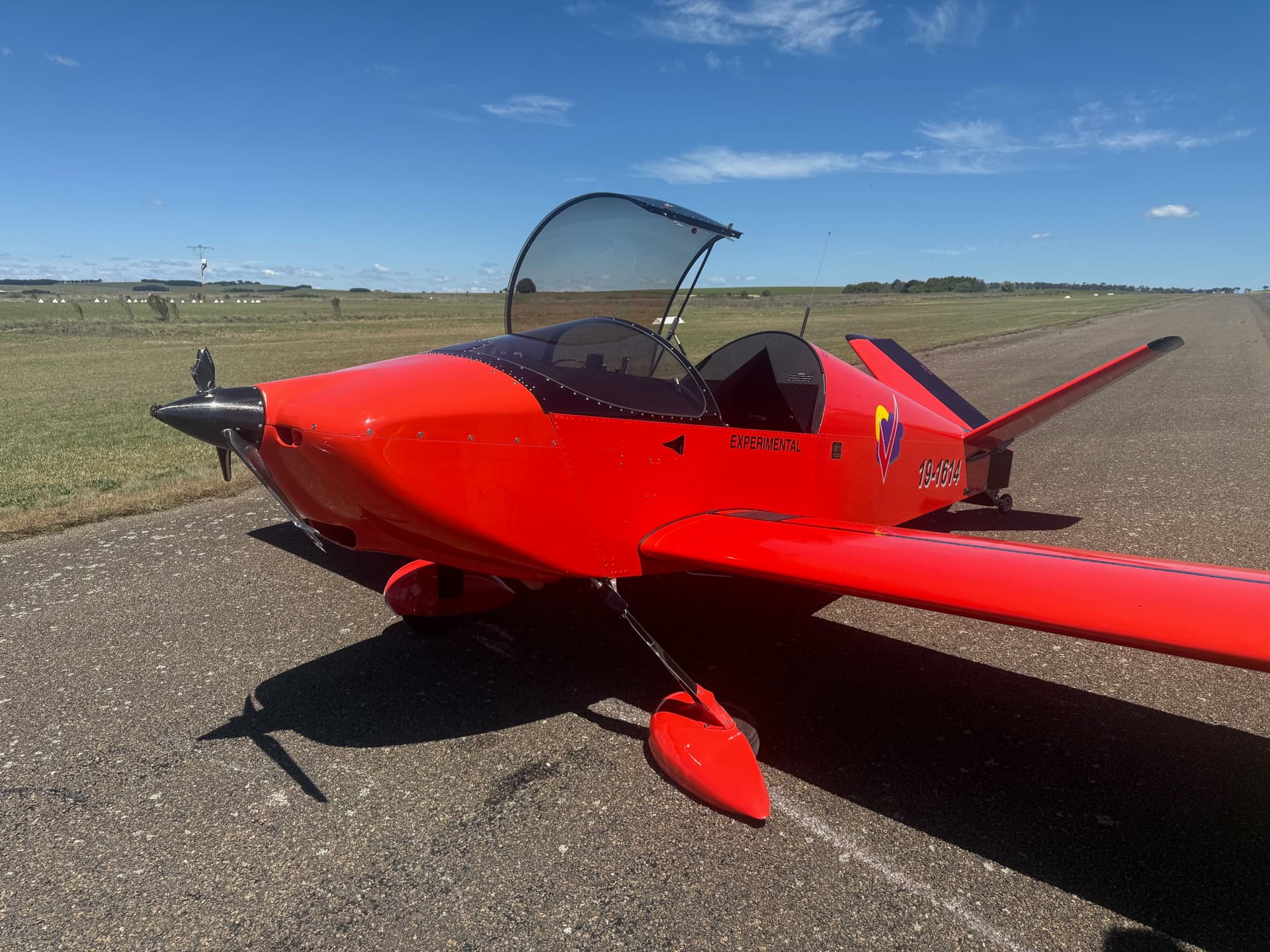
Waiex down, but hopefully not out

A pretty sad day of flying for me.

My Waiex has just 48 hours since new and a total of 36 landings, 13 landings since last annual.

To my mind, I have never had a hard or side drifted landing in this conventional geared Waiex yet, but somehow, the left wheel axle bolt sheared and caused the wheel to spin under the gear and become a wheel pant skate just to test my skills!

Australia has limited amounts of snowfall, so in this configuration with the newly acquired skate, this landing was always likely to end in tears…

This landing had 7KT winds at 30 degrees from the right, nothing too concerning. I touched down tail wheel first as I often do and the right main touched down slightly before the left followed by a slight bounce of about 1 foot but on the second touchdown of the mains there was a very aggressive shimmy which has never occurred on this aircraft before.
Soon after this, I felt some extra drag on the wheels and strange noises and at first, I thought I must have a flat tyre and at this stage wasn’t really sure which wheel it was.
I was feeding in right rudder to keep straight which told me it is the left wheel and then I started adding brake pressure followed by needing full right rudder and hard right braking which still had the aircraft tracking straight down the centerline.

Unfortunately, as the speed bled off, the rudder became less effective as the friction of the left wheel pant kissing the runway became greater and soon after I could see in slow motion my windshield view turning left and I thought about adding power but thought I lost enough speed to at least have me survive (still not sure if that would have helped or just set me up for a second try at slowing down).

As the inevitable ground loop developed, the nose started going over and the aircraft was almost 180 degrees turned around when the Propeller exploded right before my best seat in the house view!

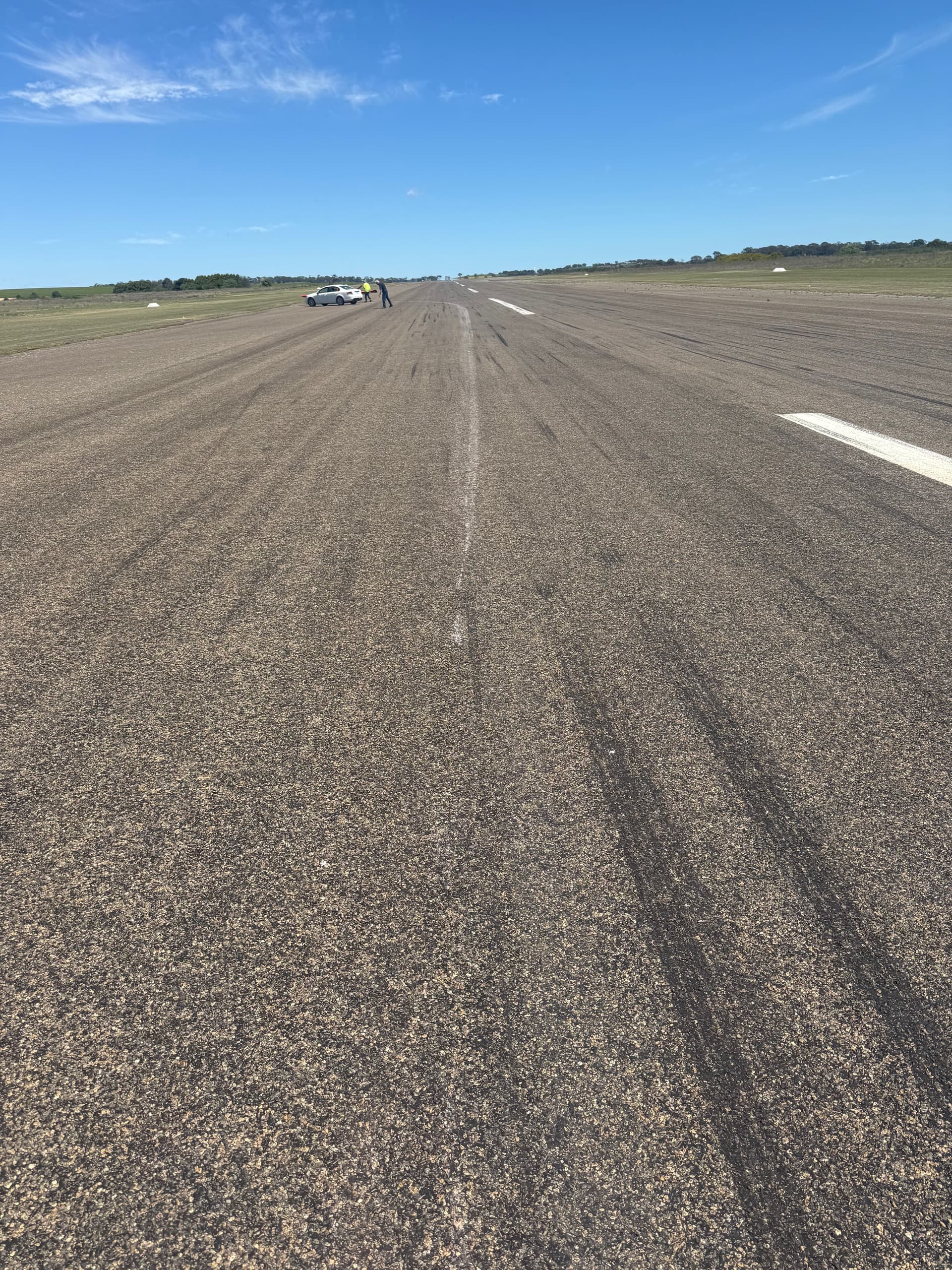
Hopefully the damage is limited to what is seen in the picture. Second picture is the wheel pant skid mark on the runway, looks like white powder not the black tyre marks.

Many thanks to the onlookers who heard and saw most of the incident and came running to my rescue and ultimately helped get it off the runway and back to the hanger on a dolly and towrope.
The ELT triggered during the event and good to know it works as I received a call from emergency services shortly after evacuating the aircraft.

Murray Parr
WXB 0015
Rotax 912ULS
First flight May 6 2023

Murray, sorry to hear of your misfortune. I’ve had a couple sad days of flying in my years and I can sympathize. I am sure you can fix it - it’s just time and money. There are worse things.

Thanks Bryan,
I am pretty upset about it although I try to make light of it. Haven’t stopped thinking about it since and keep wondering if there were any tricks up my piloting sleeve that could have saved the day although I feel it was about as best of an outcome possible. If I didn’t have the differential brakes, I think the nose over would have occurred at high speed instead, so I am glad I installed those.

I can’t wait to go back out and try to find what caused such an event on a fairly new aircraft. I will post a couple of other pictures of the sheared bolt that holds the axle in position.

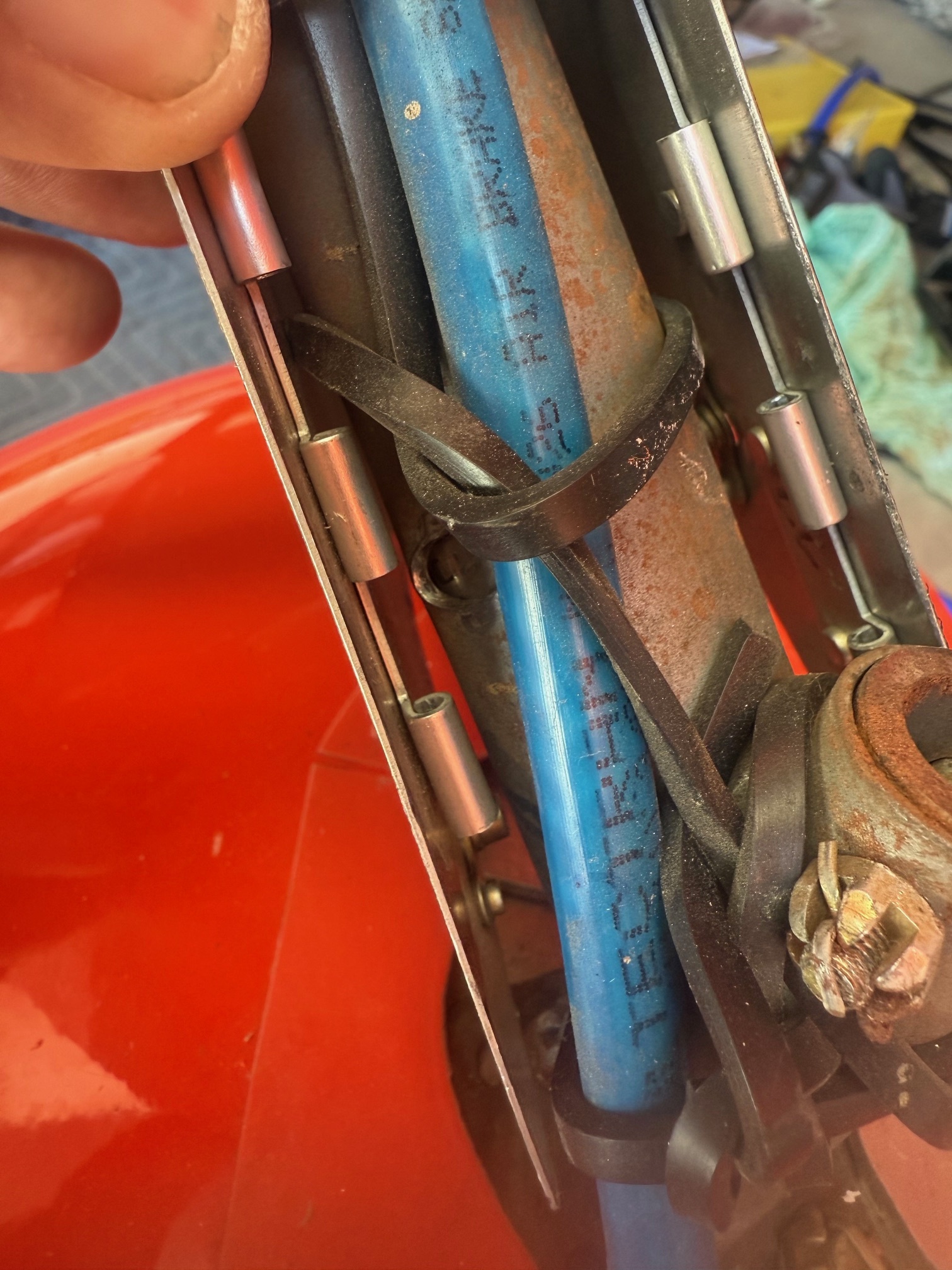
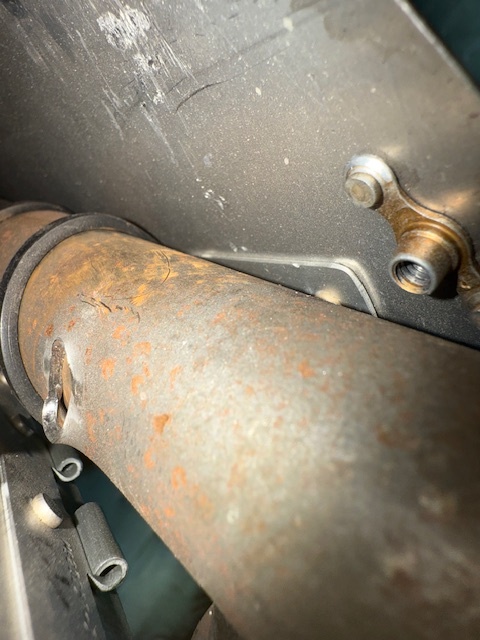
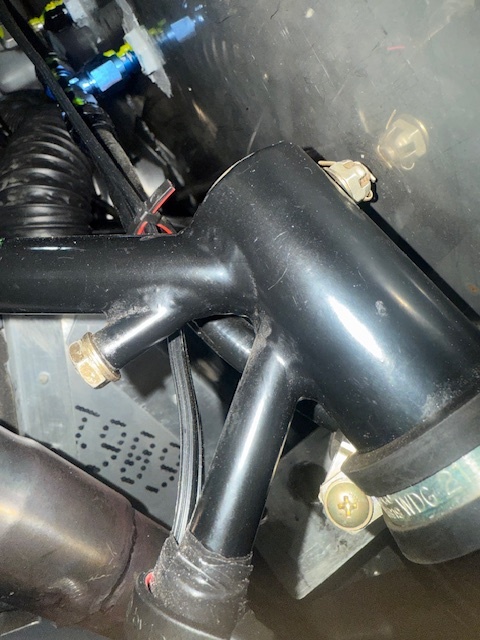
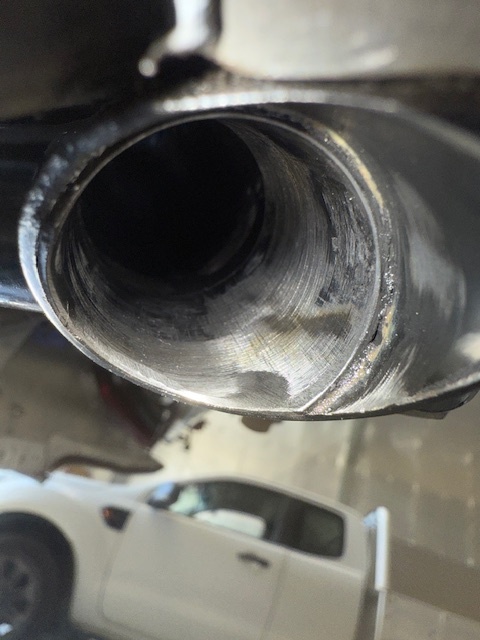
1st picture is of the slightly elongated axle tube. Note: This is a Tracey O’Brien axle but that part of the design is the same as standard.

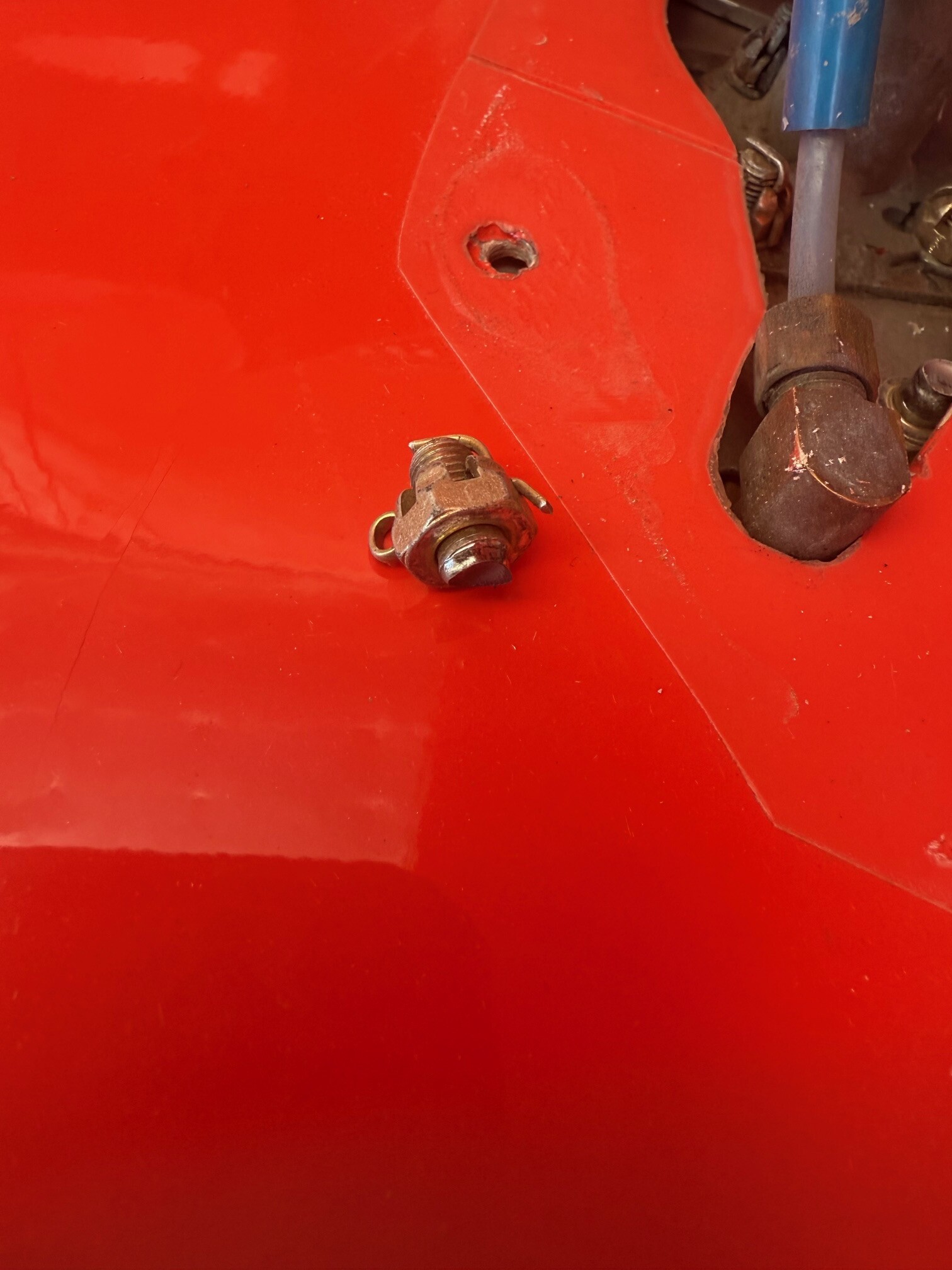
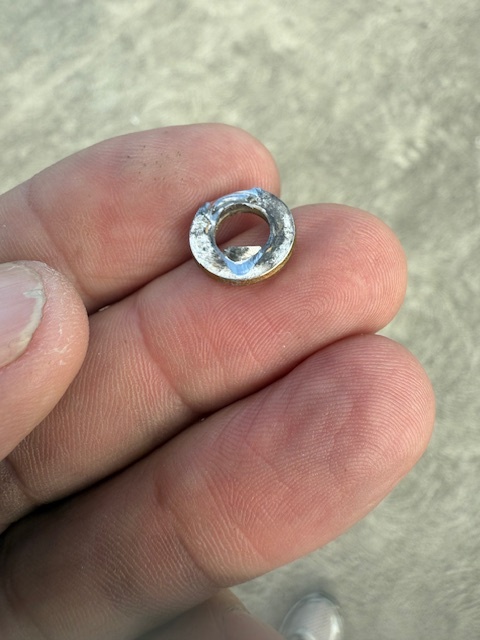
Second picture is of the nut with sheared bolt. Looks like a fresh brake with no evidence of progressive cracking. There is some even wear all around the bolt which should weaken it.

My annual inspection involves twisting it to see if any elongation is forming and then turning the bolt head to make sure there is continuity.

From now on, I will remove the bolts completely to inspect and even if they are good, might as well replace them. My biggest concern is whether they can make a year if I start landing more which is what I plan to do.

I think I will see if there is room for 2 bolts instead of one. kind of like having a backup if one fails.


I have the Sonex axles. They did not fit the gear legs as snugly as I would have liked, so I bonded them together with metlweld epoxy from Aircraft Spruce. Not sure how tight your TOB parts are, but the bond makes the job of the shear bolt much easier.

1 Like

Thanks for sharing your bad luck, Murray. I’m glad you’re okay and the airplane will live to fly again another day!

1 Like

Glad you are OK. Sorry about your beautiful Sonex. Its doesn’t seem like its out but I guess all that depends on the insurance situation.

1 Like

It’s been a while since I installed them, but if I remember correctly, both the Sonex and the O’Brien axle sleeves were what is considered a slip fit, certainly not an interference or press fit.
I am heading out to the airport today to try find any parts that may have been left on the runway and take a few more pictures of the marks on the runway. My insurance wants pictures of that in case the airport wants compensation for any damages to the runway surface (I already found the washers that were on the sheared bolt so that could mean both ends of the bolt sheared in the one event).

Murray Parr
WXB 0015
Rotax 912ULS
First flight May 6 2023
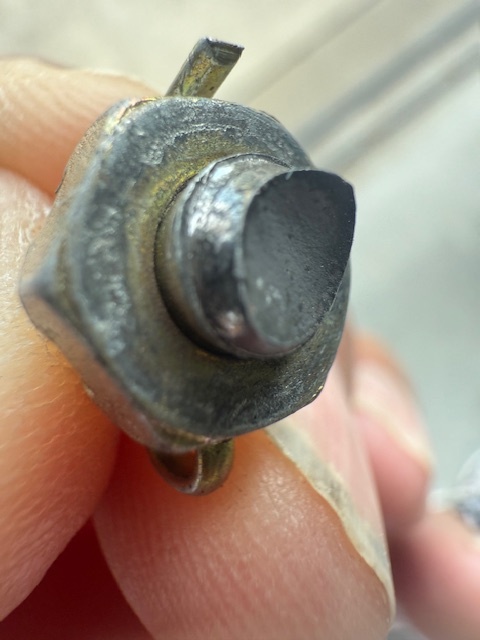
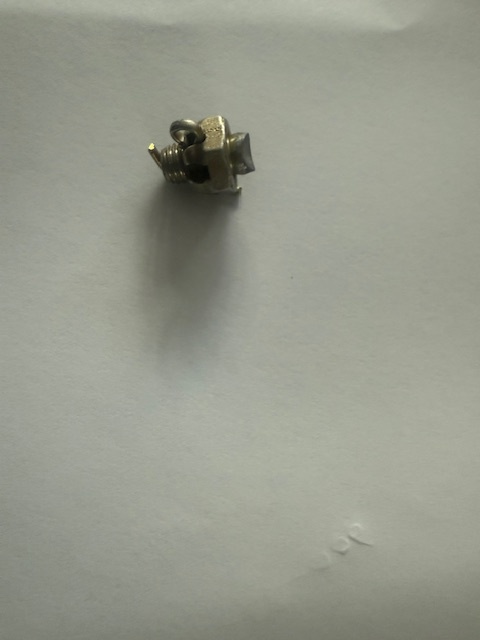
Found the smoking gun!

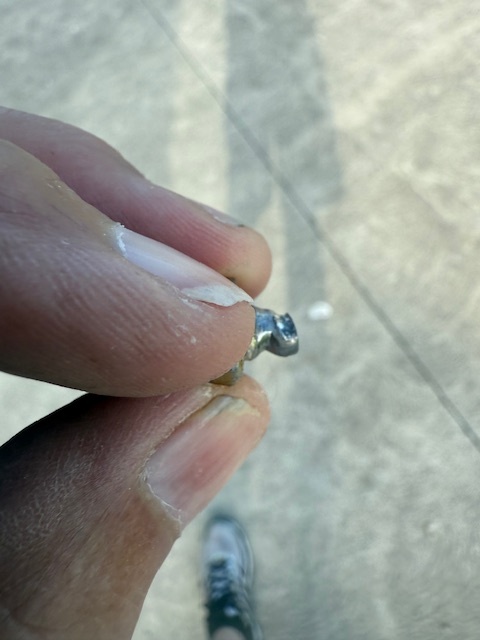
AN-4 bolt on the head side is worn as shown in picture. Only 36 landings to get to this point. I will have to look at options to make this a lot stronger than this. Otherwise, I will have to replace them every 10 to 15 landings or so…
Even then, I won’t be able to land this bird again without thinking this could happen again at any time.

I went through the drawings and can’t see anything different I should have done. I don’t get any shimmy as others have reported and don’t fly off grass except for 2 times. I am still flabbergasted as to how this wore out so quickly as other Sonex’s can go for hundreds of landings without this happening.


There seems to be motion between the parts as evidenced by the hole elongation. Were those bolts a tight fit? They should be. Also it looks like you may have had threads in the load bearing area, though it’s hard to tell from the pictures. Better to have the shank of the bolt clear the tube and use washers to allow the nut to tighten. Just some thoughts.

The shank was all the way through past the washer, if anything, the nut was close to running out of thread. The holes were originally tight. I tried twisting the axle and gear leg on the condition inspection last January and couldn’t move any of it which doesn’t seem right. There should have been play developing.

I think some of the elongation appears exaggerated as you can see the outward bulge from once the bolt broke the center section of the bolt must have forced the hole outward as it spun on the leg.

I have been trying to find what the Tracy O’Brien axle sleeves are made of; can anyone enlighten me with this? Some research suggests it could be Chrome moly but that could be just the axle.

If they are made of harder material than the Sonex sleeves, that could explain the rapid wear on the bolt.

I will reach out to Sonex in the near future to see what their thoughts are on this, my default setting is, it could have been something I did or didn’t do. I am not sure the reasoning behind the installation instructions stating tighten until snug then back off 1/4 turn.

I like the design of the upper gear leg bolt hole that has a sleeve for the bolt to go through, that should spread the load to a slightly broader area of the bolt shank, I am thinking of welding a short sleeve to both sides of the bolt hole on the axle sleeves and probably upsize the bolt to 5/16. Maybe even a second bolt closer to the end of the gear leg for redundancy if one fails.

I hate to see this, Murray. I’d like to think that my building tolerances are X-15 tight, but it was just me and a drill press. I’m just stating for reference that my landing total is around 1550 with only two sets of bolts. I switched “back in the day” from the stainless to cadmiums for the service bulletin. I’d have to check my logs to be exact.

Hopefully, this is not an AN hardware quality control issue.

Kip

YX0082

15 years flying now.

“Hopefully, this is not an AN hardware quality control issue.”

I’ve wondered that myself. Like Kip points out, I too changed from stainless to cadmium bolts as part of a SB for the landing gear. My Corvair Sonex is used on pavement and turf fields (recently flying Young Eagles) and I’ve haven’t had any issue with the landing gear. Keep in mind that my Corvair “Cleanex” Sonex has a bit more weight than most others also.

I’m really curious to learn what was the cause of this as I also have the TOB axels on the Sonex gear legs …

Dale
3.0 Corvair/Tailwheel

As the originator of the SB Sonex went public with all these years ago, I feel qualified to comment. The SB specified a change from stainless to cadmium AN-4 hardware: even with these the bolts kept on snapping with depressing regularity, only avoiding disaster by replacing them 4 times per annum. Clearly another approach was called for.

The solution was to ream out the top retaining holes in the gear legs and the engine mount to ø5/16in-8mm and replace the AN-4 hardware with phosphated ø5/16-8mm 12.9 grade capscrews. Torque these bolts close to limit- use high quality nuts that can really take the strain.

Then the plane was elevated from the ground in flight attitude with the axle stub ends on the gear legs just not touching a flat ground reference surface (no load on them): make absolutely 100% sure that the axles are secured with the correct toe-in as as specified in the plans. Replace the AN-4 hardware securing the stubs with 1/4 in 12.9 grade phosphated capscrews. Again, torque the living daylights out of them.

This was back in 2011 or so, some 1000 landings on both grass and tarmac since then: so far no issues.

Hi Murray, sorry to hear about this. One line you wrote stood out to me:

“My annual inspection involves twisting it to see if any elongation is forming and then turning the bolt head to make sure there is continuity.”

By twisting it you may have been scoring the bolt over time. When you put it all right make sure everything is deburred, try not to twist the bolt in (tap it in or draw it in with the nut) and then mark the bolt head and gear leg tube with witness paint so you can see if its spinning in its hole.

Another wrote about “torquing the living daylights out them.” I have no skin in the game but over-tightening bolts stretches them and weakens them. These bolts are working in shear, not tension. They don’t have to be tight, they have to be in correctly-drilled and prepared holes and prevented from coming out, just like the spar pins.

(I only pop in here occasionally, so I might not see follow-up questions or comments.)

Kerry Fores

(I’d change my Profile Name to my real name if I knew how.)

1 Like

Sorry for the delayed response and thankyou to all that replied.

I have a couple of videos that show clearly what we believe is the root cause of this but so far, I haven’t been able to download them to this platform, any advice on this is appreciated.

Turns out, the Tracy O’Brien axles have a slightly looser fit than the Sonex axles and that combined with me following the plans instructions and the SB of tighten until snug then back off 1/4 “Do not overtighten” was a mistake. Sonex is going to update this advice. Probably to torque to the lower recommended value of 40" lbs. but I think they are waiting on some engineering advice on this before changing anything.

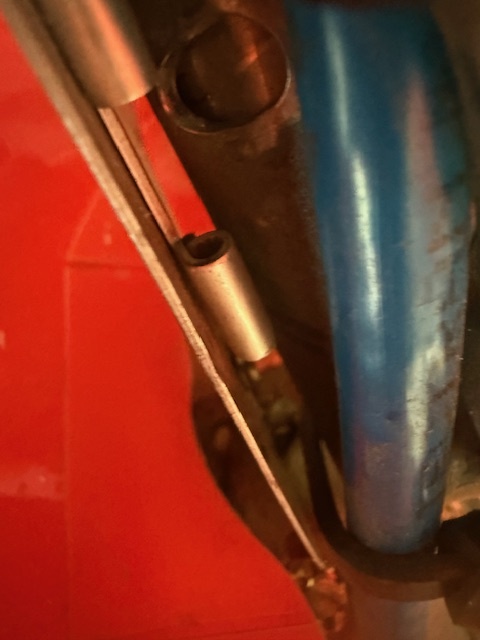
I see some of you have upsized the bolts to 5/16. This should work ok with the axle sleeves, but the gear legs have an extension tube as shown in this picture, which would be quite thin by the time you reamed it out to 5/16.

How has this worked out for those that have done this?

There was a lot of force happening during the landing run with the wheel dragging along. This picture shows the gear leg sleeve now oval shaped and lots pf play. the other side is still nice and tight.

Not all the damage was caused by the failure, some well-meaning assistant must have leant on the flap when we were rigging the Waiex up for the tow back to the hanger and bent the flap, I will have to stop looking as each time I do, I find something else wrong and the damage list is becoming quite extensive now.

Even the cowl, which I thought just had cosmetic damage is quite distorted and needs major surgery. The Rotax gearbox inspection showed significant forces had distorted the housing and the bill is mounting above 8000 Ausie dollars. But hey, it saved an $8000 crankshaft…

1 Like

Murray,

Here is an old thread:

On the wayback machine it’s on page 5 of the Sonex topic threads.