The big AeroCarb/AeroInjector thread

The big AeroCarb/AeroInjector thread

Posted: Mon Feb 23, 2015 11:06 pm

by rizzz

As suggested by the moderation in the “Flying over the Sierra Thread”, we should split off the AeroCarb/AeroInjector topic in its own thread given the subject regularly pops up in other threads.
So here it is, the big AeroCarb/AeroInjector thread.

I would very much like to hear from ALL people on this forum flying behind, or ever having flown behind an AeroCarb/AeroInjector, both POSITIVE AND NEGATIVE experiences/opinions.

I’ve attached a poll to the topic as well.

Personally I have not flown behind my AeroCarb so I’m not voting myself in the topic, however, I’ll quote my post from the other thread which pretty much explains where I stand on the subject:

I have an AeroCarb and I am very aware many people struggle to get it running right.
However, I also know there are many, many, many more who don’t have issues with it and they are usually much less vocal (busy flying probably).
I personally still like the simplicity of the setup and no other carb beats the AeroCarb on that, so I am going to try my AeroCarb and see how it goes.
But, I’m not going to put tens of hours into it though, what you save in simplicity in setup is lost in many hours fiddling with the thing trying to get it to run right.
If I can’t get it to run right following the instructions within a reasonable time frame, I’ll get a Rotec and turn the AeroCarb into an ashtray or something.


Re: The big AeroCarb/AeroInjector thread

Posted: Tue Feb 24, 2015 12:12 am

by SonexN76ET

Deleted


Re: The big AeroCarb/AeroInjector thread

Posted: Tue Feb 24, 2015 12:20 am

by N1906R

I have just over sixty hours on my jab 3300 with aerocarb and have no issues with it. It took four adjustments during the first five hours to get it adjusted. I have not had to readjust for summer or winter flying but I do see higher egt’s in colder weather due to running leaner. My fuel system is exaclty as described in the Jabiru engine installation manual with the exception of the the line from the fuel valve to the gascolator is steel braided teflon hose instead of the hard line.


Re: The big AeroCarb/AeroInjector thread

Posted: Tue Feb 24, 2015 9:55 am

by kmacht

Granted I only have about 10 hours behind my aerocarb but so far so good. I have only had to make two adjustments from the factory recomended initial setting. One was after the first flight when I found it needed to be a bit richer to keep the EGT’s down and a second adjustment when the weather turned cold. I did have an issue with the needle wanting to move when I tightened down the set screw but the factory provided a very simple solution that fixed the problem.

The complaints with the aerocarb that I have seen seem to be foucused on trying to get it to run a perfect mixture at all power and atlitude settings and not necessarily issues with it failing in flight or keeping the engine from starting. The simplicity of the aerocarb tends to make it so that it is a very reliable carb (once the engine starts it wants to keep running) but very hard to get setup so you don’t have to use the mixture when flying. Personally I set the carb just a bit on the rich side and then adjust as needed when flying by using the mixture knob. I imagine you would see some of the same behaviors of being too lean or too rich at different power settings in an old cessna if you put CHT and EGT digital readouts on all cylinders on those engines as well. It is just that we never had this type of technology back then so we blissfully flew around either burning more gas than needed or toasting our exhaust valves. If there is one thing the sonex has taught me it is what the mixture knob is for and how to use it.

Keith


Re: The big AeroCarb/AeroInjector thread

Posted: Tue Feb 24, 2015 11:45 am

by Onex107

My Onex 107 Tricycle has been flying 50 hours with the Aeroinjector and I have been working to get it tuned in most of that time. I started with the #2 needle, as delivered, and it worked as per the book setup for the first 20 hours. Then it went lean at the top end and I had to change up to the #2 1/2 needle. The problem with both needles was when the top end, wot, was adjusted for max rpm the idle was so rich I had to adjust the mixture almost to cutoff to get a smooth idle. Throw in a case of the burps and it was a handful to keep running.
Obviously, the #2 and #2 1/2 needles are not linier with the slide opening and adjusting in small increments was not working. I pulled the needle holder out and started measuring. I found that my needle holder had .025 play in the ball joint. That is nearly 1/2 turn of the 3/8 X 16 set screw. They are suggesting 1/8 of a turn, .0075 adjustments here. A new needle holder was made using a disc on the end instead of a ball so the play/clearance could be eliminated. That fixed one problem. Next was the needle taper. A builder in Florida suggested trying the #3 needle. Richer? Really? I did, and found that I could adjust for a perfect idle first, with a small amount of mixture adjustment left, and then work on wot with small adjustments. I’m not sure the quality control of the needles is that great. The overall length of my four needles varied .040 along with the position of the taper in relation to the needle holder. I couldn’t measure the taper it’s self. It’s important to mark the bottom of the needle with a file to accuratly start the first installation. A wide felt marker is not good enough. I, like the builder in Florida, find the #3 needle to be more linear with the slide opening than the “leaner” needles. When it is adjusted for a smooth idle there is enough left at the top end for the higher rpms. I think the variation in dimensional control of the needle holders and needles is the contributing problem with the varity of tuning frustrations we are having.


Re: The big AeroCarb/AeroInjector thread

Posted: Tue Feb 24, 2015 3:17 pm

by msedwards

I built ONEX 350NX and have 20 hrs on it so far. I took the aero-injector out of the box installed it as per- manual never touched the needle that came installed from the factory it performs just fine.
The only thing I’ve had to adjust is the idle stop, still playing with it to get set at 900- 1000 rpm.The other thing, I went with a bigger K-N airfilter after trying a K-N filter the same size as the paper
factory filter as i couldn’t get the 3000 RPM on climb-out.Same problem with the paper filter.With the bigger K-N I’m now getting the 3000 RPM on climb-out. So you can say I’m happy with the aero-injector.


Re: The big AeroCarb/AeroInjector thread

Posted: Tue Feb 24, 2015 5:23 pm

by tonyr

I have 40 hours on a Jabiru 2200 Sonex fitted with an earlier Aerocarb. It uses the lighter flex cable for pull open operation on the aerovee throttle quadrant. (current flex cable is a little thicker)
Mixture is a vernier control.
It took about 4 flights to get it adjusted where I was happy with it. It was too lean to begin with and has been progressively richened to keep EGTs under control. It could probably go another 1/8-1/4 turn richer. Idle is no problem at present… probably why it needs to be a bit richer!
At present on takeoff the fuel flow is about 21 litres per hour at 3100 rpm. The throttle often needs to be backed off a little if the EGTs get too high.
In cruise I have been leaning to 15-16 litres per hour at 2750-2850 rpm for around 100-105 Kts IAS.
Last weekend with OAT 30°C at 3500’ feet I had a couple of hiccups when leaned a little too much (about 15 litres per hour).
Richening a little solved that.
I have steel braided line throughout, with fire sleeve, an Usher gascolator and a Red Fuel cube transducer. The fuel drip tray below the carb and a heat shield around the red cube is covered with reflective heat shield. I also use a hot air box with a larger K&N filter.
A small NACA vent on the left hand cowl ports air to the lower corner where the air filter and gascolator sit. A larger opening under the gascolator with a small deflector helps pull that air out of the cowl past the unit.
I have used the hot air box on occasion even though its not technically required, just a bit of insurance on a long idle descent on a humid conditions.
The biggest problem I have is heat soak after sitting on the ground post flight.
It can take some judicious mixture work to get started again if its still hot under the bonnet.
Park brake on, throttle cracked a little more than usual, and push the mixture in whilst cranking usually gets it going.
All in all I am very happy with my setup.


Re: The big AeroCarb/AeroInjector thread

Posted: Tue Feb 24, 2015 6:37 pm

by sonex1374

Hey guys,

I put some thoughts down regarding this topic. It drags on for a while, so I apologize in advance for the length.

Jeff


I’ve tuned several AeroCarbs and AeroInjectors, both my own and others, and have formulated a few conclusions over time. First off, small things make a big difference. Because of this, it’ s very difficult to compare people’s experiences directly because their setups often contain numerous small differences that may be having major impacts on their ability to tune.

The list of “small things” that comes to mind includes:

  • Fuel system specifics (line routing, gascolator or filter, proximity of the fuel line to the exhaust pipes, location of the flow sensor). I think the best thing you can do is to simplify the routing as much as possible and keep flow rate as high as possible (i.e. reduce constrictions). Pay attention to the FWF instructions Sonex publishes (no high spots in line, no place for vapor to form or collect, consider ditching the gascolator). The fuel flow sensor location seems to cause trouble as well. I mount mine right after the tank shutoff valve and it reads perfectly and stays cool there, as opposed to mounting it close to the carb where it vibrates, heats up, and may collect vapor).

  • Cowling setup (size of inlets, “smoothness” of intake openings, size of the exhaust openings, extra openings like NACA vents, internal blast tubes, size of the oil cooler inlet) - the cowling specifics affect the airflow inside the cowl, which has a big impact on the carb itself. High or low pressure into the carb throat affects airflow into the engine, and thus mixture. A “hot bubble” that sits over the carb or fuel line can heat soak the line, create burps or change mixtures at random times. Too much pressure in the lower part of the cowl (i.e. extra inlets, oversized oil cooler inlet, or too small exhaust outlets) stifles cooling flow and messes up the carb (this is frustrating because it will tune fine on the ground but change tuning once in flight).

  • Air filter (size and type, clean vs dirty, even high vs low density altitude). Sonex recommends tuning without the filter. If you get it tuned right without a filter, then add the filter and things change, you probably need to change something to improve airflow thru the filter.

  • Needle selection (old brass needles that came with the early AeroCarbs vs the new SS needles, diameter of the needles, diameter of the orifice in the slide itself, “smoothness” of the taper cut into the needle). I’ve measured several old needles and some of them mic smaller than the newer SS needles. This will make tuning hard because a sloppy fit of the needle in the orifice will always allow fuel to flow around the perimeter of the needle itself, making the engine run rich at idle. The quality of the taper also matters - a rough “step” where the taper begins, milling ridges in the machined surface, or other “imperfections” will change how fuel flows through the carb. Don’t believe me? Take two needles of the same value and slightly modify one (sand or polish the surface, round over a corner or two, something seemingly small and innocent) and you’ll see that that needle will tune differently. The new AeroInjectors use a nylon (?) bushing insert at the orifice to provide a tighter more consistent fit around the needle. The carb is difficult to tune if the fit between the orifice and needle is “sloppy”, say from the wear of a few hundred hours run time and vibration.

  • Technique. Everyone has their preferred technique to tell whether their carb is running rich or lean, and it can vary quite a bit. You can’t go with just one or two indicators (like plug color, max RPM, black exhaust or smoke, EGT, EGT rise on leaning, or general feel of the engine), you need to consider multiple indicators and merge them all into a comprehensive assessment of where you are in the tuning range. Consider the case of being very rich. You go to WOT and see your EGT’s going over redline. You conclude that you are overly lean because of the high temps, and you richen even further. Had you confirmed with something else (leaned the mixture knob while at WOT, observed smoothness and max RPM while doing so), you might reach a different conclusion, like the excessively rich mixture is still burning in the exhaust manifold and that’s why the EGT’s are high.

Best thing to do while tuning is to play with the mixture knob at various throttle settings (idle, 1-2 mid-range settings, WOT) and see how the engine reacts. If you get overly lean the engine will cut out abruptly. If you can lean the knob by 50% and see the engine running better or no real visible change, you’re likely still rich. If the engine cuts out before you reach the 50% point, you might be close to the sweet-spot and have to proceed carefully.

The reason for this requires some visualization. The mixture lever is like a rotating ball valve. As the valve is rotated fuel flow is reduced, but not in a linear fashion. The first portion (0-25%) of the mixture throw has little effect on flow, and is somewhat linear in response. Then as the mixture is further rotated (25%-60%), it starts to choke the flow down in a somewhat linear in response. The last portion of the throw rapidly cuts off flow to almost nothing. It’s almost impossible to find the exact right amount of leaning when you are in the last portion of the mixture throw because it tends to go from OK-flow to not-enough with just the smallest change.

So here’s my abbreviated tuning method. Start with the recommended needle (#2.5 AeroVee, #3 Jabiru 3300). Inspect it carefully for manufacturing defects and how it fits into the orifice in the carb body. Make sure when you re-install it in the carb that you set it like the manual states (flat towards the engine, set screw in the proper location and tight). Lock the needle carrier with the set screw, and note whether the carrier “creeps” when you tighten the set screw (you have to watch the needle carefully to tell if it’s happening). Once all this is done, then install the carb onto the engine. Run the engine at idle or slightly higher rpm and lean with the mixture knob. It’s almost certainly rich, but note how much you have to lean the knob to get it running decently, and when the engine cuts out (ideally around the 75% point of the mixture knob throw, at slightly higher than idle rpm). Repeat this for a mid-rpm point and note the smooth-running point and cut-out point. You may need to lean slightly (1/8 turn) just to get to this point if you can still lean past 75% or so without cutting out). Only then try to run a high rpm or WOT. Got to WOT and then note the max rpm. Then lean the mixture knob and note the response (rpm increase, smoothness increase, or cut out point). It won’t take more than a few seconds to make these observations and determine if you are still rich at WOT. Adjust the needle by 1/8 turn (or less if you’re getting close) and try again. When you get to the point that you only need to lean by 25% or so before the engine starts to bog down or cut out, you’re getting close and might be ready to high-speed-taxi test / fly it to further assess. If at any point running at WOT that you can’t lean the engine slightly to improve things and smooth things out, you might be too lean already and need to re-assess. The final fine-tuning will come after a few test flights.

The AeroCarb / AeroInjector is a simple device, but you can’t expect it to be totally automatic. You trade the operational simplicity of a bing/zenith/marvel (where you don’t really touch it in flight) for the dirt-simple mechanics of the aerocarb and the ability to lean easily in flight. The aerocarb works with gravity flow, resists ice, is easy to mount on the engine and feed air into (no air box, carb heat, cobra head), and is inexpensive. Is it perfect? No. But it does work well if you understand it and eliminate potential problems before hand.


Re: The big AeroCarb/AeroInjector thread

Posted: Wed Feb 25, 2015 2:52 pm

by lpaaruule

Jeff,

One of the concerns I have with the aeroinjector is that even with all the research and experience you’ve had with it, your engine quit on your first flight(s) on short final. I haven’t watched your video recently, but I seem to remember you commenting that the engine stopping was not unexpected.

It would be great if you could explain why you thought that might happen, and how you corrected it before subsequent flights.

Right now I’m considering spending approx $1000 on a rotec TBI that I may not need in hopes of preventing such a thing. At this point it seems like a small price to pay for safey, and time spent…if time spent tuning a carb is valued in dollars.

Sorry if I’ve mis-stated the facts. I look forward to being set straight.

Paul


Re: The big AeroCarb/AeroInjector thread

Posted: Wed Feb 25, 2015 3:41 pm

by andrewp

Hi All,

I have a aerocarb on my Jab 3300. After initial flights, I did spend a quality weekend or two taking a new needle and following in the footsteps of others to shape it so that I have a good idle and that I don’t melt EGT wise at take off WOT. This step made all the difference for me. I also found I needed more travel out of my throttle quad to let enough fuel in mixture wise and I learned quite a lot through the process. Patience is a virtue.

Mine starts in cold weather and in warm weather no matter what. It is scary it starts so well. Once configured, it is just sort of works for me. I do have to richen/lean a little across summer and winter and that is fine.

I think you just need to accept its strength and weaknesses, but it seems to work fine for me.

Cheers,

Andrew
#618

Re: The big AeroCarb/AeroInjector thread

Posted: Thu Feb 26, 2015 10:10 am

by sonex1374

Paul,

My engine stopping on the first flight was a non-event. I had the idle stop screw set a little too low and the rpm was just ticking over. At the really low rpm settings the engine has a tendency to quit, so the solution was to slightly raise the idle speed (approx 1/4 turn on the idle stop screw). Coming down final the engine was fine until I pulled the throttle all the way back, and by that point I was looking good on the landing and the fact that the prop was slowing down and getting ready to stop wasn’t really a concern, so I just let go to see what ultimately would happen. A quick adjustment (or two) solved that, and my idle speed is still about 800 rpm, slow enough for taxi and final.


Re: The big AeroCarb/AeroInjector thread

Posted: Thu Feb 26, 2015 10:54 am

by lpaaruule

Jeff,

Thanks for the clarification. Knowing that you were in control of the engine basically until touchdown makes me feel better.

On the other hand I’ve bouced landings at the last second due to gusts while doing wheel landings in a Citabria, and it was a good thing I had full power available.

I’m trying to keep an open mind regarding the aeroinjector, and knowing that I’m basing my decision on facts is a great help.


Re: The big AeroCarb/AeroInjector thread

Posted: Thu Feb 26, 2015 12:00 pm

by kmacht

If you set the idle too low on an aerovee the engine will quit no matter what carb is installed. I found that my engine didn’t like to idle below 1000 rpm until after I had 5 or so flight hours on it. I could easily taxi, stop, and land with it set at 1200 if needed. I think you will find the idle issue for the first few hours true for most aerovee owners.

Keith


Re: The big AeroCarb/AeroInjector thread

Posted: Thu Feb 26, 2015 12:51 pm

by SvingenB

I am confused reading this. I also read people readjusting it for summer/winter.

In a normal carb (Cessna for instance), you keep it full reach, then lean when needed (in cruise, when taxing for longer periods and so on). Does the aerocarb behave differently?


Re: The big AeroCarb/AeroInjector thread

Posted: Thu Feb 26, 2015 2:43 pm

by radfordc

SvingenB wrote:I am confused reading this. I also read people readjusting it for summer/winter.

In a normal carb (Cessna for instance), you keep it full reach, then lean when needed (in cruise, when taxing for longer periods and so on). Does the aerocarb behave differently?

No. You start/warmup at full rich and takeoff/climb at full rich. Lean as needed in normal flight. Lean as needed at idle/low power after warmup.

I didn’t readjust between summer/winter. In winter my EGTs were slightly higher…but my CHTs were lower due to cold OATs.


Re: The big AeroCarb/AeroInjector thread

Posted: Thu Feb 26, 2015 5:08 pm

by Denny

I have 64 hours on a conventional gear Sonex with the Aerocarb on a Jabiru 3300. It ran fine on the first start but would balk during the last 1/4” up to full throttle. After a lot of needle changes I discovered the mixture arm angle was too small which prevented full fuel flow. I also found the air filter supplied by Sonex was too restrictive. After changing to a K&N air filter and a properly adjusting the mixture arm I was able to get full throttle. The next mistake I made was assuming I should be able to set it for optimal mixture throughout the range from idle to wide open throttle. Yes, I even reshaped some needles. I had a push button style mixture control which was very difficult to fine tune. After changing to a vernier style mixture control and setting the needle for best full throttle at full rich mixture life has been good.

I can now climb several thousand feet at full throttle with perfect EGT’s and CHT’s. For cruise I pull the mixture until the RPM’s increase and then turn the vernier knob to move the EGT’s into the desired range (I like 600 to 640º C). This keeps CHT’s in the 95 to 125º C range. If I turn too far and the EGT’'s get too high (680º C) the engine will miss a beat and I turn out the vernier half a turn. For aerobatics I leave the mixture at full rich to accommodate repeated quick changes from idle to wide open throttle. For a one hour flight: four thousand foot climb at wide open throttle, cruise at 130 mph, 15 minutes of aerobatics, I burn 4.1 to 4.4 gallons of 100LL.

This is within 10% of the fuel burn a saw on my 65 hp Baby Ace for the same one hour flight with a 70 mph cruise. The Jabiru 3300 with Aerocarb is powerful, efficient, runs cool, and smooth.

Best Regards,

Denny
#879


Re: The big AeroCarb/AeroInjector thread

Posted: Thu Feb 26, 2015 7:42 pm

by bakfly

Hi All
I have the AeroInjector on my Aerovee 2.1. For the first 10hrs or so with needle #2, I was not able to adjust the needle to run it correctly for WOT and idling. When it was running ok WOT it was not idling properly. Sonex advice me to change to #2.5 needle. This make running on WOT much to rich while it idled ok. After changing back to needle #2 from 2.5, the idling problem was really bad. The mixer control has to be pulled out almost until the fuel was almost totally cut off.
Leaning the needle didn’t help and making the Engine running to hot.
Due to desperation I decided to measure the 1, 2, 2.5 and #3 needles slope high at 5mm intervals, length of slope from the tip and the needles diameter.
I came to an interesting conclusion.: the slope of needle #2 and 2.5 are the same until about halve way from the tip. I was puzzled why the engine did not idle properly with needle #2 and did idle well with #2.5.
After measuring the diameter with a micrometer I found the problem. The diameter of the #2 needle was 0.05 mm smaller than #2.5.
Needle #2 is 3.14mm while needle #2.5 is 3.19mm. That means on idle, fuel is leaking passed the needle and make it rich without be able to lean.
After putting a new #2 3.19mm needle in the AeroInjector and after some adjustments it is like a different Engine.
The engine has now done more than 30hrs and it is running beautifully on Idle and WOT. I only lean the mixer control out during cruise to get better fuel economy. I am now very happy with the Aerovee and the Injector.

Cheers,

Peter.
Sonex #1430 Aerovee 2.1


Re: The big AeroCarb/AeroInjector thread

Posted: Fri Feb 27, 2015 10:12 am

by jerryhain

Has anyone tried using a wideband O2 sensor to help them sort out their carb? I use it to tune carburetors on cars all the time. Set the idle mixture for 14.7 and the power valve/secondaries up to the 12s to make more power. I can get any carbureted car past emissions if I can get the idle set to 14.7. I’d be very interested in knowing what an engine that’s already set up correctly and runs well is reading when it’s lean of peak.
I’m going to the workshop next weekend so I might ask about it while I am there.


Re: The big AeroCarb/AeroInjector thread

Posted: Fri Feb 27, 2015 6:46 pm

by lpaaruule

I second that question about the O2 sensor. I had thought about setting up one myself. I used to work at a place that would use an ETAS Lambda meter ( http://www.etas.com/en/products/es63x.php ) for the wide range sensors (also called linear O2 sensors).

This guy is tuning his turbo Jabiru with something like the ETAS: https://www.youtube.com/watch?v=lAnAx9x9Dng

I’ve also seen much cheaper DIY versions, and automotive kits.


Re: The big AeroCarb/AeroInjector thread

Posted: Fri Feb 27, 2015 7:02 pm

by rizzz

Hmm this is very interesting.
Given from the results of the poll so far, most are happy with their AeroCarb but any tools/methods that help with tuning it would be of great value.

Re: The big AeroCarb/AeroInjector thread

Posted: Sat Feb 28, 2015 7:09 pm

by nwawingman

I have been very happy with the performance of my AeroInjector. I will admit it took some time to get it adjusted correctly, but once it was dialed in, I have not had to mess with it. Starts good and runs the same every time I go fly. I have it configure to where it is on the rich side if my mixture is pushed in all the way. I normally take off with it pulled out about 1/4 of an inch or so. I normally taxi with it pulled out about an inch to help keep the plugs from the possibility of foiling. The best advice I could give for making the adjustment is to follow the instructions in the manual, take your time, and expect that you will be making multiple adjustment before you will get it right. There was times I thought I was never going to get right. Sometimes the best thing to do was just call it a night and try again tomorrow. I have had to adjust my AeroInjector twice now. Once when it was first installed and a second time when I replaced my solid throttle cable to the new heavier stranded cable Sonex now offers. Both time it took some time. There is a very small window of adjustment you have to hit so small adjustments are key. You know you are really close when it will idle at 1200 rpm and take throttle smoothly. If it won’t take throttle smoothly and you can’t seem to get it just start over by setting the needle back at the starting point like described in the manual. This seemed to help me the most. My AeroVee was started the first time without any adjustment being made to the AeroInjector right out of the box. It ran well enough for the first start surprisingly. Then the fun of getting dialed in began. Just take patience. Also, I would also like to recommend that you do full power run with the cowling on and the tail down and also at level attitude before you fly to verify your mixture settings.


Re: The big AeroCarb/AeroInjector thread

Posted: Sun Mar 01, 2015 9:35 pm

by fastj22

Mike Neidenthal is almost ready for first flight. We have been adjusting his first generation Aerocarb for the last few weeks. At first we found the original owner had installed the needle 90 degrees off. After fixing that, we still couldn’t get the engine to run through the entire throttle range. Installing the #3 needle helped. Jeff Schultz helped us a lot, he really knows the Aerocarb!. We had trouble keeping the engine running mid range to idle unless we aggressively leaned. Today, Mike did a simple ¼ turn lean on the needle, and the engine worked great. Ran full rich through the throttle range, and even better when leaned to the specific throttle setting. A couple of high speed taxies confirmed the engine is ready for first flight. The groove is narrow and sometimes difficult to find, but when you find it, the Aerocarb works very well. Even the older style.


Re: The big AeroCarb/AeroInjector thread

Posted: Mon Mar 09, 2015 2:35 pm

by XenosN42

Would like to throw my 2-cents in. Today I test ran my AeroVee/AeroCarb powered OneX engine for the first time. I have some experience since I also have an AeroVee in my current XENOS and a few months ago I helped a local builder tune his AeroCarb. Therefore, my experience today may not be typical.

The engine and AeroCarb ran PERFECTLY the first time! All I did was to follow the AeroCarb manual to the letter when I set it up. The engine took throttle smoothly, developed 3050 static RPM, and ran with no change in RPM when I turned off the primary & secondary ignition systems. It even idled fairly well around 900 RPM. Beyond the numbers the engine just sounds good. In some ways I think it ran better than my XENOS AeroVee.

Just my one off experience so take it for what it’s worth. However, word to the wise: Read, re-read and follow the manual. :idea:

– Michael
N42XE; XENOS flying 4 years
N169XE; OneX first flight soon


Re: The big AeroCarb/AeroInjector thread

Posted: Sat Sep 12, 2015 4:53 pm

by sx1094

What damage does all this ground running at WOT due to a new engine that is not broke in to get this AeroCarb adjusted? Sad this thing is so difficult. Because of the different results by different builders, the quality control of this unit must be lacking.


Re: The big AeroCarb/AeroInjector thread

Posted: Sat Sep 12, 2015 10:24 pm

by mike.smith

sx1094 wrote:What damage does all this ground running at WOT due to a new engine that is not broke in to get this AeroCarb adjusted? Sad this thing is so difficult. Because of the different results by different builders, the quality control of this unit must be lacking.

It’s not difficult, but you can’t get it adjusted running on the ground. You’ve got to be in the air looking at all the numbers, and looking at fuel burn. You should not make a habit of running the plane WOT on the ground. Yes, you need to get it to idle properly and to do the initial WOT run-ups (tied down) to make sure it’s safe to fly, but beyond that you aren’t going to get it dialed in on the ground. My experience has been that engine temps and fuel burn are going to give you the information you need. For the AeroVee, if fuel burn is below 4gph you are way too lean. Much over 5gph and you are too rich. EGTs are good for trends, but don’t have much to do with engine health at any given moment. It’s the CHTs you need to manage, and you need to be in the air to see what’s going on there. IMHO you should not be comfortable with 400 F CHTs even during break in. Too hot. If you have to run rich during break in to keep temps down, then do it. You can always dial it back later for better fuel burn. I currently average 4.4 gph and CHTs run 290 (#2) to 340 or 350 most of the time. Climb out on a hot day, #3 cylinder may hit 390 for a brief time. If it starts to climb past that I push the nose down and even throttle back a bit if I need to. 400 F CHTs are not acceptable to me.


Re: The big AeroCarb/AeroInjector thread

Posted: Sun Sep 13, 2015 9:21 am

by SonexN76ET

I will pick this up where Mike left off and add my two cents to the ground running portion of the adjustments. Except for adjusting the timing based on performance in the air I had to do most of my other adjustments based on ground runs. My AeroInjector mixture had a very narrow range of where it would run well. A couple of times after a test flight test I would try an adjustment of perhaps 1/16th of a turn on the needle. I would ground run to test that to ensure it was safe to fly.

You do have to do a significant amount of carefulground running to ensure the settings are safe to take the plane up in the air. I scarred the hell out of myself trying to take off with a too rich mixture and had the engine start coughing, sputtering and loosing power and had to abort my takeoff while 50 feet in the air. Another time I set my mixture too lean and had to land immediately due to high EGT and CHT temps and the engine starting to missfire. This is not a reflection on the AeroInjector but rather on me not knowing exactly what I was doing. Tuning your engine is not something to take lightly. This is one area where you need to exercise caution.

For ground tests and adjustments you need to make sure you do not overheat your engine. You can maybe only get three relatively short runs in before you need to let the engine cool down completely.

Make sure you tie down the tail and block the wheels. Sweep the area in front of, below, and around the propeller to remove stones, gravel, and other FOD from tearing up your propeller.

You need to idle the engine to let it warm up to operating temperature.

Follow the Sonex instructions on tuning

Make sure at full rich your EGTs do not exceed 1300. Better not to have them exceed 1250. This is in steady full throttle ground runs. Pulling back the mixture to lean peak should raise the EGT by the spread recommend by Sonex. If I recall correctly this should be an increase of 90 degrees. Check your manual for the correct number.

On a new engine your CHT will rise quickly during ground runs. Do not exceed the redline of 450 degrees. As soon as your CHT goes above 400 pull the throttle back, let the engine cool down a bit then shut her down and let her cool off while you systematically make your adjustments in very small increments.

Above all else, carefully follow the ArroInjector and Aerovee manuals and be safe. Make sure you read and understand the manual and pay attention to every single detail!!!

There are many interrelated items in the tuning process besides mixture and idle. Your timing needs to be spot on. Your valves need to be properly adjusted with the correct gap. Your valve timing also needs to have been done correctly when you assembled the engine. Your fuel flow needs to be tested to ensure it is sufficient. Your air filter needs to be clean and uncontaminated by engine oil.

Have a systematic plan for each engine ground run. Record your EGT and CHT readings. Keep the ground runs in the green temp range. Be safe. Follow the AeroInjector manual.

These same items for the most part apply as well to the Rotec TBI and most other fuel delivery systems.

Good luck!

Jake


Re: The big AeroCarb/AeroInjector thread

Posted: Sun Sep 13, 2015 12:49 pm

by sx1094

Has anybody tried to use a lubricant on the slider inside the AeroCarb to help prevent sticking? Thanks


Re: The big AeroCarb/AeroInjector thread

Posted: Sun Sep 13, 2015 1:22 pm

by Fastcapy

-Removed-


Re: The big AeroCarb/AeroInjector thread

Posted: Sun Sep 13, 2015 3:37 pm

by mike.smith

sx1094 wrote:Has anybody tried to use a lubricant on the slider inside the AeroCarb to help prevent sticking? Thanks

That would not be advisable. Any lubricant will only pick up grit and make things worse. When my AI was sticking it was 100% because of the routing of my cables. The route had two bends that were very shallow, but that was at least one bend too many. Once I ran the cables in a single arc to the AI it was as smooth as glass. Here is my Kitlog page:

http://www.mykitlog.com/users/display_l … 250&row=18
http://www.mykitlog.com/users/display_l … 251&row=17
The center photo here is the money shot:
http://www.mykitlog.com/users/display_l … 253&row=16


Re: The big AeroCarb/AeroInjector thread

Posted: Mon Sep 14, 2015 2:17 am

by 142YX

I voted for the last option because it was the only choice for someone who isn’t running the Aeroinjector after trying it… but I don’t like the wording and wish there were one more option. I would describe my opinion as:

“The AeroCarb/AeroInjector is not the right choice for my mission and have chosen to go a different rout.”

I don’t hate the AeroInjector and think the wording of that option is just too strong… but I have decided not to go with it.

I flew Waiex #142 with an AeroInjector twice; on my first two flights. To keep a long story short, I had two issues with my setup:
1-I could not develop full power
2-I did notice burps and power hesitations

For that reason I am converting over to a Rotec TBI MKII, with a pressurized fuel system. If my mission was different; say only local flights in part of the country where the seasonal weather changes were not that significant and I wasn’t interested in tweaking performance, the AeroInjector may be the carb for me. But the reality of my mission is that I need the TBI to perform reliably at sea level and 8000 DA elevations on a regular basis - on the same day, I live in one of the hottest, most miserable climate areas of the country, and yet hangar the airplane where it snows during the winter, and I don’t particularly find the adjustments to the AeroInjector to an easy nor a pleasant job and don’t want to do it multiple times per year.

For the more detailed version of the story:

I really like the simplicity of the AeroInjector, and had high hopes that I would get it to run my Jabiru 3300 well. The initial setup during ground runs prior to first flight seemed too easy – I just threw the #3 needle in there and followed the instructions in the manual, and the engine lit up and came to life without issue on the first try. It would idle quite well, and I had no indication that the engine wanted to do anything other than continue running between 700-1000 rpm. I was able to achieve the specified ground static RPM (I got somewhere between 2900 and 3000 RPM on the ground), and response to the fastest throttle inputs I could give it seemed smooth and hesitation free. “Hard idle” throws after full throttle runs seemed smooth as well. This was all on the initial setting! The one gripe I had during this phase was that I was not able to get it set to hold a good idle RPM tolerance with the idle screw… when I thought I had it set perfectly to about 800-850, it would tend to fluctuate by about 150 RPM or so despite my best efforts, but this didn’t seem that bad. I did note that the stated procedure in the manual to “set so that full rich produces 90-100 F lower than peak EGT temps at full throttle” was an impossible task to do on the ground, as the Jabiru would hit its max ground running CHT temp limit within about 15 seconds of full power application… and the EGT’s had not settled out by that point – so I could never really perform this test. I tried it twice to no avail, and also tried a build up approach of trying to get something out of half throttle, ¾ throttle etc; but then got too worried about damaging something and thought it best to just see how it ran in the air and get the data point then. It was running, and refused to quit no matter what I did to it, so I thought it was time to go fly.

On first flight, my initial climb rate was much less than I thought it should have been, only about 800 fpm. I quickly realized that the source of that issue was from the lack of RPM that I was developing, only about 2800 or so and definitely less than I had been able to achieve statically on the ground only a few days prior which I found odd. I elected to continue the flight, as the engine was still running smooth and again, didn’t feel like it was about to die at all. Once I got to altitude after my first climb out I tried the mixture knob, and sure enough as I pulled it back the RPM did increase, but EGT temps went screaming up through the roof so I stopped and pushed it back in. I continued the rest of the flight like that and everything went fine, temps stayed in the green, had no indication that the engine was about to quit (even on final when I pulled hard idle), but I never did get to full power.

I killed one weekend after that flight trying to adjust the AeroInjector. It was apparent from the rise in EGT, fuel flow numbers (compared to the “typical” values in the Jab manual), and lack of power that on first flight that I was running much too rich. As soon as I tried to adjust for a leaner setting, the engine simply wouldn’t run. I tried these adjustments several times, and for the most part got very consistent results: 1/8 of a turn appeared to make no change, and after ¼ of a turn (lean) the engine would not start at idle like it used to. I could start it at, say 1/3rd ish throttle but it would immediately die when brought back to idle. It was disconcerting to me that the adjustment was this sensitive, because of the slop (free-play) in the needle setting is easily 1/8th of a turn’s worth (if not more). It is possible that I was not as precise as I thought with my adjustments during tightening, however I consider myself to be reasonably mechanically inclined and tried my best not to have it drift while tightening. After 10 hours of work, I ended up with a setting almost where I originally was to begin with. I tried to be a tad on the lean side (somewhere between 1/16th and 1/8th leaner, maybe). The thought I had walking away from this exercise was that if it truly was this sensitive and finicky, maybe I would get lucky and nail it – but I certainly didn’t want to have to do this on a regular basis. I was also a bit disgruntled because I had just put 15-20 or so startup cycles on my brand new, not broken in $19k engine in an attempt to get something that would let me develop full power… which I needed to break in the engine!


All of the fuel flow data from the first flight. The black line being to the left of the red line indicates that my fuel flow was higher than what Jabiru defines as “typical”.

On flight two I saw largely no improvement in the amount of power that I could develop. Temps were still in the green, but as soon as I tried to lean out the mixture EGT’s again went soaring above the limits almost immediately, the engine began to run rough, and I wasn’t close to the RPM that I was hoping for. On this flight I also experienced my first “Burps”, which seemed to happen randomly on several occasions. In addition there was at least one time where I advanced the throttle in flight and got a very sluggish response (first time I had experienced that). It was a good deal warmer (at least 20 F) on the day of flight 2 compared to flight 1 which probably contributed to vapor bubbles forming… but I have a high quality, very insulated, continuously up-sloping, short-as-possible fuel line running directly from the gascolator to the AeroInjector, so the only thing I could probably do to make it any better would be to blast tube or remove the gascolator. The burps weren’t bad, didn’t feel like the engine was about to die… but it did put thoughts in my head like “well at least I am right over the field right now”. I also live in a mountainous area (Mojave, CA) and will frequently find myself out of glide range to an airport and don’t want to put myself in the situation where those thoughts come into my head – if I can avoid it.


Shown here is the leaning out experiment that I performed on flight #2. As the data shows, EGT’s increase by approximately 200F, go over limits, without much gain in RPM (only about ~75). The large RPM drop is what I attribute to roughness, well before the engine developed full power.

Somewhat unrelated to all of this is the fact that I also haven’t passed a fuel-flow test on the ground yet. The Jab needs 10 GPH and the thumb rule states 1.5 times the max burn rate of the engine is what you should have. I can only get 12 GPH at about half fuel, and it drops off to about 9.5 GPH on the last gallon or so. My fuel system is: TANK - BALL VALVE - RED CUBE - 3/8” HARD LINE – GASCOLATOR - 3/8” FLEX LINE – AEROINJECTOR. Pretty simple. I could remove the red cube fuel flow transducer and maybe the flow under gravity feed alone would improve enough to pass this test – but I am not willing to do that because I nerd out on flight test data and I like the situational feedback that a fuel flow indication provides me in flight. In order to mitigate the burps, and provide the fuel flow the Jab needs for full power in any situation, my only options are to nix the gascolator AND red cube (and hope for the best), or to add a fuel pump. I don’t want to see what happens when I feed the AeroInjector with an unregulated fuel pump… and by the time I add a regulator? Why not just go with the Rotec? By that point I have destroyed the AeroInjector’s main advantage of being the “simplest” solution.

I have read almost unanimous reports from everyone who has run both that allude to the Rotec TBI bringing high EGT’s under control. Best theory I have right now would be do the inarguably better fuel atomization that the Rotec gives over the AeroInjector providing a more efficient charge for the engine to burn quickly in the cylinders, and not as it is leaving the exhaust valve and passing the EGT probes. But who knows. If it works, I’ll be happy.

Right now I feel painted into a 4 dimensional corner of being not able to lean the needle due to inconsistent running at the low end, therefor being quite rich at the high end and not being able to lean out due to EGT concerns and/or rough running, seeing evidence of vapor form in the fuel lines and not being willing to remove the only “unnecessary” restriction in my flow path to get the gravity feed to work. Add to this the concern of screwing up my brand new engine for not breaking it in properly as I am two flights deep and have not been able to develop full power yet. Each one of these concerns points me in the direction of a different fuel system setup, for which I am now one week into the modification process.

The new fuel system will be:
TANK – BALL VALVE – 40 MICRON FILTER – 3/8” HARD LINE – GASCOLATOR – 3/8” FLEX LINE – ELECTRIC PUMP - 3/8” FLEX LINE – ENGINE PUMP - 3/8” FLEX LINE – RED CUBE – ROTEC TBI MKII

My optimism is high, but I will report back with the results good or bad.

Re: The big AeroCarb/AeroInjector thread

Posted: Mon Sep 14, 2015 10:32 am

by Onex107

Mike, I have been there with my AeroInjector also. I notice in your testing you don’t consider air intake. I found my problem for not having full power at WOT to be restricted air, not fuel flow, due to an air filter I consider too small for that volume of air, especially if it has a little oil on it. Try it with the filter removed. Adjusting the needle won’t change that. Also, the play in the needle holder was nearly 1/2 turn. The needle is free to move until you tighten that ball joint by bending or shims.


Re: The big AeroCarb/AeroInjector thread

Posted: Mon Sep 14, 2015 11:25 am

by SonexN76ET

142YX,

It looks like you have had to deal with a number of the same issues that I did on my first couple of flights. For many of these same issues I decided to go with the Rotec TBI Mk II also.

I enjoyed watching your first flight video. In the video two things struck me as possible issues that could have compounded your AirInjector tuning difficulties:

  1. The AeroInjector will not work properly with pressurized or ram air. As air pressure builds up the AeroInjector leans out erratically. Is the intake on the bottom of your cowling pressurizing the air to the AeroInjector?

  2. Sonex states you MUST have your wheel pants and gear leg fairings on when you are breaking in your engine. On the small Sonex airframe the un faired wheels and gear legs dramatically increase drag and thus cause high engine temperatures and reduced air speeds and reduced engine RPM. John Monnett made a big deal over this at the Builder’s workshop I attended.

I look forward to hearing about your next series of flights with the Rotec.

Jake


Re: The big AeroCarb/AeroInjector thread

Posted: Mon Sep 14, 2015 2:56 pm

by 142YX

Onex107 wrote:Mike, I have been there with my AeroInjector also. I notice in your testing you don’t consider air intake. I found my problem for not having full power at WOT to be restricted air, not fuel flow, due to an air filter I consider too small for that volume of air, especially if it has a little oil on it. Try it with the filter removed. Adjusting the needle won’t change that. Also, the play in the needle holder was nearly 1/2 turn. The needle is free to move until you tighten that ball joint by bending or shims.

I hear you on the air intake… the flights were done with the filter on but all of my ground adjustments were done with the filter off. I am using the same K&N filter that many people report good success with.

I don’t think i quite had 1/2 turn worth of slop on mine… but definitely agree that the slop-to-sensitivity ratio is a little higher than what i would like.

SonexN76ET wrote:1. The AeroInjector will not work properly with pressurized or ram air. As air pressure builds up the AeroInjector leans out erratically. Is the intake on the bottom of your cowling pressurizing the air to the AeroInjector?

Good eye… I am running a custom cowl right now, but that scoop in the front is just an oil cooler and not a ram air intake. Air is fed to the AeroInjector the same way it would be with the stock cowl currently. The cowl i am running right now has a lot of areas where it can improved upon and I intend on developing a new cowl a bit later with what i learn from flying this one.

I am going to eventually try to feed the Rotec with a ram air intake in the cowl i am developing… but i don’t want to bring this thread too far off-topic. I will say this though, and it was the only point on which I found myself at odds with the good folks at Rotec when I talked with them at Oshkosh this year. They insisted that ram air not be done with the TBI. It is my opinion that it should be fine if done correctly - but the air needs to be properly recovered and/or straightened as it is fed into the inlet. I can see how air being directed into (instead of being sucked in), at some angle other than a perfectly parallel to the throttle body could do unpredictable things to the AeroInjector, and especially the Rotec with it’s integral static port right at the inlet. That could screw with the fuel supply pretty bad. But if the ram air intake feeds a plenum where the ram pressure is recovered and the throttle body is just sipping from that pressure tank, it should theoretically be no different than just operating at a lower altitude. I get why Rotec would be defensive about this however, it is probably very easy to not do correctly and they are at risk of people badmouthing their TBI because it “doesn’t work right”, which would not be good for business.

SonexN76ET wrote:2. Sonex states you MUST have your wheel pants and gear leg fairings on when you are breaking in your engine. On the small Sonex airframe the un faired wheels and gear legs dramatically increase drag and thus cause high engine temperatures and reduced air speeds and reduced engine RPM. John Monnett made a big deal over this at the Builder’s workshop I attended.

Interesting, thanks very much for this feedback. I had really wanted to get the wheel & leg fairings done before first flight, but i got pretty impatient towards the end of the build. I have some friends who told me the same thing - that i would probably get better RPM once the drag was cleaned up, but I don’t remember hearing Sonex’s stance on the issue. I totally agree that getting those fairings on there will help with some of the problems i was having. I am still confused, however, as to why my RPM was lower in the air straight and level than i got on the ground statically. I was blaming that on the AeroInjector’s sensitivity to the ambient conditions of the day, but there may be more too it than that. Right now i have the wheel pants cut & trimmed and almost ready to be installed, but the parts that give the most bang for their buck, the gear leg fairings, are the two last parts of the airplane i still have to fabricate!


Re: The big AeroCarb/AeroInjector thread

Posted: Mon Sep 14, 2015 4:35 pm

by gammaxy

142YX wrote:
Shown here is the leaning out experiment that I performed on flight #2. As the data shows, EGT’s increase by approximately 200F, go over limits, without much gain in RPM (only about ~75). The large RPM drop is what I attribute to roughness, well before the engine developed full power.

I find it interesting that EGTs on 5 & 6 respond to leaning very similarly to your other 4 cylinders. If they were significantly leaner than the rest, I expect they might have started to go lean of peak and reached a plateau or decreased in temperature while the others were still rising. Any chance those two probes somehow read a little differently than the rest? I found a procedure from MGL to check EGT calibration using a candle:

With the EGT still connected to your instrument, hold the tip of the probe in the hottest part of a paraffin-based household candle. You should get a reading of 930 deg F (500 deg C) on your instrument. If you do, your sender is good!

As long as the CHTs are fine and the engine is running well, I would consider using smooth running of the engine as the baseline for my EGT limits for now.

On my Aerovee Sonex, the leg fairings make ~8mph difference in cruise and the wheel pants make ~2mph (rough numbers according to memory).


Re: The big AeroCarb/AeroInjector thread

Posted: Mon Sep 14, 2015 5:29 pm

by 142YX

gammaxy wrote:

With the EGT still connected to your instrument, hold the tip of the probe in the hottest part of a paraffin-based household candle. You should get a reading of 930 deg F (500 deg C) on your instrument. If you do, your sender is good!

Good call on the calibration - I have used tons of thermocouples in my day and never ran across one that wasn’t reading properly but who knows. Certainly good for a sanity check.

gammaxy wrote:If they were significantly leaner than the rest, I expect they might have started to go lean of peak and reached a plateau or decreased in temperature while the others were still rising.

Yea, from the looks of the temps upstream of the leaning i would certainly agree - looks like #s 5 and 6 are leaner. Maybe the better atomization of the Rotec will help a little bit with the distribution?


Re: The big AeroCarb/AeroInjector thread

Posted: Mon Sep 14, 2015 6:16 pm

by SonexN76ET

142YX,

I have just spent the last couple of months working on a RAM air system for my Rotec TBI MkII. Now I see your comment that Rotec is now advising against ram air. Well, this is why I dislike the Rotec technical support. The Rotec website still shows that RAM air is OK to use. There is much conflicting information on the Rotec web site and conflicting information from Rotec’s technical support on various issues. The Sonex technical support is far superior. I have been considering going back to the AeroInjector as a result.

Thanks,

Jake


Re: The big AeroCarb/AeroInjector thread

Posted: Mon Sep 14, 2015 7:15 pm

by gammaxy

142YX wrote:Yea, from the looks of the temps upstream of the leaning i would certainly agree - looks like #s 5 and 6 are leaner. Maybe the better atomization of the Rotec will help a little bit with the distribution?

Actually, I was trying to suggest that despite what it might look like maybe 5 and 6 are not actually leaner than the others. I was basing this on the observation that they follow the same basic curve as the other 4. If they really are a lot leaner, I would expect them to follow a different curve or peak out sooner than the others. A lot of variables could cause those two EGT’s to read artificially high–are they positioned at the same location on the exhaust pipe, are the wires identical to the other 4 (adding copper extensions to EGT leads will cause errors)?

If the cylinders actually are leaner, perhaps it is due to an intake leak?

I’m not actually familiar with the Jabiru 3300, but I would think if your 5 and 6 are actually lean that others with a similar configuration would report the same.

In any case, you do seem pretty rich overall. With my Aerovee, I can pull my mixture out 3/4" or so in a climb for maximum power (extra 50rpm or so). When I level out at WOT and the rpm increases by 200-300 rpm it seems to go a little lean and I find myself pushing the mixture in (richer) a bit (maybe 1/4" out or so).

In my experience, too rich has been better than too lean, because at least you can adjust it out with the mixture knob, so I would make any adjustments towards lean gradually, making sure you have sufficient margin at all power settings. For some reason mine seems to go a little too lean around 1400 rpm easily which is a power setting you like to have on approach and taxiing around. This sets the practical limit of how lean I am willing to adjust my aeroinjector. I bet my EGT change at WOT is a bit more than the specified 90-100 F, but probably fairly close.


Re: The big AeroCarb/AeroInjector thread

Posted: Tue Sep 15, 2015 3:46 am

by fjdoug

sx1094 wrote:Has anybody tried to use a lubricant on the slider inside the AeroCarb to help prevent sticking? Thanks

i use LPS#2, and give it a good squirt every ten hours or so through the hole that you access the needle.
as part of my preflight i check the throttle operation before start.

my throttle did jam however only when the engine was not running.
it seems in my case,that the vibrations with the engine running free up any sticking.


Re: The big AeroCarb/AeroInjector thread

Posted: Tue Sep 15, 2015 1:09 pm

by LarryEWaiex121

I fall in the category of loving my Aero-Injector. I appreciate the simplicity of design and lack of moving parts.
In helping others not having the same success I discovered a common thread. Not having ever used the Aero-Injector, they departed from the plans and implemented some “improvements” before ever attempting to operate the engine/Aero-Injector as Sonex spelled out. So much for simple. Integrating more un-knowns before developing a solid understanding of how to set it per the plans.
I can not imagine a simpler carburetor system to install and maintain than the Aero-Injector if the install is followed to the letter without mods of unknown value.
No doubt there are lots of happy Rotec, and other manufacturers of injector systems that have very good success.
I guess my point would be that its difficult for me to see greater success with more components and avenues of departure from the desired outcome than a system with few moving parts, yet, gives incredible adjustability when installed per spec.
Once the range of mixture is established to allow a riching or cooling of 100 degrees from peak, the world is yours. And the instructions tell you precisely where to begin your journey. That’s again assuming you have not installed uncalled for gizmos


Re: The big AeroCarb/AeroInjector thread

Posted: Tue Sep 15, 2015 8:15 pm

by rizzz

If you have a look at my opening post in this thread you’ll notice that I’v been a little weary about the AeroInjector, even though I bought one and want to give it a try.
You can’t beat the simplicity of the installation, that was pretty much my only reason for choosing the AeroInjector.

I have not yet voted as I don’t have enough experience yet, however, now that I’ve got the engine running, so far things have been running good!
I have a 2.4L VW engine and a 32mm AeroInjector.

The only change I did to it was change the needle to a 2.5.
I installed the 2.5 needle as per the plans and have not touched it since.

I cannot fully test things yet as I’m having issues getting my MGL E1 to give me a proper RPM reading so it’s hard to say if things are tuned ok or not, I need to resolve the RPM issue first, but so far so good.
I’m getting good response throughout the power range although I’m probably a little rich near idle, but from what I can see almost perfect near WOT.

Re: The big AeroCarb/AeroInjector thread

Posted: Tue Sep 15, 2015 8:55 pm

by fastj22

I have a love/hate with the Aerocarb. I have nearly 200 hours on it. I love the simplicity.
When its dialed in, I love it. It simply works.
But its very temperamental. A small adjustment can make it horrendous.
For me its just too sensitive to season and altitude. My home airport is at 6100 ft. I can tune it for the here and its fine. I fly down to Texas and it runs too lean. By fall, it needs another tweek and if you over adjust, its just wrong. Adjusting the needle is a PITA.

I also think that I’m not getting good atomization of the fuel. On WOT at take off, #6 goes lean and stays lean until I pull back throttle. Then EGT temps even out. #6 is closest to the carb.

Burps…got em. Installed a burp tube and it helped a lot. But on really hot days, I still burp, especially using MoGAs.

So I bought a Rotec TBI at OSH this year. Just received it and am planning my install. I’ll be installing the old mech fuel pump on my Jab and an electric boost pump with a return to the tank. I hope this solves any burp by circulating fuel through the system during taxi. The regulator on the TBI should handle any fuel pressure increase.
I’ll also be installing a air straightener and air box with carb heat and cold air intake. I think the aerocarb could benefit from this too.


Re: The big AeroCarb/AeroInjector thread

Posted: Mon Jan 18, 2016 7:33 pm

by SonexEZ

I want a different air filter what dose everyone else use, engine had the K&L but i just did a top overhaul cause i didnt like what i saw in the cylinders , is dirt causing the lines that i saw in the cylinders due to dirt ? I am not sure but the engine only had 145 hrs on it so i would like to try and not have this problem again any thoughts on airfilters please get back to me Sonex is going to airport on Febuary 1 st engine has 1.5 hrs now


Re: The big AeroCarb/AeroInjector thread

Posted: Mon Jan 18, 2016 9:31 pm

by fastj22

Do you fly off a dirt/grass strip?
You shouldn’t be getting much dirt to the filter taxiing on asphalt and especially flying.
The K&N should be more than sufficient.


Re: The big AeroCarb/AeroInjector thread

Posted: Mon Jan 18, 2016 11:45 pm

by mike.smith

The K&N is a cleanable filter, so you have to put the red oil media back on the filter material after cleaning. I’m sure you know that but it never hurts to state the obvious :slight_smile: I have the K&N and have never seen any evidence of dirt getting to the engine. There is far more carbon and lead in the cylinders from the fuel, than you could ever get from outside contaminates (unless maybe if you operate off dirt strips).


Re: The big AeroCarb/AeroInjector thread

Posted: Tue Jan 19, 2016 11:44 am

by DCASonex

If by chance you are seeing black crud inside air filter, check your valves. Bad design or pairing of incompatible components caused hydraulic lifters to over pump in my old Jabiru which kept valves open too long, blowing exhaust crud all the way back through intake system, carb, and into the inside of the filter. Jabiru’s failure to address that (engine was still under warranty) is why I am now happily flying behind a CAE 3300.

David A. Sonex TD, CAE 3300


Re: The big AeroCarb/AeroInjector thread

Posted: Tue Jan 19, 2016 4:15 pm

by SonexN76ET

For the Aerovee with an AeroInjector, an alternative air filter is the K&N E3221. It had a bigger diameter than the stock air filter but is just as narrow. If you have the Sonex air filter mount you will need to make a cover for the filter to allow for the wider diameter. You will get much better air flow.

Jake


Re: The big AeroCarb/AeroInjector thread

Posted: Mon Apr 25, 2016 8:04 pm

by rizzz

My 50h engine service is coming up soon so among other things I will need to replace the AeroInjector air filter element.
Sonex sells these for under $10 but I’ll probably get screwed on postage again so for the Aussie builders out there, anybody know of a local source to get one of these?

Thanks,
Michael


Re: The big AeroCarb/AeroInjector thread

Posted: Mon Apr 25, 2016 9:08 pm

by kmacht

The local autoparts store here in the states carries the filter. They had it in the lawnmower maintenance section. I think it was advertised as a 4" generic filter. May want to check your auto store to see if they have something similar.

Keith
#554


Re: The big AeroCarb/AeroInjector thread

Posted: Mon Apr 25, 2016 9:38 pm

by Brett

Same. I bought one recently from auto 1 cor about $10. Standard 4 inch filter.


Re: The big AeroCarb/AeroInjector thread

Posted: Tue Apr 26, 2016 6:01 pm

by fjdoug

rizzz wrote:My 50h engine service is coming up soon so among other things I will need to replace the AeroInjector air filter element.
Sonex sells these for under $10 but I’ll probably get screwed on postage again so for the Aussie builders out there, anybody know of a local source to get one of these?

Thanks,
Michael

hi Michael,
i have not bought one here but a quick search found this, looks similar:

http://www.kustoms.com.au/osc/product_i … f49cd6ed82

Doug.

Re: The big AeroCarb/AeroInjector thread

Posted: Fri Jun 24, 2016 10:38 am

by Onex107

I, like Jeff, have done some research on the Aerocarb needles, holder, and setup. The main thing I think causes problems is the play in the needle holder. You can’t make 1/4 turn adjustments if the play is more than that. It’s a 3/8 X 16 setscrew, that’s .030 per turn. The play in mine was .025 and that was a problem. Tighten it up anyway you can and eliminate this variable. I was determined to get to the point where the needle worked at WOT and idle without a major mixture change. A friend of mine made needles for me with different tapers until we found one that accomplished this goal. I’m now using needle #7 and it works perfectly. But guess what. After designing and making needle #7 the measurements are exactly the same as the Aeroinjector #3. The taper angle, the location of the WOT sweet spot ( .083 thickness ) from the zero point, and the idle sweet spot. This needle is exactly .125 in diameter and that is important also. If your needle is .001 or .002 under, it will run richer. I have to assume that the orifice diameter is controlled better than the needles.
I mark the zero spot on the bottom of the needle with a sharp file. Move the zero mark to the edge of the slide. Turn the holder screw in (leaner) 2 1/2 turns. It’s a good place to start. You will be within a 1/4 turn of the final setting. I start my Aerovee with the mixture pulled out (from full rich) about 3/8 of an inch. It idles great at this setting. I do my run up and takeoff with the same mixture setting. During climb out if the EGT or CHT begin to get too hot, I increase the mixture about 1/8 inch to cool them down during the climb. Once at cruise rpm I lean the mixture about an 1/8 inch to bring the temps back up to a good operating level. I don’t touch the mixture again until the next takeoff and I don’t make needle adjustments between summer and winter because the mixture is never “all the way in”. It has a little room to adjust both leaner and richer. 115 hours and running sweet.
I might add, I shut the fuel off with the main valve because the mixture shutoff leaks. That way I never change the mixture setting from one flight to the next.

Onex 107
Tri Gear
Aerovee


Re: The big AeroCarb/AeroInjector thread

Posted: Fri Jun 09, 2017 11:39 am

by Onex107

I agree with everything Jeff said. I am currently running the #3 needle in my AeroInjector equipped Onex. I find it better calibrated to my fuel system. My mixture control is about half way out and the only adjustment I make is during climb out I move it about 1/4 inch richer to keep temps in line and back 1/4 inch leaner during cruise to put the EGT temps in the 12 1300 range. CHT’s run in the 280-325 range. No flow meter, no gascolator, eliminated the burps by wrapping the exhaust pipes and insulating the fuel line. L & N air filter helped. WOT in flight 3300, static 2900 with a Sensinich 54 X 44. Climb out rpm 3000 at 90 mph and 6-700 ft/min. No mixture change required during approach and landing and taxi idle at 950 rpm. Don’t touch the mixture again until during climb out. Couldn’t be simpler. Love my AeroInjector.


Re: The big AeroCarb/AeroInjector thread

Posted: Sun Oct 01, 2017 2:08 pm

by lutorm

  1. The AeroInjector will not work properly with pressurized or ram air. As air pressure builds up the AeroInjector leans out erratically. Is the intake on the bottom of your cowling pressurizing the air to the AeroInjector?

I read this and it didn’t seem right to me so I had to sit down and draw a diagram. I was thinking that the dynamic pressure is a small fraction of the atmospheric pressure so it should make very little difference. (The dynamic pressure at sea level and 150mph is about 2.7kPa, so if you have 100% pressure recovery in the intake that would be equivalent to a 2.7% change in air pressure.)

What I didn’t realize is that the problem is that the fuel vent isn’t pressurized to the same pressure, so while the dynamic pressure is a small fraction of atmospheric pressure, it’s a large fraction of the (unregulated) fuel pressure. In fact, a 0.5m gravity pressure is about equal to the dynamic pressure at 180mph and sea level.

However, that’s assuming the fuel tank is at static pressure. At least on our Sonex, the fuel vent is pointing into the relative wind, so there should be some pressure recovery there, too. In any case this seems to indicate that it would be good to route the fuel vent down to the intake so both sides of the fuel system see the same pressure. If you did that, the only effect from ram air at 150mph would be equivalent to about a 1000 ft decrease in altitude, which seems unlikely to be noticeable given our … ahem, less that tight mixture control.

However, it also makes me wonder why there’s not a similar mixture difference between full and empty tank. The fluid column height, and thus the fuel pressure, should vary by at least a factor of two between full and empty tank so, since orifice flow goes as sqrt(pressure), that should give a 40% change in fuel flow between full and empty tank. Do people not observe big mixture changes depending on how full the tank is?


Re: The big AeroCarb/AeroInjector thread

Posted: Mon Oct 02, 2017 5:16 pm

by sonex1374

lutorm wrote:Do people not observe big mixture changes depending on how full the tank is?

I notice a slight difference in fuel flow from a full tank to an empty tank, but the difference (subjectively) seems minor and not a real problem. Part of this may be due to the nature of your flying with a near-empty tank - the final leg of a trip that usually involves cruise flight reducing to low power for descent and landing. These situations don’t require high fuel flows, so the difference an empty tank makes may simply be hidden from view.

One thing that I do on my fuel system is to vent the fuel tank to the lower cowling in the vicinity of the AeroInjector air filter. This ensures the carb and the fuel tank get equal effect of air pressure. This venting scheme might not make any difference, but it eliminates one variable present with a ram-pressure fuel tank vent or a vent line that sticks down below the cowling. Both those vent arrangements may see large variations in air pressure.

Jeff


Re: The big AeroCarb/AeroInjector thread

Posted: Mon Oct 02, 2017 6:16 pm

by mike.smith

lutorm wrote:

  1. The AeroInjector will not work properly with pressurized or ram air. As air pressure builds up the AeroInjector leans out erratically. Is the intake on the bottom of your cowling pressurizing the air to the AeroInjector?

I would also assume that a major issue would be carb heat, which I would also assume would be necessary if air is being fed directly from outside the cowl instead of from within (where the air is warm).


Re: The big AeroCarb/AeroInjector thread

Posted: Tue Oct 03, 2017 9:37 am

by builderflyer

One thing that I do on my fuel system is to vent the fuel tank to the lower cowling in the vicinity of the AeroInjector air filter. This ensures the carb and the fuel tank get equal effect of air pressure. This venting scheme might not make any difference, but it eliminates one variable present with a ram-pressure fuel tank vent or a vent line that sticks down below the cowling. Both those vent arrangements may see large variations in air pressure.

Jeff[/quote]

Jeff,

Could you expand your thinking on your tank vent system a bit? It seems counterintuitive that reducing the pressure on the fuel in the tank is a good thing, especially in that the fuel pressure is so low to begin with and is even that much lower with lesser amounts of fuel in the tank. With your setup, It would seem possible to develop a negative fuel pressure in the fuel line with low quantities of fuel. What am I missing?

My system is kinda the opposite of yours in that the vent tube faces directly into the prop blast and the end of the tube is flared to attempt to capture as much air as possible. But, from your earlier descriptions, your setup may very well work better than mine. So, again, what am I missing?

Thanks,

Art,Sonex taildragger #95,Jab 3300 #261

P.S. Watched your recent flight to Vicksburg and it seemed so similar to many of my flights that I almost entered it into my logbook.


Re: The big AeroCarb/AeroInjector thread

Posted: Tue Oct 03, 2017 4:47 pm

by lutorm

builderflyer wrote:It seems counterintuitive that reducing the pressure on the fuel in the tank is a good thing, especially in that the fuel pressure is so low to begin with and is even that much lower with lesser amounts of fuel in the tank. With your setup, It would seem possible to develop a negative fuel pressure in the fuel line with low quantities of fuel. What am I missing?

Not Jeff, but the thinking behind my conclusion that this is the correct way of doing it is that, since the AeroCarb/AeroInjector does not regulated the fuel pressure, you need to minimize changes in fuel pressure to minimize the resulting changes in fuel flow and mixture ratio. By routing the fuel vent to the intake, the two ends of the fuel system will always be at the same pressure regardless of your speed, so there should be no mixture changes as the ram air pressure changes which I would expect you to get otherwise.


Re: The big AeroCarb/AeroInjector thread

Posted: Tue Oct 03, 2017 6:02 pm

by SonexN76ET

In Tony Bingelis’s books he calls for orienting the fuel vent into the direction of flight to help to increase the fuel pressure in a gravity fed fuel tank. Based on the extremely small opening of the fuel vent line I doubt that it causes any major increase in fuel pressure. I think for the operation of the AeroInjector it is insignificant. The negative side to orienting the opening into the direction of flight is that you have an increased chance of incurring a fuel vent blockage by hitting a large bug or the like. My vent was done according to the Sonex plans where it comes out the bottom of the cowling adjacent to the firewall.

The pressurized air that affects the AeroInjector is any ram air pressure. The ram air pressure going into an AeroInjector will cause erratic leaning of the AeroInjector that the AeroInjector does not automatically compensate for. The factory guidance is to avoid any ram air going into the AeroInjector (as in if your are creating a ram air plenum or creating a ram air effect with other custom touches to the lower cowling).

Jake


Re: The big AeroCarb/AeroInjector thread

Posted: Tue Oct 03, 2017 8:35 pm

by Rynoth

lutorm wrote:By routing the fuel vent to the intake, the two ends of the fuel system will always be at the same pressure regardless of your speed, so there should be no mixture changes as the ram air pressure changes which I would expect you to get otherwise.

This doesn’t seem to be an accurate statement. The fuel vent is ram air into the top of the tank. The fuel line ends at the needle in the aeroinjector, which is effectively a venturi. It seems to me that it would have an inverse effect to what you’re describing… an increase in airspeed would increase the pressure at the top of the tank and reduce it at the venturi.

Furthermore, the surface area of the aeroinjector inlet is far larger than the fuel vent. I think the fuel dynamics of this is much more complicated than meets the eye, and going with the Sonex recommendation is the prudent course (i.e. no ram air to aeroinjector.)


Re: The big AeroCarb/AeroInjector thread

Posted: Wed Oct 04, 2017 1:49 am

by lutorm

SonexN76ET wrote:In Tony Bingelis’s books he calls for orienting the fuel vent into the direction of flight to help to increase the fuel pressure in a gravity fed fuel tank.

Yes, but Binggelis was talking about traditionally carbureted engines that have a float bowl. In that situation you do want max fuel pressure to make sure you get fuel to the carb (as long as it’s not so high so as to overcome the float valve), because the pressure needed to draw fuel into the airstream only depends on the height of the fuel in the bowl and not on the incoming fuel pressure from the tank.

The AeroCarb/AeroInjector is very different. There is no float bowl and the pressure difference between the fuel tank and the needle orifice will directly determine the fuel flow out of the orifice. (The pressure at the needle orifice is in turn dependent on the pressure at the intake and the airflow, which we assume constant.) The carb has no way of knowing what part of the static pressure at the intake comes from stagnation pressure vs static atmospheric pressure, there is only one variable: the pressure difference between the two ends of the fuel system.

SonexN76ET wrote:Based on the extremely small opening of the fuel vent line I doubt that it causes any major increase in fuel pressure. I think for the operation of the AeroInjector it is insignificant.

No, pressure doesn’t work that way. Because there is no actual airflow through the vent line, the size of the opening is insignificant and the pressure at the vent line opening must be equal to the pressure in the fuel tank. (This is the same reason the diameter of a pitot tube doesn’t affect the airspeed reading.)

Re: The big AeroCarb/AeroInjector thread

Posted: Wed Oct 04, 2017 2:09 am

by lutorm

Rynoth wrote:

lutorm wrote:By routing the fuel vent to the intake, the two ends of the fuel system will always be at the same pressure regardless of your speed, so there should be no mixture changes as the ram air pressure changes which I would expect you to get otherwise.

This doesn’t seem to be an accurate statement. The fuel vent is ram air into the top of the tank. The fuel line ends at the needle in the aeroinjector, which is effectively a venturi. It seems to me that it would have an inverse effect to what you’re describing… an increase in airspeed would increase the pressure at the top of the tank and reduce it at the venturi.

Furthermore, the surface area of the aeroinjector inlet is far larger than the fuel vent. I think the fuel dynamics of this is much more complicated than meets the eye, and going with the Sonex recommendation is the prudent course (i.e. no ram air to aeroinjector.)

Yes, there is some pressure drop between the static pressure outside the air filter and the pressure at the needle orifice, but that just depends on the velocity of the air flowing in, which should not be affected much by any ram air.

What I’m saying is that, yes, it would be my expectation that with the fuel vent pointed into the wind and the intake at effectively cowl exit pressure, the pressure in the fuel vent should make the engine get richer at higher airspeeds. Once my plane is flying again I will certainly look for just this effect.

If you make a ram air intake, on the other hand, you would probably anticipate that a reasonable ram air intake have higher pressure recovery than the fuel vent line and thus the pressure at the intake would now go up faster than the fuel vent does, making the engine get leaner with speed.

If you route the vent line down to the air filter, on the other hand, it should be neither. A ram air intake would then by design make the pressure change equally on both sides of the fuel system just as flying higher or lower would. There is simply no way the carb can know the difference between airspeed and altitude at that point.

I respect that you want to follow Sonex’ recommendations. It’s certainly a good starting point. Personally, after seeing the incredibly uneven mixture distribution with the stock intake system on our Aerovee, I’m of the opinion that the virtue of the stock system is that it is very simple. That’s the Sonex philosophy and a good maxim to go by, but the tradeoff of simplicity vs function seems to be a bit too far on the side of simplicity for my taste, and if you are willing to experiment there certainly seems to be room for improvement.


Re: The big AeroCarb/AeroInjector thread

Posted: Wed Oct 04, 2017 10:54 am

by sonex1374

First off, I’m not going to talk about ram air to the carb, merely fuel tank vent placement. Ram air is another discussion…

There’s no question theoretically that altering the pressure of the vent line (and thus the fuel tank) will change the fuel flow at the carb. The real question is how much it will vary, and if that’s significant. If you accept that the total pressure range the vent is likely to see (say 50 mph to 200 mph) is approx. 1 psi, then how much will that affect things?

http://www.sonex604.com/images/aoa/Ram_ … rspeed.jpg

Well, 1 psi is equivalent to 27 inches of water (roughly equivalent to fuel for the purpose of this discussion). That is roughly the depth of the tank. So the max effect of varying the vent line pressure should have a similar effect as the tank fuel level varying from empty to full.

A way to test the significance of this for yourself is to simply run a fuel flow test with two runs - one with a full tank, one with an empty tank, then compare the results. I think you’ll find the flow rate will indeed vary somewhat between these two extremes. Having said that, however, we fly all the time living with this variance, and it doesn’t really affect things all that much. The effect is there, but it’s really not that significant.

There’s another factor that comes into play beyond simple fuel pressure at the carb, and that’s the effect of manifold pressure from the engine. The fuel pressure in the lines (a combination of fuel level “head pressure” and vent line pressure) delivers the fuel to the carb orifice, but then the engine “sucks” on that orifice to draw the fuel in. This is a complicated process to fully define, but it’s easy to observe. For those of you that have fuel flow meters installed, run this test. Set the throttle to idle for starting, turn on your fuel valve, move the mixture knob to full rich, and note the fuel flow rate. It will be pretty low, like 0.5 gph or something. Of course, with the engine not running, all this fuel is simply pouring out the carb and into the air cleaner, so we tend to avoid doing this! That being said, then simply start the engine, and watch the fuel flow rate jump way up. We haven’t changed anything by starting except the manifold pressure, and the engine “sucking” is flowing more gas. As I said, the flow dynamics are somewhat more complicated then they first seem.

So back to my earlier statement about the vent line placement. Venting the fuel tank to the same location as the air cleaner ensures that the carb intake and the fuel tank intake are exposed to the same air pressure (whatever that may be), and this reduces the variance that occurs with changing airspeeds. It doesn’t change the effect of varying fuel level, only airspeed. Is this a good thing? I tend to think so. Is it all that significant? Not really, but we hedge our bets wherever we can.

Jeff


Re: The big AeroCarb/AeroInjector thread

Posted: Wed Oct 04, 2017 11:58 am

by Msing48

All of the the technical discussion here is interesting but in practical use I have found no difference in either venting in the lower plenum, out the bottom or above the cowling except that with a taildragger and full fuel the first two locations allow fuel to escape out of the vent tube when the plane is level or in a descending attitude. I started out with the vent at the bottom and barely inside the cowling (Aerovee engine and Aerocarb). Then I extended it to just outside the bottom of the cowling. I didn’t like the fuel escaping as soon as I lifted the tail so moved the vent opening to about 4" above the cowling and facing forward. In that position I didn’t lose fuel and noticed no change in mixture regardless of speed. When I upgraded to the newer Aeroinjector I could see no change regarding mixture. I also left it there when I replaced the engine with a Jabiru 3300 and the larger Aeroinjector and have the same results regarding mixture. My recommendation would be to put the fuel vent wherever you want it and don’t get too obsessed with the tecnicalities.


Re: The big AeroCarb/AeroInjector thread

Posted: Wed Oct 04, 2017 4:15 pm

by builderflyer

Thanks to all for adding your ideas to this thread. My thoughts, however incoherent…

It would seem that, ideally, the goal that we are attempting to accomplish is to have the same amount of fuel delivered to the carb by the fuel system as demanded by the engine at any particular point in time, no more and no less, and with the pilot’s ability to control the air/fuel ratio as he deems necessary to achieve the appropriate EGTs. In our gravity system, the amount of fuel the fuel system is able to deliver is determined by the size of the fuel line between the tank and the carb, any restrictions in the fuel line such as a gascolator, fuel sender unit or filter, and the amount of “head” available which varies with the fuel level in the tank, the pitch attitude of the aircraft in flight, and any pressure added to or subtracted from the head via the fuel tank vent.

As the pilot advances the throttle and the engine demands for fuel increases, wouldn’t it be desirable to increase the head on the system to aid in the delivery of additional fuel as well? Having the fuel vent tube being pressurized by the prop blast and/or slipstream would appear to be helpful here, although the amount of pressurization available is uncontrollable. Placing the fuel vent tube near the air filter would accomplish just the opposite, that is reduce the available head (Bernoulli’s equation) and possibly hinder the delivery of the additional needed fuel.

But two factors concern me regarding the placement of the fuel tank vent tube opening in the engine compartment. 1. Unless the vent tube is at a height of several inches above the fuel tank at some point, it will burp raw fuel at times and would that not be dangerous to have that fuel dumped inside of the cowling?, and 2. If one was to experience an engine fire, what could be the ramifications of having an open path (the fuel tank vent line) from the fire to the fuel vapors within the fuel tank?

Just my thoughts,

Art,Sonex taildragger #95,Jab 3300 #261/ tired old Aerocarb


Re: The big AeroCarb/AeroInjector thread

Posted: Thu Oct 05, 2017 12:12 am

by sonex1374

Mike is correct when he says all this vent placement doesn’t really matter. In practice, they all seem to work acceptably. To clarify where my vent line terminates, it’s at the bottom of the cowl, near the air cleaner (but still a few inches away), right above the fiberglass. Any drips out the vent run out the back side of the cowl in approx 1 inch, essentially like it would if it penetrated the cowl itself. Not sure how this setup may comparatively fair in a fire… Extending the vent line up a few inches it a great idea. Just take a look at Bob Mika’s fuel vent to see a superb example of how to do it!

Jeff


Re: The big AeroCarb/AeroInjector thread

Posted: Thu Oct 05, 2017 8:57 am

by SvingenB

Static/dynamic pressure is one thing, but what about differences in G? Pulling two Gs, and the fuel pressure doubles. Has anyone experienced variation in mixture when pulling G?


Re: The big AeroCarb/AeroInjector thread

Posted: Thu Oct 05, 2017 4:21 pm

by SonexN76ET

In regards to the ArroInjector running rich while pulling G’s, I have noticed while pulling extended G’s (maybe three or four) for more than a few seconds the engine will surge or miss a bit. It does not seem to loose power it just makes a different engine sound than the normal rhythm. I have found that more aggressively leaning my mixture before I start the high G maneuvers reduces this disruption in the engine sound.

Jake


Re: The big AeroCarb/AeroInjector thread

Posted: Thu Oct 05, 2017 7:04 pm

by rizzz

SonexN76ET wrote:In regards to the ArroInjector running rich while pulling G’s, I have noticed while pulling extended G’s (maybe three or four) for more than a few seconds the engine will surge or miss a bit. It does not seem to loose power it just makes a different engine sound than the normal rhythm. I have found that more aggressively leaning my mixture before I start the high G maneuvers reduces this disruption in the engine sound.

Jake

Yep, noticed the same thing.


Re: The big AeroCarb/AeroInjector thread

Posted: Sun Oct 08, 2017 3:59 pm

by Arjay

Regarding the over rich condition on pulling hi g, my mechanic (an experienced airshow pilot) had to make an emergency landing on a road a few weeks ago when the engine quit and he was unable to restart it. He made about a 4 g pull up from straight and level and the engine just quit. Since then he has experimented and found he can mostly keep the engine running by leaning aggressively just before the hi g maneuver as well as continuing to lean throughout the maneuver. He did have the engine quit, even doing this, but was able to restart with the starter by using a hot start technique (mixture to idle cutoff, throttle advanced, push starter button and then bring the mixture to rich).

This was in a sonex tail dragger with aerovee and aerocarb with no air filter. The fuel vent comes out the top of the cowl and faces forward.

Would love to hear anyone else’s experiences, inputs, thoughts.


Re: The big AeroCarb/AeroInjector thread

Posted: Tue Oct 10, 2017 3:13 am

by lutorm

Over the last couple of days I’ve been working to get the AeroCarb adjusted for the custom intake plenum I’ve written about in the Aerovee forum. My conclusion is that there is something very strange about the tuning instructions, which as has been mentioned before here says to make sure you “have a 90F EGT rise between full rich and the point where the engine just starts running rough”, which they call “peak lean”.

If we interpret “peak lean” as peak EGT, this instruction is wildly inconsistent with any other sources I’ve found which say that “full rich” usually is 250F rich of peak and that the “red box” where the engine should not be operated extends to 200F ROP for powers over 80%. “Best power” mixture is at 150F ROP, which is too lean to run at full throttle. 90F ROP would put the engine way lean for full throttle, pretty much in the worst possible spot.

The only way to reconcile this contradiction is if what Sonex calls “peak lean” is nowhere near actual peak EGT for most cylinders. That might be pretty true given how bad the mixture distribution is with the stock intake, so the leanest cylinder would start to lean misfire while the richest ones are still many hundreds of F ROP? But if that’s the case, which EGT do they want to increase by 90F? If a cylinder is so lean so as to misfire, it will be lean of peak and its EGT dropping.

With my custom intake, however, the mixture distribution is much improved and all the EGTs more or less go up in unison and are much closer together. The highest EGTs I’ve seen during leaning is 760C (1400F) so that would put a desired “full rich” mixture somewhere around 1150F (620C). The peak EGTs happened at a fuel flow of around 25L/h (6.6gph) and I’ve found that to get the EGTs down to 620C at full throttle I have to get the fuel flow past 32L/h (8.4gph). This seems like a higher fuel flow than what other people are reporting, but seems confirmed by the fact that I can pick up some RPM by leaning a bit and that CHTs are noticeably lower at fuel flow > 30L/h compared than down around 25L/h. I’m sure the intake system makes the engine make more power than stock, since it picked up about 250 static RPM with the change (3240-3260 now) so that may explain why the fuel flow would be a bit higher, but it seemed people were mentioning fuel flows of around 5gph WOT as being on the rich side. I just don’t see how that is possible. 80hp at 5gph would be a BSFC worthy of a Toyota Prius, not a 50 year old engine design at ful power mixture.

I also found that adjusting the needle seems to affect the idle side much more than the WOT flow. I turned the needle by half a turn and there was no effect on the WOT fuel flow, but it wont from pig rich at idle to too lean to run.

Re: The big AeroCarb/AeroInjector thread

Posted: Tue Oct 10, 2017 12:53 pm

by NWade

lutorm wrote:If we interpret “peak lean” as peak EGT, this instruction is wildly inconsistent with any other sources I’ve found which say that “full rich” usually is 250F rich of peak and that the “red box” where the engine should not be operated extends to 200F ROP for powers over 80%.

I interpret the tuning instructions as saying that they want you to run the engine with the mixture knob pushed in to the full rich position. Then lean it out until the engine starts to run rough and check to make sure the peak EGT you see during that leaning operation is at least 90 degrees hotter than what you started with (at full rich mixture).

Basically, they want to make sure that your engine is running rich-enough at its richest setting, and 90-degrees of EGT difference is a minimum safe amount of “room” between full-rich and peak-EGT.

NOTE: An engine may not run rough until it gets past peak-EGT, so you want to look for the highest recorded value over that span; not necessarily the EGT you see at the leanest possible setting.

NOTE 2: EGT gauges don’t respond totally instantaneously, so I’d do the mixture pull fairly slowly, to ensure that the gauges have a chance to record good values.

My $0.02,

–Noel
Sonex #1339


Re: The big AeroCarb/AeroInjector thread

Posted: Tue Oct 10, 2017 8:02 pm

by lutorm

NWade wrote:I interpret the tuning instructions as saying that they want you to run the engine with the mixture knob pushed in to the full rich position. Then lean it out until the engine starts to run rough and check to make sure the peak EGT you see during that leaning operation is at least 90 degrees hotter than what you started with (at full rich mixture).

Basically, they want to make sure that your engine is running rich-enough at its richest setting, and 90-degrees of EGT difference is a minimum safe amount of “room” between full-rich and peak-EGT.

But that’s my point: look at any reference (for example Figure 3 in Mike Bush’s article in Sport Aviation) and you’ll find universal agreement that 90-degrees rich of peak is exactly where you do NOT want to operate the engine. You need >200F-250F from peak EGT at WOT.

After doing some tuning test runs with the EGT’s in that area, I took a look inside the engine with a borescope and the piston tops were full of little shiny marks reminiscent of meteor craters on the Moon. I think these are detonation marks and confirms that running 90F ROP is not a good place to be.


Re: The big AeroCarb/AeroInjector thread

Posted: Tue Oct 10, 2017 8:49 pm

by SonexN76ET

Those spots on the top of your pistons are probably lead deposits.

I would really caution you about operations contrary to the recommendations of Sonex.

It will be no fun for you if after liftoff you aircraft fails to climb because it is bogged down by an overly rich mixture. Every little modification and change you make will end up with you acting as a test pilot in an unknown area of your plane’s operating envelope.

Mike Bush has experience in running a maintenance management company, not designing and building aircraft engines. His advice often runs counter to the recommendations of major certified aircraft and engine manufacturers. He has no expressed experience with experimental or LSA engines. I would take his advice with a grain of salt. I take Kerry and the Sonex team’s advice as gospel.

Jake


Re: The big AeroCarb/AeroInjector thread

Posted: Tue Oct 10, 2017 10:23 pm

by SonexN76ET

If you are truly worried about detonation when running your engine, you should check your timing and also that you properly set your compression ratio. Be aware that when you remove your cylinder heads that you need to put on new copper cylinder head gaskets that are of the same thickness as you had previously as that also affects compression ratio.

Jake


Re: The big AeroCarb/AeroInjector thread

Posted: Tue Oct 10, 2017 11:33 pm

by lutorm

SonexN76ET wrote:Mike Bush has experience in running a maintenance management company, not designing and building aircraft engines. His advice often runs counter to the recommendations of major certified aircraft and engine manufacturers. He has no expressed experience with experimental or LSA engines. I would take his advice with a grain of salt. I take Kerry and the Sonex team’s advice as gospel.

I tend to take everyone’s advice with a grain of salt, but seeing as Mike’s, GAMI’s, etc agree with my understanding of physics (which does not change based on the certification state of the engine), while the Sonex team has not provided any physical motivation for their procedure and designed the stock intake with its atrociously bad mixture distribution in the first place, I’m not inclined to believe Sonex over the others.

Ultimately I’ll believe the data, which we should get in abundance in the air, and then the verdict should become pretty clear. “Education and recreation”, that’s what it’s about, isn’t it?


Re: The big AeroCarb/AeroInjector thread

Posted: Tue Oct 10, 2017 11:47 pm

by gammaxy

On my engine/propeller/airplane, I have about 100F between roughness and full rich when flying WOT at max RPM in level flight. In most other conditions the spread is considerably greater. The mixture tends to be leaner in flight for the same throttle position and mixture setting due the engine being able to spin faster and thus breathe more air for the same amount of fuel. On the ground and in climbout I probably get more than 200F spread at the same throttle position due to the richer mixture.

I’m very doubtful you are experiencing detonation as long as you are running 100LL and have the ignition advance set correctly. I believe the higher RPMs we turn also tend to provide more margin.

When you get a chance, I’m interested in hearing more about the 250 rpm you picked up. If repeatable, that’s pretty significant. When I read your blog previously, I interpreted this statement as meaning you got 70rpm:

Static RPM with the plenum was about 3220 while the others were around 3150, so that’s a good sign; whatever else is going on, the engine is making more power than it used to.

50-70rpm is in the ballpark of the improvement I would have expected. 250rpm is really incredible.


Re: The big AeroCarb/AeroInjector thread

Posted: Wed Oct 11, 2017 1:24 am

by NWade

I tend to be a Mike Busch devotee, but I will point out that he does specifically state that he doesn’t have experience with Experimental engines. Also, IIRC its 50-degrees ROP where he shows the highest stresses occur.

For me, I take the 90 degree rise as a minimum in the Sonex manual. They just want to ensure you to have some leaning capability when you pull that mixture cable.

–Noel


Re: The big AeroCarb/AeroInjector thread

Posted: Wed Oct 11, 2017 2:26 am

by lutorm

gammaxy wrote:When you get a chance, I’m interested in hearing more about the 250 rpm you picked up. If repeatable, that’s pretty significant. When I read your blog previously, I interpreted this statement as meaning you got 70rpm:

Static RPM with the plenum was about 3220 while the others were around 3150, so that’s a good sign; whatever else is going on, the engine is making more power than it used to.

50-70rpm is in the ballpark of the improvement I would have expected. 250rpm is really incredible.

Yeah, I don’t have a great amount of data on the unmodified engine simply because the rear cylinders were running so lean it would overheat with 15s or so at full throttle on the ground. I just went back and looked at the two test runs I do have from back in June; they both have a 25.6L/h fuel flow and max static RPMs of 3040 and 3150. Max static now is 3240 - 3260, after tuning the carb but also fixing the stripped and leaky spark plugs… So, to get a real control I would have to put the stock intake back on, which I’m not enough of a scientist to do… :wink: So yeah, I don’t know where I got 250, that must be a typo. It’s somewhere between 70 - 210 rpm. There are probably differences from the wind and temperature when the tests were made, too.
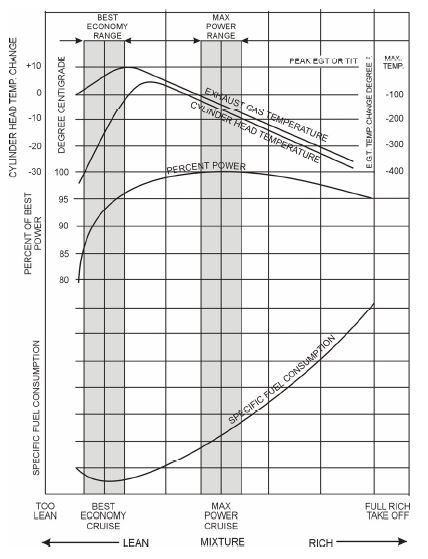
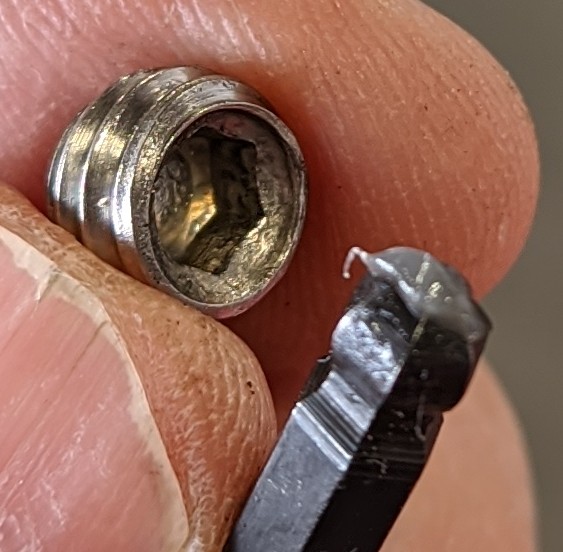
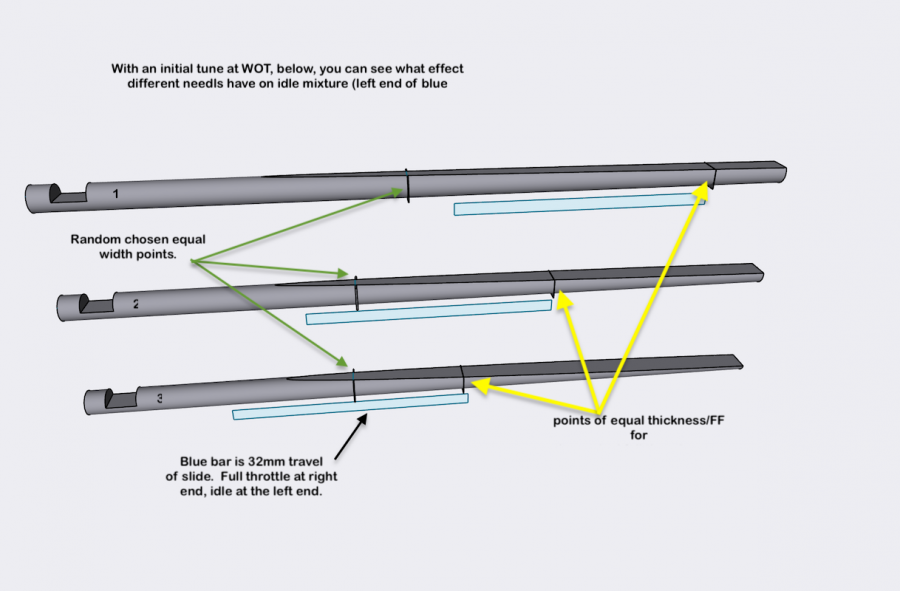
I’m happy that it picked up some power, but the reason we embarked on this experiment was to try to even out the mixture distribution so we can run it at full power without overheating the back cylinders. In the ground runs now, the back cylinders heat up at about 2/3 the rate they did with the stock intake. Hopefully we’'ll also be able to lean much better at cruise power.


Re: The big AeroCarb/AeroInjector thread

Posted: Wed Oct 11, 2017 10:06 am

by Onex107

Don’t be in a hurry to label “shiny spots on the piston” detonation. After running at a rich setting the piston is coated with a rather thick layer of carbon, and the shiny spot is where it has flaked off and the new piston is visible. The plugs are the clue. If the plugs are sooty, so is the piston. Carburetor engines are not capable of running lean of peak due to the uneven fuel distribution and when you get close to peak, the engine will run rough because one or two cylinders are dropping out. Certified engines that are capable of lean of peak are fuel injected with balanced fuel injectors matched to each cylinder. When one of them goes lean of peak, the engine is still smooth, just using less fuel and making less power. In my case, the hottest cylinder, highest EGT, is the leanest, and that is the one I have adjust to. Until one of you comes up with a new intake manifold and better fuel atomization.


Re: The big AeroCarb/AeroInjector thread

Posted: Wed Oct 11, 2017 11:34 am

by sonex1374

Be careful using Lycoming and Continental recommendations on non-Lycoming and Continental engines. Every design is different, and the numbers don’t transfer over directly. Think about Rotax 2 strokes and how different their CHT/EGT recommendations are. Using anything from the 4-stroke world on them will kill them quickly. The concepts still apply, such as max stress on the engine being at some point rich of peak mixture, but where that point is, and how to identify it will vary greatly.

Sonex has been flying VW’s for a long time, and they have no interest is misleading anyone. When they make a recommendation, I tend to think it’s fairly well thought out.

As to adjusting the AeroCarb, I’ve come to realize that if the mixture is set a bit rich by the needle, the pilot can always lean it a bit with the mixture knob (even on climb out) to smooth things out. However, it’s impossible to make it richer, so that’s the goal of ensuring at least 100 deg temp rise when leaning. It’s possible to adjust the needle so rich that the engine just slobbers and stumbles, then leaning makes it progressively better right up to the point the engine dies because you just cut off all the fuel supply. That’s also not a good area to operate, so there is a degree of fine tuning required here.

Kerry talked about the tuning process on Episode 7 of SonexFlight, so that might be worth reviewing again for those just joining the conversation.

http://www.sonexflight.com/7/index.html

Jeff

Re: The big AeroCarb/AeroInjector thread

Posted: Wed Oct 11, 2017 5:59 pm

by lutorm

sonex1374 wrote:Kerry talked about the tuning process on Episode 7 of SonexFlight, so that might be worth reviewing again for those just joining the conversation.

Interesting: I just listened to that episode and Kerry says (at 32min in):

Once you’re at WOT and the EGTs have stabilized … slowly pull the mixture control back and listen for your RPM to increase and you watch your EGTs and you are looking for an increase in RPM coupled with an increase in about 75-100 degrees. That tells you you’re a bit on the rich side for WOT and that’s what you want to be.

(my emphasis) He says nothing about the EGTs peaking or the engine starting to run rough. I interpret that statement as meaning you want the full rich EGTs to be 75-100 degrees lower than what they are at peak RPM ie. best power mixture, not 75-100 lower than peak EGT. This actually agrees pretty well with my impression, because peak power EGT is something like 125-150 ROP and full rich then becomes 200-250 ROP. See the plot below, for example.

But that description doesn’t sound at all like what I read in the AeroCarb manual, which clearly says to lean until the engine begins running rough.

As for experimental vs not, the Aerovee is an air-cooled, four-stroke, two-valved, fixed-time spark-ignition engine running 100LL. It’s similar to a Lycoming or Continental in every fundamental detail. A Rotax has some significant differences, ie liquid cooled heads, but operates on the same physical principles. A two-stroke, or diesel, rotary, or Atkinson cycle engines for that matter, are fundamentally different in their operation and I wouldn’t apply any of the ideas here to those. But to say that an Aerovee is different in some way from a certified aircraft engine just isn’t true.


Re: The big AeroCarb/AeroInjector thread

Posted: Thu Oct 12, 2017 11:52 am

by sonex1374

lutorm wrote:I interpret that statement as meaning you want the full rich EGTs to be 75-100 degrees lower than what they are at peak RPM ie. best power mixture, not lower than peak EGT. …[snip] … But that description doesn’t sound at all like what I read in the AeroCarb manual, which clearly says to lean until the engine begins running rough.

One of the main reasons for having Kerry go over the tuning instructions was to add better clarity and understanding to the process. I’m glad his explanations in the podcast helped clear things up.

Jeff


Re: The big AeroCarb/AeroInjector thread

Posted: Thu Oct 12, 2017 2:38 pm

by lutorm

sonex1374 wrote:

lutorm wrote:I interpret that statement as meaning you want the full rich EGTs to be 75-100 degrees lower than what they are at peak RPM ie. best power mixture, not lower than peak EGT. …[snip] … But that description doesn’t sound at all like what I read in the AeroCarb manual, which clearly says to lean until the engine begins running rough.

One of the main reasons for having Kerry go over the tuning instructions was to add better clarity and understanding to the process. I’m glad his explanations in the podcast helped clear things up.

Jeff

I don’t know if it cleared things up, since we now have Sonex saying two almost opposite things… Kerry’s explanation makes sense to me (and is largely what I did) so I’ll follow that rather than the manual, but I think they need to rewrite the instructions in the manual to be consistent with that procedure, too. Maybe I’ll email him and see what he says.


Re: The big AeroCarb/AeroInjector thread

Posted: Tue Aug 02, 2022 1:40 pm

by Bryan Cotton

So far I’m pretty happy with mine. I’ve only adjusted the idle stop.


Needle Stop Screw

Posted: Thu Sep 15, 2022 8:08 pm

by BRS

I’m just getting used to the AeroInjector having removed the RevFlow from my Revmaster R2300. Tuning is going well but I struggled with removing and installing the needle stop screw as it kept falling off the allan wrench. So I finally started putting a blob of ‘fuel-lube’ on the wrench to stick the screw. Another (better?) solution would be to use a steel other than stainless screw so that a magnet could be used on the wrench.

How do you manage the set screw from dropping off the wrench?


aeroInjector stop nut.jpg (69.88 KiB) Viewed 4784 times


Re: The big AeroCarb/AeroInjector thread

Posted: Thu Sep 15, 2022 10:30 pm

by Bryan Cotton

Because of my nifty throttle reversing mechanism, I have to pull off the carb to adjust. But I also found a normal T handle allen wrench without the ball end works fine. I think the set screw stays on the normal allen wrench pretty good.


Understanding Needles

Posted: Sun Sep 18, 2022 12:19 am

by BRS

In my never ending effort to complicate simple matters, I drew this representation of needles to try to better understand the relationship of idle mixture vs WOT mixture with various needles. Nothing is to scale as can be seen where idle on needle 3 is way before the beginning of the taper. This exageration is actually helpful in visualizing what happens. Three random, but equal thickness, points drawn for each of WOT and idle.

Click to see entire image.

AeroInjector_3needles.png


Re: The big AeroCarb/AeroInjector thread

Posted: Sun Sep 18, 2022 11:08 am

by Bryan Cotton

Very cool graphic and analysis.

I would assume you would need to to to the #3 needle if you were not getting enough juice at WOT - so you would not set WOT at the same cross-section as on a thicker needle.

Also, the actual attainable travel is a function of the carrier and its position in the throttle plate, so physically I’m not sure you could get the case depicted for the #3 needle.

The bottom two needles are labeled 2, I assume the very bottom is actually a #3.


Re: The big AeroCarb/AeroInjector thread

Posted: Sun Sep 18, 2022 7:22 pm

by BRS

I might take some actual measurements and draw this to scale so that the case with #3 would not look so absurd. BTW -that is a “3” but for some reason the image got distorted as well as some text missing.

The take-away (for me) is the clear representation of what to do when your idle/midrange is rich after getting WOT dialed in. I always scratched my head that Sonex calls #3 richer and #1 leaner since their instructions are to first tune at WOT then consider changing the needle for other items. Since (it seems) that WOT can be tuned on any needle, the terms richer-needle / leaner-needle does not apply to WOT but to the rest of the range. So if my idle/mid-range is too rich I need a ‘leaner’ needle. From my pic you can see that would be a higher number (which sonex calls richer?!).


Re: The big AeroCarb/AeroInjector thread

Posted: Sun Sep 18, 2022 7:52 pm

by Bryan Cotton

BRS wrote:From my pic you can see that would be a higher number (which sonex calls richer?!).

Yes, I can see.

I left the #2 needle in, have made two adjustments, and I’m happy with the operation of my Aerocarb.

Re: The big AeroCarb/AeroInjector thread

Posted: Mon Sep 19, 2022 11:32 am

by Onex107

I ended up using the #3. The two hot spots, idle and wot, must be within the slide travel to avoid having to correct with mixture at idle after adjusting for wot. The controlling measurement is thickness ( in the orifice opening ). I found that approx. .083 is the wot thickness, and depending on the angle, which you can calculate, the idle sweet spot ends up wherever the distance between the two puts it. I made seven needles out of .125 drill rod and #7 ended up measuring almost identical to #3. I had a contact from a Onex in Florida who suggested the #3.
The steeper angle of the #3 does not mean it’s richer, it only means the two sweet spots are closer together and can both be located within the slide opening. I had my needle set for wot with the mixture about half way out. That left me able to go richer or leaner from that setting. Richer for temp. reduction on climb out and leaner at cruise for fuel economy. I did not have to touch the mixture after landing for a 900 rpm idle and did not reset it until the next takeoff. With the #3 the idle spot ends up a little too close to the wot spot and I had to reset the slide travel for idle. It was trying to idle at 700 and didn’t like it.
I had the needle adjusted 2 1/2 to 3 turns in from the starting line for the Aerovee. There must not be any play in the ball end of the needle holder. Mine had nearly a half turn of play. Using a marker pen is not accurate enough, I marked the bottom of the needle with a file mark. Nice and shiny, easy to see with a mirror, and an accurate starting point. 300 fun hours without a problem.


Re: The big AeroCarb/AeroInjector thread

Posted: Sat Jun 24, 2023 2:32 am

by rizzz

Does anyone know what the size/thread of the idle screw on the AeroInjector is?
I seem to have stripped mine and I can’t find anything like it in my arsenal.


Re: The big AeroCarb/AeroInjector thread

Posted: Sat Jun 24, 2023 11:17 am

by Area 51%

8-32