Sonex-A purchase - What to look for

Sonex-A purchase - What to look for

Posted: Sat Apr 27, 2024 7:12 pm

by Hambone

Long-time lurker here, first post!

I’m heading out to look at a used Sonex A-model/Aerovee in Pennsylvania. It looks like an amazing build, only 60 hours flying time, and the current (2nd) owner is very knowledgeable, experienced, and helpful, and has a genuine reason for sale.

https://www.barnstormers.com/classified … -2017.html

I’ll fly with the owner for a few days, and if I decide to buy, undertake the long cross-country home to California (avoiding the Rockies!)

I’m trying to gather as much information as I can. What specifically should I be looking for on inspection? What should I test in the air? I have 3,000+ hours, so I’m not worried about the flying aspect. What concerns me most is the reliability of the Aerovee. There seems to be a mixed bag regarding engine safety, but there are an awful lot of Aerovees and Aerovee Turbos out there, so they can’t be THAT bad!

Thanks to all in anticipation!

Mods: If there is a better category to put this in, please move it. Thank you.
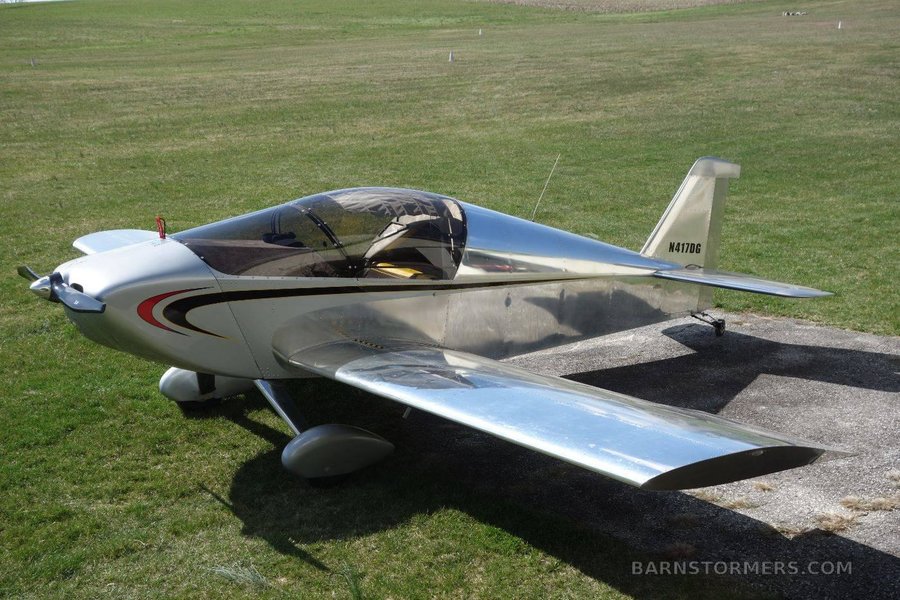
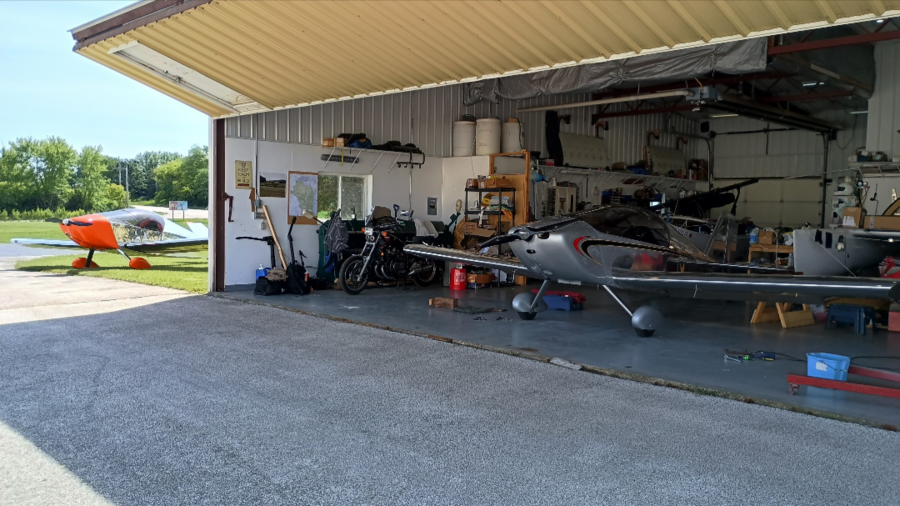
large_image_1901533_2_1713646423.jpeg


Re: Sonex-A purchase - What to look for

Posted: Sat Apr 27, 2024 9:02 pm

by daleandee

Hambone wrote:What concerns me most is the reliability of the Aerovee. There seems to be a mixed bag regarding engine safety, but there are an awful lot of Aerovees and Aerovee Turbos out there, so they can’t be THAT bad!

My Aerovee Sonex took me from Carolina to Tennesse a couple of times for the American Sonex Association Gatherings (thank you John Davis). Lots of Aerovee powered Sonex aircraft would attend and some came from far distances (Charlie Radford & Bob Mika come to mind). During flights in my Aerovee nose roller I had to watch the oil level and top it off at fuel stops but otherwise it was fine. Climb rate in a fully loaded plane at higher altiutudes with the Aerovee isn’t spectacular and engine temps can be a concern.

I met Phil Simon at the American Sonex Association fly-in. Here’s a good article he wrote about all the flying & the many hours he put on his Aerovee Sonex:

https://www.sonexaircraft.com/phil-simon-1007/

I’m a Corvair zealot these days but the little VW worked well enough to make me fall in love with the airplane.

Dunno if this helps …

Dale
3.0 Corvair/Tailwheel

PS: That’s a great looking plane BTW.


Re: Sonex-A purchase - What to look for

Posted: Sat Apr 27, 2024 11:06 pm

by Hambone

Thanks, Dale! That’s great to know. It certainly helps to inspire confidence in the AeroVee.

Phil’s diary is a great read, and full of useful information. It’s always good to be prepared, and reading about the trials and tribulations of others is a good way to help avoid making the same mistakes!


Re: Sonex-A purchase - What to look for

Posted: Sat Apr 27, 2024 11:31 pm

by MichaelFarley56

I agree with Dale…that is a beautiful looking Sonex and I hope it’s exactly what you are hoping it will be!

There is a lot to consider when purchasing a Sonex and I know it’s easy to focus on the engine, which I will certainly discuss, but as for the airframe itself, a few things to consider:

  • Look at rivets: the rivets should be in the middle of any flange area on ribs, gussets, etc. The pictures make this airplane look really nice and I’m sure it is, but I’d try to grab a flashlight and inspect as many areas as possible to make sure all of the parts are riveted and/or bolted together correctly and are secure by making sure the aluminum tabs and parts are to secure, and rivets and bolts look correct.
  • Check any black pushrods for flight controls especially at the ends of those pushrods to make sure everything is tight and secure.
  • Check the landing gear and wheels as much as possible to make sure everything is secure, there is no play in the wheels or axles, and nothing is leaking. Check tires for proper inflation and no flat spots.
  • Make sure there are no cracks in the canopy or windshield
  • Make sure the fiberglass parts don’t have any cracks or fitting issues.
  • Make sure all of the lights and/or avionics work properly and the wiring looks uniform

As for the AeroVee, the core of the engine is solid so the main thing to check is compression of each cylinder if at all possible. A good check of the crank and camshaft bearings is the oil pressure: it should be at least 10 psi per 1000 rpm (for example, 30 psi at 3000 rpm cruise). If it meets or exceeds that, that’s a good sign!
The valves are the main “weakness” of the AeroVee so perform a compression check if at all possible. If you can’t, insist on an oil change and head torque check prior to leaving to make sure the head bolt torque values are in order. Othewise, make sure the engine is producing proper power (3000 RPM on takeoff is preferred) and there are no excessive oil leaks. You can normally tell a healthy engine by cool CHT temps (well below 400 CHT is preferred), good oil pressure as previously noted, and normal oil temps (below 210 degrees). Finally, check the prop bolts to make sure they are torqued properly.

Let us know how it goes and what you see as you look the Sonex over!


Re: Sonex-A purchase - What to look for

Posted: Sun Apr 28, 2024 9:56 am

by Bryan Cotton

We are coming up on 240 hours on our AeroVee. Biggest issue is oil leaks. More of a mess and nusiance than a safety hazard. Biggest single XC was a bit over 460 miles. I want to fly to Sun-n-Fun some year. My biggest worry is spousal, not engine. My engine was built by my then 15 year old.

Weight is critical. Ours is a little over 670 lbs. Performance at that weight is decent solo, and low with two people. I’m jealous of the people with 650 lb airplanes. I know there are some over 700 and that would make it a single place with low performance.

Mixture setup is critical. You should be able to lean for peak RPM and get the EGTs high but under redline. My AeroVee does not run well rich. Too lean is bad too. When set up properly it is easy to manage. Don’t expect all cylinders to match EGTs without applying weird science. I’m working on that.

Jack up the airplane and check how solid the main gear is. Same with the tail gear.

Search for Waiex 191 on YouTube and you will find two channels, mine and my son’s. Lots of AeroVee powered informal instruction, cross country, and aerobatics.

Everything will need safety wire eventually. Oil pressure sender, valve covers, oil sump, air filter, wheel pant axle bolt, and so on. Those are the things I can think of offhand. For sure the AeroInjector should be safetied as per the manual.


Re: Sonex-A purchase - What to look for

Posted: Sun Apr 28, 2024 2:17 pm

by Hambone

Mike & Bryan - thanks for the most welcome and useful information! I’m creating what I hope is a comprehensive and effective pre-buy checklist.


Re: Sonex-A purchase - What to look for

Posted: Sun Apr 28, 2024 2:44 pm

by Bryan Cotton

Oh yeah - electrical load. You only have 20A to work with. Some of that is for recharging the battery after start. Some of that is to run the secondary ignition for takeoff, landing, or a failure of the primary ignition. How much is left over? Beware overdone Sonex electrical systems.

Also see this for when you get home:
viewtopic.php?f=6&t=7412

John Deere for the win. Believe me!


Re: Sonex-A purchase - What to look for

Posted: Sun Apr 28, 2024 4:28 pm

by Hambone

More photos, kindly supplied by the owner:
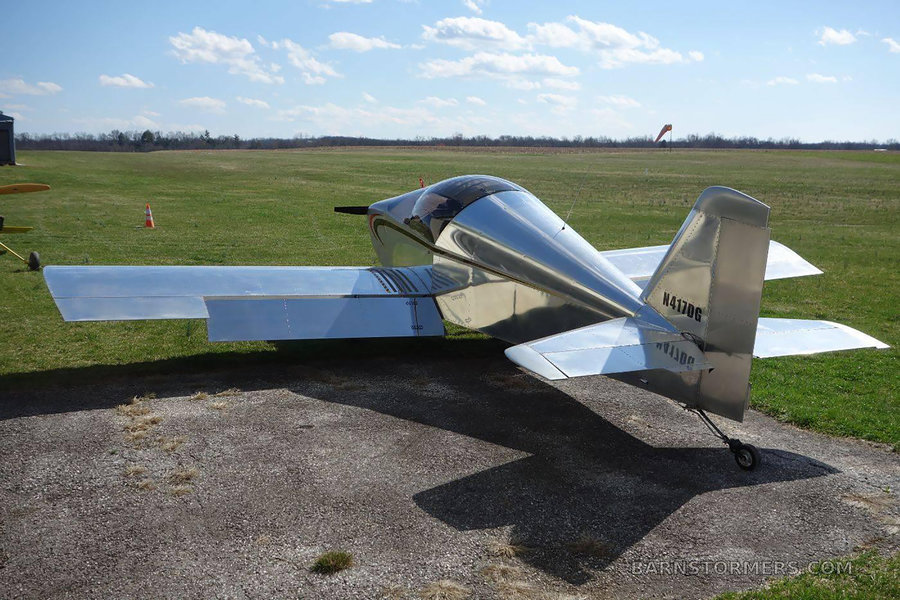
Sonex Rear Three Quarter.jpg


Re: Sonex-A purchase - What to look for

Posted: Sun Apr 28, 2024 8:07 pm

by Barry63

Guys, if I’m not mistaken, this sure looks like Darrick Gundys Sonex, #1646 from a few years back. The paint scheme and that is in PA, only about an hour and a half east of me, is what made me think it was his. If I remember correctly, he sold it to someone from his home field.

Hambone, go into the Photo Album and look down the list for Darricks 1646. It’s not very far down the list on the first page. He has a TON of build pics on there.

I would have bought it when he initially put it up for sale but couldn’t afford it as I already own a 172. Hope this helps you out.


Re: Sonex-A purchase - What to look for

Posted: Sun Apr 28, 2024 8:12 pm

by Hambone

Thanks for that, Barry. It is indeed Darick’s build.

I’ll definitely go through the photos!

Edit: I can’t seem to see many of the photos, only the word ‘image’ where I would expect to see a photo.

Re: Sonex-A purchase - What to look for

Posted: Sun Apr 28, 2024 8:21 pm

by Bryan Cotton

Sadly we have lost Darick.
https://www.yorkdispatch.com/obituaries/mpa087606

I’ve never met him in person or seen his airplane but I’d be inclined to think it is a good one.

Edit: the photos in the middle of his build thread are missing. Thanks to the photobucket/postimage debacle. But in the beginning and end there are some.


Re: Sonex-A purchase - What to look for

Posted: Mon Apr 29, 2024 6:13 am

by kmacht

Make sure you look through and check that service bulletins were done. There were a couple critical ones that come to mind on the A model. The first is the landing gear bolts. They changed the type of bolt (stainless to cad plated maybe?). There were issues with the bolts cracking but you could not see it because they broke inside the joint up at the motor mount. The other one to consider is the rudder pedals. Some of the early A models used thinner tubing in the rudder pedals and it caused some problems with them failing under heavy ground handling loads. Finally, there were a bunch on the early aerocarb and throttle. Pay particular attention to how the throttle cable is routed and that it isn’t binding the aerocarb or being twisted at the throttle assembly. There were some issues with the slide part of the carb sticking at full throttle and a few others of the cable breaking right at the throttle lever. All were fixed with a number of service bulletins

Finally, check out how the fuel line is run and read up on the sonex burps. Ideally you want a straight line from tank to carb on a constant downward slope. The line should also be heavily insulated. Essentially you are trying to minimize vapor bubbles in the line by keeping the temps down and making the path of least resistance be the gas tank for any air in the line. If you see a gascolator mounted down low with a loop back up to the carb instead of an in line filter you will want to inspect closer. The aerocarb has no float bowl so any interruption in fuel at all (even a minor one like a vapor bubble) will make the engine stumble. It’s not very assuring when it happens on takeoff.

Keith
#554


Re: Sonex-A purchase - What to look for

Posted: Mon Apr 29, 2024 11:17 am

by Hambone

Thanks for the useful information, Keith. I’ll be sure to review and check all service bulletins and the fuel line installation.


Re: Sonex-A purchase - What to look for

Posted: Mon Apr 29, 2024 3:15 pm

by Bryan Cotton

Here is his fuel line installation:
viewtopic.php?f=39&t=913&start=100


Re: Sonex-A purchase - What to look for

Posted: Mon Apr 29, 2024 5:31 pm

by Hambone

That’s great, Bryan. Thanks for that.

Even having not known Darick, I must admit to getting a bit choked up reading through his build journal. His attention to detail and attitude were apparent, and I’m so sorry he’s not still flying N417DG.

Anyway, I’m really looking forward to seeing the Sonex tomorrow afternoon, after a long redeye flight from San Francisco!


Re: Sonex-A purchase - What to look for

Posted: Mon Apr 29, 2024 7:59 pm

by Bryan Cotton

Hambone wrote:That’s great, Bryan. Thanks for that.

Even having not known Darick, I must admit to getting a bit choked up reading through his build journal. His attention to detail and attitude were apparent, and I’m so sorry he’s not still flying N417DG.

Anyway, I’m really looking forward to seeing the Sonex tomorrow afternoon, after a long redeye flight from San Francisco!

It would be a fitting tribute if you bought it and flew the heck out of it!


Re: Sonex-A purchase - What to look for

Posted: Tue Apr 30, 2024 7:49 am

by Hambone

Bryan Cotton wrote:

Hambone wrote:That’s great, Bryan. Thanks for that.

Even having not known Darick, I must admit to getting a bit choked up reading through his build journal. His attention to detail and attitude were apparent, and I’m so sorry he’s not still flying N417DG.

Anyway, I’m really looking forward to seeing the Sonex tomorrow afternoon, after a long redeye flight from San Francisco!

It would be a fitting tribute if you bought it and flew the heck out of it!

That’s a great way to look at it!


Re: Sonex-A purchase - What to look for

Posted: Tue Apr 30, 2024 6:00 pm

by WaiexB22

Bryan Cotton wrote:Here is his fuel line installation:
https://sonexbuilders.net/viewtopic.php … &start=100

Sorry to jump off topic, but I have been looking to install a drain exactly like the one on this fuel system as opposed to a gascolator. Just a T with a sump routed to the belly of the cowl. Is anybody else running one? Has well does it work?


Re: Sonex-A purchase - What to look for

Posted: Tue Apr 30, 2024 11:04 pm

by WaiexN143NM

Hi all,
Rip darick gundy, almost two years ago in his passing.

Michael.


Re: Sonex-A purchase - What to look for

Posted: Fri May 03, 2024 5:44 pm

by Hambone

So I flew out to Pennsylvania, met up with owner Brian Bange (super nice guy), and bought his Sonex! It’s a beautiful build by Darick, further refined and improved by Brian. We had a short 30-minute jaunt around the beautiful Susquehanna Valley countryside, which is actually the first time anyone has been in the right seat in its short 60 hours life! It performed well with two 180-pounders and half a tank of fuel. Of course, I’m already considering the turbo upgrade as well as an avionics refresh!

Now back in California, contemplating whether to fly it or UHaul it home. I think I’ll go back out and fly it around the local area for a few days before making that decision.

Thanks to everyone for the assistance. I’m afraid I’ll probably be asking for more!
Re: Sonex-A purchase - What to look for

Posted: Fri May 03, 2024 5:51 pm

by Bryan Cotton

Congrats! I’d have to get it approved by the war department but may be able to put you up at C77 if you need a stop. There may be others who would do the same. Even at 100kts it beats driving a uhaul.


Re: Sonex-A purchase - What to look for

Posted: Fri May 03, 2024 5:55 pm

by Hambone

Bryan Cotton wrote:Congrats! I’d have to get it approved by the war department but may be able to put you up at C77 if you need a stop. There may be others who would do the same. Even at 100kts it beats driving a uhaul.

Thanks for the offer, Bryan! Yeah, I don’t relish the idea of 2,000+ miles down I-80. I do fancy the adventure of flying it home, though. I’ve done that with a Flight Design CTSW, a Corben Baby Ace (almost made it home!), and a SkyRanger Classic. I thoroughly enjoyed the adventures, despite weather and maintenance challenges along the way. In many ways, I enjoyed it more than my 3,000 hours in the T-38 and A-10.

My only hesitation is the AeroVee with only 60 hours, my lack of AeroVee knowledge and maintenance skill, and just how much engine support, if needed, would be available along the route.


Re: Sonex-A purchase - What to look for

Posted: Fri May 03, 2024 7:12 pm

by WaiexB22

Congrats on the purchase!

I could be wrong, but I think Brian may be related to Ian Bange, who is active in the yamaha group.


Re: Sonex-A purchase - What to look for

Posted: Sat May 04, 2024 10:32 am

by bvolcko38

I’m thinking if there are 60+ hrs on the engine…all the bugs have been worked out.


Re: Sonex-A purchase - What to look for

Posted: Sat May 04, 2024 11:08 am

by Hambone

bvolcko38 wrote:I’m thinking if there are 60+ hrs on the engine…all the bugs have been worked out.

That’s what I’m thinking, too. Plan at present is to go out and fly it in the local area for a few days before deciding whether to fly it or UHaul it back. I know what I’d rather do!


Re: Sonex-A purchase - What to look for

Posted: Sat May 04, 2024 2:26 pm

by Bryan Cotton

60 hours is good. Burning up some hours in PA before you leave is really sensible. Things to be aware of, at least based on my experience:

  1. oil will leak and come out the breather. More RPM means more oil coming out. Find your happy RPM and know what to expect for fuel burn and oil usage.
  2. My AeroVee is not happy when rich. Lean it out.
  3. Cruise climb is good for cooling. For XC we climb at 90 kts and cruise at 100.
  4. With only 20A, electrical conservation is key. We run with the primary ignition only except for takeoff and landing.
    Tires should be 45-50 psi. Although Darick went with bigger tires so not sure if this still holds true. Concern is the tire and tube spinning on the rim at touchdown and hard braking, which can damage the valve stem.

For comparison we burn about 4GPH and need a half quart every 10 hours. Read the AeroVee manual and have the right oil.

I’ll also mention my airplane was ready for big XC before I was. Takes time to build trust and confidence.


Re: Sonex-A purchase - What to look for

Posted: Sun May 05, 2024 2:58 pm

by Hambone

More great info, Bryan. Thanks!

I’ll certainly look into each of those points as I start flying. If I decide to fly back, I won’t set off back for California until I’m confident in both the airplane and my abilities.

The electrical conservation is something to look into that I hadn’t considered. How much current do each of the ignition systems use? Also, I had planned on running my iPad/ForeFlight and Sentry from the 5v USB sockets Darick built into the panel. Perhaps I should run them from their internal batteries and charge them up at each overnight stop. I also have a few small 20,000 mAh power banks I can use.


Re: Sonex-A purchase - What to look for

Posted: Sun May 05, 2024 3:06 pm

by Bryan Cotton

The primary ignition uses no electrical power. It’s basically a Briggs & Stratton type magneto. The ipad will use 1-2A at 5V, which ends up being 0.5-less than an amp at 14.5. We do it all the time. Not sure what Darick has for lights. If he has a conventional master contactor that’s about an amp. Radios not transmitting and transponders are low current draw. The primary ignition is fused for 10A and probably uses 7-9.


Re: Sonex-A purchase - What to look for

Posted: Sun May 05, 2024 3:15 pm

by Hambone

I should have looked more into the lights. I did turn them on, and there seemed to be a flashing green light on the right wingtip, and a steady red on the left. Could it be that the flashing green light is a hybrid navigation light/anticollision beacon? Or maybe it was steady green and flashing white, and I didn’t pick up on that.


Re: Sonex-A purchase - What to look for

Posted: Sun May 05, 2024 3:24 pm

by Bryan Cotton

I think what is common is a strobe on each wingtip, and of course red/green nav lights there too. My nav lights also have an aft-facing white nav light. It might be that a connection has failed to the left strobe.

My nav lights draw about an amp, and the strobes the same. I only run the nav lights in the dark or at sunset. LED lights are awesome.

Sonex-A purchase - What to look for

https://sonexbuilders.net/viewtopic.php?f=25&t=7735

Page 4 of 25

Re: Sonex-A purchase - What to look for

Posted: Sun May 05, 2024 3:28 pm

by Bryan Cotton


Re: Sonex-A purchase - What to look for

Posted: Sun May 05, 2024 3:49 pm

by Hambone

Nice. I didn’t look closely enough when I was out there. I’ll check them out more thoroughly when I return.


Re: Sonex-A purchase - What to look for

Posted: Sun May 05, 2024 6:38 pm

by WaiexB22

FWIW I confirmed this was built by Ian Banges father. Ian is active in the Yamaha group and supplied parts for conversions for a while. In my encounters with him, he has been smart, professional, and he is very practical. He is working on a phazer powered chinook that is on youtube. I’m guessing he got at least some of that from his dad and I think you found yourself a sweet bird.


Re: Sonex-A purchase - What to look for

Posted: Sun May 05, 2024 6:43 pm

by Hambone

WaiexB22 wrote:FWIW I confirmed this was built by Ian Banges father. Ian is active in the Yamaha group and supplied parts for conversions for a while. In my encounters with him, he has been smart, professional, and he is very practical. He is working on a phazer powered chinook that is on youtube. I’m guessing he got at least some of that from his dad and I think you found yourself a sweet bird.

Really? How did you confirm that? It wasn’t built by Darick Gundy? Now I’m confused.


Re: Sonex-A purchase - What to look for

Posted: Sun May 05, 2024 7:31 pm

by WaiexB22

I reached out to Ian, because I knew his dad had one. Sorry for the confusion it was owned by him. He was not the builder.


Re: Sonex-A purchase - What to look for

Posted: Sun May 05, 2024 8:38 pm

by Hambone

WaiexB22 wrote:I reached out to Ian, because I knew his dad had one. Sorry for the confusion it was owned by him. He was not the builder.

Got it. I think I’m connecting the dots now!


Re: Sonex-A purchase - What to look for

Posted: Thu May 09, 2024 6:38 pm

by Hambone

Well, I’m trying to get prepared for the potential 2000+ mile cross-country from Pennsylvania to California. I hope to travel light, and fit everything in the right seat.

So, what are the recommendations for tools and equipment to bring? I’m hoping the engine is well-tweaked before departing Pennsylvania, and won’t require servicing during the 20 or so hours flying home (fingers crossed!) I’d like to carry a minimal tool kit to accommodate potential issues along the way, such as a spare tube and pump, etc, as well as oil, rags, tiedowns, emergency survival gear, etc.

Any recommendations greatly appreciated!


Re: Sonex-A purchase - What to look for

Posted: Thu May 09, 2024 7:00 pm

by Bryan Cotton

I’d bring some safety wire. A canopy cover if you have one.


Re: Sonex-A purchase - What to look for

Posted: Thu May 09, 2024 10:18 pm

by MichaelFarley56

First, congratulations on the purchase of a very nice looking airplane! I hope you’re very happy with the Sonex and enjoy it as much as the rest of us!

Everyone is going to have different ideas on a tool kit so you will have to use your best judgement but in general, only bring stuff you’ll actually be able to use. Meaning, if you’re going to carry a spare tube and tire, have proper tools to actually perform the tire change including a new cotter pin for the axle bolt. Having said that, I would take enough tools to be able to pull the engine cowling and perform basic adjustments as needed.

My list would be something like:

  • extra quart of oil
  • canopy cover
  • extra tire tube
  • some duct tape
  • some safety wire
  • a few basic tools including screwdrivers and wrenches

Sometimes it’s amazing what you can do with some duct tape and a multi tool!

No matter what have a great trip and keep us up to date on your progress! Use this community as a resource as well!


Re: Sonex-A purchase - What to look for

Posted: Thu May 09, 2024 10:41 pm

by daleandee

Hambone wrote:Well, I’m trying to get prepared for the potential 2000+ mile cross-country from Pennsylvania to California. I hope to travel light, and fit everything in the right seat.

Congrats on aircraft ownership!

As for tools I’d carry a stubby 3/8 rachet and a few sockets for plugs & common sizes for bolts & nuts, a few wrenches, a common double ended screwdriver (the ends where the bits go in are also nut drivers), engine oil, spare tube, a flashlight, a bit of safety wire, duct tape, a multi-tool & flashlight. It is wise to carry the ability to start a fire in case you are stranded and need to make heat, draw attention, or make coffee while you wait for help. 8~)

Plot a course near airports and, if possible, near to places where Sonex owners live as they are very helpful and most would likely have the ability to fix any concerns by lending/giving parts or tools as needed.

It should be a great adventure so you can sign on at night and keep us updated on your progress. Enjoy the ride!

Best …

Dale
3.0 Corvair/Tailwheel

Sonex-A purchase - What to look for

https://sonexbuilders.net/viewtopic.php?f=25&t=7735

Page 5 of 25

Re: Sonex-A purchase - What to look for

Posted: Thu May 09, 2024 11:36 pm

by Hambone

Bryan, Mike & Dale - thanks for those recommendations! I’ll build them all into a duffle bag that I’ll strap into the right seat.

When I ferried my Baby Ace from Georgia to Texas, and knew I was crossing the bayou, I wore a survival vest with all the necessities required should the unthinkable happen. I’m not sure I would have survived the swamp, though!

It’s great to have a community such as this to help each other out. I found the same wonderful camaraderie and helpfulness when I had a vintage VW camper.


Re: Sonex-A purchase - What to look for

Posted: Fri May 10, 2024 8:52 am

by Scott Todd

I’ve moved small airplanes back and forth across the country a dozen times. The alure and romance of the small uncontrolled or grass strip should NOT be in the plan unless you have made prior arrangements. I can’t tell you how many times I have shown up at one only to find the fuel pump out of service, no transportation to food, no oil, etc. On long cross countries, I make it at point to stop at Delta airports. There will always be people, tools, supplies, and anything else you may need. From a safety perspective, If you botch a landing, have a flat, or whatever, someone will be able to help you immediately.


Re: Sonex-A purchase - What to look for

Posted: Fri May 10, 2024 11:52 am

by builderflyer

Based on past experience with my Sonex and, so far, what others have not mentioned:

  1. An extra spark plug or two and the tools to change them
  2. A trickle charger and the ability to connect it to the battery without removing the cowling. Mine includes a long DC cord to be able to reach the airplane from any nearby AC outlet. This setup has gotten me home a couple of times when starting the engine had been difficult.
  3. A torque wrench for prop bolts. When my Sensenich wood prop was low time, the prop bolts lost their torque in a very few hours. So on your trip, and without any additional assurance, I’d be checking the prop bolt torque before leaving PA and at least one time enroute.

Have fun and be especially wary of those strong springtime winds,

Art,Sonex taildragger #95,Jabiru 3300#261


Re: Sonex-A purchase - What to look for

Posted: Fri May 10, 2024 12:17 pm

by Hambone

Scott Todd wrote:I’ve moved small airplanes back and forth across the country a dozen times. The alure and romance of the small uncontrolled or grass strip should NOT be in the plan unless you have made prior arrangements. I can’t tell you how many times I have shown up at one only to find the fuel pump out of service, no transportation to food, no oil, etc. On long cross countries, I make it at point to stop at Delta airports. There will always be people, tools, supplies, and anything else you may need. From a safety perspective, If you botch a landing, have a flat, or whatever, someone will be able to help you immediately.

Thanks, Scott. That’s great advice. I learned some of those lessons on my last trip!


Re: Sonex-A purchase - What to look for

Posted: Fri May 10, 2024 12:18 pm

by Hambone

builderflyer wrote:Based on past experience with my Sonex and, so far, what others have not mentioned:

  1. An extra spark plug or two and the tools to change them
  2. A trickle charger and the ability to connect it to the battery without removing the cowling. Mine includes a long DC cord to be able to reach the airplane from any nearby AC outlet. This setup has gotten me home a couple of times when starting the engine had been difficult.
  3. A torque wrench for prop bolts. When my Sensenich wood prop was low time, the prop bolts lost their torque in a very few hours. So on your trip, and without any additional assurance, I’d be checking the prop bolt torque before leaving PA and at least one time enroute.

Have fun and be especially wary of those strong springtime winds,

Art,Sonex taildragger #95,Jabiru 3300#261

Thanks, Art. That’s really useful information. I’ll include those items in my toolkit.

I hope to avoid the worst of the winds and turbulence by being airborne at civil twilight, and on the ground by lunchtime. I’ll only press on if the winds and weather look favorable.


Re: Sonex-A purchase - What to look for

Posted: Fri May 10, 2024 12:30 pm

by Bryan Cotton

One thing about the Sonex compared to other tailwheel airplanes I’ve flown - it has less low speed rudder power than a cub, C140, etc. The 3 point takeoff helps a lot, and I also recommend taking off with a notch of flaps. Gets you off the ground a lot quicker. So as you expand your crosswind comfort level in the airplane keep this in mind. The solid link tailwheel is part of your yaw authority on the ground at lower speeds.

I can’t remember how many hours before my prop torque stabilized. These days it never moves, although I still check it when the cowl is off.


Re: Sonex-A purchase - What to look for

Posted: Fri May 10, 2024 5:01 pm

by Hambone

Bryan Cotton wrote:One thing about the Sonex compared to other tailwheel airplanes I’ve flown - it has less low speed rudder power than a cub, C140, etc. The 3 point takeoff helps a lot, and I also recommend taking off with a notch of flaps. Gets you off the ground a lot quicker. So as you expand your crosswind comfort level in the airplane keep this in mind. The solid link tailwheel is part of your yaw authority on the ground at lower speeds.

I can’t remember how many hours before my prop torque stabilized. These days it never moves, although I still check it when the cowl is off.

More great info! Thanks again, Bryan.


Re: Sonex-A purchase - What to look for

Posted: Fri May 10, 2024 5:04 pm

by Hambone

So I just hit a hurdle while trying to organize insurance with Avemco.

They require 10 hours (!) of dual instruction in a tailwheel Sonex, partially due to my low (30 hours) tailwheel time. In lieu of that, I can apparently do the EAA Flight Advisor program. I don’t even know what that is!

I’ve got some research to do…


Re: Sonex-A purchase - What to look for

Posted: Fri May 10, 2024 5:49 pm

by Bryan Cotton

Bummer. I got around the insurance problem by going without for my first year. Then my insurance was reasonable.


Re: Sonex-A purchase - What to look for

Posted: Fri May 10, 2024 7:16 pm

by daleandee

Hambone wrote:So I just hit a hurdle while trying to organize insurance with Avemco.

They require 10 hours (!) of dual instruction in a tailwheel Sonex, partially due to my low (30 hours) tailwheel time. In lieu of that, I can apparently do the EAA Flight Advisor program. I don’t even know what that is!

I’ve got some research to do…

Don’t know if it will help but I’ve had great service from https://air-pros.com/victorianeuville/

Tell Victoria I sent you …

Dale
3.0 Corvair/Tailwheel

Re: Sonex-A purchase - What to look for

Posted: Fri May 10, 2024 8:02 pm

by Jester504

Hambone wrote:So I just hit a hurdle while trying to organize insurance with Avemco.

They require 10 hours (!) of dual instruction in a tailwheel Sonex, partially due to my low (30 hours) tailwheel time. In lieu of that, I can apparently do the EAA Flight Advisor program. I don’t even know what that is!

I got insurance through Avemco without 10 hours dual via the EAA Flight Advisor sign-off. There’s almost no info on the EAA website about it and the Avemco agent on the phone didn’t actually know what it was, either, except that it was a box he could check that waived the 10 hours requirement. The EAA website has a search function to find nearby Advisors. I spoke to a person two states away that ended up signing me off. Essentially, the work is as much or as little as the Advisor wants it to be, and results in paperwork that you can send to Avemco.

I also spoke to Victoria at AIR and she wasn’t able to help me without 10 or 15 (I think it was 15 to be honest) hours of dual instruction.


Re: Sonex-A purchase - What to look for

Posted: Fri May 10, 2024 8:36 pm

by Hambone

daleandee wrote:

Hambone wrote:So I just hit a hurdle while trying to organize insurance with Avemco.

They require 10 hours (!) of dual instruction in a tailwheel Sonex, partially due to my low (30 hours) tailwheel time. In lieu of that, I can apparently do the EAA Flight Advisor program. I don’t even know what that is!

I’ve got some research to do…

Don’t know if it will help but I’ve had great service from https://air-pros.com/victorianeuville/

Tell Victoria I sent you …

Dale
3.0 Corvair/Tailwheel

Just zapped her a message.


Re: Sonex-A purchase - What to look for

Posted: Fri May 10, 2024 8:37 pm

by Hambone

Jester504 wrote:

Hambone wrote:So I just hit a hurdle while trying to organize insurance with Avemco.

They require 10 hours (!) of dual instruction in a tailwheel Sonex, partially due to my low (30 hours) tailwheel time. In lieu of that, I can apparently do the EAA Flight Advisor program. I don’t even know what that is!

I got insurance through Avemco without 10 hours dual via the EAA Flight Advisor sign-off. There’s almost no info on the EAA website about it and the Avemco agent on the phone didn’t actually know what it was, either, except that it was a box he could check that waived the 10 hours requirement. The EAA website has a search function to find nearby Advisors. I spoke to a person two states away that ended up signing me off. Essentially, the work is as much or as little as the Advisor wants it to be, and results in paperwork that you can send to Avemco.

I also spoke to Victoria at AIR and she wasn’t able to help me without 10 or 15 (I think it was 15 to be honest) hours of dual instruction.

That’s promising. I’ll see if anyone at our local EAA chapter knows anything about the Flight Advisor program.

Thanks for the info!


Re: Sonex-A purchase - What to look for

Posted: Fri May 10, 2024 10:26 pm

by Bryan Cotton

Victoria is our insurance agent also. She could not get Adam covered until he had 100 hours total/50 hours tailwheel.


Re: Sonex-A purchase - What to look for

Posted: Fri May 10, 2024 10:30 pm

by Hambone

Bryan Cotton wrote:Victoria is our insurance agent also. She could not get Adam covered until he had 100 hours total/50 hours tailwheel.

Hmmm. This could be a potential deal-breaker.


Re: Sonex-A purchase - What to look for

Posted: Fri May 10, 2024 11:15 pm

by Bryan Cotton

Hambone wrote:

Bryan Cotton wrote:Victoria is our insurance agent also. She could not get Adam covered until he had 100 hours total/50 hours tailwheel.

Hmmm. This could be a potential deal-breaker.

Bummer. I’d say look at the big picture though. Can you find a CFI buddy to make the trip with you? Or someone insurable?


Re: Sonex-A purchase - What to look for

Posted: Sat May 11, 2024 12:27 am

by Hambone

Bryan Cotton wrote:

Hambone wrote:

Bryan Cotton wrote:Victoria is our insurance agent also. She could not get Adam covered until he had 100 hours total/50 hours tailwheel.

Hmmm. This could be a potential deal-breaker.

Bummer. I’d say look at the big picture though. Can you find a CFI buddy to make the trip with you? Or someone insurable?

Probably not practical to get someone to tag along for the 2000 mile trip. I’ll pursue the EAA avenue, and see what happens. Where there’s a will, there’s a way!


Re: Sonex-A purchase - What to look for

Posted: Sun May 12, 2024 5:49 am

by SNX1508

Check out O2 Sports Insurance https://www.o2sportsinsurance.com/

$725.00 / year for my Sonex, 3rd Party Liability only though. You must be a USUA member (US Ultralight Association). When I initially insured the Sonex the requirement was 10 hours dual instruction in same category & class, i.e. Airplane, SEL, Tailwheel. No requirement for any time in a Sonex.


Re: Sonex-A purchase - What to look for

Posted: Sun May 12, 2024 11:04 am

by Hambone

SNX1508 wrote:Check out O2 Sports Insurance https://www.o2sportsinsurance.com/

$725.00 / year for my Sonex, 3rd Party Liability only though. You must be a USUA member (US Ultralight Association). When I initially insured the Sonex the requirement was 10 hours dual instruction in same category & class, i.e. Airplane, SEL, Tailwheel. No requirement for any time in a Sonex.

Thanks, Terry! I’ll check that out.


Re: Sonex-A purchase - What to look for

Posted: Tue May 14, 2024 9:34 pm

by Hambone

Looks like I’ve gotten the insurance set up for Avemco. I managed to contact an EAA Flight Advisor (super friendly and knowledgeable RV-7 and Xenos builder and owner), and he’s going to sign me off.

Also had a long discussion with a very experienced Sonex builder and owner, and got lots of AeroVee information. It was a rather daunting amount of information, with discussion over Avgas vs Mogas and associated differences in required compression ratios, managing engine temps and preventing plug fouling by selective use of the ignition system, and the unique air and ground handling characteristics of the Sonex. He actually had a VW racing shop completely rebuild his AeroVee, resulting in over 100 hp without a turbo, no cooling problems, and smooth running in all conditions. I’m going to find out more about that.

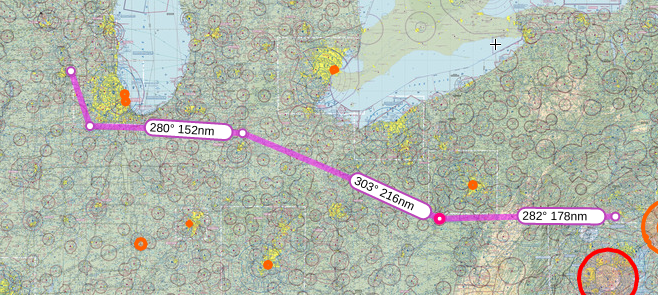
Getting excited now! Anyone not too far from a course between KTHV and KGOO who would like to meet up first week in June, let me know!

Re: Sonex-A purchase - What to look for

Posted: Wed May 15, 2024 11:49 am

by daleandee

Hambone wrote:He actually had a VW racing shop completely rebuild his AeroVee, resulting in over 100 hp without a turbo, no cooling problems, and smooth running in all conditions.

I personally do not believe such a rebuild is possible with an Aerovee. I’m not doubting what you were told but I am seriously doubting the validity of what you were told. From my limited experience with engines, that claim just isn’t possible. I believe if it could be done then Sonex would not have needed to add a turbo.

Revmaster has a larger engine, R-2300 (2331cc, 142.2 cu.in.) that uses their RM-049 heads featuring large fins & hemispherical combustion chambers & they rate it at (82) at 2950rpm continuous. (Takeoff power is rated at 85, at 3350rpm.)

I’d like to be proven incorrect by seeing the actual proof from a certified dyno run without the CHTs going into orbit and the RPMs in a range where our small prop size would still be efficient.

Best,

Dale
3.0 Corvair/Tailwheel


Re: Sonex-A purchase - What to look for

Posted: Wed May 15, 2024 3:33 pm

by Bryan Cotton

I’d be interested to know what prop he runs and what RPM he sees.


Re: Sonex-A purchase - What to look for

Posted: Wed May 15, 2024 6:35 pm

by Hambone

Bryan Cotton wrote:I’d be interested to know what prop he runs and what RPM he sees.

I don’t know, but I can ask him next time I talk to him.


Re: Sonex-A purchase - What to look for

Posted: Wed May 15, 2024 6:39 pm

by Hambone

Well, I’m receiving a huge amount of useful information from Jim Triggs, an EAA Flight Advisor with over 14,000 hours flying time. What he doesn’t know isn’t worth knowing! He built and flies an RV-7 and a Xenos. He connected me with a past student of his who built his AeroVee Sonex while in high school, and now has over 1,200 hours in it! He’s a wealth of information, too.

A common theme from both of them which concerns me is all of the attention that apparently has to paid to minimizing time on the ground with the engine running to avoid overheating issues. I’ve never flown an airplane where that was a concern. Some of the advice, like avoiding tower-controlled airfields that require takeoff clearance that could necessitate a lengthy wait on the ground, is new to me, as is considering landing halfway down a long runway if the fuel pump is near the departure end, to avoid a lengthy taxi to the pump. Lots of considerations I have never experienced, but if overheating during ground operations is an issue, I guess it makes sense.


Re: Sonex-A purchase - What to look for

Posted: Wed May 15, 2024 8:43 pm

by Bryan Cotton

For what it is worth, I’ve only had real temperature issues once. Heat of the summer, and two-up pattern work. Otherwise I don’t worry about ground ops at all.


Re: Sonex-A purchase - What to look for

Posted: Wed May 15, 2024 8:51 pm

by MichaelFarley56

I agree with Bryan. Once the AeroVee is broken in, overheating on the ground tends to be a very rare event. The Jabiru 3300 is much more prone to cylinder head temps during prolonged idle than the AeroVee is. Unless it’s an unusually hot day or you’re idling way over 1000-1200 rpm for some reason, you shouldn’t have any issues.
When I had the AeroVee on my Waiex there were many days when outside air temps were 30-50F degrees and I’d have to idle for 15-20 minutes to get the oil warm enough to perform a takeoff!

I’m thrilled you found a Flight Advisor and other knowledgeable people to talk to about the airplane. I wish you the best of luck and safe travels! Let us all know if and how we can be of service!


Re: Sonex-A purchase - What to look for

Posted: Thu May 16, 2024 2:44 am

by Murray Parr

daleandee wrote:

Hambone wrote:He actually had a VW racing shop completely rebuild his AeroVee, resulting in over 100 hp without a turbo, no cooling problems, and smooth running in all conditions.

I personally do not believe such a rebuild is possible with an Aerovee. I’m not doubting what you were told but I am seriously doubting the validity of what you were told. From my limited experience with engines, that claim just isn’t possible. I believe if it could be done then Sonex would not have needed to add a turbo.

Revmaster has a larger engine, R-2300 (2331cc, 142.2 cu.in.) that uses their RM-049 heads featuring large fins & hemispherical combustion chambers & they rate it at (82) at 2950rpm continuous. (Takeoff power is rated at 85, at 3350rpm.)

I’d like to be proven incorrect by seeing the actual proof from a certified dyno run without the CHTs going into orbit and the RPMs in a range where our small prop size would still be efficient.

Best,

Dale
3.0 Corvair/Tailwheel

It is probably possible given the low compression ratio’s we set these to vs what it could be set to.

A few years back, I built a great planes version with the force 1 hub, and it had larger cylinders, I think was 2331cc and the VW racing guru that I was purchasing parts from couldn’t understand why I wasn’t setting the compression ratio to 11:1 or higher as many of the racing engines are set to. After all, isn’t installing a turbo a similar result to boosting compression by increasing pressures in a different way.


Re: Sonex-A purchase - What to look for

Posted: Thu May 16, 2024 8:53 am

by Scott Todd

100hp doesn’t seem like a stretch. Higher compression will quickly get you more horsepower. Dual carbs. Higher RPM. We (and Sonex) choose not to do these things for reliability and longevity. Cooling on the ground shouldn’t be an issue. At 700-800 rpm, it just isn’t making much heat. My calves give out from holding brakes long before I ever worry about overheating. In my 200 or so hours behind 5 different ones, I’ve never had an overheating problem. If you have a long wait, just shut it off. Turn the second ignition off, kill the fuel, and wait. A modern radio should only draw an amp or so and sitting like that for 10 minutes won’t drain the battery enough to make a difference. When its time, fuel on, ignition 2 on, start. After you’ve done it a few times, it becomes instinctive.


Re: Sonex-A purchase - What to look for

Posted: Thu May 16, 2024 3:11 pm

by Hambone

It’s great to hear all of the experiences of minimal overheating issues! I’m feeling more confident now.

A real challenge will likely be the enroute weather, especially the seasonal Midwest thunderstorms. I plan on being airborne each morning no later than sunrise, so that should hopefully mitigate some of the weather issues. All part of the fun!


Re: Sonex-A purchase - What to look for

Posted: Fri May 17, 2024 3:40 pm

by kmacht

On the ground the battery has always been a bigger concern than overheating for me. The alternator on the aerovee puts out little to no amperage at idle. It does t really start charging until around 1500-2000 rpm. If you sit too long with the secondary ignition, radios, lights, etc all on you will quickly deplete the battery capacity down.

Re: Sonex-A purchase - What to look for

Posted: Fri May 17, 2024 4:38 pm

by Bryan Cotton

kmacht wrote:If you sit too long with the secondary ignition, radios, lights, etc all on you will quickly deplete the battery capacity down.

Of all those loads, the ignition is the biggest. The radio doesn’t draw much when not transmitting. We always turn the secondary off on the ground. We use both ignitions to start, and after it has warmed up a little the secondary comes off.

We always run strobes, but only use nav lights for night flying. The landing/taxi lights go to wig wag mode after we takeoff and shut down the secondary.

It’s only 20A but if you manage the loads it is enough.


Re: Sonex-A purchase - What to look for

Posted: Fri May 17, 2024 5:04 pm

by Hambone

kmacht wrote:On the ground the battery has always been a bigger concern than overheating for me. The alternator on the aerovee puts out little to no amperage at idle. It does t really start charging until around 1500-2000 rpm. If you sit too long with the secondary ignition, radios, lights, etc all on you will quickly deplete the battery capacity down.

Bryan Cotton wrote:

kmacht wrote:If you sit too long with the secondary ignition, radios, lights, etc all on you will quickly deplete the battery capacity down.

Of all those loads, the ignition is the biggest. The radio doesn’t draw much when not transmitting. We always turn the secondary off on the ground. We use both ignitions to start, and after it has warmed up a little the secondary comes off.

We always run strobes, but only use nav lights for night flying. The landing/taxi lights go to wig wag mode after we takeoff and shut down the secondary.

It’s only 20A but if you manage the loads it is enough.

More great information. Thanks!


Re: Sonex-A purchase - What to look for

Posted: Mon May 20, 2024 6:04 pm

by Hambone

As I prepare to return to Pennsylvania to pick up the Sonex, I’m getting the jitters reading about all of the AeroVee vapor lock and overheating issues here in the forum. There seems to be an awful lot of after-build mods that are necessary to alleviate the overheating and vapor lock issues. Not being an engineer, or particularly mechanically-minded, it gives me cause for concern. I’m beginning to wonder if the AeroVee is the engine for me.


Re: Sonex-A purchase - What to look for

Posted: Mon May 20, 2024 7:12 pm

by Bryan Cotton

I think every build is a little different. I also think the people with the biggest issues tend to be the most vocal. I’d try it out and then decide if it is for you or not. Just my opinion.


Re: Sonex-A purchase - What to look for

Posted: Mon May 20, 2024 9:13 pm

by Scott Todd

You’ve probably heard all this but l’ll repeat it here for future readers. I think most Sonex owners have had this conversation with other people. First, its an Experimental airplane. I think many people these days think its the same as a certified airplane. They in fact have an airworthiness certificate. Its just issued in the Experimental Amateur Built category. One of the BIG differences is that ANYONE can work on an Experimental airplane. Any Schmo can tear the engine apart, use whatever parts they want, and even use hardware store stuff on them. We accept this. We also pay VERY special attention to the maintenance and operation of them. More so than a typical pilot that gets in a Cessna or Cherokee and takes off. If you want to just be a pilot and get in and fly when you want, perhaps Experimental Aviation isn’t for you.

Please don’t quote this post. We can all scroll up to read. That way I can edit it if needed.


Re: Sonex-A purchase - What to look for

Posted: Mon May 20, 2024 9:50 pm

by daleandee

Hambone wrote:As I prepare to return to Pennsylvania to pick up the Sonex, I’m getting the jitters reading about all of the AeroVee vapor lock and overheating issues here in the forum. There seems to be an awful lot of after-build mods that are necessary to alleviate the overheating and vapor lock issues. Not being an engineer, or particularly mechanically-minded, it gives me cause for concern. I’m beginning to wonder if the AeroVee is the engine for me.

FWIW … I was the first to respond to you when you started this thread. I ended that post with this statement, “I’m a Corvair zealot these days but the little VW worked well enough to make me fall in love with the airplane.”

No one can answer the question for you concerning the Aerovee. I flew an Aerovee powered Sonex for 175 hours and decided that it wasn’t the engine I wanted in my airplane. The reasons for that decision are only important to me. There have been a number of folks that began with the Aerovee engine and later on went with another option. A few here have went to a Jabiru 3300 to replace the Aerovee (I won’t call names but they may speak for themselves).

My research led me to Corvair power. Obviously it’s not the choice everyone would make as it’s not factory supported and it exceeds the FWF weight limit set by the company (as many other options have proven to do). If you are interested in why I did what I did there is a thread on here that gives a lot of information about the research and the reasons I have for using Corvair power (currently the thread is locked - I don’t know why that is).

viewtopic.php?f=9&t=4273&hilit=justification

You will know much more once you get to the plane and get some time flying it in the local area. If you don’t feel comfortable enough in it to fly it home you can always pull the wings, put it in a box truck, and drive it home. There’s nothing wrong with being careful and having trepedation about such a long flight in a new to you airplane.

Dale
3.0 Corvair/Tailwheel


Re: Sonex-A purchase - What to look for

Posted: Tue May 21, 2024 10:11 am

by MichaelFarley56

Hambone wrote:As I prepare to return to Pennsylvania to pick up the Sonex, I’m getting the jitters reading about all of the AeroVee vapor lock and overheating issues here in the forum. There seems to be an awful lot of after-build mods that are necessary to alleviate the overheating and vapor lock issues. Not being an engineer, or particularly mechanically-minded, it gives me cause for concern. I’m beginning to wonder if the AeroVee is the engine for me.

Not that I’m trying to start an argument with anyone or make you question your decisions, but I am one of the many (former) AeroVee owners that never had vapor lock issues on my engine throughout the 7 years and around 400 hours I flew behind that engine. I know some people report this problem, but I can’t help but wonder how many people spend hours fixing this issue when it doesn’t exist? I fly behind Lycomings and Continentals that burp a little on hot taxi situations; it’s just what engines do!

You’ve flown in your Sonex, so let me ask: did you have any overheating issues or other problems when you were flying it? Did the plane fly well and the engine run well?

And Dale is correct…I happen to be one of those people that pulled my AeroVee and replaced it with a Jabiru 3300. Why? Simple…I wanted to climb and cruise faster! Where is my old AeroVee? Sitting in my hangar, hopefully waiting to get installed on a Onex someday!


Re: Sonex-A purchase - What to look for

Posted: Tue May 21, 2024 2:40 pm

by Hambone

Bryan Cotton wrote:I think every build is a little different. I also think the people with the biggest issues tend to be the most vocal. I’d try it out and then decide if it is for you or not. Just my opinion.

Great point, Bryan! Why would anyone start a thread about how their AeroVee runs perfectly with no issues? The squeaky wheel gets the grease, so they say.


Re: Sonex-A purchase - What to look for

Posted: Tue May 21, 2024 2:45 pm

by Hambone

MichaelFarley56 wrote:

Hambone wrote:As I prepare to return to Pennsylvania to pick up the Sonex, I’m getting the jitters reading about all of the AeroVee vapor lock and overheating issues here in the forum. There seems to be an awful lot of after-build mods that are necessary to alleviate the overheating and vapor lock issues. Not being an engineer, or particularly mechanically-minded, it gives me cause for concern. I’m beginning to wonder if the AeroVee is the engine for me.

You’ve flown in your Sonex, so let me ask: did you have any overheating issues or other problems when you were flying it? Did the plane fly well and the engine run well?

It did not have overheating issues until I pulled the nose up and slowed in the climb. As soon as I accelerated back to 90, all was good. The builder claims to have never had a vapor lock issue, so that is reassuring.


Re: Sonex-A purchase - What to look for

Posted: Tue May 21, 2024 2:50 pm

by Hambone

daleandee wrote:

Hambone wrote:As I prepare to return to Pennsylvania to pick up the Sonex, I’m getting the jitters reading about all of the AeroVee vapor lock and overheating issues here in the forum. There seems to be an awful lot of after-build mods that are necessary to alleviate the overheating and vapor lock issues. Not being an engineer, or particularly mechanically-minded, it gives me cause for concern. I’m beginning to wonder if the AeroVee is the engine for me.

FWIW … I was the first to respond to you when you started this thread. I ended that post with this statement, “I’m a Corvair zealot these days but the little VW worked well enough to make me fall in love with the airplane.”

No one can answer the question for you concerning the Aerovee. I flew an Aerovee powered Sonex for 175 hours and decided that it wasn’t the engine I wanted in my airplane. The reasons for that decision are only important to me. There have been a number of folks that began with the Aerovee engine and later on went with another option. A few here have went to a Jabiru 3300 to replace the Aerovee (I won’t call names but they may speak for themselves).

My research led me to Corvair power. Obviously it’s not the choice everyone would make as it’s not factory supported and it exceeds the FWF weight limit set by the company (as many other options have proven to do). If you are interested in why I did what I did there is a thread on here that gives a lot of information about the research and the reasons I have for using Corvair power (currently the thread is locked - I don’t know why that is).

https://www.sonexbuilders.net/viewtopic … tification

You will know much more once you get to the plane and get some time flying it in the local area. If you don’t feel comfortable enough in it to fly it home you can always pull the wings, put it in a box truck, and drive it home. There’s nothing wrong with being careful and having trepedation about such a long flight in a new to you airplane.

Dale
3.0 Corvair/Tailwheel

The Jabiru 3300 sounds like an amazing match for the Sonex/Waiex. That extra 50% power must be amazing. The Corvair conversion sounds great, too.

Re: Sonex-A purchase - What to look for

Posted: Tue May 21, 2024 3:28 pm

by daleandee

Hambone wrote:The Jabiru 3300 sounds like an amazing match for the Sonex/Waiex. That extra 50% power must be amazing. The Corvair conversion sounds great, too.

120 HP makes a great plane become a fantastic plane! I did consider a Jabiru but I’m extremely thankful to have made the decision I did. The Corvair is very smooth and IMHO has the best sound of any engine you can choose to install:

https://www.youtube.com/watch?v=uYJm2H3pqXY

For what the “burps” sound like listen to the takeoff in this video (gets serious about a minute into it):

https://www.youtube.com/watch?v=PWIFGfGhjOM

FWIW … I don’t agree with Mike Farley that burping is just what engines do. My engine does not burp, stumble, or bumble. If it ever does it will go back to the hangar until I find the problem and fix it.

Years ago at Crossville there was a horrible accident after the fly-in was over and everyone was departing. The accident aircraft was departing when the engine stumbled/quit but it came back to life so instead of the pilot landing on the remainder of the >5400’ runway he elected to continue on. At the end of the runway it quit again and he & his wife suffered severe injuries in the crash that followed.

The accident report revealed that on the way to the fly-in that the plane had stopped for fuel and when taxing out for take-off the engine quit. The pilot restarted it and went his way. Many wondered afterwards if the accident was caused in part because the pilot got used to the engine stumbling and quitting.

I believe that my plane should run at least as good as the truck I drove to the airport. Your milage may vary, but I doubt it …

Dale
3.0 Corvair/Tailwheel


Re: Sonex-A purchase - What to look for

Posted: Wed May 22, 2024 8:13 am

by MichaelFarley56

daleandee wrote:
FWIW … I don’t agree with Mike Farley that burping is just what engines do. My engine does not burp, stumble, or bumble. If it ever does it will go back to the hangar until I find the problem and fix it.

Don’t misread that statement as “you’re safe to fly an airplane even if the engine shuts down” or anything similar. I agree with you Dale that if an engine is not running correctly, the time to fix it is before a flight ever happens.

My statement should say…I spend a lot of time at airports and regularly see million dollar Bonanzas and Cirruses taxi by that aren’t idling perfectly smooth, quite possibly by not having their mixture set properly for taxi.

For what it’s worth….


Re: Sonex-A purchase - What to look for

Posted: Thu May 23, 2024 11:33 am

by Bryan Cotton

Hambone wrote:Anyone not too far from a course between KTHV and KGOO who would like to meet up first week in June, let me know!


KTHV to C77.png (506.63 KiB) Viewed 2615 times

It’s about 600 nm to C77, so could be reached in 1-2 days depending upon your endurance. At least 6 hours of flight time. Not too far off the great circle route to KGOO. We have a guest bedroom. I’ll PM you contact info.

Edit: I used KMPG, KGWB, and C09 as waypoints assuming you want to avoid class B and C. Not to mention Lake Michigan!


Re: Sonex-A purchase - What to look for

Posted: Mon May 27, 2024 1:24 pm

by Hambone

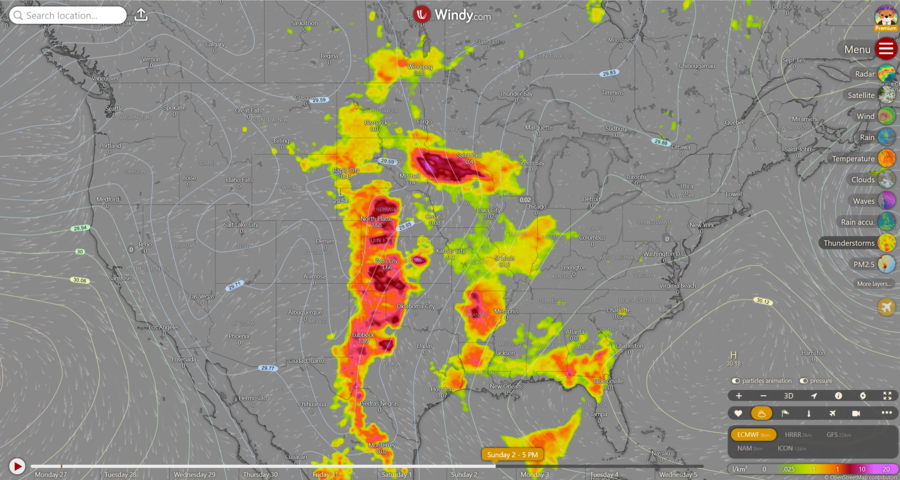
As flying the Sonex home to California is imminent, I’m having some real concerns about the nationwide weather. My gut instinct is telling me this isn’t a very good idea with forecast weather patterns what they are. Especially behind a low-hour AeroVee.

Then again, a 2600 mile UHaul drive isn’t something to look forward to, either!

Screenshot 2024-05-27 102808.png


Re: Sonex-A purchase - What to look for

Posted: Mon May 27, 2024 2:51 pm

by Bryan Cotton

My take is the weather game is the same no matter what engine/airplane you are flying behind/in. If it’s not good, wait it out until it is. Broadly the weather moves west to east, so you can always wait for it to pass then continue west.

With a new to you airplane, your definition of good weather is likely to be more restrictive - so that means potentially more time to complete the trip.

I’d be gung ho to do it if I was retired and didn’t have any time pressure.


Re: Sonex-A purchase - What to look for

Posted: Mon May 27, 2024 5:30 pm

by Hambone

Well, I’m obligated now, so it’s going to have to happen one way or another.


Re: Sonex-A purchase - What to look for

Posted: Tue May 28, 2024 10:19 am

by bvolcko38

The good the about the weather is, it’s always changing. Bide your time wait for good wx


Re: Sonex-A purchase - What to look for

Posted: Tue May 28, 2024 12:04 pm

by builderflyer

From the perspective of someone who has made dozens of flights back and forth across the country in light airplanes, (Aeronca 7AC thru Bellanca Super Viking) your greatest real life weather challenge in the Sonex will probably be wind. None of your T-38 or A-10 time will help you here. You’ll likely find yourself taking on winds that if you were home, you’d just decide to wait to fly in another day or two but the temptation to push on when on a long cross country trip will be huge. Also, those of us who do most of our flying in California just don’t get to fly with gusty crosswinds very much like they do regularly east of the Rockies.

Regarding the Aerovee engine…I don’t know the builder of “your” Sonex but most Aerovee engines have likely been put together by someone who has never built an engine before. Given that scenario, if I was to buy an Aerovee powered Sonex product built by someone else, I think the first thing I would do is tear down the engine to its basic components and put it back together myself so that I could be sure of what I had.

I’ve had thoughts of selling my Sonex after playing with it for 25 years and one thing I’ve strongly considered is to include delivery to the buyers location as part of the selling price. Too many buyers have had issues getting their newly purchased Sonex home, worst case being they killed themselves in the process.

This reads like an awfully negative message. Sorry for that.

Art,Sonex taildragger #95,Jabiru 3300 #261


Re: Sonex-A purchase - What to look for

Posted: Tue May 28, 2024 12:27 pm

by Hambone

Thanks for all of the advice! I’ll certainly take my time, and am prepared to wait it out for decent weather before each leg. I aim to get a sunrise (or earlier) start each day, and be on the ground before the winds kick up. To mitigate the crosswind issue, I’m planning on using airports with crossing runways.

Of course, if it looks too bad at any point, I’ll find a local A&P, take off the wings, and UHaul the rest of the way home.

Regarding the AeroVee and the Sonex, I’ll fly it extensively for 2 days before departing on the cross-country. And if I don’t feel up to it, or feel the airplane and/or engine aren’t up for it, the seller will help me stuff it in a UHaul.


Re: Sonex-A purchase - What to look for

Posted: Tue May 28, 2024 3:31 pm

by Arjay

Hambone wrote:
As I prepare to return to Pennsylvania to pick up the Sonex, I’m getting the jitters reading about all of the AeroVee vapor lock and overheating issues here in the forum. There seems to be an awful lot of after-build mods that are necessary to alleviate the overheating and vapor lock issues. Not being an engineer, or particularly mechanically-minded, it gives me cause for concern. I’m beginning to wonder if the AeroVee is the engine for me.

Hambone: My Story:
Like you, I purchased an Aerovee powered Sonex, with Aerocarb. That was back in 2014. With no prior checkout, training or even reading about the Sonex, (the guy I bought it from did not even know how to get it started). I got a ride to So. Carolina to see the airplane, and had to do some work to connect the throttle to get it running. After that, arranged an annual inspection and came back some time later to pick up the airplane and fly it home to Atlanta. Along the way, I stopped at Tocoa, GA where it experienced a flat tire, so had to leave it there for a few days to get a new tire. Then flew home. I had no problems with the engine during the trip until entering downwind at my home airport at KlZU the engine quit. So, there, my second landing in the airplane was dead stick. (That was interesting- probably my best landing ever in that airplane). Got the engine running on the ground, but it would die when pulled back to idle. That problem continued for several flights, afterwards, and we determined it was vapor locking. After trying several fixes, we finally solved the problem by insulating the exhaust pipes and fuel lines, and ducting outside air to blow directly onto the fuel line going into the Aerocarb. Later, we changed the Aerocarb to a Rotec TBI, which allowed us to do away with the gascolator and fresh air blowing onto the fuel line. Now it runs fine at all speeds, but is very sensitive to mixture—does not run well rich.

Hope this helps.

Ron

Sonex-A purchase - What to look for

https://sonexbuilders.net/viewtopic.php?f=25&t=7735

Page 10 of 25

Re: Sonex-A purchase - What to look for

Posted: Tue May 28, 2024 4:51 pm

by Hambone

AeroVees quitting, thunderstorms, gusty crosswinds. Ugh.

Man, I’m so regretting this whole purchase. Unfortunately, I can’t get out of it now, so I need to make the most of it. At this point, UHauling it home seems like the lesser evil. I’ll be able to make a more reasonable assessment of the situation when I get there tomorrow.

I really appreciate the comments and experiences!


Re: Sonex-A purchase - What to look for

Posted: Tue May 28, 2024 5:57 pm

by Bryan Cotton

There is a lot of negativity here. Just realize that those bad things are not common to every experience.

I think your original plan of flying locally for 2 days to make sure your comfort level is there is good. Then setting off with the approach of waiting out weather. The UHaul solution is always available along the way. An A&P is not required to remove the wings. Would actually be more generally helpful to have either a sonex person or a glider pilot.


Re: Sonex-A purchase - What to look for

Posted: Tue May 28, 2024 6:00 pm

by BRS

Bryan,
If he does remove his wings, remind him & me, isn’t there an easier sequence like right before left or the other way around when removing/installing.

-brs


Re: Sonex-A purchase - What to look for

Posted: Tue May 28, 2024 6:46 pm

by Bryan Cotton

BRS wrote:Bryan,
If he does remove his wings, remind him & me, isn’t there an easier sequence like right before left or the other way around when removing/installing.

-brs

There is a Sonex instruction sheet for that. Looks like right wing goes on first. So to disassemble left wing off first.

Edit:
https://www.sonexaircraft.com/instruction-sheets/


Re: Sonex-A purchase - What to look for

Posted: Tue May 28, 2024 7:29 pm

by Hambone

Got a bus, two trains, and two planes to get to Pennsylvania. Lots of time (maybe too much!) to formulate a game plan.

I don’t see comments as positive or negative, only informative. And I appreciate them, too.


Re: Sonex-A purchase - What to look for

Posted: Wed May 29, 2024 10:23 am

by Scott Todd

And for those handful of comments, positive or negative, there are literally hundreds of users out there flying along contently.


Re: Sonex-A purchase - What to look for

Posted: Wed May 29, 2024 12:48 pm

by bvolcko38

Hambone,
If you haven’t already, go to this link and download the instructions for wing removal and installation.
https://www.sonexaircraft.com/instructi … /#gen-info


Re: Sonex-A purchase - What to look for

Posted: Wed May 29, 2024 2:12 pm

by daleandee

Scott Todd wrote:And for those handful of comments, positive or negative, there are literally hundreds of users out there flying along contently.

Great information from great sources:

viewtopic.php?f=41&t=6545&hilit=accidents

From the thread:

With the Sonex fleet being larger than ever, and with so many aircraft changing hands, we asked Ron to look at statistics involving Non-Buider Owners, or “NBO’s” both in the Sonex fleet, and in the homebuilt fleet at-large. While Sonex NBO’s are not accounting for more accidents overall in the Sonex fleet, it’s important to note that Sonex NBO’s are more likely to have an accident in the first 10 hours of operating their new aircraft than original builders are during the first 10 hours of the aircraft’s phase I flight testing.

This fact is also confirmed by a NTSB report for experimental aircraft:

https://www.ntsb.gov/safety/safety-stud … SS1201.pdf

Which comes to this same conclusion (as one of many):

A similarly large proportion of E-AB aircraft accidents occur shortly after being
purchased by a subsequent owner. For example, 14 of the 224 study accidents
during 2011 occurred during the first flight by a new owner of a used E-AB aircraft.

The takeaway is to get familiar with your “new to you” experimental Sonex and get as much transition training as required in order to be able to not only fly it … but be able to fly it well.


Re: Sonex-A purchase - What to look for

Posted: Thu May 30, 2024 7:12 pm

by Hambone

So I defied the new-owner odds and survived not just one, but two flights. Engine purred along nicely, landings were OK, so I’ve decided to head out early tomorrow morning. Sleeping in the pilot’s lounge to facilitate an early start,and the seller is kind enough to pick me up from Harrisburg after I drop off my rental car.

It’s a real exercise in logistics and cockpit management packing enough for a week, especially without a cargo area behind the seats. I’ve packed everything into a duffle bag and backpack that will be bungeed together and held in by the seat belts.

Flying with an iPad on one leg and a kneeboard on the other doesn’t leave much room for anything else. And I thought an F-16 cockpit was tight!

Anyway, thanks to everyone for the help so far. I hope to get to the Cottons outside Chicago tomorrow before the front gets there, and we’ll see how the weather develops before progressing further west.


Re: Sonex-A purchase - What to look for

Posted: Thu May 30, 2024 8:06 pm

by WaiexB22

I’m glad to hear positive things here after your arrival. Safe travels! Have FUN!

Re: Sonex-A purchase - What to look for

Posted: Thu May 30, 2024 8:59 pm

by daleandee

It appears you are taking a solid, wise, and measured approach to your undertaking. It also appears that you have a fair amount of experience doing this. I trust that nothing I’ve posted came across as negative as my purpose was not to cause fear but rather to gender caution and preparation.

If the plane is ready, you are ready, and the weather is good then it’s time for you to go and meet the Cottons! Safe travels and use caution. You will have a wonderful story to tell us shortly!

Dale
3.0 Corvair/Tailwheel


Re: Sonex-A purchase - What to look for

Posted: Fri May 31, 2024 5:48 pm

by Bryan Cotton

Screenshot_20240531-164420.png

Made it


Re: Sonex-A purchase - What to look for

Posted: Fri May 31, 2024 6:21 pm

by Hambone

Yep. Made it this far! 7+ hours over three legs. Slept in a little pilot lounge at the grass strip in Pennsylvania so I could get an early start. Up at 4:40 and airborne at 6!

The AeroVee purred like a kitten (well, a slightly naughty and noisy kitten), and I managed to cruise at 8500’ on the first two legs. Only managed 6500’ on the third leg as it was much warmer (and bumpier, too!)

Anyway, I’m now at Bryan’s house, and am most appreciative of his amazing hospitality as well as the Sonex shared knowledge.

What a great community!


Re: Sonex-A purchase - What to look for

Posted: Fri May 31, 2024 10:47 pm

by karmarepair

What’s the path from Illinois to Grass Valley? Follow I-80? Maybe Susanville/Chester/Red Bluff, then South to KGOO for the last leg? Vice trying to jump over Tioga Pass? Do you have O2 or extra fuel?


Re: Sonex-A purchase - What to look for

Posted: Fri May 31, 2024 11:18 pm

by BRS

You look right at home.


Re: Sonex-A purchase - What to look for

Posted: Sun Jun 02, 2024 11:35 am

by WaiexB22

Glad to see your progress. Keep it up!..and keep us updated


Re: Sonex-A purchase - What to look for

Posted: Sun Jun 02, 2024 12:27 pm

by Bryan Cotton

Weather is not cooperating. To top that off, we did a compression check and the numbers were low. Borescoped the cylinder and found a couple burned exhaust valves. Adam is giving him a ride to pick up a uhaul. The seller did not want to do a compression test, and that was a danger sign.


Re: Sonex-A purchase - What to look for

Posted: Sun Jun 02, 2024 3:30 pm

by daleandee

Bryan Cotton wrote:Weather is not cooperating. To top that off, we did a compression check and the numbers were low. Borescoped the cylinder and found a couple burned exhaust valves. Adam is giving him a ride to pick up a uhaul. The seller did not want to do a compression test, and that was a danger sign.

Better safe than sorry … but I hate to hear it. I’m guessing that the engine has about 70 hours on it now. Did you notice any cracking between the valves? On my Aerovee I noticed the cracking at about 60 hours. I understand it’s a common occurance with the big valve heads but it still made me uneasy when I discovered it.

Either way the airplane will get home and the repairs will get done. Soon enough all this will be a distant memory with some lessons learned.

Dale
3.0 Corvair/Tailwheel

PS: Flew into our EAA chapter meeting yesterday. It was hot & bumpy and the winds were quite blustrey. Here is a quick shot someone took of me departing:

https://photos.google.com/share/AF1QipM … ZPXzRTWlBR


Re: Sonex-A purchase - What to look for

Posted: Sun Jun 02, 2024 6:17 pm

by WaiexB22

I hate to hear that, but glad to hear there is a plan to get it home and get it fixed.

I know nothing about the aerovee, but I hope its an easy fix and the plane is back up and flying soon.


Re: Sonex-A purchase - What to look for

Posted: Sun Jun 02, 2024 10:02 pm

by Bryan Cotton

daleandee wrote:Did you notice any cracking between the valves?
Dale
3.0 Corvair/Tailwheel

Yep! I saw the crack, we may have gotten a picture.

Re: Sonex-A purchase - What to look for

Posted: Sun Jun 02, 2024 10:39 pm

by Hambone

So, despite yesterday’s poor leakdown test, I was up at 4:30 this morning to eagerly continue my journey westward. I was sitting in the airplane at 6, ready to go. Low ceilings and visibility were all around, but forecast to improve mid-morning. So I sat there for 3 hours, and decided to do a little research on VW air-cooled burned valves.

And I learned that the burned valve in my AeroVee demonstrated all of the attributes of a classic burned valve. It was eroding from the edge (hence the low compression), and had the characteristic green crescent on the edge.

Now I became very apprehensive about continuing. I messaged Bryan and voiced my concerns, and without a moment’s hesitation, Bryan and Adam gave up their entire Sunday to help take the wings off and load the UHaul. These guys possibly literally saved my life! People like Bryan and Adam renew my sometimes waning faith in human nature, and I’m so grateful for their assistance.

So it’s a 2,000 mile UHaul home to California tomorrow, with the Sonex tucked safely behind. Am I disappointed to not be flying home? Sure. But I’d rather be safe than sorry!


Re: Sonex-A purchase - What to look for

Posted: Sun Jun 02, 2024 10:39 pm

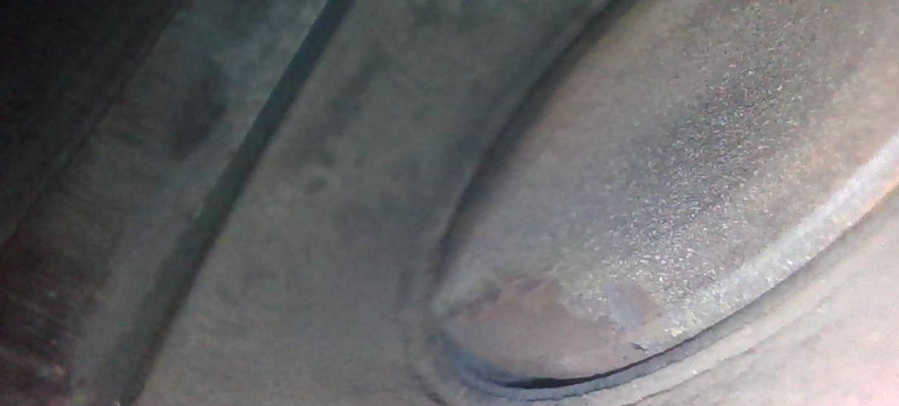
by Bryan Cotton

Burned valve. 80/13 on the leakdown test.

burned valve.png

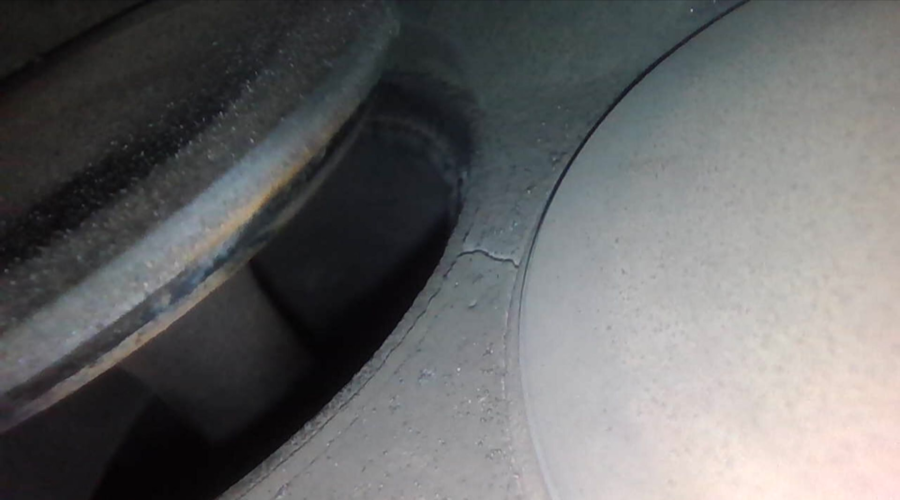
Crack between valves:

head crack.png

These are mofoco heads.

Edit: in theory these heads were off 10 hours ago for new rings, and the valves were not burned. Can that happen this quickly? Interested to hear what the VW gurus think.


Re: Sonex-A purchase - What to look for

Posted: Mon Jun 03, 2024 12:21 am

by Murray Parr

I wonder if the valve stopped rotating, it looks like the burnt part of the valve is right near the crack but might just be a coincidence.


Re: Sonex-A purchase - What to look for

Posted: Mon Jun 03, 2024 12:45 am

by Bryan Cotton

Murray Parr wrote:I wonder if the valve stopped rotating, it looks like the burnt part of the valve is right near the crack but might just be a coincidence.

It’s not the best picture, but the burned part was not aligned with the valve.


Re: Sonex-A purchase - What to look for

Posted: Mon Jun 03, 2024 7:54 am

by bvolcko38

Bryan,
What kind of borescope do you have?


Re: Sonex-A purchase - What to look for

Posted: Mon Jun 03, 2024 8:34 am

by kmacht

That valve doesn’t look too bad. I would triple check to make sure your rockers have the correct .004-.006 gap as being just a little off can cause the valve to open early or late and mess with compression measurements. It’s very common for that measurement to move around for a while after a rebuild. If you do decide to put a new valve in it, it is a relatively simple job as long as the seat is still good. I use an oxygen sensor socket to push down on the valve spring in a drill press and then a small magnet on a stick to grab the keepers. If you lap the new valve to the seat you should be able to tell if the seat is fully sealing or not.

As far as the location of the mark vs the crack between the two seats it should be irrelevant if the rocker arm geometry is setup correctly. One of the reasons that the rockers are not perfectly centered on the top of the valve is so that the valve rotates slightly with each stroke. Any marks lining up would indicate either incorrect rocker geometry or a sticky valve guide keeping things from turning.


Re: Sonex-A purchase - What to look for

Posted: Mon Jun 03, 2024 8:45 am

by Hambone

Well, perhaps the AeroVee would have gotten me home. And of course the forecast over the western half of the US looks great this week. Never mind. It’s all good.


Re: Sonex-A purchase - What to look for

Posted: Mon Jun 03, 2024 9:55 am

by Bryan Cotton

bvolcko38 wrote:Bryan,
What kind of borescope do you have?

Bill, something Adam got on Amazon for $70. It’s chinese, has a forward & side camera. It works well enough!

kmacht wrote:That valve doesn’t look too bad. I would triple check to make sure your rockers have the correct .004-.006 gap as being just a little off can cause the valve to open early or late and mess with compression measurements. It’s very common for that measurement to move around for a while after a rebuild.

Keith,
That valve was cooked. It is a little easier to see when you are moving the camera around than in the static picture. We could see a gap. Also we did check & set all the valves. The #1 exhaust was at 0.005", and my manual says 0.006-0.008. We reset it to 0.007. But besides the picture and the 80/13 leakdown, there is this:

  1. Very low compression when turning over by hand
  2. With the leakdown test going, you could easily move the prop around off TDC and it didn’t want to take off like a normal engine.
  3. With the leakdown test going, air was pouring out the exhaust pipe.
  4. We moved the prop around to open the valves and look at the seats. They were horrible. It was clear they were not sealing well.

Re: Sonex-A purchase - What to look for

Posted: Mon Jun 03, 2024 11:13 am

by Area 51%

Sounds like the worst case of “get-home-itis” I’ve ever heard.

By the time Adam flew back from Sonex with a pair of new heads, Bryan and Hambone could have had the engine ready for the install. 4-5 hours later it’s time for a beer, a nap, then onward.

Gotta be worlds cheaper than a 2000-mile U-Haul rental to boot.


Re: Sonex-A purchase - What to look for

Posted: Mon Jun 03, 2024 3:23 pm

by Bryan Cotton

Another interesting thing we found was there was a distinct click, 12 per revolution, when you turned the prop slowly over. We looked at the Aerovee manual and figured out there are 12 magnets on the PMG. Popped off the starter, popped off the stator cover and the noise went away. Three of the 4 screws that hold the stator to the cover were a little loose, so the stator could move around. Redid the loctite, retorqued the screws, noise was gone.

Re: Sonex-A purchase - What to look for

Posted: Tue Jun 04, 2024 8:19 am

by bvolcko38

" distinct click, 12 per revolution, when you turned the prop slowly over"
Been there. done that.


Re: Sonex-A purchase - What to look for

Posted: Tue Jun 04, 2024 1:15 pm

by Bryan Cotton

Here is a video of the valves.

hambone had mentioned that in a climb he got over 400, and then cooled to 330 or so. On my Aerovee I rarely get over 300 and I typically cruise with the hot cylinders in the mid 200s. One major difference we noticed was the baffles. They sealed ok against the cowl, but there were a lot of gaps where the sheetmetal met the engine. Not sure if that was as built by Derrick or as redone by the second owner, but the tabs that form the back corners were loose or hacked up. The back right side had a huge gap - you could drive a truck through it. Also the rear baffles were not tucked into the cooling tins. Up front there was a large gap forward of the heads. I think all the time I spent to seal that stuff, either with sheetmetal or a gallon of red RTV, was worth it.


Re: Sonex-A purchase - What to look for

Posted: Tue Jun 04, 2024 2:42 pm

by BRS

Bryan, I’ve always wondered how you keep your cyl so cool. Mine (R2300) tend to run about 390 on climb and 360 in cruise (2700-2900 rpm). Oil is around 160. Where are your CHT probes located? My baffles are well sealed and cylinders all wrapped.


Re: Sonex-A purchase - What to look for

Posted: Tue Jun 04, 2024 3:22 pm

by Bryan Cotton

BRS wrote:Bryan, I’ve always wondered how you keep your cyl so cool. Mine (R2300) tend to run about 390 on climb and 360 in cruise (2700-2900 rpm). Oil is around 160. Where are your CHT probes located? My baffles are well sealed and cylinders all wrapped.

Under the top spark plugs.


Re: Sonex-A purchase - What to look for

Posted: Tue Jun 04, 2024 7:05 pm

by Hambone

Well, I never thought I’d be stuck for weather in the UHaul, but here I am in Wyoming with winds gusting to 65 mph, and high-sided vehicles <40,000 lb GW prohibited from using I-80. Wouldn’t be so bad, but I’m stuck at a filthy, disgusting truck stop in the middle of nowhere. Nothing to do but wait it out. Winds forecast to abate tomorrow evening. Oh, well..


Re: Sonex-A purchase - What to look for

Posted: Tue Jun 04, 2024 11:34 pm

by BRS

What an adventure! Think of all the great memories you’ll have (once the not so nice ones fade). Stay safe.


Re: Sonex-A purchase - What to look for

Posted: Wed Jun 05, 2024 9:05 am

by DCASonex

I recall someone on this forum predicting that your biggest problem moving a Sonex cross country would be the winds. Looks like they were right. :slight_smile:

David A.


Re: Sonex-A purchase - What to look for

Posted: Thu Jun 06, 2024 4:14 pm

by Hambone

Made it home relatively unscathed. The soft padding between the leading edge of the wing and the floor of the UHaul came loose toward the end of the trip, and there is some metal-on-metal damage near the root. It’s a small scratch and dent, aligned with a rib. I checked the airplane at least 20 times during the trip, and that pad was there until I drove into California, where I-80 is in atrocious shape. Why can other states keep their interstates in decent shape, but not California, with their crazy taxes? I’m so ready to leave this state, especially after visiting Pennsylvania and Illinois.

Anyway, I’m hoping the damage is purely cosmetic. Is there any way to pull a small dent out of the leading edge? And how do I determine that the damage is not structural? I’ll be able to see the damage better once we unload the airplane this evening.


Re: Sonex-A purchase - What to look for

Posted: Thu Jun 06, 2024 10:02 pm

by Kai

Fascinating story, this: most regrettable the flight had to be abandoned prematrurely. But, so far- so good!

IMHO we all need to learn something from this:

  1. if one actually must have an engine out situation during a ferry flight, the best place to do so must surely be close to the Cotton family residence, Poplar Grove, IL.
  2. the issue with this engine seems to be heat related and in fact overheating with associated issues is something that happens with depresssing regularity to small, aircooled and fairly highly loaded engines. WHY? What are we missing that manufacturers apparently have properly covered? (I can´t recall any instance when heat related issues have been published by manufacturers in factory aircraft). Provided that the engine has been assembled with quality parts according to the book and properly run in- what seems to be the matter with quite a few cooling setups? Air intakes up front and cooling plenums on top seem almost identical on all of them-what else? Cooling air exits too small? Insufficient suction under the engine to get the hot air out? Or is it just that operators disregard factory set temperature limits during flight- or perhaps instrument senders that are either defective and/or improperly positioned?

It would surely be of great advantage to delve deeper into this?


Re: Sonex-A purchase - What to look for

Posted: Fri Jun 07, 2024 9:44 am

by builderflyer

Kai wrote:2) the issue with this engine seems to be heat related and in fact overheating with associated issues is something that happens with depresssing regularity to small, aircooled and fairly highly loaded engines. WHY? What are we missing that manufacturers apparently have properly covered? (I can´t recall any instance when heat related issues have been published by manufacturers in factory aircraft).

Could it be, at least in part, that the “factory” is located in one of the colder parts of the USA and that their aircraft are not typically flown during the hottest time of the year due to their involvement in Airventure (Oshkosh). Just wondering.

Art,Sonex taildragger #95,Jabiru 3300 #261

Re: Sonex-A purchase - What to look for

Posted: Fri Jun 07, 2024 11:22 am

by Bryan Cotton

builderflyer wrote:
Could it be, at least in part, that the “factory” is located in one of the colder parts of the USA and that their aircraft are not typically flown during the hottest time of the year due to their involvement in Airventure (Oshkosh). Just wondering.

Art,Sonex taildragger #95,Jabiru 3300 #261

And yet - here I am, 101nm south of Sonex, flying through the hottest part of the year. Two summers so far. Currently I’d say our limitation is pattern work, 2 up, when it’s hot. Maybe 3 trips around and then go and fly around. I’m going to work on that.


Re: Sonex-A purchase - What to look for

Posted: Fri Jun 07, 2024 11:31 am

by Hambone

Well, I’m now on a quest to build up the AeroVee to be as reliable as possible. While I certainly don’t have Bryan’s skills (I think he could build an AeroVee out of toothpicks), I’m ready, willing, and able to learn.

I stuffed the Sonex in the hangar last night with the help of the hangar owner, a friend and A&P. He was quite intrigued by the Sonex and AeroVee, and obviously found them very different from what he works on in his day job at the Diamond Service Center.

For now, I’m taking a short break from the Sonex, apart from learning more about the AeroVee. The last week has been intense, and I’ve neglected too many other things in life.

Thanks again to everyone for the comments, and once again especially to Bryan and Adam for the insane amount of work they did helping me to get home safely.


Re: Sonex-A purchase - What to look for

Posted: Fri Jun 07, 2024 11:36 am

by N190YX

I cringe when I see pilots making unnecessarily steep climb outs. Particularly in hot weather, climb at a faster airspeed to get more engine cooling. Steep departures may be fun, but hard in the engine!


Re: Sonex-A purchase - What to look for

Posted: Fri Jun 07, 2024 11:57 am

by Bryan Cotton

N190YX wrote:I cringe when I see pilots making unnecessarily steep climb outs. Particularly in hot weather, climb at a faster airspeed to get more engine cooling. Steep departures may be fun, but hard in the engine!

Amen! 70kts to clear obstacles, normal climbs at 80kts, cruise climb for XC at 90 kts.

Glad you are home safe Hambone!


Re: Sonex-A purchase - What to look for

Posted: Fri Jun 07, 2024 12:00 pm

by Hambone

Bryan Cotton wrote:

N190YX wrote:I cringe when I see pilots making unnecessarily steep climb outs. Particularly in hot weather, climb at a faster airspeed to get more engine cooling. Steep departures may be fun, but hard in the engine!

Amen! 70kts to clear obstacles, normal climbs at 80kts, cruise climb for XC at 90 kts.

Glad you are home safe hambone!

Thanks!

And the ding in the wing isn’t too bad. It will be a reminder of a crazy 2,000 mile drive!


Re: Sonex-A purchase - What to look for

Posted: Fri Jun 07, 2024 2:34 pm

by Kai

I was at pains not to mention any particular brands in my first posting, but since one make has already been brought forward by others I could just as well mention another one from way down south in another continent. They manufacture complete airplanes and also sell their engines to E-AB´ers. To put it carefully, they have put a lot of design effort into their own cowlings. As a result their own aircraft generally perform as advertised without a pletoria of hair raising engine heat issues, whereas the E-AB engines seem to suffer far too much from this ailment, notwithstanding the fact that their findings have been published in their comprehensive installation manual. I wonder why- maybe we are just to lazy to adhere to their suggestions?

Taking this one step further and looking at (very expensive!) european brands of VW-1 aeroderivatives, they seem to do quite well in airframes specifically designed for them (but throw away the heads after 500 hrs flight time!) Once years back I attended an engine course for one such specific brand. It was made quite clear that the original VW cooling fan would force feed 900 l/min of cooling air through the fins on heads and cylinders at full tilt and at a heat load of some 40-50 HP. Nedless to say, such a mass of cooling air is as good as unattainable in our slow moving airplanes- yet we flog out almost twice that power in continuous cruise settings! Let´s face it- adequately cooling these engines takes a lot of dedicated work by properly informed and well trained expertise. A couple of weekends around the patch with a factory (any factory!) supplied cowling having nice looking air in- and outlets, is far from sufficient.


Re: Sonex-A purchase - What to look for

Posted: Fri Jun 07, 2024 11:58 pm

by karmarepair

Hambone wrote:Is there any way to pull a small dent out of the leading edge? And how do I determine that the damage is not structural? I’ll be able to see the damage better once we unload the airplane this evening.

“Pops A Dent” glue puller and patience, and you’ll never know the dent was ever there. And you can look in the wing root with a flashlight and an inspection mirror to look for “tripping” of the ribs, but if the visible dent is not ON the ribs, internal, structural damage seems exceedingly unlikely.
Pictures?


Re: Sonex-A purchase - What to look for

Posted: Sat Jun 08, 2024 12:40 am

by karmarepair

On cooling http://bobhooversblog.blogspot.com/search?q=cooling
Gone now, but “Veeduber” flew an Aeronca C-3 with an 1100 cc VW BEFORE 1960, and may have been the first person in the USA to fly behind a VW. He built and sold VW aeroengines for a while, had strong opinions, and was a friend and a mentor to me. Also check out his HVX modifications, to put more oil in the heads around the valves to carry off heat, for the VW is as much Oil Cooled as Air Cooled. A typical Aerovee DOES NOT have these mods, mine has a FEW of them.

Pressure differential between the upper and lower plenum should be about 9 inches of water at full power, which a well designed and implemented “firewall” forward should be able to easily achieve at about 100 MPH.

John Monnett has a lot of hours behind VW aeroengines, and had the help of Claude of Claude’s Buggies (now CB Performance) and his sons, both pilots, in the development of the ORIGINAL AeroVee (for the Sonerai) and the AeroVee 2.0, but he did some things that made me wonder. The first iteration of baffles on the Sonex Aerovee were Not Very Good; the current “fence” baffles are much better, IMHO. The needed lip for the cowling outlet is NOT in the plans set, but is rather in the instructions for the cowling, and are easy to miss. The oil cooler inlet for the Cooler Under The Sump arrangement has a tendency to pressurize the LOWER plenum, sapping the pressure differential. Someday, I’ll change my airplane over to a top mount cooler, but I want to fly it first - we are close. This year.

Another issue has been the heads themselves, particular the aftermarket, drag racing oriented ones. They often did not have adequate airflow around the exhaust valves. The heads AeroConversions sells now are based on Chinese sourced EMPI castings and are as good as the Original German heads that have been unavailable for 25 years.

Searching this forum and a lot of Aerovees have burnt valves and cracked heads in frightfully short periods of time, but plenty of others have gone hundreds of hours with little trouble.


Re: Sonex-A purchase - What to look for

Posted: Sat Jun 08, 2024 2:47 am

by Kai

Eh- well, yes: that´s it, then!

You´re more to the point than I am: I hope that both your posting and Mr Hoovers blog is read by all VW-1 flyers- and especially Hambone.

And thanks!
Kai


Re: Sonex-A purchase - What to look for

Posted: Sat Jun 08, 2024 7:23 am

by daleandee

karmarepair wrote:On cooling http://bobhooversblog.blogspot.com/search?q=cooling
Gone now, but “Veeduber” flew an Aeronca C-3 with an 1100 cc VW BEFORE 1960, and may have been the first person in the USA to fly behind a VW. He built and sold VW aeroengines for a while, had strong opinions, and was a friend and a mentor to me. Also check out his HVX modifications, to put more oil in the heads around the valves to carry off heat, for the VW is as much Oil Cooled as Air Cooled.

You might wanna be careful bringing Bob into the disscussion as some here might learn things they didn’t know and others might well be offended. I believe his “Christmas Engine” story is a good read for an honest approach into reality:

https://bobhooversblog.blogspot.com/200 … ngine.html

Dale
3.0 Corvair/Tailwheel

Re: Sonex-A purchase - What to look for

Posted: Sat Jun 08, 2024 11:11 am

by Hambone

Lots to read! Thanks to everyone.

Now I assume there are scores, perhaps even hundreds of AeroVees flying successfully without melting valves and warping heads. Why does temperature management seem to be so much more critical in an AeroVee than in a similarly configured ‘traditional’ air-cooled aircraft engine, and is it a foregone conclusion that stock AeroVees are always going to be problematic?


Re: Sonex-A purchase - What to look for

Posted: Sat Jun 08, 2024 4:26 pm

by Kai

I was under the impression that this would have been made clear in the previous postings.

To start with the latest- IMHO it is a foregone conclusion that sooner or later all these small high output air cooled engines that depend on differential cooling will come up with some cooling/heat related issue- I don´t think it is confined to only one make. I would certainly not be surprised if someone could come up with exeptions- but generally: yes.

Presently the only heads in use by converters are the DP ones, as these are presently the only ones commercially available as new, although the single ports are better for our use. As Hoover wrote in his blog 20 years ago, this dp design is flawed for aeroderivative application. Sooner or later something will give- there is just not enough cooling surface for exhaust seats, valve heads, stems and guides. Exactly when depends on the builders attention to detail in head preparation for high output operation without a massive cooling fan, the design and construction of a proper no air leak cooling plenum, the installation and testing of air fences and tins under the head to take advantage of the available cooling air, sufficient pressure differential between cooling plenum and cowling outlet, hamfisted engine operation during climb- the list goes on and on. All are issues the builder will have to deal with before the installation may be considered operational- it is tedious work.

It is this individuality that makes it so hard to offer to the point comments. Not two installations are exactly alike- something is always different.

LyCons on the other hand, are designed from start for pressure differential cooling. Great attention has been given to large cooling areas around the exhaust side of the heads, as well as the cowlings- though it must be admitted that nothing in this world is perfect: last season a Warrior plonked down on our airstrip with an engine that had swallowed an exhaust valve. But there are thousands and thousands of them, all running just fine under very strict operational directions, with only a small percentage of issues. Compare that to the relatively few VW-1´s in operation and the high quantity of issues they experience.


Re: Sonex-A purchase - What to look for

Posted: Sat Jun 08, 2024 4:40 pm

by Bryan Cotton

Fortunately my AeroVee has never read the Hoover blog. 265 hours and counting. I’d like to catch up to the high time AeroVee guys, but some of them set a high bar to reach. I do agree that the cooling is not as good as the Lycoming series. I also strongly suspect that the burned valves Kevin experienced happened before he got the airplane. One of his concerns was it didn’t seem like there was much compression when turning the prop by hand, when he initially flew out to check it out. That’s a hard thing to quantify via email. But yeah, it was a lot less than mine when he arrived here. With 60 hours in the logbook, it would be interesting to see if all the break-in valve adjustment and head torque schedule was carried out. We set the valves when he was here and some of them were on the tight side.


Re: Sonex-A purchase - What to look for

Posted: Mon Jun 10, 2024 1:29 am

by Kai

Great Plains once offered liquid cooled heads for the VW-1. It´s probably like cussing in church, but I was sorely tempted to try them on a friends engine which was also on the hungry side for valves and heads. However, not the lightest by design, the VW engine got even heavier with these on, so Steve Benett told me it had not been a marketing success. Friend refrfained from this project and took his business elsewhere.

I, on the other hand, was so sick of the neverending head battle with my aircooled Jab, that I went Down Under with my pennies and got a set of LCH´s. The result was like magic, and I immediately became a convert. Gone were the burnt and broken valves, cracked heads, detonation, and loose seats. Although the engine itself became a little lighter with these heads, coolant, radiator and pump increased installed weight somewhat- nothing the Sonex could not handle. Since my need for speed later forced me to remove this engine from the airframe, as far as I know it is still putt-putting around up there with its new owner. When I ask him for any issues, all I get back is a puzzled look.

Like I said- like cussing in church…………


Re: Sonex-A purchase - What to look for

Posted: Mon Jun 10, 2024 2:03 pm

by Arjay

Bryan had stated:
“hambone had mentioned that in a climb he got over 400, and then cooled to 330 or so. On my Aerovee I rarely get over 300 and I typically cruise with the hot cylinders in the mid 200s. One major difference we noticed was the baffles. They sealed ok against the cowl, but there were a lot of gaps where the sheetmetal met the engine. Not sure if that was as built by Derrick or as redone by the second owner, but the tabs that form the back corners were loose or hacked up. The back right side had a huge gap - you could drive a truck through it. Also the rear baffles were not tucked into the cooling tins. Up front there was a large gap forward of the heads. I think all the time I spent to seal that stuff, either with sheetmetal or a gallon of red RTV, was worth it.”

I bought my legacy Sonex, with Aerovee, from the second owner. Originally, I had no particular cooling issues, but they started when I replaced the CHT probes (one failed and I replaced both). Now, I can never keep the CHT under 400 F on climb out. Even step climbing at 70 mph, 2800 or so RPM, it always goes over 400. I will level off and richen the mixture and get it down into the 390’s, then climb some more, while it goes over 400 during the climb. Ususally, after about 30-40 minutes into the flight, the CHT will come down a little so and I can keep it under 400, then.

We have tried several things to help this: opened up the air inlet and outlets in the cowl, partially closed off the inlet to the bottom oil cooler, and taped off the side NACA opening in the cowl that was only feeding air into the bottom area under the engine, checked the baffles around the engine, etc. These changes have helped a little, but the problem, although improved, is still evident. Not having built the plane, myself, I don’t have the knowledge and/or building skills to know what to do to solve this. I NEED SOME HELP. (And I suspect I’m not alone).

Bryan, you have obviously worked miracles with your installation. I am so envious of what you and Adam have achieved with your low CHT’s. Would you mind sharing the details of how you did it? Could you provide details, including pictures, of what you did to get such low CHT numbers? Where did you put that gallon of red RTV? What are the dimensions of your cowl air inlets and outlets? Can you show us how you sealed the air box around your engine, including baffles, seals, closed gaps, etc.?

Thank you so much. I am sure you have and will continue to help many of us with this issue.

Ron
Legacy Sonex taildragger with Aerovee, Rotec TBI, modified Anson tailwheel


Re: Sonex-A purchase - What to look for

Posted: Mon Jun 10, 2024 2:22 pm

by Bryan Cotton

Arjay wrote:Bryan, you have obviously worked miracles with your installation. I am so envious of what you and Adam have achieved with your low CHT’s. Would you mind sharing the details of how you did it? Could you provide details, including pictures, of what you did to get such low CHT numbers? Where did you put that gallon of red RTV? What are the dimensions of your cowl air inlets and outlets? Can you show us how you sealed the air box around your engine, including baffles, seals, closed gaps, etc.?
Ron
Legacy Sonex taildragger with Aerovee, Rotec TBI, modified Anson tailwheel

Ron, next time I have the cowl off I’ll take pictures and start a new thread. I’ll confess that my CHTs have never been calibrated. But I’ve also looked at my valves with the borescope when I was troubleshooting the lean #1 cylinder issue, and they looked great. Totally different than Hambone’s. We probably had about 240 hours when I last had a look at them. Regarding the inlets and outlets - I followed the plans.


Re: Sonex-A purchase - What to look for

Posted: Mon Jun 10, 2024 4:13 pm

by BRS

In my thinking, valve condition and CHT’s are not directly related. Yes EGT affects CHT but really well baffling and appropriate inlet/outlet will keep CHT’s happy while valves are still cooking. Fuel flows as well as fuel type (even oil type) seem to affect the valves more than CHT’s Unless of course you are north of 450 or so on the heads and the seats are getting pounded into recession.

I’ll get a pic of how the Revmaster CHT probes are installed, for your new thread Mark. They are considerably different from the spark-plug gasket type. No doubt they will give different results. Hotter or cooler I’m not sure.


Re: Sonex-A purchase - What to look for

Posted: Tue Jun 11, 2024 12:49 am

by Kai

I have always been thaught that the main heat generator is combustion. Combustion temperature (EGT) is a function of fuel flow: too little fuel and the EGT goes through the roof. One needs to take care that the EGT´s in all cylinders are reasonable well balanced with a delta T of say 30-40 centigrades, and a maximum not exceeding manufacturers values. I don´t know about the VW-1´s, but on the Jabs this was a daunting task. Too much fuel and everything coked down, too little and the seats were dropping out. Further complicating the situation is the fantastic fuel quality available to us these days, with these small engines none too happy about the lead in Avgas 100LL, forcing users over to Mogas with ethanol. Wonderfull!. The only asset normally available for checking the EGT, is the temp probe. Its readings are hugely affected by where in the pipe it is positioned. Manufacturers indicate 100-120 mm from the exhaust port:they seldom say anything about the inside or the outside of an exhaust pipe elbow, up- or downstream from it, or on the side. The result is that a direct comparison is of questionable value- some are even sitting smack in the middle of the cooling air stream.

Much of the heat goes out with the exhaust, but a lot remains, which needs to be dealt with, as it is soaked up by the components in the cylinder head, the piston crown and the top of the cylinder causing many issues if left unattended. The only medium available for piston crown cooling, is engine oil- and you can do little about it. The rest is handled by liberal quantities of cooling air. The final result of its work is quantified by the CHT probe. The lower its value, the better- IMHO well below 150 C/300 F as a continuous value for safe operation. A common position of this as a ring probe is under a spark plug- which unfortunately is sitting smack in the middle of the cooling air as a result of engine design. An alternative position as indicated by Brock is therefore highly interesting. Jab too tried to do something about this and stuck a probe into the head between the sparkplugs- still with liberal quantities of cooling air flowing over it. Something better needs to be found.


Re: Sonex-A purchase - What to look for

Posted: Tue Jun 11, 2024 1:43 am

by WesRagle

HI Guys,

Kai wrote:The final result of its work is quantified by the CHT probe. The lower its value, the better- IMHO well below 150 C/300 F as a continuous value for safe operation.

Just to back up the above statement.

Back when I was first flying the Onex I ask Scott Casler or Hummel Engines this question: "Is there a temperature that is just too low for CHT after break in?

His reply: “The lower the CHT the better.”

I’ve spent a lot of time thinking about fuel injection lately. One of the books I’ve read suggests that it is a mistake to inject fuel directly into an open intake valve. It’s better to evaporate the fuel against a closed intake valve just before valve opening to ensure full evaporation. I can’t help but wonder if evaporating a gallon of fuel per hour at each intake port might lower CHTs a bit.

Wes


Re: Sonex-A purchase - What to look for

Posted: Tue Jun 11, 2024 4:11 am

by Kai

Wes,

You may perhaps have a point, but I am speculating the very small quantity of heat it takes to evaporize injected fuel spray, counts for nothing compared to the great quantity of heat already stored in the head as well as residual heat in the combustion chamber.. So should you start with an efi project on you Onex engine, don´t be disapointed if you notice no change. Another misconseption is that efi will noticeably increase engine power, everything else being the same. Truth is there might be a very few ponies gain, solely because the engine no longer has to negotiate the power loss associated with the (manifold) pressure drop in the venturi.

Re: Sonex-A purchase - What to look for

Posted: Tue Jun 11, 2024 12:50 pm

by WesRagle

Kai,

Yeah, you’re probably right. But I am expecting several advantages. One advantage that I’m really hoping for is much better balanced cylinder to cylinder fueling. If I can get that I should be able to make better power without over leaning, and burning the exhaust valve of, that one (or two) lean cylinders.

Wes


Re: Sonex-A purchase - What to look for

Posted: Tue Jun 11, 2024 2:42 pm

by Kai

Wes,

Well, yes- should you decide to go for an efi system with en ecu having sequential control og each injector, balancing the egt´s should be well within reach. However, each cylinder producing the same power is another matter altogether. First you need an induction system that allows each cylinder to suck in the exact quantity of air. Then you need an exhaust system that gives exactly the same amount of back pressure to each cylinder. This to warrant even filling. If you manage this over the entire rpm range you are close to an even power loading of all cylinders.

Good luck with that, as it has not been done yet, at least not as far as I know. You will need an induction plenum at least 1.3 times the volume of each cylinder- perhaps something close to what Edge Performance does with their EP conversion of the R912 + + range. And probably also an exhaust extractor system of considerable size: where to tuck that one away under the cowling will be an exercise in dexterity.

Please keep us informed about your progress!


Re: Sonex-A purchase - What to look for

Posted: Tue Jun 11, 2024 3:14 pm

by Jester504

NACA did at least two studies in the 40s investigating the relationship between CHT, EGT, valve temperature, and valve condition. They had to create custom valves with thermocouples in them. The results proved that valve temperature correlates nicely with EGT (but 150-200 F lower) and not CHT as many think.

Here’s a link to the first: https://www.abbottaerospace.com/downloa … rmocouple/


Re: Sonex-A purchase - What to look for

Posted: Tue Jun 11, 2024 6:27 pm

by WesRagle

Hi Jester,

That’s interesting.

Where is the link to the second :slight_smile:

Wes


Re: Sonex-A purchase - What to look for

Posted: Tue Jun 11, 2024 10:30 pm

by BRS

Kai wrote:Wes,

Well, yes- should you decide to go for an efi system with en ecu having sequential control og each injector, balancing the egt´s should be well within reach. However, each cylinder producing the same power is another matter altogether. …

With EFI balancing EGT’s is not quite the right idea. The thought of having exact equal temps and or power on four separate (essentially) engines (cylinders) is a dream. With EFI what you can do, and do very well, is to have each cylinder run the same fuel ratio at at-least a small range of power band. So the better test is what some call the Gami Test. That is, tune the cylinders so that they all reach peak EGT at the exact same fuel flow. So though they may all indicate different temps at say 150 deg ROP, they will still all be on the same page and running in unison.

This is what I’ve learned from running the SDSEFI on three different engines (Subaru EJ22, Rotax 9XX franken motur, Lyc IO-360).


Re: Sonex-A purchase - What to look for

Posted: Wed Jun 12, 2024 9:46 am

by Kai

A dream indeed: how true!

However, I did not want to be a naysayer and squash all his ambitions. If he wants to go efi, which I personally believe is the right way to go- I have flown behind these things since 2011- by all means: have a shot at it. But don´t get too disappointed with the level of success you have achieved after having forked out considerable quantities of good money.

Another thing altogether is that this thread started more or less an information to all concerned partiets about the challenges one could meet when working to get temperatures on the loose under control in differential air cooled small aero engines. On a general basis I would say that we´re still not there.

Anybody with excess of say at least 500 issue free hours in the air please tell us about your findings and solutions!


Re: Sonex-A purchase - What to look for

Posted: Wed Jun 12, 2024 9:57 am

by Bryan Cotton

Kai wrote:Anybody with excess of say at least 500 issue free hours in the air please tell us about your findings and solutions!

I’ll suggest this thread as a good place to do it:
viewtopic.php?f=7&t=7279

My 270 hours were not trouble free. Mostly I chased oil temperature issues. I do still plan to add the B model exits. I’m chasing the ability to do pattern work when it is hot out.


Re: Sonex-A purchase - What to look for

Posted: Wed Jun 12, 2024 11:55 am

by WesRagle

Hey Bryan,

Bryan Cotton wrote:I’ll suggest this thread as a good place to do it:
http://www.sonexbuilders.net/viewtopic.php?f=7&t=7279

Let’s start a new thread. Based on recent banter I think a good title might be:

“The perfect VW (Chasing the Dream)”

What da’ya think.

Anybody with excess of say at least 500 issue free hours in the air please tell us about your findings and solutions!

If you listen to Jeff’s pod cast on SDS EFI, "Episode 58 - “SDS EFI for your AeroVee” (ref. http://www.sonexflight.com/58/sonexflight_e58_jun2019.mp3), Peter claims (if I’m remembering correctly) 600 hour of trouble free flying. However, as a maintenance item, he refreshed his heads every 200 hrs.

However, I did not want to be a naysayer and squash all his ambitions.

Impossible :slight_smile:

There is a lot to learn here.

Here’s a link to the first: https://www.abbottaerospace.com/downloa%20…%20rmocouple/

I had never read a study about valve temperature. That pretty much proves that VW flyers don’t need to look at CHTs when they find burnt valves. The problem is more likely high valve temperature and the best proxy we have for that is EGT. Maybe VWs just have to be “fuel cooled” under heavy load. That can be best done with balanced fuel distribution and that can be best done with EFI.

Pressure differential between the upper and lower plenum should be about 9 inches of water at full power, which a well designed and implemented “firewall” forward should be able to easily achieve at about 100 MPH.

I’d like to know how to do that!

Like I said, a lot to learn.

Anyway, the perfect VW? Take a RevMaster, replace the ignition with AeroVee ignition, replace the charging system with a Great Plains 35 Amp (Harley) alternator, add EFI, and find some gold paint that will stick :slight_smile:

Wes


Re: Sonex-A purchase - What to look for

Posted: Wed Jun 12, 2024 4:26 pm

by Jester504

WesRagle wrote:Where is the link to the second :slight_smile:

https://www.abbottaerospace.com/downloa … -cylinder/

WesRagle wrote:That pretty much proves that VW flyers don’t need to look at CHTs when they find burnt valves. The problem is more likely high valve temperature and the best proxy we have for that is EGT.

Generally, I agree, but it’s important to point out that while the valve temperature correlates with EGT, the absolute EGT measurement itself isn’t really precise, so it still doesn’t tell us directly or indirectly what temperature the valve actually is. You just know that peak EGT is roughly peak valve temp, not peak CHT. Theoretically, you will cool the valves by being either richer or leaner than peak EGT. Also, to my understanding, it may not be the temperature of the exhaust gas by itself burning the valves. The valves could have other problems, like not rotating properly, that cause the heat to build-up uncontrollably without shedding it in the normal way.


Re: Sonex-A purchase - What to look for

Posted: Wed Jun 12, 2024 6:50 pm

by WesRagle

Jester504 wrote:Generally, I agree, but it’s important to point out that while the valve temperature correlates with EGT, the absolute EGT measurement itself isn’t really precise, so it still doesn’t tell us directly or indirectly what temperature the valve actually is.

Agreed. But… at that one point, stoichiometric/peak, EGT has special value. If you can use EGT to tune an EFI unit such that EGTs all peak at the same mixture setting, that’s pretty cool. EGT then get’s demoted to a cross check parameter and from that point forward you can operate your engine by mixture according to flight regime. I think that, along with an EGT limit set below spec, will help me manage/keep me from abusing the engine.

Wes

Re: Sonex-A purchase - What to look for

Posted: Wed Jun 12, 2024 9:06 pm

by BRS

Bryan Cotton wrote:

BRS wrote:Bryan, I’ve always wondered how you keep your cyl so cool. Mine (R2300) tend to run about 390 on climb and 360 in cruise (2700-2900 rpm). Oil is around 160. Where are your CHT probes located? My baffles are well sealed and cylinders all wrapped.

Under the top spark plugs.

This might explain a bit of difference. My CHT probes are mounted in the head just above the exhaust manifold.


Re: Sonex-A purchase - What to look for

Posted: Thu Jun 13, 2024 1:15 am

by Kai

That´s a new one! Never seen anything close to that good. It seems that a hole has been drilled in the head coming out just above the head bolt stem. Then they stick in the cht sensor and secure it with a setscrew. Well out of any contact with fridgit cooling air! And the need to replace a ring sensor on more or less a regular schedule because the spark plug pipe killed it when the plug had to come out, is a thing of the past! I speculate this is Mr Horvat´s brainchild?


Re: Sonex-A purchase - What to look for

Posted: Thu Jun 13, 2024 1:32 am

by Bryan Cotton

BRS wrote:This might explain a bit of difference. My CHT probes are mounted in the head just above the exhaust manifold.

http://www.aeroconversions.com/support/ … nstall.pdf

Sonex instruction sheet says under the plug or close to it.


Re: Sonex-A purchase - What to look for

Posted: Thu Jun 13, 2024 7:45 pm

by BRS

Bryan Cotton wrote:

BRS wrote:This might explain a bit of difference. My CHT probes are mounted in the head just above the exhaust manifold.

http://www.aeroconversions.com/support/ … nstall.pdf

Sonex instruction sheet says under the plug or close to it.

Yup! Revmaster vs Aerovee design choices. I’ll probably not take the time but it would be interesting to mount a temporary probe like in the aerovee instructions just to see how different the two locations are.


Re: Sonex-A purchase - What to look for

Posted: Thu Jun 13, 2024 8:32 pm

by WesRagle

Hi Brock,

BRS wrote:Yup! Revmaster vs Aerovee design choices. I’ll probably not take the time but it would be interesting to mount a temporary probe like in the aerovee instructions just to see how different the two locations are.

I know it’s a big ask, but if you get a chance please do. It would be valuable information.

Also, you wouldn’t happen to have a pic of the thermocouple tip. Just wondering how the junction is made. Cr/Al or Copper Con?

Edit: What is that black adhesive used to secure the T/C wires?

Thanks,

Wes


Re: Sonex-A purchase - What to look for

Posted: Fri Jun 14, 2024 12:49 pm

by Area 51%

Location—Location—Location.
This is where the probe was located on the Xenos prototype. The owner was always bragging about how low his CHTs were in a protracted climb. Typically in the 175deg range.
Funny thing…he’s had to replace a cylinder head every 75 hours or so. .


Re: Sonex-A purchase - What to look for

Posted: Fri Jun 14, 2024 1:07 pm

by Kai

Jester504 wrote:NACA did at least two studies in the 40s investigating the relationship between CHT, EGT, valve temperature, and valve condition. They had to create custom valves with thermocouples in them. The results proved that valve temperature correlates nicely with EGT (but 150-200 F lower) and not CHT as many think.

Here’s a link to the first: https://www.abbottaerospace.com/downloa … rmocouple/

Far be it from it that I etc etc………. , but what did I tell you all those years ago?? Unfortunately it is not known where exactly in the exhaust pipe NACA would have located an EGT probe, so we are still more or less in the dark. In my work with gas temperatures and pressure there were a lot of rules defining the location to ensure uniform and comparable readings: downstream at least 3 pipe diameter lengths from any elbow, and upstream about 5 diameter lengths from an elbow- to mention a few. Not so easy in the cramped exhaust piping of a VW-1. if anybody has any good ideas- please come forward!


Re: Sonex-A purchase - What to look for

Posted: Fri Jun 14, 2024 6:34 pm

by Jester504

Kai wrote:Unfortunately it is not known where exactly in the exhaust pipe NACA would have located an EGT probe, so we are still more or less in the dark.

Whether they put them at the top or the bottom of the exhaust or put each one in a different spot, it wouldn’t change the resulting curve which correlates with valve temperature and not CHT. I agree that it would change the absolute EGT measured for a given cylinder, but the correlation is what’s interesting, not the specific temperature.


Re: Sonex-A purchase - What to look for

Posted: Fri Jun 14, 2024 6:38 pm

by Jester504

WesRagle wrote:Agreed. But… at that one point, stoichiometric/peak, EGT has special value. If you can use EGT to tune an EFI unit such that EGTs all peak at the same mixture setting, that’s pretty cool. EGT then get’s demoted to a cross check parameter and from that point forward you can operate your engine by mixture according to flight regime. I think that, along with an EGT limit set below spec, will help me manage/keep me from abusing the engine.

Agreed! Still not convinced any EGT limit is anything more than shooting in the dark, since the measurements are so variable across installations, but I’m with you on the general idea of using it as a cross-check and always setting your mixture setting relative to peak EGT.


Re: Sonex-A purchase - What to look for

Posted: Fri Jun 14, 2024 7:35 pm

by daleandee

Good thoughts here concerning EGTs and the life of an exhaust valve. Still I hope that the effect of high CHTs are considered as most of the cooling of the exhaust valve is done by the valve being in contact with the head and still more through the valve stem. (I’ve heard different numbers but most give an 80% or more through the valve seat and 15% or less through the stem). Cooling the exhaust valves by enrichening the mixture can only go so far. If the heads are running redline CHTs (or nearly so) then something needs to be done.

In the report cited earlier it was noted, “…. relatively large increases in over-all cylinder-head cooling are required to maintain constant valve temperature.” When CHTs are high the valve cannot be cooled as well as with lower temps. High CHTs weaken the aluminum and cause seat loosening and recession and misalignment. When the valve and seat can’t seal and hot exhaust gas escapes past the valve the burning begins.

A good review is found here with many references (including the earlier study): https://www.csobeech.com/exhaust-valves.html

“Variation in fuel-air ratio (leaning) had a relatively great effect on valve temperature.”

Many were surprised when Jabiru gave such low max EGT numbers for their aircooled engines along with lower max CHT numbers also. Some of that may be due to the alloy used in their heads. VWs heads are not healthy when run over 400-450ºF while Corvair turned on the idiot light at 575ºF. No one wants to run their heads that hot.

FWIW, I generally see 225-250ºF CHTs in the summer with EGTs running 1225-1250ºF. When I had an Aerovee Sonex the best I could do with head cooling in cruise was 385ºF on the left rear (all others were lower) while the left front was slobbering rich. I was reading accurate temps taken under the plugs.

Charlie Radford did a test back in the days of the old Yahoo group where he compared the under the plug sensor with the smaller probes mounted next to the plug per the Sonex instructions. IIRC I believe the difference was 20-30ºF cooler for the remote mounted sensor. There were a few that mounted a CHT ring probe under the head bolt near the exhaust valve. That was said to be 70ºF lower than a plug mounted sensor. Some were claiming amazing CHT numbers but hadn’t bothered to calibrate thier system and/or mounted their probes in places where the cooling air was cooling the probes.

So the joke was to mount the probes where they made you feel the best and just go fly the thing! 8~)

Dale
3.0 Corvair/Tailwheel

Re: Sonex-A purchase - What to look for

Posted: Fri Jun 14, 2024 7:50 pm

by BRS

WesRagle wrote:Hi Brock,

BRS wrote:Yup! Revmaster vs Aerovee design choices. I’ll probably not take the time but it would be interesting to mount a temporary probe like in the aerovee instructions just to see how different the two locations are.

I know it’s a big ask, but if you get a chance please do. It would be valuable information.

Also, you wouldn’t happen to have a pic of the thermocouple tip. Just wondering how the junction is made. Cr/Al or Copper Con?

Edit: What is that black adhesive used to secure the T/C wires?

Thanks,

Wes

Wes, the RTV (my favorite) I buy at Napa (National Aircraft Parts Association). The junction looks to be a simple weld. I believe this kind of probe can be twisted and crimped. I’ll see about doing a ground run comparason test.


Re: Sonex-A purchase - What to look for

Posted: Fri Jun 14, 2024 8:03 pm

by BRS

So the joke was to mount the probes where they made you feel the best and just go fly the thing! 8~)

Dale, not just a joke but an actuall practice. I’ve a friend who flies an origanal c-172 straigt tail. They had trouble with the oil temps during certification on those planes. The fix was to install a blast tube pointed at the oil temp sensor. (at least that’s how I understand it) Amazing, on a certified plane.


Re: Sonex-A purchase - What to look for

Posted: Fri Jun 14, 2024 9:58 pm

by WesRagle

BRS wrote:Wes, the RTV (my favorite) I buy at Napa (National Aircraft Parts Association). The junction looks to be a simple weld. I believe this kind of probe can be twisted and crimped. I’ll see about doing a ground run comparason test.

Thanks,
Wes


Re: Sonex-A purchase - What to look for

Posted: Sat Jun 15, 2024 3:56 am

by Kai

WesRagle wrote:Hi Brock,

BRS wrote:
I know it’s a big ask, but if you get a chance please do. It would be valuable information.

Edit:

Thanks,

Wes

Following!
Kai


Re: Sonex-A purchase - What to look for

Posted: Sat Jun 15, 2024 8:00 am

by bvolcko38

In my experience, the Aerovee valves do not rotate at all. Even though my rockers were set up as per the plans, I see absolutely no evidence of valve rotation. I’ve had both heads off at different times and there is no exhaust valve rotation whatsoever. There is no way the lubed rocker with an arm of a couple millimeters can overcome the friction of the valve spring. Certified, and other engines have valve rotators.


Re: Sonex-A purchase - What to look for

Posted: Sat Jun 15, 2024 4:20 pm

by daleandee

bvolcko38 wrote:In my experience, the Aerovee valves do not rotate at all. Even though my rockers were set up as per the plans, I see absolutely no evidence of valve rotation. I’ve had both heads off at different times and there is no exhaust valve rotation whatsoever. There is no way the lubed rocker with an arm of a couple millimeters can overcome the friction of the valve spring. Certified, and other engines have valve rotators.

My Corvair and those conversion engines built by Dan Weseman or William Wynne have rotators on the exhaust valves (very early models may not have them. Easy enough to check).

Dale
3.0 Corvair/Tailwheel


Re: Sonex-A purchase - What to look for

Posted: Sat Jun 15, 2024 7:18 pm

by BRS

I had an A&P friend (now flown West) who used to test lycoming valve rotation by repetitivly tapping the rocker with a mallot. You could watch the valve stem turn. Takes some thought so you don’t end up pounding on the push rod thus bending it.


Re: Sonex-A purchase - What to look for

Posted: Sun Jun 16, 2024 1:13 am

by Kai

bvolcko38 wrote:In my experience, the Aerovee valves do not rotate at all. Even though my rockers were set up as per the plans, I see absolutely no evidence of valve rotation. I’ve had both heads off at different times and there is no exhaust valve rotation whatsoever. There is no way the lubed rocker with an arm of a couple millimeters can overcome the friction of the valve spring. Certified, and other engines have valve rotators.

That´s interesting!

With some working experience with the major european makes of VW-1 aeroderivatives, Limbach and Sauer, I have done a certified service rep tech course on them both. There is no doubt that the exhaust valves on these rotate as advertised. But no rotators- just the tappet hitting the stem off centre.

Why would it be different on Aerovee? Perhaps different production setups in Mexico?


Re: Sonex-A purchase - What to look for

Posted: Sun Jun 16, 2024 6:54 am

by Area 51%

Kai wrote:Why would it be different on Aerovee? Perhaps different production setups in Mexico?

Mexico?
The cases are manufactured in Brazil, the heads in China, cranks and cams home-grown.


Re: Sonex-A purchase - What to look for

Posted: Mon Jun 17, 2024 12:11 am

by Kai

That was not such good news. I have an aquaintance whose Aerovee powered Sonex had a crank failure right in front of the first web after some 80 hrs. The front of the crank, the 2 blade wooden Sensenich prop and the scullcap spinner came down in a busy mall parking lot. Nobody was amused. So he decided to go for a Great Plains motor- which held out a little longer. But this crank also broke in two, this time across the last web in front of the flywheel. He decided that there had to be something better that would last at least a couple of years.

Re: Sonex-A purchase - What to look for

Posted: Mon Jun 17, 2024 9:40 am

by rwthomas1

Daleandee touched on the point and it seems it may have been missed. An exhaust valve cools when it is on the seat. The seat, the margin width, and how good the valve job is will play a large role in how cool an exhaust valve runs. If I was to setup a set of heads for this kind of use, a margin a good bit wider than the minimum would be good. Along with any sharp edges before and after the seat area smoothed out as much as possible. Sharp edges attract heat. Not trying to step on any toes, but the devil is in the details for valve setup on highly stressed engines.


Re: Sonex-A purchase - What to look for

Posted: Mon Jun 17, 2024 12:46 pm

by BRS

rwthomas1 wrote:… Not trying to step on any toes, but the devil is in the details for valve setup on highly stressed engines.

Well if it’s the devil’s toes you are stepping on, I say do it, in fact, stomp don’t step. We need more of that these days. :wink:


Re: Sonex-A purchase - What to look for

Posted: Mon Jun 17, 2024 1:17 pm

by Hambone

So what would you modify or check on a new set of heads from Sonex?


Re: Sonex-A purchase - What to look for

Posted: Mon Jun 17, 2024 2:44 pm

by Kai

Hambone wrote:So what would you modify or check on a new set of heads from Sonex?

Following!


Re: Sonex-A purchase - What to look for

Posted: Mon Jun 17, 2024 9:26 pm

by BRS

There is a company that makes some slick looking water cooled head/cylinders for lycoming. Something like that for the VW might be fun.

While the heads are off, some folks like to go at them with a round file, hack-saw-blade etc and open up all the little blocked castings around exhaust side of the head. Get a path for all that cooling air to flow through.


Re: Sonex-A purchase - What to look for

Posted: Tue Jun 18, 2024 12:29 am

by karmarepair

Hambone wrote:So what would you modify or check on a new set of heads from Sonex?

The current production Sonex heads are really nice. All the air passages are clean and crisp.

I’d get busy on the baffling. I don’t have the link handy but if you go to the EAA builders log website and search for the Lawrence Sonex near Concord CA you’ll find my plane, and you can see what I’ve done.


Re: Sonex-A purchase - What to look for

Posted: Tue Jun 18, 2024 12:38 am

by Hambone

karmarepair wrote:

Hambone wrote:So what would you modify or check on a new set of heads from Sonex?

The current production Sonex heads are really nice. All the air passages are clean and crisp.

I’d get busy on the baffling. I don’t have the link handy but if you go to the EAA builders log website and search for the Lawrence Sonex near Concord CA you’ll find my plane, and you can see what I’ve done.

Will do. Thanks!


Re: Sonex-A purchase - What to look for

Posted: Tue Jun 18, 2024 1:28 am

by Kai

Check that the crankshaft has the smaller ø20mm prop flange bolt, and not the bigger one.
Get the prop dynamically balanced.
Find a proper place for the 4 cht sensors like shown on these pages previously.
Be very suspicious if you ever see the cht at anything much above 300F.
Check the ignition system for proper timing. When done, check it again.
Get hold of very high quality valves. If you´re not very comfortable with cutting seats and grinding in valves and seats yourself, take them to someone who is.
If the carburettor has a leaning device, always keep the A/F ratio below 12.5-12.8
Make sure that your cooling air plenum and baffeling is super tight. ALL the air must go where it cools- especially on the underside of the heads..
The exit lips on the air outlets in the cowling like suggested by Sonex must be in place. At least make them so wide that the the lower edge is flush with the bottom of the fuselage floor. Even better extend the cowling outlet channles back to the firewall. As an alternative you could also put side outlets in the cowling- mine made a real difference.
And finally- run the engine exclusively on good quality high octane fuel. Detonation will kill it faster than anything else.


Re: Sonex-A purchase - What to look for

Posted: Tue Jun 18, 2024 11:16 am

by BRS

Kai wrote:…
Get the prop dynamically balanced…

Kai - i own a balancer and have balanced many larger props with a spinner, backplate, ringgear, but I’ve never figured out a place to put weights on my little Prince prop. Any advice?


Re: Sonex-A purchase - What to look for

Posted: Tue Jun 18, 2024 11:48 am

by Kai

To dynamically balance my Sensenich fp 2-blade, I put a prop spacer between the backside of the prop and the engine drive flange, I seem to recall that a 1 inch thick one from Sabre Mfg was sufficient. In this one I drilled and threaded 6 pcs 1/4 inch holes diametrically placed exactly between the holes for the prop bolts. Find 6 round head machine screws that are so long that they reach from the outer diameter of the cowlings prop opening to the prop flange boss. Go and buy a stack of 1 inch diameter flat washers, something around 1.5-2 mm thick. Start the balancing process by attaching washers to the machine screws and secure with thread lock. Voila! The weather is absolutely dismal here now, but should it ever stop raining I´ll get out to the airstrip an take a picture,

Re: Sonex-A purchase - What to look for

Posted: Tue Jun 18, 2024 6:11 pm

by BRS

That prop spacer is what I was thinking would have to be done. 1" seems really heavy and overkill. A picture would be worth 500 words (inflation you know).


Re: Sonex-A purchase - What to look for

Posted: Tue Jun 18, 2024 6:14 pm

by Hambone

Kai wrote:Check that the crankshaft has the smaller ø20mm prop flange bolt, and not the bigger one.
Get the prop dynamically balanced.
Find a proper place for the 4 cht sensors like shown on these pages previously.
Be very suspicious if you ever see the cht at anything much above 300F.
Check the ignition system for proper timing. When done, check it again.
Get hold of very high quality valves. If you´re not very comfortable with cutting seats and grinding in valves and seats yourself, take them to someone who is.
If the carburettor has a leaning device, always keep the A/F ratio below 12.5-12.8
Make sure that your cooling air plenum and baffeling is super tight. ALL the air must go where it cools- especially on the underside of the heads..
The exit lips on the air outlets in the cowling like suggested by Sonex must be in place. At least make them so wide that the the lower edge is flush with the bottom of the fuselage floor. Even better extend the cowling outlet channles back to the firewall. As an alternative you could also put side outlets in the cowling- mine made a real difference.
And finally- run the engine exclusively on good quality high octane fuel. Detonation will kill it faster than anything else.

That’s quite the comprehensive list. Thanks! Many (all) of those tasks are beyond my current limited (nonexistent) mechanical skillset. Lots to learn…


Re: Sonex-A purchase - What to look for

Posted: Tue Jun 18, 2024 6:15 pm

by Bryan Cotton

Kai wrote:Get the prop dynamically balanced.

I’d argue this is a nice to have, not a must have.


Re: Sonex-A purchase - What to look for

Posted: Tue Jun 18, 2024 9:21 pm

by Hambone

Kai wrote:Get hold of very high quality valves. If you´re not very comfortable with cutting seats and grinding in valves and seats yourself, take them to someone who is.

So, would you replace the valves that ship with a new head from Sonex?


Re: Sonex-A purchase - What to look for

Posted: Tue Jun 18, 2024 9:33 pm

by Bryan Cotton

Hambone wrote:So, would you replace the valves that ship with a new head from Sonex?

I’m curious if the valves from Sonex are the same as when I bought my engine. Aerovee S/N 795. Pretty close to Darick’s S/N I’m guessing. I noticed the valve stems had deformed under the valve keepers a bit. I think the stainless quality of the 2014 era valves were not the best.


Re: Sonex-A purchase - What to look for

Posted: Tue Jun 18, 2024 11:36 pm

by daleandee

Here’s a good page from the massive amount of information Mark Langford has on his site. In the beginning he was flying a KR2 with a VW engine and chronicled his work with maintaining the 2180 conversion it had.

He gets into various types of VW heads and some of the issues with each and includes some of the errors discovered when he selected the wrong heads to use.

Lots to learn here: http://www.n56ml.com/n891jf/vw/


Re: Sonex-A purchase - What to look for

Posted: Wed Jun 19, 2024 1:23 am

by Kai

BRS wrote:That prop spacer is what I was thinking would have to be done. 1" seems really heavy and overkill. A picture would be worth 500 words (inflation you know).

No- not really! 1 inch is what allows for space between prop and cowling for those 1 inch dia balancing weight washers. Besides, the spacers from Sabre are made from aluminium and are super light- really a work of art. I´ll venture out to the field as soon as the rain stops- you´ll get your pic: promise!


Re: Sonex-A purchase - What to look for

Posted: Wed Jun 19, 2024 9:31 am

by DCASonex

Using my Dyna-Vibe balancer with a wood Sensenich prop on my CAMit 3300, was able to bring it nicely in balance by just adding some large washers under the nuts of the prop bolts. That was about 3 or 4 years ago, time to do it again.

David A.


Re: Sonex-A purchase - What to look for

Posted: Wed Jun 19, 2024 10:57 am

by BRS

DCASonex wrote:Using my Dyna-Vibe balancer with a wood Sensenich prop on my CAMit 3300, was able to bring it nicely in balance by just adding some large washers under the nuts of the prop bolts. That was about 3 or 4 years ago, time to do it again.

David A.

I’ve the same balancer. I should at least give it a try and see how far out of balance I am (the plane not me). Really though, in flight it feels smooth, it’s just that if there is something to be tweaked (in a good way) why spend my time flying when I can find a reason to be wrenching. Ha.


Re: Sonex-A purchase - What to look for

Posted: Wed Jun 19, 2024 11:02 am

by Bryan Cotton

BRS wrote:Really though, in flight it feels smooth, it’s just that if there is something to be tweaked (in a good way) why spend my time flying when I can find a reason to be wrenching. Ha.

If it’s not broke, fix it some more!

Re: Sonex-A purchase - What to look for

Posted: Wed Jun 19, 2024 12:35 pm

by Kai

Bryan Cotton wrote:

Kai wrote:Get the prop dynamically balanced.

I’d argue this is a nice to have, not a must have.

I`d argue that what is a must have, is a crankshaft that stays in one piece- and anything that can be done to increase its useful life, is a must. Dynamic balancing will reduce harmonics and torsional vibrations (a well known and documented crank killer) in the crankshaft. All the VW-1 aeroderivatives I know of have one massive configuration error, as the main pto is at the structurally weaker end of the crank. The pto should be from the flywheel end, as many others have underlined before me- Bob Hoover among others. Look at the Sterling work William Wynne has done with the Corvair engine with the addition of the flywheel end bearing and the prop drive flange on the flywheel. The result is that this automotive unit has now become one of the more reliable aircooled powerplants for the Sonex.


Re: Sonex-A purchase - What to look for

Posted: Wed Jun 19, 2024 2:20 pm

by BRS

I’ve a freind who put one of these (https://www.balancemasters.com/aircraft.html) on his RV-6. We checked it with the Dyna-Vibe before and after the installation. In this case his controllable prop was out too much (you can really feel it - not good) as ring didn’t have enough weight to do the job. It did remove a bit more than half the vibration. This thread got me to wondering if one would fit behind the Prince prop ok. I might have to give them a call.

It’s bassically a ring part filled with murcury (quick-silver as they call it).


Re: Sonex-A purchase - What to look for

Posted: Wed Jun 19, 2024 2:30 pm

by Hambone

Buying new heads from Sonex, is it worth sending the heads straight to a VW specialist to have better valves and a valve job done before installation? Would this be any different than having better quality valves installed for VW automotive applications?

If the baffling is tidied up, would better quality valves reduce the possibility of valve damage again?


Re: Sonex-A purchase - What to look for

Posted: Wed Jun 19, 2024 2:57 pm

by Bryan Cotton

Hambone wrote:Buying new heads from Sonex, is it worth sending the heads straight to a VW specialist to have better valves and a valve job done before installation? Would this be any different than having better quality valves installed for VW automotive applications?

If the baffling is tidied up, would better quality valves reduce the possibility of valve damage again?

I’m going to bolt on my new Sonex heads right out of the box. I’m going to rebuild my old heads with the best parts I can find.


Re: Sonex-A purchase - What to look for

Posted: Wed Jun 19, 2024 3:08 pm

by Hambone

Bryan Cotton wrote:

Hambone wrote:Buying new heads from Sonex, is it worth sending the heads straight to a VW specialist to have better valves and a valve job done before installation? Would this be any different than having better quality valves installed for VW automotive applications?

If the baffling is tidied up, would better quality valves reduce the possibility of valve damage again?

I’m going to bolt on my new Sonex heads right out of the box. I’m going to rebuild my old heads with the best parts I can find.

Are you doing this soon?


Re: Sonex-A purchase - What to look for

Posted: Wed Jun 19, 2024 3:16 pm

by Bryan Cotton

Hambone wrote:Are you doing this soon?

I have new heads on order due to compression loss in cylinder 3 as I posted elsewhere.


Re: Sonex-A purchase - What to look for

Posted: Wed Jun 19, 2024 6:32 pm

by Hambone

The further I go down this rabbit hole, the more I realize that buying an airplane with an AeroVee was a foolish and ill-conceived move on my part. Sonex advice is that if you don’t have the requisite ability or desire to build one of their airplanes, perhaps you shouldn’t own one, either. I get that now.


Re: Sonex-A purchase - What to look for

Posted: Wed Jun 19, 2024 7:05 pm

by daleandee

Hambone wrote:The further I go down this rabbit hole, the more I realize that buying an airplane with an AeroVee was a foolish and ill-conceived move on my part. Sonex advice is that if you don’t have the requisite ability or desire to build a one of their airplanes, perhaps you shouldn’t own one, either. I get that now.

Don’t let the lessons you’ve learned distract you from the fact that you own a very nice airplane! VW engines are challenged when working as hard as they do in these airframes and other similar planes. I don’t say that to be negative it’s just the way it is. A 2180 will fly these planes and with great attention to cooling and operation you will get fair service from the VW conversions. It just a truth that the valves and heads take a beating and that’s the weak point. This is not a secret.

Many that fly VW airplanes keep a set of fresh heads on the shelf so as they can be swapped out in a few hours once you get into the groove of how it’s done.

In reality heads for VW conversions are inexpensive compared to certified aircraft. Once you have a second set then (like Mr. Cotton is doing) take the first set and have them redone and set them on a shelf. In a hundred hours swap them out and have the next set redone and placed on the shelf (time to replace will vary - I first had to pull the heads at 65 hours for exhaust valve leakage on my aerovee).

As I said earlier, I flew a VW conversion for ~5 years, did a lot of work/research and realized it wasn’t the engine I wanted on my plane. I have a list of reasons for why but it’s just a personal choice. The VW conversions do work, they just take a lot more maintenance than the other engine offerings.

Dunno if this helps …

Dale
3.0 Corvair/Tailwheel


Re: Sonex-A purchase - What to look for

Posted: Thu Jun 20, 2024 8:29 am

by bvolcko38

As I see it, the elephant in the room is Chinese parts made of Chinese materials.


Re: Sonex-A purchase - What to look for

Posted: Thu Jun 20, 2024 8:40 am

by Bryan Cotton

bvolcko38 wrote:As I see it, the elephant in the room is Chinese parts made of Chinese materials.

Amen!

Re: Sonex-A purchase - What to look for

Posted: Thu Jun 20, 2024 12:07 pm

by kmacht

bvolcko38 wrote:As I see it, the elephant in the room is Chinese parts made of Chinese materials.

I don’t believe that the EMPI heads being manufactured in China is the cause of burnt exhaust valves on an aerovee but if you want US made heads just give MOFOCO a call. They will send you a set of US cast and manufactured heads that work with the aerovee including having them machined for the proper CC’s, 92mm bore and using stainless intake and exhaust valves. They will even cut the second set of spark plug holes in each head for $100. These are the same heads that Sonex used to sell years ago before switching to EMPI. Two new 042 heads setup for an aerovee with dual plugs from MOFOCO is still cheaper than buying the Chinese manufactured EMPI heads from Sonex with their markup. The only downslide to the 042 heads is that the web between the valve seats is small and tends to develop a non critical crack over time. You could also buy the 040 or 041 heads setup for an aerovee with slightly smaller valves for less money if that is a worry for you.

Keith
#554


Re: Sonex-A purchase - What to look for

Posted: Thu Jun 20, 2024 5:08 pm

by pappas

I was glad to replace the original MOFOCO heads supplied by Sonex with the EMPI’s. The EMPI’s casting was noticeably more dense than the MOFOCO’s. I realized that when I drilled and tapped an oil separator return line into the back of the head. Much better bite for the fitting.
I believe the valves have a better seating surface with the EMPI’s.


Re: Sonex-A purchase - What to look for

Posted: Thu Jun 20, 2024 8:13 pm

by Area 51%

CB Performance is my go-to head store. The heads are cast by Autolinea who also manufactures the cases and have an extra cooling fin. Nine versus the 8 on a stock head.
They do, however, need to be sent elsewhere for the extra spark plug holes. DO NOT tell CB Performance they are for an airplane. They will not sell you the heads.


Re: Sonex-A purchase - What to look for

Posted: Thu Jun 20, 2024 10:38 pm

by Bryan Cotton

Area 51% wrote:CB Performance is my go-to head store. The heads are cast by Autolinea who also manufactures the cases and have an extra cooling fin. Nine versus the 8 on a stock head.
They do, however, need to be sent elsewhere for the extra spark plug holes. DO NOT tell CB Performance they are for an airplane. They will not sell you the heads.

Which ones? There seem to be many options.


Re: Sonex-A purchase - What to look for

Posted: Fri Jun 21, 2024 2:11 am

by Kai

Hambone wrote:The further I go down this rabbit hole, the more I realize that buying an airplane with an AeroVee was a foolish and ill-conceived move on my part. Sonex advice is that if you don’t have the requisite ability or desire to build one of their airplanes, perhaps you shouldn’t own one, either. I get that now.

I´m about to get a bad conscience here- I surely hope you don`t feel the pletoria of comments on these pages have contributed to mask the essence og VW-1 ownership in a Sonex.

I think Dale & Dee are hitting the nail on the head with their posting. Now, before you do anything rash like spending the rest of your life in a monastry or something, think of all the options you have: educate yourself and get the VW back to life, or educate yourself and install a different brand. That´s for the engine side. Then there is the airframe: since it is your behind on the line up there, get yourself educated and learn about upgrades, service, repair, and maintenance.

Addendum:
There are two major sources of knowledge here: one of them is Sonex. At least do a builders course at their premises- I did it in 2004 (dear me, 20 years ago!) and learn the rock bottom basics of airframe building, sheet metal forming, and blind riveting. There is nothing difficuilt about this, and pester those guys with questions: they are more than willing to answer. The other one is local EAA chapters. Become a member and start going to their meetings. People will be eager to help in any way possible: nothing beats working on other people´s engines!

My two bits

Bryan Cotton informs Sonex does not offer their builders course any more. See below. I should have checked-sorry!

Kai


Re: Sonex-A purchase - What to look for

Posted: Fri Jun 21, 2024 3:11 am

by WesRagle

Hey Hambone (If that is your real name :wink:

Hambone wrote:The further I go down this rabbit hole, the more I realize that buying an airplane with an AeroVee was a foolish and ill-conceived move on my part. Sonex advice is that if you don’t have the requisite ability or desire to build one of their airplanes, perhaps you shouldn’t own one, either. I get that now.

Listen to Kai. You just learned a lesson that you would have to learn, to one degree or another, regardless of which experimental airplane you bought. That is, when it comes to experimental aircraft, you can’t buy the dream, you have to live the dream. A rather abrupt lesson in your case but don’t let it get you down.

So, before you waste too much time with self loathing, go back to your previous attitude:

Well, I’m now on a quest to build up the AeroVee to be as reliable as possible.

Dig in. Before you know it you will be back in the air.

All the Best,

Wes


Re: Sonex-A purchase - What to look for

Posted: Fri Jun 21, 2024 6:49 am

by Area 51%

Bryan Cotton wrote:Which ones? There seem to be many options.

The 044. Not the Panchito (or whatever it’s called). I also sprung for the titanium retainers. No good reason other than they are a couple of ounces lighter. .


Re: Sonex-A purchase - What to look for

Posted: Fri Jun 21, 2024 8:13 am

by Bryan Cotton

Kai wrote:There are two major sources of knowledge here: one of them is Sonex. At least do a builders course at their premises- I did it in 2004 (dear me, 20 years ago!) and learn the rock bottom basics of airframe building, sheet metal forming, and blind riveting.

It’s not been offered for years.


Re: Sonex-A purchase - What to look for

Posted: Fri Jun 21, 2024 8:57 am

by bvolcko38

At our low rpm 3000 +/-, why do we need dual ports and bigger valves. This is for high rpm power, no?


Re: Sonex-A purchase - What to look for

Posted: Fri Jun 21, 2024 9:50 am

by Kai

Bryan Cotton wrote:It’s not been offered for years.

My bad! I´ll edit accordingly.

Thanks
Kai

Re: Sonex-A purchase - What to look for

Posted: Fri Jun 21, 2024 10:03 am

by Kai

bvolcko38 wrote:At our low rpm 3000 +/-, why do we need dual ports and bigger valves. This is for high rpm power, no?

For (at least) two reasons:

  1. nobody makes new single port heads any more (maybe remanufactured?)
  2. the engines are by design basically so low on power that anything that could possibly restrict flow to the cylinders is done away with.

Re: Sonex-A purchase - What to look for

Posted: Fri Jun 21, 2024 12:12 pm

by Hambone

Thanks for the wealth of advice and experience. I’m taking it all on board as I contemplate the way forward.

Edit: I’m certainly intrigued by the variety of heads on offer. I have a buddy who is an air-cooled VW specialist, albeit non-aviation. I’ll seek his advice, too.


Re: Sonex-A purchase - What to look for

Posted: Fri Jun 21, 2024 1:06 pm

by DCASonex

Hambone, Kia is right, you have been flying alone. Find your local EAA chapter, Closest here is about 65 mile drive, but elected to join one about 85 miles from here. For the right group pf people, it is worth the longer drive. so if you have options, check out more than one local.

One way or the other life is one long learning experience. Enjoy the ride.

David A.


Re: Sonex-A purchase - What to look for

Posted: Fri Jun 21, 2024 1:11 pm

by Hambone

DCASonex wrote:Hambone, Kia is right, you have been flying alone. Find your local EAA chapter, Closest here is about 65 mile drive, but elected to join one about 85 miles from here. For the right group pf people, it is worth the longer drive. so if you have options, check out more than one local.

One way or the other life is one long learning experience. Enjoy the ride.

David A.

Thanks, David.

I’m a member of the EAA chapter here, but there really isn’t any building going on. Perhaps I should find another one, even if it requires travel.


Re: Sonex-A purchase - What to look for

Posted: Fri Jun 21, 2024 2:12 pm

by Area 51%

Bryan Cotton wrote:

bvolcko38 wrote:As I see it, the elephant in the room is Chinese parts made of Chinese materials.

Amen!

Hey Hey Hey…be nice…those are my old brake drums you’re talking about.


Re: Sonex-A purchase - What to look for

Posted: Fri Jun 21, 2024 3:18 pm

by Kai

DCASonex wrote:Hambone, Kia is right, you have been flying alone. Find your local EAA chapter, Closest here is about 65 mile drive, but elected to join one about 85 miles from here. For the right group pf people, it is worth the longer drive. so if you have options, check out more than one local.

One way or the other life is one long learning experience. Enjoy the ride.

David A.

David, buddy

After all these years with Jabs and Camits and I don´t know what, is´nt it about time you reprogram your spell checker? Kia is a korean auto make- and my name is Kai. It is, by the way, ancient northern german (frisian, actually) dialect, short for Karl (or Charles).

Blueskies!


Re: Sonex-A purchase - What to look for

Posted: Sat Jun 22, 2024 4:43 am

by Kai

Hambone wrote:Thanks for the wealth of advice and experience. I’m taking it all on board as I contemplate the way forward.

Edit: I’m certainly intrigued by the variety of heads on offer. I have a buddy who is an air-cooled VW specialist, albeit non-aviation. I’ll seek his advice, too.

If you do, you need to thread with the utmost care! Bear in mind that the only kind of cooling he knows about is a huge fan that blows enormous quantities of cooling air over the heads. Compared to what he is used to, pressure differensial cooled VW-1 aeroderivatives have almost no cooling at all!


Re: Sonex-A purchase - What to look for

Posted: Sat Jun 22, 2024 11:18 am

by Bryan Cotton

Kai wrote:…pressure differensial cooled VW-1 aeroderivatives have almost no cooling at all!

That’s been said a couple of times. We do have some data courtesy of Peter:

pfhoeycfi wrote:Fyi something to consider. I measured the cooling air PD across the engine from above the engine to near the right side exit.
The values were…at IAS
2" at 65 mph
2.5" at 75 mph
3" at 85 mph
3.5" at 95 mph
4" at 100 mph
4.5" at 110 mph
5" at 120 mph

I used an old school manometer and my IAS is what it is. The values are rounded. Another airplane will likely have different results. But its a baseline. Attempts at flow improvements will yield greater (hopefully), the same or lower DPs at these speeds. I’ll likely confirm the numbers before I make any changes. I’m also going to check the DP across the oil cooler.

It would be interesting to see actual data for a VW type 1 fan, rather than a subjective statement. It does have the advantage of maximum cooling at maximum RPM, which can be maximum power if your foot is on the floor. It also likely has less power - even if they build a 120HP race motor, how long can you hold that amount of power? Not for 20 minutes as you climb to 8000’. I really don’t think a fan, assuming we could magically place one, would be the answer for our application. The place where the cooling is lacking is during max throttle climb at lower airspeeds.


Re: Sonex-A purchase - What to look for

Posted: Sat Jun 22, 2024 12:05 pm

by Kai

Further to Bryan´s posting, I came across this on the net: http://www.offroadvw.net/tech/wes/fan.html

Further it appears that at 5000 crankshaft rpm the standard VW-1 fan supplies some 1700-1800 cfm- that is with the gearing supplied by VW. Interesting for us is what it would supply at say 3000 rpm, where the aeroderivatives are often operated. And how much heat would then have to be grotten rid of- that is the residual heat from the development of say som 65-70 HP on the crank.

The pressure differensial data between air inlet and air outlet in the Sonex cowling listed above do not correspond very well with the requirements listed in the Jab installation manual for their 4 cyl engines: 60mm (2.5 in) wg PD at 1.3 Vs. Of course it requires a super tight cooling plenum and nicely finished head fins, like the Jabs have coming out of production.

Of course some kind of fan cooling is not the answer to VW-1 cooling requirements. Still something has to be done with those engines that are cooking their heads and/or are overheating their valves. So I wonder what the Corvair community has done to get on top of this?


Re: Sonex-A purchase - What to look for

Posted: Sat Jun 22, 2024 12:23 pm

by WesRagle

Hi Guys,

Concerning the pressure differential across the cooling baffles, this graph shows what we have to work with.

Image

Most of us cruise around 100 Kts. 0.5 InHg = 6.80435 Inches of Water.

I measured the differential on my Onex but didn’t record air speed.

Image

The high pressure tube was routed through a blast tube and taped flat to the rear bulkhead of the baffling. The reference tube was taped to an oil cooler hose and basically just dangling in space behind the engine.

I climbed to 2000’ AGL (~5000 ft DA), leveled off and throttled for 3000 RPM cruise. I let everything stabilize for about 4 minutes and then noted temperatures. Oil Temp 197, hottest CHT 327, EGTs in the mid 1200’s, and pressure drop across the baffling was 6.5 in. H2O. 6.5 is what Capt. Google says is needed to cool an O-360.

So there is one more data point.

And here is a link to a study specifically targeting aero VW cooling.

https://www.mdpi.com/2504-3900/39/1/4/pdf

Wes

Re: Sonex-A purchase - What to look for

Posted: Sat Jun 22, 2024 3:23 pm

by Hambone

Thanks to all for the interesting and useful information!

In retrospect, I have only myself to blame for this situation. Knowing now what I didn’t know then (ain’t hindsight grand?), I should have insisted on a leakdown check. The seller apparently didn’t do one when he performed the conditional inspection back in October, claiming that the engine wouldn’t generate full power if there was a compression problem.

Live and learn, they say…


Re: Sonex-A purchase - What to look for

Posted: Sat Jun 22, 2024 5:10 pm

by flyguy0609

Pilots never have a bad day, we collect war stories to tell the unwary.


Re: Sonex-A purchase - What to look for

Posted: Sat Jun 22, 2024 7:11 pm

by daleandee

Kai wrote:Still something has to be done with those engines that are cooking their heads and/or are overheating their valves. So I wonder what the Corvair community has done to get on top of this?

Kai,

I can’t speak to every Corvair conversion but on the Sonex airframes overheating is not a problem. In fact too much cooling could be sited as a concern.

When I flew to my first Corvair college I asked Dan Weseman why my Corvair ran so cool. He asked what problem I was trying to solve! He used to fly aerobatics in his “Wicked Cleanex” which was a 3.1 Corvair conversion. Reported the highest CHT he ever recorded was 375ºF. Early on during my first few hours in the summer of 2013 I recorded 365ºF. These days I see 225-250ºF during cruise. My sensors are under the two rear plugs so the center cylinders might run a bit higher but all the plugs look amazingly the same as far as the mixture & burn goes. I can even see the proper burn line on the ground strap to show they are in the correct heat range.

Chris Smith as well as a few others I’ve known with Corvair powered Sonex aircraft have all had very cool temps. In a slower draggy plane (Zenith 701 for instance) they make a cowling with larger openings and a cooling lip on the bottom of the cowling. Corvairs are verboten on Sonex airframes because they are heavy … but the extra weight must be in more cooling fins on the heads. 8~)

Keep in mind that the VW was never designed to offer the kind of power being asked of it. The turbo Corvairs were rated at 180 HP @ 5600 RPM. Now that’s not constant power but asking an upgraded conversion engine to put out 90 HP @ 2800 RPM is highly derating the engine.

Sorry to give such a long answer to how the Corvair guys deal with overheating. It’s basically not an issue.

Link to EAA Corvair college (yes I’m in there): https://www.youtube.com/watch?v=wvXAX0C2q5c

Dale
3.0 Corvair/Tailwheel


Re: Sonex-A purchase - What to look for

Posted: Sun Jun 23, 2024 1:16 am

by Kai

Dale,

Yes- thanks: I think that is some of the essence. The 2170 cc VW-1 Is very highly loaded when asked to produced 70 plus HP at 3000 rpm. The Corvair on the contrary is derated when asked to produce slightly more at 2800 rpm.

As an aside to your verboten: once when we still had Jeremy among us, I mentioned that a Corvair would be of interest in my build. As you say, he strongly adviced against it. When pressed for why, he believed that a sufficiently strong engine mount could very well be welded up to take the strain of this somewhat heavier power unit. His concern were the angular brackets (this was of course for the Legacy) in the fuselage front designed to accept the mount: they had never been calculated/tested for more that 200 lbs.


Re: Sonex-A purchase - What to look for

Posted: Sun Jun 23, 2024 2:26 am

by Kai

Hambone wrote:Thanks to all for the interesting and useful information!

In retrospect, I have only myself to blame for this situation. Knowing now what I didn’t know then (ain’t hindsight grand?), I should have insisted on a leakdown check. The seller apparently didn’t do one when he performed the conditional inspection back in October, claiming that the engine wouldn’t generate full power if there was a compression problem.

Live and learn, they say…

Now I am am confused- what happened to the small dia fuel line in an ear?

You take a 1/4 in clear (or blue) soft flex fuel line of some length. Then you take off the cowling. Then ignition OFF and fuel OFF and throttle to full. Take the dipstick out of its tubing/crankcase hole and stick in the fuel line. Stick the other end in your ear. Tell the owner to pull the prop over a few compression strokes.

If you hear a hissing sound in your ear you know that at least one of the piston rings is leaking. The engine will require an overhaul.

The same procedure with the flex line in the exhaust outlet. If it hisses, one/more of your exhaust valves is/are leaking.

Then the same with the hose in the carby throat: hissing and one/more of you inlet valves is/are leaking.

Of course there are nuances here-especially the piston rings: but surely everybody does at least that before the purchase of a second hand engine??


Re: Sonex-A purchase - What to look for

Posted: Sun Jun 23, 2024 9:51 am

by Scott Todd

“…they had never been calculated/tested for more that 200 lbs.” Seriously? I’m an Aerospace Engineer with some background in Structures. That’s a pretty lame excuse. People put their 180 lb VW out there and then add the Turbo, big exhaust, cabin heat, battery, etc. Then its rated for 6g’s. So move your battery (it will have to go back anyways) and de-rate it to 5g’s without any calculations. Who among us are doing the kind of aerobatics to 5g’s anyways? Most of us would pass out before that if not used to it.

FWIW, I do a compression check before every flight. Just pulling it thru you can tell the difference between 50 and 70 pounds. I teach this to my students and they are all amazed at how different it feels once you know to look for it.


Re: Sonex-A purchase - What to look for

Posted: Sun Jun 23, 2024 10:26 am

by flyguy0609

Kai wrote:His concern were the angular brackets (this was of course for the Legacy) in the fuselage front designed to accept the mount: they had never been calculated/tested for more that 200 lbs.

Well not exactly. A couple of yeas ago I cam across a table containing weights and engines and landing gear on a very old thread here. So I downloaded the data. The average empty weight of a nose roller is roughly 25 lbs. heavier than the tail dragers. The heaviest WW Corvair conversion weighs in at 225 lbs. I consider that a very fortuitous coincidence. In my opinion. the reliability, low cost of maintenance and purchase as well as the extra 5 knots from exchanging the nose wheel for a tail wheel, makes the Corvair engine a good choice.


Re: Sonex-A purchase - What to look for

Posted: Sun Jun 23, 2024 10:50 am

by Kai

flyguy0609 wrote:In my opinion. the reliability, low cost of maintenance and purchase as well as the extra 5 knots from exchanging the nose wheel for a tail wheel, makes the Corvair engine a good choice.

I can offer no arguments- I only repeat what Jeremy verbally told me during an Osh convention.

But there is an aside to this-as an EXP builder you can hang on any engine you want- in a lot of countries as long as you can document to the national CAA that the airframe designer will indeed accept the deviation from original plans (which at that time included only Aerovee and Jabiru). Since no such data for the swap to Corvair were at that time available, they would have to be produced to satisfy the CAA- and Sonex was happy (this was back in 2004, as far as I recall) to do so. They suggested a sum of USD 20K was transferred to their account for an initial feasability study.

Count your blessings living in the US!


Re: Sonex-A purchase - What to look for

Posted: Sun Jun 23, 2024 11:30 am

by Hambone

Kai wrote:

Hambone wrote:Thanks to all for the interesting and useful information!

In retrospect, I have only myself to blame for this situation. Knowing now what I didn’t know then (ain’t hindsight grand?), I should have insisted on a leakdown check. The seller apparently didn’t do one when he performed the conditional inspection back in October, claiming that the engine wouldn’t generate full power if there was a compression problem.

Live and learn, they say…

Now I am am confused- what happened to the small dia fuel line in an ear?

You take a 1/4 in clear (or blue) soft flex fuel line of some length. Then you take off the cowling. Then ignition OFF and fuel OFF and throttle to full. Take the dipstick out of its tubing/crankcase hole and stick in the fuel line. Stick the other end in your ear. Tell the owner to pull the prop over a few compression strokes.

If you hear a hissing sound in your ear you know that at least one of the piston rings is leaking. The engine will require an overhaul.

The same procedure with the flex line in the exhaust outlet. If it hisses, one/more of your exhaust valves is/are leaking.

Then the same with the hose in the carby throat: hissing and one/more of you inlet valves is/are leaking.

Of course there are nuances here-especially the piston rings: but surely everybody does at least that before the purchase of a second hand engine??

Great information!

I would certainly never buy any kind of piston engine again without including a comprehensive leakdown check, no matter what the seller tells me.


Re: Sonex-A purchase - What to look for

Posted: Mon Jun 24, 2024 4:29 pm

by Hambone

New heads on order from Sonex. A friend who is an expert VW air-cooled racing specialist will be helping me with the head installation.

I hope that new heads, along with tightening up of the baffling, will be all it takes to get flying.

Edit: with now-daily >6,000 ft density altitudes at KGOO, I’ll need all 80 hp!

Re: Sonex-A purchase - What to look for

Posted: Mon Jun 24, 2024 10:34 pm

by BRS

BRS wrote:

DCASonex wrote:Using my Dyna-Vibe balancer with a wood Sensenich prop on my CAMit 3300, was able to bring it nicely in balance by just adding some large washers under the nuts of the prop bolts. That was about 3 or 4 years ago, time to do it again.

David A.

I’ve the same balancer. I should at least give it a try and see how far out of balance I am (the plane not me). Really though, in flight it feels smooth, it’s just that if there is something to be tweaked (in a good way) why spend my time flying when I can find a reason to be wrenching. Ha.

Today I dusted off the DyaVibe installed two new 9v batteries. I really didn’t ‘feel’ like doing a balance job since it all felt ok to me. I’m glad I did. The prop bolts have a diameter of only 4-3/8" so I was skeptical. The work started with the prop at 0.27 IPS (Inches Per Second) which is not awful. But by the time it balanced to 0.01 IPS the difference was noticeable. This should keep various parts happy longer. It just feels good to know how well balanced the prop now is instead of guessing.


Re: Sonex-A purchase - What to look for

Posted: Tue Jun 25, 2024 6:41 am

by Kai

Brock,

You´re a better man than me! With a prop bolt DIAMETER of only 4-3/8 in, I´m surprised you managed to balance anything at all :slight_smile:


Re: Sonex-A purchase - What to look for

Posted: Tue Jun 25, 2024 11:00 am

by BRS

Kai wrote:Brock,

…With a prop bolt DIAMETER of only 4-3/8 in, I´m surprised you managed to balance anything at all :slight_smile:

Exactly! I didn’t think it would work but in the end it was quite simple and worth the effort.