I stumbled on this - and left a comment.
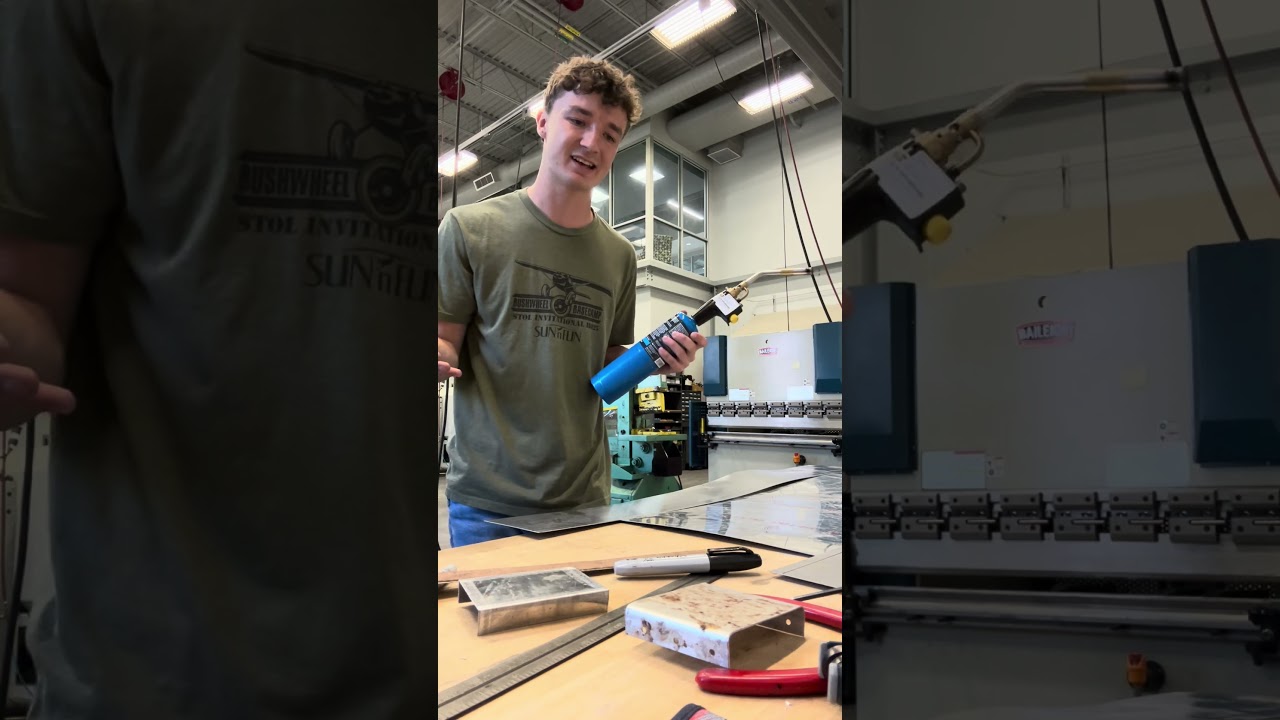
His original rear spars were bent with no radius and cracked. So he is re-making them by annealing them and bending them with no radius.
I stumbled on this - and left a comment.
His original rear spars were bent with no radius and cracked. So he is re-making them by annealing them and bending them with no radius.
Thanks for sharing. I posted on his rebuttal to your comment. Sounds like it was a customer’s airplane … which makes it even worse IMO.
I appreciate your youtube comment, as well as the comments from Wes and Kevin, plus one guy I didn’t know. Hopefully he understands we are not trying to pick on him but just trying to keep him from going to the dark side.
Grayson says:
I agree, structural parts are quite important to not be annealed but a few things are important to note. Firstly, the Sonex uses the main spar for lift, drag, and torsion loads so the rear spars function is to locate ribs, attach control surfaces, and reduce longitudinal torsion. Secondly, although it is technically a structural part, I used a fine torch tip to isolate the heat as much as one can. And third, the spar is going to be spliced along its length in two places upon the customers request so no of all the things I could worry about a slight local annealing to avoid cracking on a spar that is not exactly load bearing and is already going to be spliced in two places is not my biggest concern.
I’m probably preaching to the choir, but here is why he is wrong:
Structurally, the annealed line along the spar is similar to a pipe loaded in torsion with a slit along its length. It is no longer a “closed” section, and as such, the torsional deflection will be much greater. (Consider how much a channel section twists compared to a closed pipe; the wing is now a channel with the main spar as its web and the upper and lower skins as the flanges.)
It may be some time before it shows signs of failure, leading the owner to think it’s OK and these concerns are overblown. But this part is definitely NOT airworthy.
I left a comment as well. Annealed or not, the part still needs the proper bend radius.
Grayson has stepped up and resolved this issue.
He just went way up on the respect-o-meter!
Thank you sir …
Dale
3.0 Corvair/Taildragger
Comment deleted. Following Dale’s example.
This post was deleted as it is no longer needed.
Hi all, I’m the one responsible for the video. I’m really sorry for the snide replies and I know the foolishness of the choice I made. I’m in contact with Mark at Sonex and have a deleted the video in question not to hide my mistake but to avoid leading people to make the same one. I have another video addressing the issue that I will post soon, I’m having Mark review it and let me know what he’d like for me to improve before I post it. The owner of the aircraft is aware of my mistake and I’m working to amend things the best I can. I genuinely appreciate your help and I have no excuse for my foolishness in my response to your comments.
Hi Grayson,
Welcome to the forum. Don’t be shy, we all make mistakes. Please keep us up to date on your project.
All the Best,
Wes
Thank you sir.
Agreed. Mistakes are human … and learning from them instead of by them is priceless. He did the right thing.
Dale
Well done.
Grayson,
Welcome and all’s well that ends well. Thank you for doing the right thing. I have often said, in flying or building/repairing that the most important skill is not doing it right the first time, but recovering from a mistake.
Thank yall for the help and kindness. Sonex Spar to be picked up at Oshkosh.
Good choice Grayson! Very few men will admit it when they make a mistake, much less do so in public. Every man makes mistakes, it’s just that most of them are well-concealed. Today you took a step to becoming a wiser aviator.
Andy
Hi @gm13785 and welcome to the forum. In my opinion, it takes a lot of guts to create content and put yourself out on the internet. It takes even more to admit mistakes and do the right thing; outstanding response to a human mistake that I guarantee all of us have and/or will make (being incorrect).
Thanks for joining our community!
Many of us built a sheet metal brake like the one documented by Dave Clay: https://www.cannedhamtrailers.com/pdfs/davesbrakeplans.pdf
I used mine to scratch-build the fuselage, but ended up buying the wing kit and using Sonex’s spars. I only built my brake 8’ long so was happy to get a spar from Sonex that didn’t require splice plates.