Primer
Posted: Sat Jul 23, 2011 11:53 pm
by dbdevkc
Anyone here used self-etching primer? I am considering using it on any mating surfaces. Other than the Monett’s stating it is unnecessary, it taking extra time, and adding a bit of weight, are there any technical reasons to not do it?
Kevin
Waiex 169
Re: Primer
Posted: Sun Jul 24, 2011 3:49 pm
by Andy Walker
I don’t think there is any technical reason not to prime parts. I have heard some say that priming with no topcoat can actually promote corrosion, but I’m not sure if that applies to all types of primer, or for that matter if it’s really true at all.
That said, I’m not doing an corrosion protection on my build. If I were living near the ocean I would reconsider that. But it’s not recommended by the factory, and it adds weight, so I’m going to skip it. One thing to consider: how long do you plan to fly the Sonex? 20 years? 30? Less? There are thousands of 50-60 year old Cessnas and Pipers that had no corrosion protection from the factory that are doing just fine, and most of them are Alclad which is not as corrosion resistant as 6061-T6. Just something to think about.
Re: Primer
Posted: Sun Jul 24, 2011 3:51 pm
by MichaelFarley56
I don’t think you’re going to hurt anything.
I used the gray NAPA self etching primer (number 72##…I can’t remember the actual number) on my tail and main wing spars, and then used it on all flanges and mating surfaces in the wings and fuselage. I live in Ohio so it’s probably overkill, but fir just a few dollars I didnt think it would hurt anything.
Re: Primer
Posted: Mon Jul 25, 2011 12:01 am
by Sonex1517
Kevin,
I can’t see how it would hurt…
We aren’t doing it - but we live in the midwest.
Re: Primer
Posted: Mon Jul 25, 2011 2:16 pm
by dbdevkc
I have been reading on some hot rodder discussion boards things to the effect that using self etch primer by itself will not offer any corrosion protection.
If you ask the manufacturer like I did you can get the correct answer.
Self etch primer is for metal that has not been etched by some other means. So if you are building a something and weld up some brand new sheets of the steel and do not want to sand them you use the self etch primer. The job of self etch primer is to make a good surface for putting the next layer of paint on to the metal. If the metal is already a good surface for a direct to metal paint then you do not need (and do not want) an etching primer.
The etch primer has been improperly thought of as a way to prevent corrosion. I had the local dupont paint store guy try to sell it to me for that purpose.
For most of what we are doing the better solution is to etch the metal. Either with various chemical methods such as Pickle X or metal pre-treats the paint companies sell. We can also sand the metal or even better sandblast. Then put down a nice layer of epoxy to seal the metal from moisture.
You are correct in the use of etch primer. Only for new metal that has not been sanded.
And…
Yes the paint supplier will tell you anything to sell more paint or material.
I agree, etching primer is extremely OVER rated. So what does etching primer do? It forms a TEXTURE on the bare metal so that paint will mechanically bond to it.
If you have sanded or media blasted the metal, there is NO need for etching primer. The metal has a texture due to the sanding or blasting.
Just cover the bare metal with Epoxy Primer/Sealer and go for it. You can apply your top coats or do your body work right on top of the epoxy.
you wont get any protection from etch primer. moisture will go right through it. use epoxy.
Re: Primer
Posted: Fri Jul 29, 2011 3:11 am
by rizzz
The etch primers do not provide “significant” corrosion protection by themselves but remember, if they are good enough for Vans to use on the 2024-T4 alum in their quick build kits (Vans uses the P60G2 primer), they must certainly be good enough on the Sonex 6061-T6 alum.
Re: Primer
Posted: Fri Jul 29, 2011 9:53 am
by Andy Walker
rizzz wrote:The etch primers do not provide “significant” corrosion protection by themselves but remember, if they are good enough for Vans to use on the 2024-T4 alum in their quick build kits (Vans uses the P60G2 primer), they must certainly be good enough on the Sonex 6061-T6 alum.
No doubt the primer is good enough, since no primer is good enough too! I just question adding the weight, expense, and time of primer when the benefit is questionable. for 2024 it might make more sense, but for 6061 I just think you’re wasting time unless you are in a marine environment. My opinion of course. Again I point out that most of the airplanes made by the big manufacturers do not have any anti-corrosion coatings, and many of them have been flying 50-60 years (and are made of alclad). Are you really building your Sonex to last longer than that??
Re: Primer
Posted: Mon Aug 01, 2011 12:01 am
by rizzz
Andy Walker wrote:
rizzz wrote:The etch primers do not provide “significant” corrosion protection by themselves but remember, if they are good enough for Vans to use on the 2024-T4 alum in their quick build kits (Vans uses the P60G2 primer), they must certainly be good enough on the Sonex 6061-T6 alum.
No doubt the primer is good enough, since no primer is good enough too! I just question adding the weight, expense, and time of primer when the benefit is questionable. for 2024 it might make more sense, but for 6061 I just think you’re wasting time unless you are in a marine environment. My opinion of course. Again I point out that most of the airplanes made by the big manufacturers do not have any anti-corrosion coatings, and many of them have been flying 50-60 years (and are made of alclad). Are you really building your Sonex to last longer than that??
You’re absolutely right.
However, there is one other reason I can come up with to prime your aircraft, resale value.
Even though priming is completely optional on 6061, if you ever plan to sell your Sonex it might be hard to convince potential buyers of this fact, they might go with the other Sonex on barnstormers that was primed.
Then again, potential buyers might favor a lighter Sonex to a primed Sonex, who knows.
Re: Primer
Posted: Mon Aug 01, 2011 8:59 am
by dbdevkc
How toxic is S.E.P., and what type of precautions need to be taken when using a rattle-can S.E.P. (ie: respirator, etc.)?
Kevin
Re: Primer
Posted: Mon Aug 01, 2011 10:37 am
by Andy Walker
rizzz wrote:
Andy Walker wrote:
rizzz wrote:The etch primers do not provide “significant” corrosion protection by themselves but remember, if they are good enough for Vans to use on the 2024-T4 alum in their quick build kits (Vans uses the P60G2 primer), they must certainly be good enough on the Sonex 6061-T6 alum.
No doubt the primer is good enough, since no primer is good enough too! I just question adding the weight, expense, and time of primer when the benefit is questionable. for 2024 it might make more sense, but for 6061 I just think you’re wasting time unless you are in a marine environment. My opinion of course. Again I point out that most of the airplanes made by the big manufacturers do not have any anti-corrosion coatings, and many of them have been flying 50-60 years (and are made of alclad). Are you really building your Sonex to last longer than that??
You’re absolutely right.
However, there is one other reason I can come up with to prime your aircraft, resale value.
Even though priming is completely optional on 6061, if you ever plan to sell your Sonex it might be hard to convince potential buyers of this fact, they might go with the other Sonex on barnstormers that was primed.
Then again, potential buyers might favor a lighter Sonex to a primed Sonex, who knows.
Good point! Many of us (myself included) plan to never sell, but times and circumstances change.
Re: Primer
Posted: Mon Aug 01, 2011 10:38 am
by Andy Walker
dbdevkc wrote:How toxic is S.E.P., and what type of precautions need to be taken when using a rattle-can S.E.P. (ie: respirator, etc.)?
Kevin
I don’t think there are any particular hazards specific to SEP. I used it outdoors with a filter mask. I think a filter and decent ventilation are all you need to be safe.
Re: Primer
Posted: Wed Aug 17, 2011 9:35 pm
by rizzz
dbdevkc wrote:How toxic is S.E.P., and what type of precautions need to be taken when using a rattle-can S.E.P. (ie: respirator, etc.)?
Kevin
Definitely not as toxic as zinc chromate or alodine.
A mask is all you need.
I’m priming the inside of the fuselage with a grey SEP called “Killrust etch primer” (http://www.wattyl.com.au/library/TDS/D2 … Primer.PDF).
It’s not as good as the prekote & zinc phosphate combination I’m using on the other parts, but it looks much better:
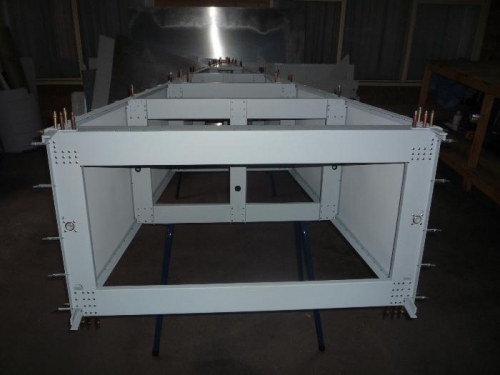
It comes both in rattle cans or in 1/4l containers, I buy the containers and use my spray gun, much cheaper than the rattle cans
Re: Primer
Posted: Fri Nov 01, 2013 1:12 pm
by SvingenB
6061 is much more corrosion resistance than alclad 2024 by orders of magnitude (literally). 6061 is often used in boat hulls that are used in the ocean and fjords (salt water), and they last for decades untreated. 6061 is also about 5-10 times more corrosion resistance to crevice corrosion than 2024 alclad (ref Corrosion of Aluminum and Aluminum Alloys by J.R. Davis). When Sonex say there is no need to prime the airframe, they are very much correct.
But, there are a few things. Boat hulls are designed not to have crevices (mating surfaces etc), they are welded, and steps are taken to protect against galvanic corrosion. Galvanic corrosion will start whenever dissimilar metals are joined and there is moist, oxygen and some salt. Stainless steel and aluminium is a good and safe combination regarding galvanic corrosion - except in marine environments. Although 6061 has the highest resistance against crevice corrosion of all aluminium alloys, it is not entirely fool proof.
IMO if the airplane (6061 and SS rivets) is placed inland, there is absolutely no need for any corrosion protection. It will last for centuries. In coastal areas it will probably last for decades unprotected (compared with a few years for 2024 alclad), but this is very dependent on the local atmospheric conditions regarding moist and salt.
The main issue with the Sonex aircrafts is SS rivets and aluminium causing galvanic corrosion in marine atmosphere. This is a well known problem for all boat owners. Aluminium is good, SS is good, but the combination is bad, causing the aluminium to corrode due to galvanic corrosion when salt is present. The solution is to protect the joints where SS is in contact with aluminium. A jointing compound is especially made for this, it’s called Duralac http://www.llewellyn-ryland.co.uk/duralac.html. That’s what I am using. Mating surfaces should ideally be separated by some polymer, typically using an epoxy primer.
So, even though my Onex will experience a marine atmosphere, it will be nowhere near as severe as my boat. I probably don’t need any protection whatsoever, but Duralac on the rivets won’t hurt and galvanic corrosion between the SS rivets and the aluminium sheets is the number one issue IF corrosion is an issue at all. Deep down I know that crevice corrosion will not be a problem on 6061, but a primer on the mating surfaces won’t hurt. I have previously used aviation grade strontium chromate epoxy primer (on all surfaces) with excellent results, but it is a PITA to use and toxic as hell. I’m still experimenting with alternatives, so far a marine vinyl primer or a automotive aluminium primer seems like the best choices, but only on the mating surfaces. The point with the marine vinyl primer is that it makes an absolutely water resistant barrier, which is exactly what I need.
Anyway, my two main points are: 1 IF corrosion is a problem (which it most probably isn’t), it most certainly is due to galvanic corrosion between the SS rivets and the aluminium sheets and angles in a marine atmosphere (inland this is not an issue at all). By using Duralac on the rivets, this problem is eliminated altogether. Priming the surfaces will not help on this problem, it can even make it worse because the exposed area of the aluminium becomes concentrated around the rivets and thereby increasing the galvanic potential. 2 Sonex recommendation is to use nothing at all, and that is probably an excellent recommendation.
Re: Primer
Posted: Mon Jan 20, 2014 8:16 pm
by jmattson
So, after reading all of the posts here and articles online it seems as if the self etching primer is unneeded on 6061? I bought my project with the fuselage mostly complete-a large portion of it has been sprayed with either self etching primer or a lightweight epoxy. So all of that work that was done was for nothing? Just added weight and expense? That would really suck… Especially since I already started to spray self etching primer on the wing parts and assemblies…
Re: Primer
Posted: Mon Jan 20, 2014 8:46 pm
by rizzz
jmattson wrote:So, after reading all of the posts here and articles online it seems as if the self etching primer is unneeded on 6061? I bought my project with the fuselage mostly complete-a large portion of it has been sprayed with either self etching primer or a lightweight epoxy. So all of that work that was done was for nothing? Just added weight and expense? That would really suck… Especially since I already started to spray self etching primer on the wing parts and assemblies…
The topic is heavily debated but here’s my take on it,
If nothing else, it will certainly add to the resale value of your Sonex,
The 6061 aluminium Sonex might indeed not need corrosion protection like the 2024 RV’s do but even if you’re convinced of this fact, if/when you ever decide to sell your plane you will need to convince potential buyers of this as well. I don’t think somebody would not buy your plane because it was primed on the inside but I am certain there are many who would not buy it if they see it was not primed.
To give you an example, most other members of my local SAAA group are RV builders and I know when I tell them the Sonex actually does not really need corrosion protection because it’s built out of 6061 alumiunium, they look at me with disbelief. A lot of those builders have really strong opinions about priming and how this should be done. Some will even still go as far as stating that the only acceptable method is still both alodining and then priming with zinc chromate. Try selling an un-primed aircraft to someone who has been talking to or one of those guys…
Re: Primer
Posted: Mon Jan 20, 2014 9:07 pm
by jmattson
Thanks Michael, this fact alone does seem to make the priming worth the weight and expense. Next question would be about the type of primer I’m using. It’s just a generic self etching primer rattle can I picked up at the auto store. This is what my friend who I bought my project off of told me to buy and use. Should I really be using the more expensive stuff like SEM? Thanks again.
Re: Primer
Posted: Mon Jan 20, 2014 9:25 pm
by Mike53
To each his own .I asked Sonex about it and was told it was totally unnecessary and would only add weight .If you look up 6061t6 properties it states -’ 6061 is more easily worked and remains resistant to corrosion even when the surface is abraded’,I have had some 6061 laying outside now for over 2 years (cutoffs from elevators and rudder) and they look as good as the day I put them out there.
As to resale it will be easy enough for the prospective buyer to inspect the plane for any tell tale signs of corrosion viv a vis inspection plate removal and on the Onex looking right into the wing sections with the wings folded up.Easy to inspect planes today with the inspection cameras selling for under $ 200 today.
Re: Primer
Posted: Mon Jan 20, 2014 9:36 pm
by rizzz
jmattson wrote:Thanks Michael, this fact alone does seem to make the priming worth the weight and expense. Next question would be about the type of primer I’m using. It’s just a generic self etching primer rattle can I picked up at the auto store. This is what my friend who I bought my project off of told me to buy and use. Should I really be using the more expensive stuff like SEM? Thanks again.
I started off with expensive “aviation grade” zinc phosphate primer (also rattle cans), I’ve used another “aviation grade” product called EkoPrime as well, now I’m using Wattyl Killrust metal etch primer which can be picked up from any paint store here in Aus.
Out of the 3 I find the local paint store etch primer by far the best, it seems to be the most durable of the 3, it does not scratch as easily as the other two and it is by far the easiest to apply as well, it’s also very cheap and easily available. If I were to start again, that’s what I would use exclusively.
The zinc phosphate was ok but it only came in rattle cans and is therefore quite expensive.
The Ekoprime is my least favourite of the 3 even though it is supposed to be “aviation grade” whatever that means. The only good thing about it is that t’s water based and therefore it is easy to clean the spray gun, but it is a pain to apply (it just goes everywhere and drips easily), it is very fragile and any minor handling of a part will damage the primer and its not cheap either.
Re: Primer
Posted: Mon Jan 20, 2014 9:37 pm
by rizzz
Mike53 wrote:To each his own.
As I said in my previous post, the topic is heavily debated 
Re: Primer
Posted: Mon Jan 20, 2014 9:45 pm
by Bryan Cotton
Any 40’s, 50’s, 60’s, or 70’s era Cessna will be unprimed 2024-T3 alclad, except for a minority of airframes. The C140 I was restoring had some corrosion issues. Considering it is 68 years old that is not too bad. I am not sure that an unprimed airplane would be harder to sell than an overweight one.
When I was building my RV4, I alodined and epoxy primed everything. I only built the tail. Had I finished, it would have taken me an extra year of time but it would have lasted forever instead if just 60 years. On the hummelbird I switched to spray bombs, initially ZnCr and then SEM. I like SEM primer. Used it on the 140 too. On the Waiex - no primer for me. I don’t care if it will only last 60 years, I will be 107 then. We live in the Midwest. Maybe on the coast it would be worth it.
I guess you can tell which camp I am in! I say prime if it makes you happy and the auto stuff is fine. If you don’t want to prime don’t fret.
Primer
Posted: Mon Jan 20, 2014 10:05 pm
by Sonex1517
Discussing religion, politics, sex, wheel landings, and whether to prime in polite company is not advised…
Robbie
Sent from my iPad using Tapatalk HD
Re: Primer
Posted: Mon Jan 20, 2014 10:14 pm
by daleandee
If corrosion is the concern there is another option that has not yet been discussed:
http://www.aircraftspruce.com/catalog/cspages/acf50.php
Quite a fantastic product. I will warn those that polish though, when you use ACF-50 it will creep out of every crack and crevice for a few days after application. I used this on my last Sonex by ordering the aerosol cans and applying it as I put it together. It can be sprayed or fogged into the air frame. Needs to be applied every two years (preferably at annual) and has very minimal weight.
FWIW,
Dale
N319WF
Re: Primer
Posted: Tue Jan 21, 2014 12:17 am
by Rynoth
I am not priming my build… except for the fact that I did prime my wing spars with inexpensive rustoleum aluminum primer (not etching.) Doing so on the spars was more of an experiment/why the heck not sort of move. I’m still not convinced it’s remotely necessary.
As far as resale goes… as many builders that (it seems to me) prime their aircraft, I’m sure the expectation of buyers is tenfold that priming is necessary. So I imagine there is a resale benefit to doing so.
Re: Primer
Posted: Tue Jan 21, 2014 12:52 am
by rizzz
Rynoth wrote:As far as resale goes… as many builders that (it seems to me) prime their aircraft, I’m sure the expectation of buyers is tenfold that priming is necessary. So I imagine there is a resale benefit to doing so.
LOL, I guess in that sense it’s like a self-fulfilling prophecy.
Re: Primer
Posted: Tue Jan 21, 2014 3:49 am
by sonex892
I primed the internals of my sonex, yes its a bit more work, yes it adds a bit of weight and yes, it may be overkill. I did it for me no one else.
At the time I built it I lived quite a long way from the coast so there was no real need to prime. 18 months ago I found myself relocating for work. The plane and I are now near the coast, real near. I am glad that I primed the internals but now wished I used duralac on all rivets.
I say each to their own. If you want to prime go ahead if you don’t then don’t. Simple as that.
The stuff that Dale mentioned sounds like the same stuff they use each annual here on a C182 seaplane.
Re: Primer
Posted: Tue Jan 21, 2014 11:59 am
by jmattson
Thanks everyone for the info and advice. I think I’ll just stick to the rattle can, it really can’t hurt anything-even if in the long run it doesn’t help. Like was mentioned earlier, if I ever go to sell I’ll have the novelty of saying “Yea, it’s been primed”.