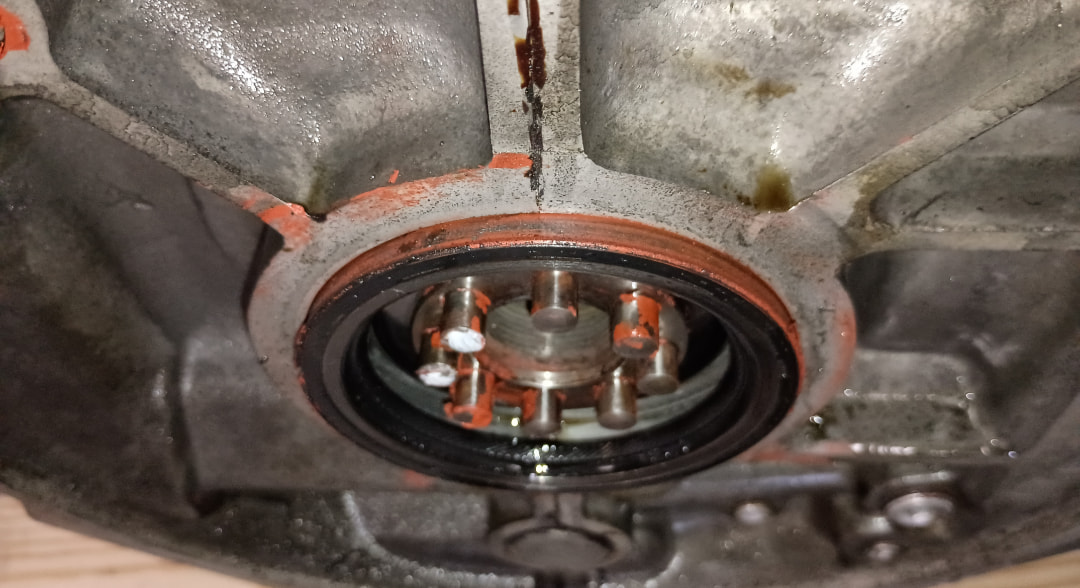
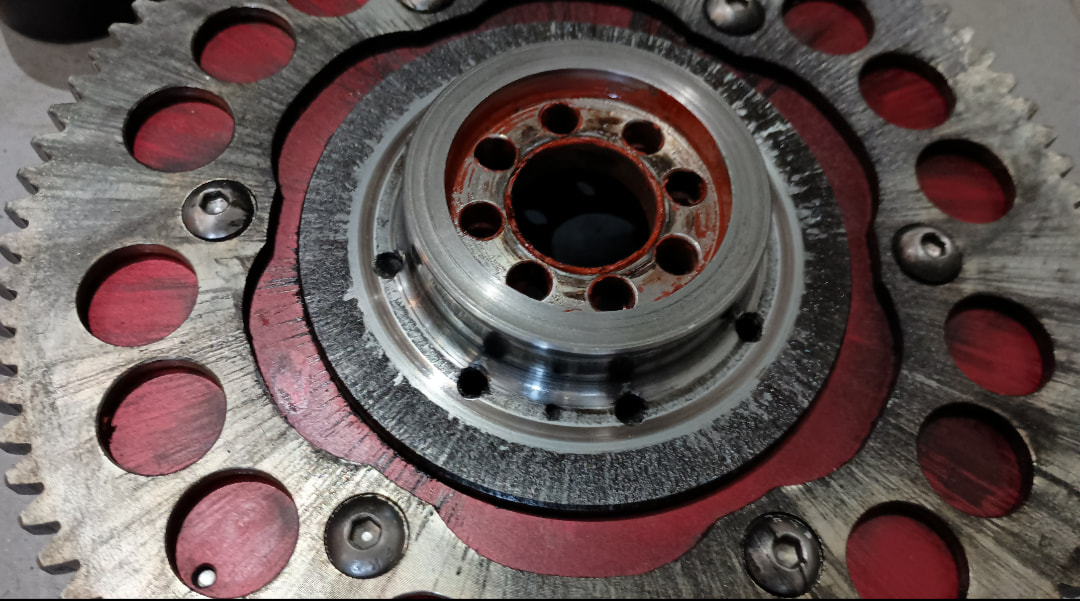
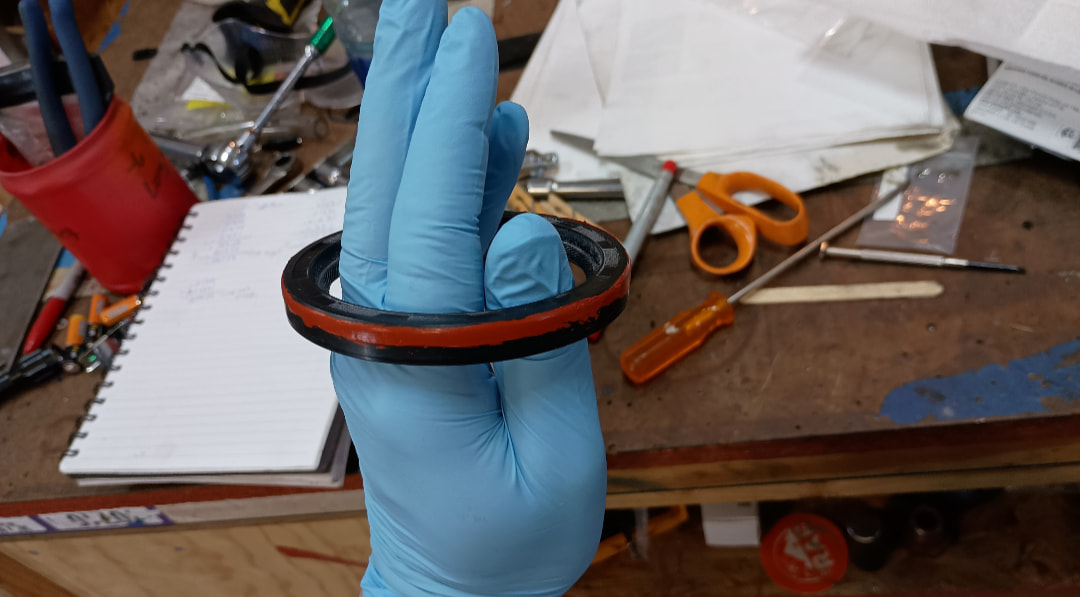
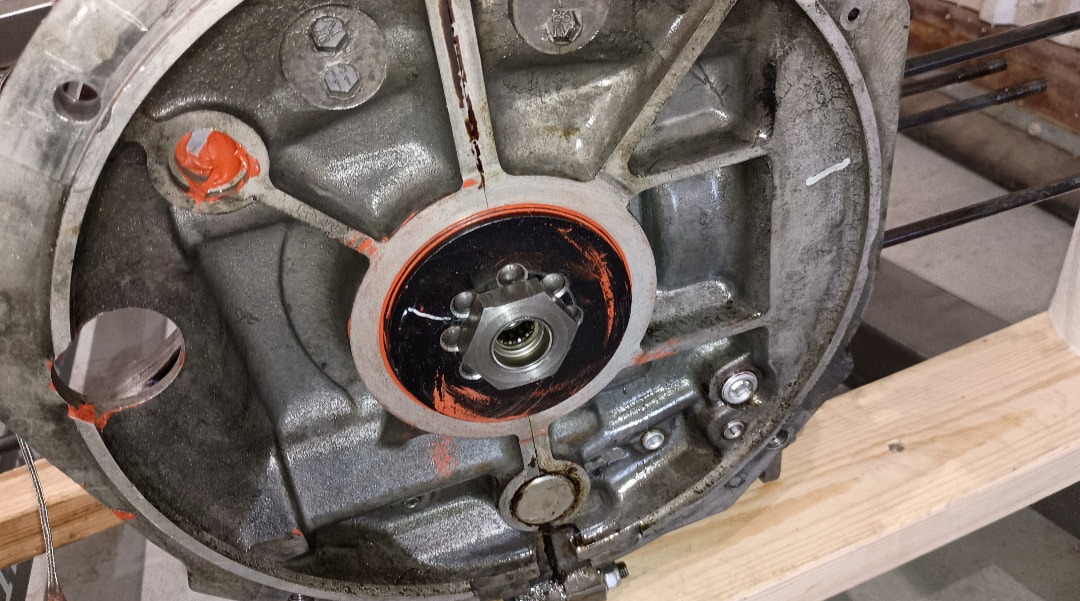
I remember that seal wanted to come out when I installed it. I pushed it back in with my seal installation tool until the RTV was set - so I thought. It must have tried to escape after I bolted on the flywheel. You can see the rub marks.
So going forward, I’ll RTV the seal in, hold it with the installation tool, and let it cure for 24 hours. I’ve always just chucked the flywheel on right away. Tool is in this old thread:
Interestingly I can’t pull the seal off by hand. So it is glued in, but in a non-optimal position.
Hi Bryan, just wondering about the seal, in my much younger auto racing days, we ocassionally had seals blow out because of, and you know this i am sure, high internal crankcase pressures. In my cases it was instigated by larger piston to bore clearences for reduced friction on piston. my question, could there be case venting problem at high rpm! Or maybe just not enough cure time on rtv? Let us know what you find out!!
I think it was cure time. Although the motor sees its share of high RPM, I’m pretty sure the seal slid out after installation and stopped when it hit the flywheel, then cured.
You could use the green loctite (648 I think) bearing retainer and it should seal well and not come out depending on what temperature you see there. Rotax use it in a lot of places on there engines but they are partly liquid cooled. I think it needs around 180C to remove again but it’s been a while since I looked that up. There could also be other bearing retainers out there that can handle higher temps.
With 10 hours on my fully rebuilt Aerovee 2.1, I nave noticed oil leaking around the flywheel area. It has only been leaking the last few hours, and I know I have seen the oil pressure over 100 with running it in the colder Montana weather. I recently removed both pressure relief plungers and polished them to make sure they moved easily in their bores. I suppose I should baffle off part of the oil cooler and warm it longer prior to my run up.
Anyway today I looked closely and the rear main seal is pushed rearward on one side, cocking it in the bore. Likely the result of too much pressure. Looks like I too will get a chance to remove an engine. And be more careful to keep the pressure below 100psi.
The breather and oil separator were thoroughly cleaned during the rebuild. No oil is coming from the small escape hole on the top of the aluminum pipe, nor is any coming from the drain tube of the oil separator. I’ll have to investigate further. Thanks.
I think on the next seal that I’ll only put RTV on half of the seal - like the half sticking out in the picture. The wet RTV acts as a lubricant that makes it easier to go in and out. If the inside half is dry, that may help retention plus have the side benefit of less opportunity to clog up the drain back to the case.
just as a reference point: Lycoming service instruction calls for Dow Corning 737 Neutral Cure Sealant and if that is not available, Pliobond #20 may be used.