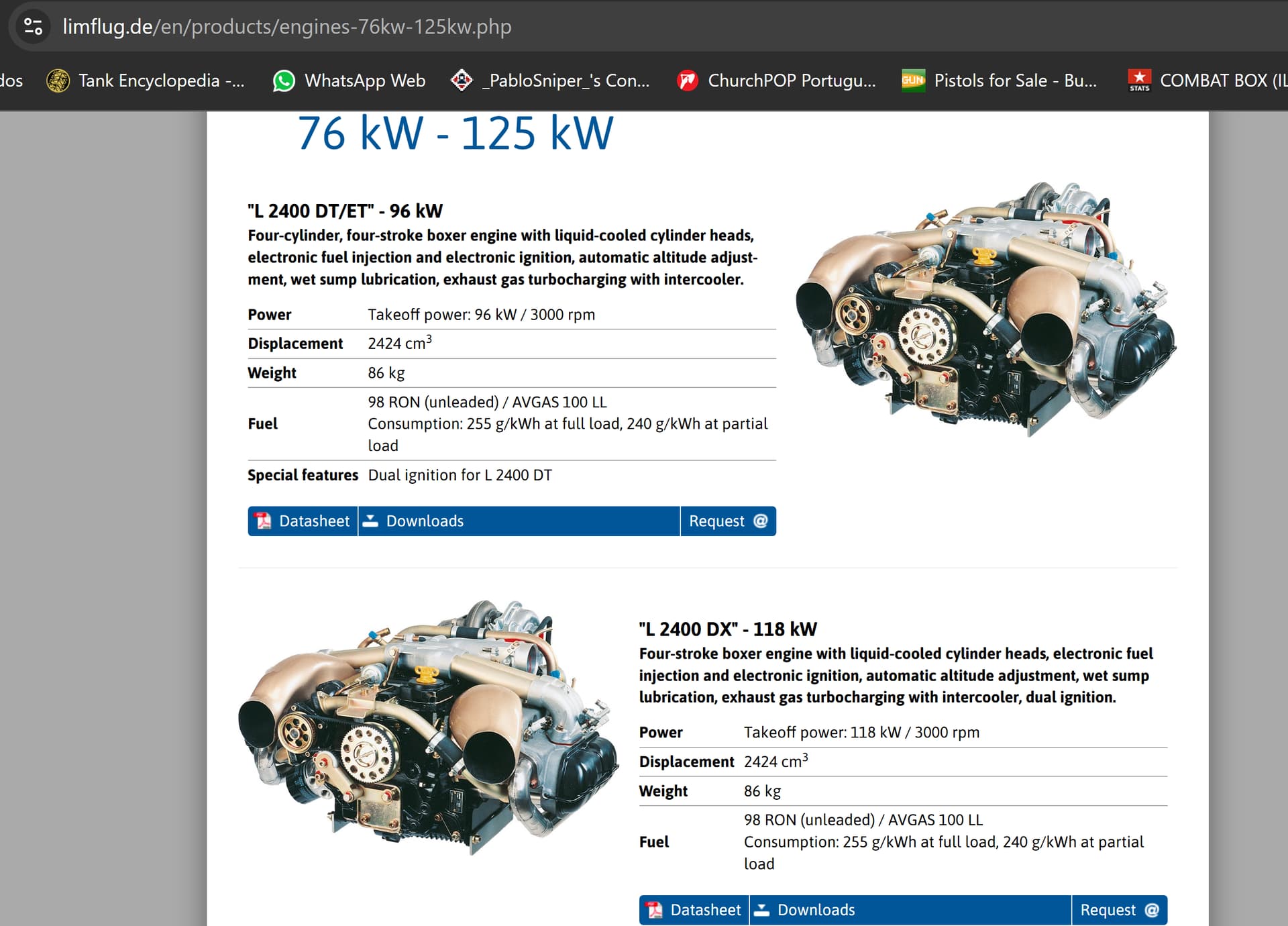
Limbach L2400 engine
Posted: Mon Jun 25, 2012 10:46 pm
by rizzz
Hi All,
I’ve found a Limbach L2400, 25hrs since new, for sale here in Aus for $7900 through the SAAA (our version of the EAA).
Looks like a pretty good deal,
Limbach’s are very nice certified VW conversions, the L2400 model is 100hp, fuel injected with liquid cooled cylinder heads, weighs 167lbs with accessories.
See specs:
http://www.limflug.de/files/pdf/DS-L2400DFi_EFi.pdf
Does anybody have any idea if this engine would fit the Sonex, preferably on the std VW mount?
It’s a very tempting option if it would work.
Cheers,
Michael
Re: Limbach L2400 engine
Posted: Tue Jun 26, 2012 12:24 am
by fastj22
Cool motor. Never heard of it.
I would think it has a standard VW case and therefore will mount to the standard VW mount.
Looks like port fuel injection. That could be a huge benefit, or a huge pain in the butt. Great if it works, pain if it doesn’t.
I do like the water cooled heads. makes it similar to a Rotax 912.
Keep us updated.
Re: Limbach L2400 engine
Posted: Tue Jun 26, 2012 1:18 am
by rizzz
I had seen them before but dismissed them because they are so expensive.
They are the only (to my knowledge) certified VW conversion engines out there and they are used on a number of of certified aircraft types:
http://www.limflug.de/index.php?page=pr … p&lang=eng
They also have a 160hp (!!!) 2400cc turbocharged VW conversion:
http://www.limflug.de/index.php?page=pr … X&lang=eng
Imagine hanging that in front of a Sonex
Re: Limbach L2400 engine
Posted: Wed Oct 30, 2013 7:53 pm
by SvingenB
Sauer also make certified engines, http://www.sauer-flugmotorenbau.de/index.html as well as experimental.
A Sauer 2400 costs 2 times as much as a AeroVee. A Limbach costs 2 times as much as a Sauer. Limbach has produced about 6000 engines, Sauer about 1000. Supposedly Limbach started producing engines made of custom made parts by VW ordered directly by Limbach. A Limbach is therefore more of a real VW aero engine than a VW aero conversion. Later Limbach produced more and more parts themselves. It really is nothing like an AeroVee or similar made by aftermarket auto parts, but is put together by certified aviation parts.
The Sauer 2200 UL is quite nice. 85 HP at 3000 RPM (80 continuous at 2700) and weighs only 66 kg (145 lb). TBO of 1600 hours. The S 2400 UL has a bit more HP, but weighs 75 kg (165 lb) and can run on lower grade fuel. TBO is the same. Then there is the S 2100 ULT, turbo with 110 HP at only 76 kg (168 lb).
Re: Limbach L2400 engine
Posted: Wed Oct 30, 2013 7:59 pm
by vigilant104
SvingenB,
If you’ve seen them: How does the prop hub/bearing on the 2200cc Sauers and Limbachs compare to the stock VW bearing (where we’ve got the prop on the Aerovee)? Thanks.
Re: Limbach L2400 engine
Posted: Thu Oct 31, 2013 4:12 am
by SvingenB
vigilant104 wrote:SvingenB,
If you’ve seen them: How does the prop hub/bearing on the 2200cc Sauers and Limbachs compare to the stock VW bearing (where we’ve got the prop on the Aerovee)? Thanks.
It’s a long time since I saw a Limback, and I didn’t look at bearings. I know the CS versions are different from the FP, but no details. Looking at the drawings, it looks like the FP versions use standard bearings, but you have to remember there is very little standard about these engines. The Sauer 1800 is used in the certified Carat motorglider with a folding prop. The main point is that these engines are engineered pieces of machinery made to last in an airplane, not some ad hoc collection of autoparts.
Re: Limbach L2400 engine
Posted: Thu Oct 31, 2013 5:33 pm
by rizzz
Remeber these engines are based on the type 4 VW block, not the type 1 like the AeroVee, GP, RevMaster and Hummel.
My friend has a Grob 109b which also has a type4 vw based (certified) engine in it, this one is a Grob engine but you can also have a Sauer or Limbach in the Grob 109b.
Here are some pictures and details of the engine:
http://vwaircraftengines.com/viewtopic.php?f=21&t=17
Re: Limbach L2400 engine
Posted: Thu Oct 31, 2013 9:50 pm
by SvingenB
As far as I know all the Sauer and Limbach engines are based on the type 1 casing. Some are based of the watercooled casing, but still type 1. The type 4 is much heavier and longer.
Re: Limbach L2400 engine
Posted: Thu Oct 31, 2013 11:43 pm
by rizzz
SvingenB wrote:As far as I know all the Sauer and Limbach engines are based on the type 1 casing. Some are based of the watercooled casing, but still type 1. The type 4 is much heavier and longer.
Looking at the pictures on the Limbach website it appears you’re right, they are type 1’s (sort of), I was always told they were type 4’s like the Grob engine.
The type 4 is indeed heavier as it is an aluminium case, not magnesium like the type 1, but I did not realize the type 4 case was longer as well?
Re: Limbach L2400 engine
Posted: Wed Apr 02, 2014 2:05 pm
by SvingenB
The 100 HP Sauer 2400 UL can have both aluminum and magnesium casing. The aluminum being 6-7 kg heavier (still lighter than most “ordinary” conversion with the default magnesium casing). I think all the larger Limbachs have aluminum casing. I have contacted Sauer, and they can deliver anything from the 1800 to the 2100 turbo. They will also make an adapter so the engine can be mounted directly on the Onex mounts, and they have really nice carbon baffles that looks like they will fit most cowlings (with some adjustments I guess). My favorite is the 2400 with aluminum, since it has lots of power and weighs about the same as the Aerovee,is stronger and dissipates heat better. Twice the price of an Aerovee as well, so I will see what I decide. The Revmaster looks nice as well.
I’m still waiting for some hard facts about the Aerovee Turbo, price HP etc. Judging by the the Sauer 2100 ULT which cost 30-40 % more than the 2200/2100 UL, I guess the Aerovee Turbo will cost maybe 50-100% more than the Aerovee, or somewhere around 10-12 thousand dollars. If that’s the case then the Sauer is a no brainer.
Re: Limbach L2400 engine
Posted: Wed Apr 02, 2014 3:04 pm
by vigilant104
SvingenB wrote:The 100 HP Sauer 2400 UL can have both aluminum and magnesium casing. The aluminum being 6-7 kg heavier (still lighter than most “ordinary” conversion with the default magnesium casing).
So, the aluminum 2400cc (2332cc actual) Sauer comes out to approx 181 lbs dry. Another comparison in the same cc range for a pre-built engine (at least for US buyers) would be a Scott Casler/Hummel 2400cc engine (it has the same bore and slightly longer stroke than the Sauer : 86mm vs 84 mm). Aluminum cases are available in the US, I don’t know if Casler can/does build with them. It would be interesting to see a apples-to-apples feature/weight/power/price comparison between the engines.
Dave Clay has a Casler 2400 in his Sonex, last I heard he was satisfied with the performance.
I wonder if Revmaster will ever come to market with the long-awaited R3000?
The Sauer’s and Limbach’s are great looking engines. I suspect the “overhead” for getting them certified and complying with the documentation requirements shows up in their price (like Lycoming, etc)
Re: Limbach L2400 engine
Posted: Wed Apr 02, 2014 6:47 pm
by SvingenB
Not exactly, the aluminium version is 75 kg dry, 165 lbs. The magnesium version is about 68 kg or 150 lbs. The 85 HP 2200UL is only 66kg or 145 lbs, not much more than a Jabiru 2200. The “default” 2400 is with aluminum casing, but I think also the 2200 can have aluminum. Sauer makes their own casings.
Re: Limbach L2400 engine
Posted: Wed Apr 02, 2014 8:01 pm
by rizzz
One thing to note if you considering a Limbach or Sauer, the mounting points on the accessory plate are positioned differently than the AeroVee/RevMaster/GP/Hummel. You would need a custom engine mount for one of these. You can see the dimensions of one of the engines here:
http://www.limflug.de/downloads/datashe … eet-en.pdf
Re: Limbach L2400 engine
Posted: Thu Apr 03, 2014 5:03 am
by SvingenB
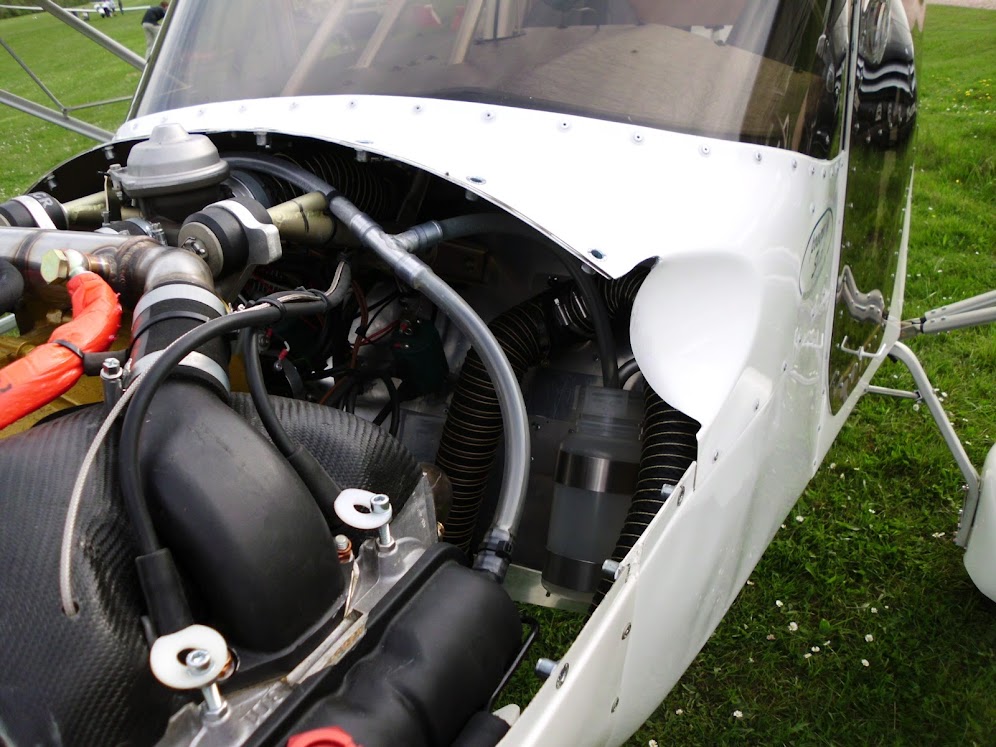
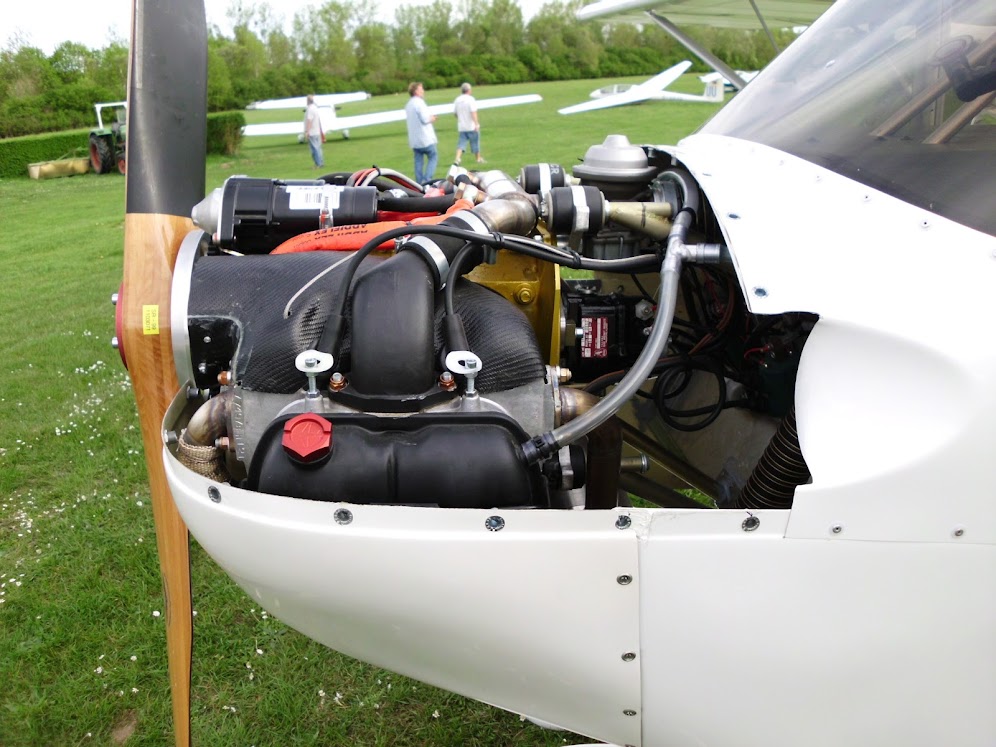
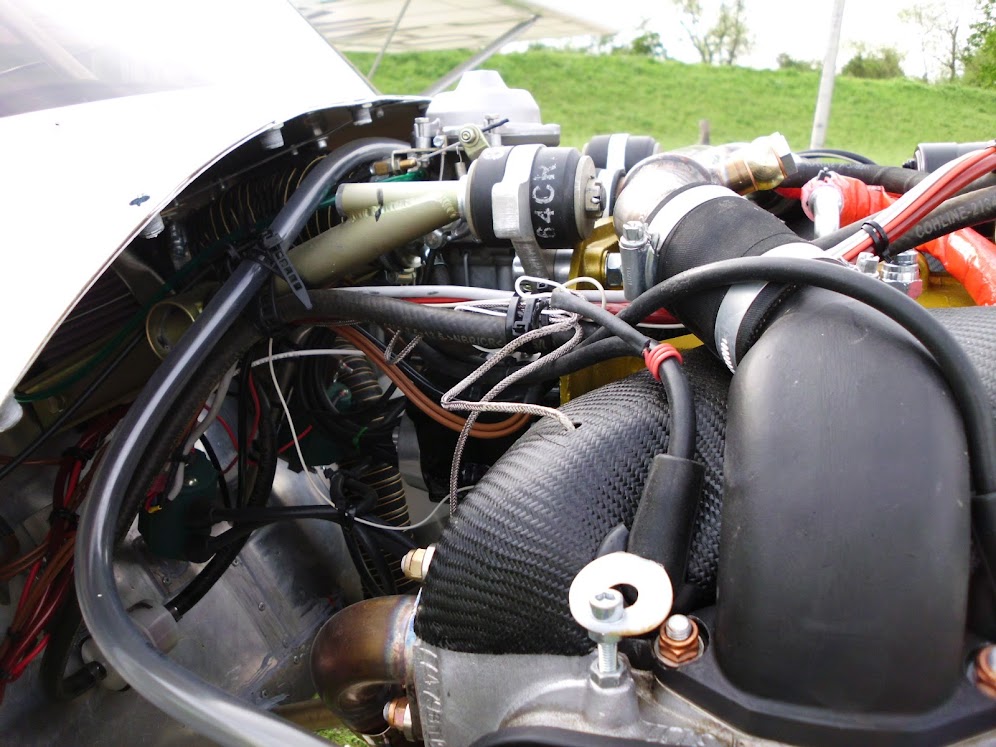
Sauers don’t have the accessory box. The stuff are mounted directly on the casing. They could make me an adapter to fit the engine mount, no need to make a new mount. They sent me pictures of one adapter, but it seems like a fairly easy thing to make yourself. I can post them here when I get home. Limbachs, I’m not sure. I think there are various configurations around.
Re: Limbach L2400 engine
Posted: Thu Apr 03, 2014 2:17 pm
by SvingenB
vigilant104 wrote:It would be interesting to see a apples-to-apples feature/weight/power/price comparison between the engines.
I agree. But just one detail. All Limbachs and Sauers have a very short manifold distance from the carb to the cylinders, some have dual carbs, one for each row of cylinders. Rotax has a similar configuration. I asked Sauer (Martin Manthey) if they could move the carb to the same position as the Aerovee. He said sure, but doing that you will loose 5-6 HP.
Re: Limbach L2400 engine
Posted: Thu Apr 03, 2014 8:16 pm
by vigilant104
SvingenB wrote:Not exactly, the aluminium version is 75 kg dry, 165 lbs. The magnesium version is about 68 kg or 150 lbs. The 85 HP 2200UL is only 66kg or 145 lbs, not much more than a Jabiru 2200. The “default” 2400 is with aluminum casing, but I think also the 2200 can have aluminum. Sauer makes their own casings.
Thanks. I can see how incorporating the accessory case into the engine castings (and eliminating the ports/fittings used only in the auto) could save some weight. The Sauer HP is quite a bit more than the figures I’m used to seeing for equivalent displacement and compression ratio VW Type 1s, does Sauer attribute the difference to the induction system (short runs, independent carbs/FI, etc)? I know high-reving engines derive a lot of benefits from very careful “flowing” and porting, but I would have guessed there were less gains to be had at 3400 RPM: at those “slow” speeds there’s plenty of time to get the charge into the cylinder, at least compared to the 6,000+ RPM engines.
Re: Limbach L2400 engine
Posted: Sat Apr 05, 2014 9:34 am
by SvingenB
vigilant104 wrote:Thanks. I can see how incorporating the accessory case into the engine castings (and eliminating the ports/fittings used only in the auto) could save some weight. The Sauer HP is quite a bit more than the figures I’m used to seeing for equivalent displacement and compression ratio VW Type 1s, does Sauer attribute the difference to the induction system (short runs, independent carbs/FI, etc)? I know high-reving engines derive a lot of benefits from very careful “flowing” and porting, but I would have guessed there were less gains to be had at 3400 RPM: at those “slow” speeds there’s plenty of time to get the charge into the cylinder, at least compared to the 6,000+ RPM engines.
The cylinder has to be filled up no matter what the revs are. 2200 cc at 3000 rpm is equal to 1100 at 6000 rpm. Also the length of the manifold has to be tuned for optimal performance and matched with the timing of the inlet valves apparently. The Sauer also has hydraulic lifters. The combustion chamber is also very different on the Sauer, similar to the Revmaster I think (or so I am told). All the others use standard automotive tops that are optimized for higher revs.
Anyway, performance of the Sauer 2200 UL on the Groppo Trial suggests that it does indeed deliver as adverticed. The Sauer 2400 UL is only slightly stronger. The 2200 has a CR of 8.8:1 and 80 HP continuous at 2700 rpm. The 2400 has a CR of 7.9:1 and 90 HP continuous at 3000 RPM. This is very comparable to a Jabiru 2200 with 80 HP at 2900 rpm (85HP at 3300 rpm) and a CR of 8.0:1
I know that the Sauer 1800 UL (1835cc, CR 8.5:1, 68 HP at 3200 rpm, 65 continuous at 3000 rpm) use the same propeller as the Aerovee. The Aerovee has the capacity of higher revs and thus considerably higher top speed, but still. During take off and climb a Aerovee does not perform much better than a 1835 cc Sauer.
These properties goes directly on the torque of the engine. The Sauer engines have a very pointed torque curve with a peak somewhere around 2600 rpm. So does the ULPower and the Jabiru. The max torque is about 210-230 Nm. The Aerovee has a flat torque curve from 2400 all the way up to 3400 rpm. but the torque is only 169 Nm at max (the Sauer 1800 has 165 Nm max at 2600 rpm). I would guess the Great Planes and Hummels are even “worse” since they run at even higher rpm, 3600. A flat torque curve is very good for a car, but not much use for an airplane. In an airplane it is better to have higher max torque in a limited rpm range. I’m no engine expert (but torque and power is well known to me through decades of working with turbines), it is fairly obvious to me that only Sauer/Limbach and Revmaster are specifically designed to run as aero engines, from an engine design point of view. The others are plain auto engines with aero peripherals. The max power is probably about the same, but the take off and climb performance with fixed pitch propellers will be much better with an aero engine design.