Fuel line fitting
Posted: Tue Apr 02, 2024 12:21 pm
by gregsonex
I read a few previous posts on the fuel line fittings and it seems some were happy to go with AN fittings and aluminum solid tube. Have others tried flex tubing and why not also use a fuel filter?
Re: Fuel line fitting
Posted: Tue Apr 02, 2024 12:58 pm
by Bryan Cotton
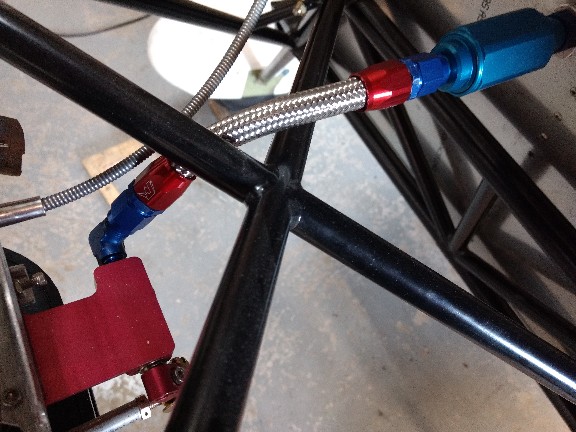
Firewall forward, I have both a filter and flex line. I think it is mandatory to use flex line there because of engine movement.
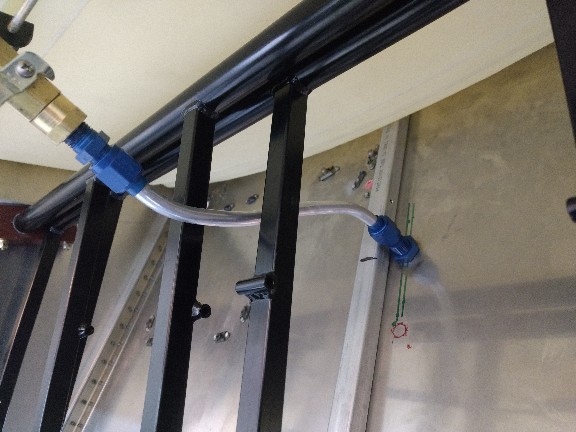
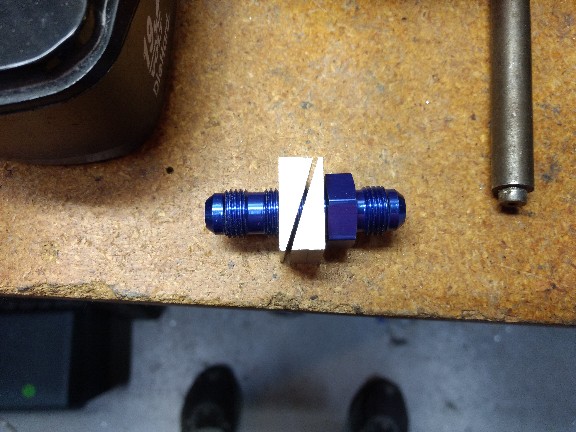
Inside I used solid tubing. You could use flex line here too if you wanted. This picture was not my final installation. I added an angle shim to make the angles good and to keep the fuel going downhill.
Re: Fuel line fitting
Posted: Tue Apr 02, 2024 1:01 pm
by Bryan Cotton
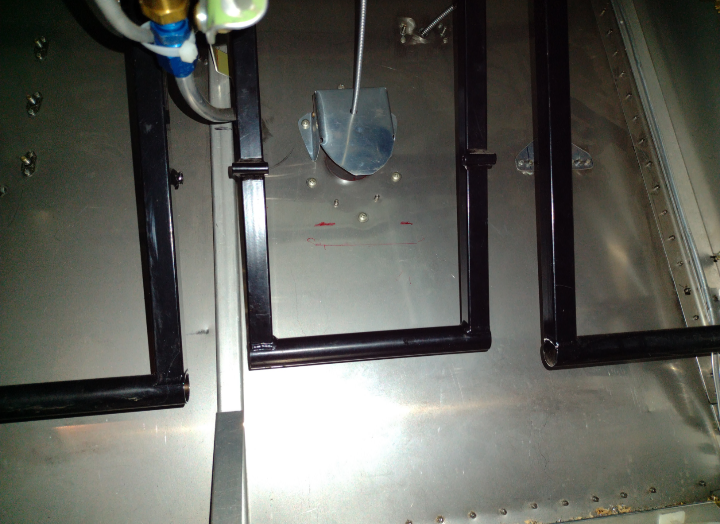
Another view of the inside plumbing:
Re: Fuel line fitting
Posted: Tue Apr 02, 2024 2:03 pm
by gregsonex
Super helpful Bryan. I went with a fire sleeve from my red cube for the FWF. Is there any benefit or reason the fuel filter should be on firewall forward or does it matter?
Re: Fuel line fitting
Posted: Tue Apr 02, 2024 2:46 pm
by Bryan Cotton
Greg,
It probably doesn’t matter. I don’t think I could have gotten my inside plumbing the way I wanted with the filter inline inside. I have two layers of firesleeve outside both for fire protection and insulation.
There is one advantage of having the filter forward of the firewall. You should be checking/cleaning the filter at annual. I find a little sediment in mine every time (twice) so far. When I clean my filter some avgas dumps out on the floor and I can use it to clean up the oil under the engine. Otherwise it goes on the cockpit floor where it serves not much benefit.
Re: Fuel line fitting
Posted: Tue Apr 02, 2024 4:09 pm
by karmarepair
If I had mine to do over, I would NOT use the AN fittings at the firewall, but would stick to the plans and pass the formed hard line THROUGH the firewall. Eliminates possible leaks where they are almost impossible to access once the plane is assembled.
I have a gascolator, which complicates the plumbing, but at least the leaks will be where you can wrench on them. I have heard the argument that anything that can pass through the finger strainer will pass through the AeroInjector, but if you have a float bowl carb or a Red Cube you may want a filter
Re: Fuel line fitting
Posted: Tue Apr 02, 2024 4:44 pm
by Bryan Cotton
On my setup I can get wrenches on all the joints, but the inside firewall one is a pain now that the floor is on. I’ve generally not had leak issues with AN fittings.
Re: Fuel line fitting
Posted: Wed Apr 03, 2024 10:08 am
by builderflyer
karmarepair wrote:If I had mine to do over, I would NOT use the AN fittings at the firewall, but would stick to the plans and pass the formed hard line THROUGH the firewall. Eliminates possible leaks where they are almost impossible to access once the plane is assembled
I agree with this basic premise not because of possible leaks but rather the concept that “anything” we insert into the fuel line between the tank and the carburetor adds up to a drop in fuel pressure that, collectively, the engine’s smooth operation may not tolerate. Only add those items to the fuel system that you believe you absolutely must have and not those that may be considered optional. Your engine will likely thank you for it with the absence of burps, for example.
Art,Sonex taildragger #95,Jabiru 3300 #261
Re: Fuel line fitting
Posted: Wed Apr 03, 2024 10:24 am
by Bryan Cotton
builderflyer wrote:
I agree with this basic premise not because of possible leaks but rather the concept that “anything” we insert into the fuel line between the tank and the carburetor adds up to a drop in fuel pressure that, collectively, the engine’s smooth operation may not tolerate. Only add those items to the fuel system that you believe you absolutely must have and not those that may be considered optional. Your engine will likely thank you for it with the absence of burps, for example.Art,Sonex taildragger #95,Jabiru 3300 #261
I agree with the philosophy of only adding what you need. That’s one reason I left off the flow meter. For a 3/8" fuel line at our rates for GPH, an AN bulkhead fitting will show no appreciable pressure drop. Plus when I did my minimum fuel, nose up fuel flow test I had waaay more than the minimum recommend GPH.
Edit:
viewtopic.php?f=39&t=578&p=46815#p46815
From 4 to 3 gallons 24.3 GPH average
From 3 to 2 gallons 18.7 GPH average
From 2 to 1 gallon 14.2 GPH average
From 1 to empty 11.4 GPH average
Re: Fuel line fitting
Posted: Wed Apr 03, 2024 12:38 pm
by builderflyer
[quote=“Bryan Cotton”
I agree with the philosophy of only adding what you need. That’s one reason I left off the flow meter. For a 3/8" fuel line at our rates for GPH, an AN bulkhead fitting will show no appreciable pressure drop. Plus when I did my minimum fuel, nose up fuel flow test I had waaay more than the minimum recommend GPH.
Edit:
http://www.sonexbuilders.net/viewtopic. … 815#p46815
From 4 to 3 gallons 24.3 GPH average
From 3 to 2 gallons 18.7 GPH average
From 2 to 1 gallon 14.2 GPH average
From 1 to empty 11.4 GPH average[/quote]
Measured fuel flows are more of an issue for those of us with larger hp engines and their greater demands for adequate fuel flows. But, I can’t say, though, that I’ve found a direct connection between measured fuel flow rates and the ability of the fuel system to produce “burps”, or not.
When I compared my original fuel system with another builder who also had the 3300 engine and had an identical fuel system to the one I used to have except that he didn’t install a bulkhead fitting and I did, and he had no issues with the “burps” and I did…I have to blame the bulkhead fitting, at least until I would remove it and see what happens. I’ve been flying my Sonex for 19 years but there is still some experimentation to do. Keeps experimental aircraft life interesting.
Art,Sonex taildragger #95,Jabiru 3300 #261
Re: Fuel line fitting
Posted: Wed Apr 03, 2024 6:15 pm
by Skippydiesel
In this conversation there seems to be a failure to understand the difference between fuel pressure and flow (volume).
Carburettor engines operate, for the most part, on fuel flow ie little pressure
We often use fuel pressure as a handy gauge of fuel system delivery efficiency/health, however you can have good pressure and poor/minimal flow.
In an aircraft fuel system it is generally easier (cheaper/simpler) to measure pressure than flow, although fairy recent innovations have made this observation less applicable than the past.
I am an advocate for transparent wall filters, so that the pilot can have some hope of visually assessing filter blockage.
Note: a blocked filter may have minimal impact on fuel pressure but restrict flow to the point of reduced engine power or failure.
Re: Fuel line fitting
Posted: Wed Apr 03, 2024 10:42 pm
by Bryan Cotton
builderflyer wrote:But, I can’t say, though, that I’ve found a direct connection between measured fuel flow rates and the ability of the fuel system to produce “burps”, or not.
Art,Sonex taildragger #95,Jabiru 3300 #261
Art,
I really believe the burps are all about heat. I’m on a quest to get rid of the burps and the excessive heat buildup in summer. I definitely agree with you about experimenting. That is part of the fun and to make your airplane a little better is very satisfying.