fuel flow
Posted: Tue Nov 18, 2014 10:05 am
by Klimek
To all the mechanical, electrical, nuclear engineers, physicists, Dr’s, lawyers and Indian Chiefs…
I’m finishing my firewall forward and would like to run a fuel flow test. Anyone have an idea what it should be at the aero Injector
inlet? Onex standard gear 15 gallons of fuel, gascolator (well insulated and shielded) with 06 line and fittings. Fuel cap on and 1/4"
vent line.
Thanks!
Frank
ONEX090
90%.90%
Re: fuel flow
Posted: Tue Nov 18, 2014 10:38 am
by kmacht
Take a look at AC 90.89A (page 23). It details out how to do the fuel flow test and what the results should be.
http://www.faa.gov/documentLibrary/medi … 90-89A.pdf
The aircraft needs to be in a certain attitude and configuration when doing the test but for gravity feed systems the formula is (.55 X engine horse power x 1.5) to get pounds of fuel per hour. Divide that by 6 to get gallons per hour. For the 80 hp vw it the fuel flow should be about 11 gallons per hour minimum or for the 120 hp Jabiru it is about 16.5.
Keith
#554
Re: fuel flow
Posted: Tue Nov 18, 2014 11:52 am
by gammaxy
I have an Aerovee with Aeroinjector.
With an automotive inline fuel filter and the Floscan fuel flow sensor I measured 12GPH for the last two gallons in my tank at the aeroinjector inlet.
I ended up removing the Floscan while troubleshooting a poor idle after landing. Without it I get 20GPH and no longer have trouble at any power setting. I spent a while adjusting and swapping needles in the aeroinjector, but once I removed the Floscan I was able to set the needle according to the plans and it has worked great ever since.
I’d like to put the Floscan back in, but would first like to know if anyone else is successfully using it and what kind of flow rate they get with it. Right now I’m just happy to have a smooth-running engine.
Re: fuel flow
Posted: Tue Nov 18, 2014 12:50 pm
by Sonerai13
gammaxy wrote:With an automotive inline fuel filter and the Floscan fuel flow sensor I measured 12GPH for the last two gallons in my tank at the aeroinjector inlet…Without it I get 20GPH and no longer have trouble at any power setting…
Chris,
We have a flowscan on the fuel system in our engine test cell here at Sonex. After discussing your fuel flow issues with you I thought I’d check the flow on our test stand. While the fuel system isn’t directly comparable to the system in the Sonex airframe, The numbers ended up comparable to what you found. I measured 22 GPH right out of the tank, through the fuel shutoff valve. Flow measured at the AeroInjector inlet (through the flowscan transducer) was a smidgen over 15 GPH. So the transducer does restrict flow to a measurable degree. Still, 15 GPH is more than enough for an AeroVee engine (We’re running a turbo engine on the test stand right now). However, your 12 GPH is still more than the minimum recommended by the FAA’s fuel flow AC (150% of the maximum fuel consumption of the engine, which for a normally aspirated AeroVee is around 7 GPH or so), so it should be adequate for your engine.
Re: fuel flow
Posted: Tue Nov 18, 2014 5:13 pm
by GWMotley
Chris and Joe,
I have essentially the same number with the flow meter installed. I do note that if I try to run a little lean of peak, there is at tendency for the engine to experience sputters from reduced fuel flow especially as I burn off fuel to lower levels in the tank. This is also noticeable during turbulence. My experience leads me to believe that some us experience a lower fuel head pressure. I have even considered a low pressure fuel pump, but If I run the needle and mixture control a little richer, the fuel flow of course increases and the sputters stops. Fortunately, these VWs don’t eat much fuel even at a richer than ideal cruise settings.
Re: fuel flow
Posted: Tue Nov 18, 2014 8:57 pm
by mike.smith
Klimek wrote:To all the mechanical, electrical, nuclear engineers, physicists, Dr’s, lawyers and Indian Chiefs…
I’m finishing my firewall forward and would like to run a fuel flow test. Anyone have an idea what it should be at the aero Injector
inlet? Onex standard gear 15 gallons of fuel, gascolator (well insulated and shielded) with 06 line and fittings. Fuel cap on and 1/4"
vent line.
Thanks!
Frank
ONEX090
90%.90%
http://www.mykitlog.com/users/display_l … 8790&row=5
http://www.mykitlog.com/users/display_l … 9395&row=4
Re: fuel flow
Posted: Tue Nov 18, 2014 9:07 pm
by fastj22
I use a Red Cube flow meter and see 26GPH full and 22GPH near empty disconnected at the inlet to the aerocarb. AN-6 lines and fittings, gascolator.
Re: fuel flow
Posted: Sun Jun 04, 2017 8:07 pm
by lpaaruule
I haven’t had nearly as good of results as others with fuel flow testing.
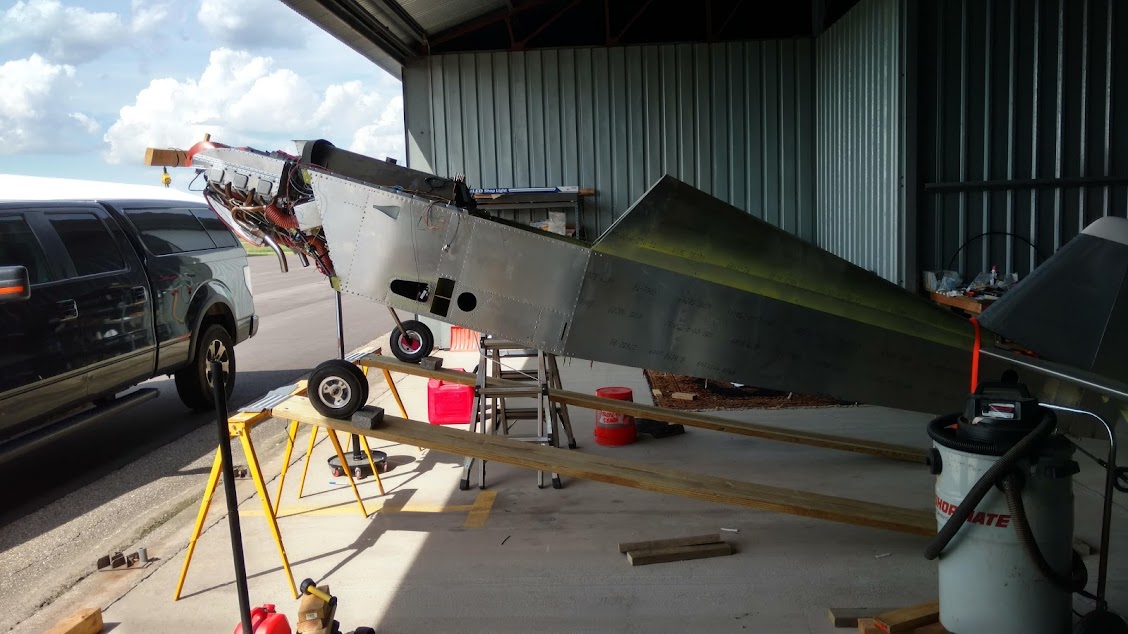
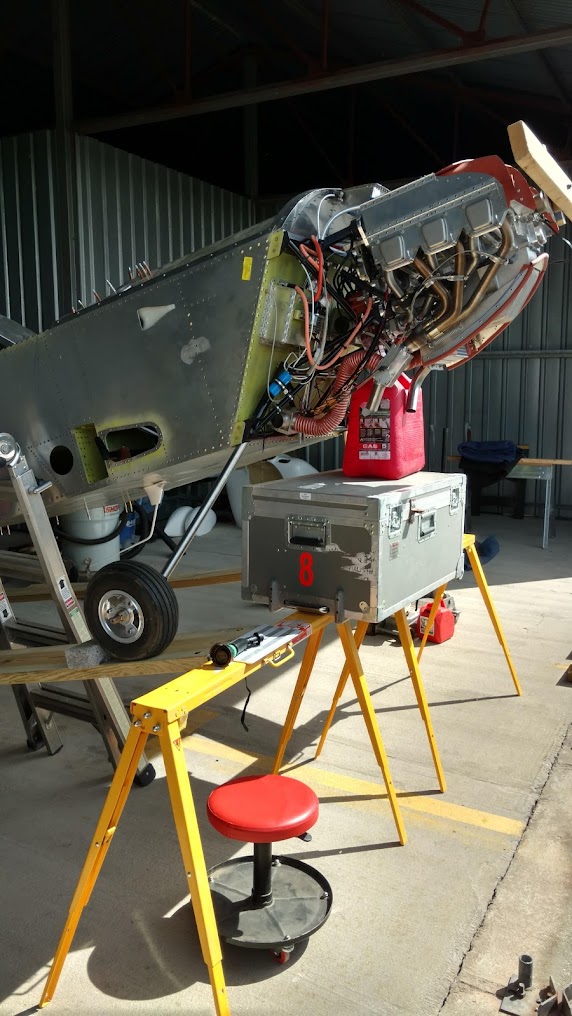
Since redoing my fuel system to have only gravity feed, I’m lucky to get 13.5 gph with 10 gallons in the tank. Surprisingly, at a 19 deg angle the fuel flow doesn’t change much, the fuel level has the most effect. I stopped at 19deg because I was getting nervous that the plane would fall and it was getting hard to push up the ramps.
At a 19 deg incline and 2 gallons in the tank I only get 10.8 GPH. This certainly isn’t 1.5 times the fuel flow a Jabiru 3300 can use. I was hoping for around 15 GPH. Ironically, from pictures I’ve seen, the Jabiru’s intake appears to be higher than the AeroVee, making it even harder for the Jabiru to get the fuel it needs.
I’m using AN-6 lines and fittings. From my tank the fuel goes through a red cube sensor, then an inline fuel filter, then a short run to the AeroInjector. The only thing I can think to do to get more fuel flow is remove the red cube sensor. I’ve checked the fuel filter for debris, and it was clean.
On a side note, I’ve looked at other builders sites, and believe that some of the testing done is invalid. Some builders will let their fuel line hang down lower than the inlet of the carb, or add a short length of fuel line to reach a bucket. Based on my testing, letting the fuel line hang down even an inch can increase fuel flow by 1 GPH with a half empty tank. It has a siphoning effect.
For example, I added a 5 inch fuel line to the end of my fuel system so the fuel would more easily go into the gas can, and the siphoning effect increased my fuel flow from 13.5gph to 17.7gph. So, any builder that simply disconnects the fuel line from the carb, and lets it hang down from the gascolator would likely get fantastic fuel flow due to the siphoning effect.
At the moment I don’t have any idea how to make my fuel system simpler other than removing the red cube sensor.
Anyone else run into this issue with the red cube? BTW, there is a T-fitting before the in-line fuel filter that has a short run of fuel line to remove water and other debris from the system. I did a flow test from that point and the curtis valve flowed 18.6GPH. That’s not a fair comparison to the carb fitting though because the curtis valve is approx 7 inches lower than the rest of the system.
If you have a Jabiru 3300, red cube sensor, gravity fed system, and are able to get 15+ GPH with minimal fuel in tank, and measuring the flow rate accurately, please respond with info on how this is done! 
Re: fuel flow
Posted: Sun Jun 04, 2017 8:38 pm
by gammaxy
I think you’re correct that some of the other reported flow rates are optimistic due to the problems you mentioned. I also doubt most have tested to 19 degrees.
I haven’t tested this but suspect if the red cube was mounted lower in the fuel system you might get a little higher flow rate.
One measurement I never made but wish I had is the flow rate pouring through the carburetor with the throttle full open and the mixture full rich. Maybe if everyone flew Aeroinjectors we wouldn’t use the 150% check since we’d all be able to measure pretty much exactly what the actual flow rate is.
Re: fuel flow
Posted: Mon Jun 05, 2017 8:43 am
by lpaaruule
I imagine that builders are going to be reluctant to admit they are flying with less than optimal fuel flow. My guess is that there is not a single Sonex out there with a fuel flow meter and Jabiru 3300 that is getting 150% max fuel flow with minimal fuel. My system would probably work fine as-is, but I like to have the odds stacked heavily in my favor.
Still thinking…
Re: fuel flow
Posted: Mon Jun 05, 2017 12:20 pm
by kmacht
Are you testing with the fuel cap on or off? How is the tank vented? Large lines out are only good if you have just as large of an inlet. The fuel flowing out of the tank has to be able to be replaced by air at a comparable rate. Just something to check.
Keith
#554
Re: fuel flow
Posted: Mon Jun 05, 2017 1:16 pm
by lpaaruule
Hi Keith,
I did try removing the fuel cap, and saw little too no difference. Additionally, when I measured the flow from the curtis valve on the bottom of the sump it flowed 18.6 gph.
Thanks for the suggestion though, I hadn’t thought of it until part way through my testing yesterday. I’m going to do an additional check tonight with minimal fuel and the plane just sitting in its normal resting tailwheel angle. Probably won’t tell me anything, but one more data point, and an additional sanity check.
Re: fuel flow
Posted: Mon Jun 05, 2017 6:04 pm
by lpaaruule
I just ran a few more tests with the plane just sitting on the gear.
To my surprise I got another 1/2gph since yesterday with about 3 gallons in the tank. So now I have 14gph.
I decided to put 10 gallons in and actually got 16.4gph. This isn’t with minimal fuel, or at 19deg, but I’ll take it.
I don’t have any help today so I can’t get the plane on the ramps to test anymore, but I’m guessing I’d get around 13gph.
The only thing I know that changed was the temperature outside. Perhaps the red cube was a little gummed up from sitting with fuel in it for months.
So I won’t be removing the red cube yet. Since I’m at a loss the moment I think I’ll work on something else and test again some other day
Re: fuel flow
Posted: Fri Jul 14, 2017 11:16 pm
by kevinh
One question: Why did you put your red cube before the filter? It seems to me filter before the red cube is better for two reasons: a) the red cube doesn’t get clogged with debris and b) if the red cube is the biggest restriction perhaps having it just before the engine would help your flow rate.
Re: fuel flow
Posted: Fri Jul 14, 2017 11:33 pm
by jowens
Atmosphere barometric pressure increase would increase fuel flow rates, correct?
Re: fuel flow
Posted: Sat Jul 15, 2017 8:45 am
by lpaaruule
Space, heat, and red cube plumbing requirement considerations.
Ideally, the filter would be before the red cube, but there isn’t room to put both in the cabin without making more bends and more fuel line length.
The positions of the red cube and filter could be swapped. That would put the red cube in the heat and maybe more vibration.
I don’t know if/how atmospheric pressure would effect fuel flow.
Ultimately I copied another builder’s working system. Debris aside, restriction is probably less then an other solution I’ve seen that includes a fuel flow meter.
I think risk of the red cube suddenly clogging is a very unlikely concern. The finger strainer in the tank should minimize this further.
I do appreciate being questioned. A recent article in kitplanes discusses lack of imagination being one the factors in airplane accidents. People never imagined that a particular failure could happen until seeing what happened after a accident.
Re: fuel flow
Posted: Sat Jul 15, 2017 12:17 pm
by kevinh
Yah - I hear you. So many tradeoffs. FWIW based on your helpful post (and others) for my Aerovee turbo install: I’m currently leaning towards:
tank → fuel filter → firewall → redcube mounted to firewall with NPT inlet serving as the bulkhead (much like how a gascolator would mount) → hose → aeroinjector. All as one essentially straight run with few bends.
I’m not super excited about this because annual service of the fuel filter could be a PITA. But, yeah - tradeoffs.
Re: fuel flow
Posted: Sun Jul 16, 2017 1:46 pm
by sonex1374
Kevin,
Let me share my thought process that influenced my fuel system design.
Don’t under-appreciate the difficulty and hassle of removing the filter from inside the cockpit each time you want to service it. The hose runs pretty straight from the tank outlet to the ball shutoff valve to the firewall, and is sort of “pinched” between those two ends. To remove it each time isn’t all that easy, and may place more strain on the tank fittings as you manipulate the hose while removing and re-installing it.
I agree that placing the filter before the red cube is ideal, but in this case, I think serviceability concerns outweigh that. Locating the filter on the engine side of the firewall places the filter in a position that’s easy to get to at service time, and allows you a simple way to remove the entire hose by removing the filter from the firewall bulkhead, and disconnecting the other end from the carb inlet.
The red cub is highly resistant to fouling from small debris, and particles will likely flow through the red cub to get ultimately trapped by the filter. In the event debris does jam the impeller inside the red cube, the flow through is not blocked and fuel keeps flowing. You’ll notice that you lost fuel flow, and will have to flush the cube, but this could even be done without removing it from the plane. Worst case is that you have to get in and remove the cube to clean it, but this is still far less invasive than removing the filter each and every year.
Food for thought.
Jeff
Re: fuel flow
Posted: Sun Jul 16, 2017 5:36 pm
by mike.smith
lpaaruule wrote:I haven’t had nearly as good of results as others with fuel flow testing.
On a side note, I’ve looked at other builders sites, and believe that some of the testing done is invalid. Some builders will let their fuel line hang down lower than the inlet of the carb, or add a short length of fuel line to reach a bucket. Based on my testing, letting the fuel line hang down even an inch can increase fuel flow by 1 GPH with a half empty tank. It has a siphoning effect.
[/img]
The only thing the lower outlet does is add a slight bit of height to increase head pressure. At 1 gal/88 seconds (my results) that’s over 40 gph, so lifting the outlet up or down several inches isn’t going to affect that number to any significant degree.
I have a setup like yours: tank, ball valve, firewall, Gold Cube, inline filter, short AN-6 hose, AeroInjector. My tests were at 21 degrees, so I’m not sure why your fuel flow is so much less. There isn’t a lot to troubleshoot. But it’s certainly worth a try to take out the Red Cube and at least confirm or deny it has an effect. Does the inline filter have AN-6 connections as well? In other words, the inlet/outlet size of the filter isn’t constricting flow?
Re: fuel flow
Posted: Sun Jul 16, 2017 9:08 pm
by mike.smith
I know it’s a drag to take things apart, but process of elimination is probably the next step. Take everything apart to the firewall. Test the fuel flow at the firewall. If you’re at a low flow there then perhaps there is something wrong at the finger strainer, or at the fuel shut off valve. If not, then put on the next link in the fuel system and test again. Then the next piece and test, and so on. See what the effects are as each new piece is added.
Re: fuel flow
Posted: Sun Jul 16, 2017 9:46 pm
by lpaaruule
Hi Mike,
Thanks for the suggestions. I may look into this further, especially if I have issues during ground running.
That’s great you have 40GPH fuel flow, but I have to admit that I’m skeptical of your results. Joe Norris stated earlier in this thread that he got 22GPH straight out of the tank. You’re system somehow has less restriction, or some other variable is contributing to you’re fantastic fuel flow, or maybe Joe’s Dyno tank is different.
Lowering the outlet had a big effect on my fuel flow. This was verified both from timing tests, and fuel flow meter readings.
All my fittings are -6.
I’ll think about it some more, but I’m not convinced that I have an issue yet.
Re: fuel flow
Posted: Sun Jul 16, 2017 10:55 pm
by mike.smith
lpaaruule wrote:Hi Mike,
That’s great you have 40GPH fuel flow, but I have to admit that I’m skeptical of your results. Joe Norris stated earlier in this thread that he got 22GPH straight out of the tank. You’re system somehow has less restriction, or some other variable is contributing to you’re fantastic fuel flow, or maybe Joe’s Dyno tank is different.
I agree, but I ran the test 3 times and got the pretty consistent average of 88 seconds to drain out a gallon of fuel. And that was starting with 3 gallons in the tank, ending with 2 gallons. I’d be curious to hear the spread of results everyone else has gotten.
Re: fuel flow
Posted: Mon Jul 17, 2017 12:06 pm
by waiking59
I checked mine recently while calibrating my Princeton fuel probe and got 15gal in 18 minutes. I got the same results twice while draining it before any filters or my red cube which is after my fuel pumps.
Re: fuel flow
Posted: Mon Jul 17, 2017 7:16 pm
by mike.smith
waiking59 wrote:I checked mine recently while calibrating my Princeton fuel probe and got 15gal in 18 minutes. I got the same results twice while draining it before any filters or my red cube which is after my fuel pumps.
That’s 50 gal/hr.
Re: fuel flow
Posted: Mon Jul 17, 2017 8:09 pm
by waiking59
That’s right Mike, straight from the shutoff valve through the firewall fitting and out the fuel line removed from the primary filters.
It’s 5/16" high pressure fuel injection fuel line.
See ya at AV