Thanks for he reference:
Oil 20W-50 - zinc & phosphate min. 12% to .14% and for some reason non synthetic ie straight mineral oil which is getting harder to find.
Why non synthetic?
Even air cooled mowers (B&S/Kawasaki/Honda/etc) have moved to at least a semi sythetic. 
They don’t run 100LL though.
1 Like
Ah!
Can it run on high octan unleaded - 98RON in Australia?
Here in the US we typically have 100LL at airports. Our automotive gasoline is mostly contaminated with alcohol and is lower octane. To run car gas I’d have to drop my compression ratio to 7:1. I’m running 9:1 and don’t want to give up any performance.
From the Aerovee manual:
“Note: Engines which are not operated frequently collect damaging moisture. This moisture can only be removed by operating the engine until oil temperatures are above 190-degrees for an extended period of time, or by changing the oil. Short
runs of the engine, which do not allow the engine to come to full operating temperature, are more damaging than not running the engine at all.”
Sonex LLC © 2025 All Rights Reserved
I don’t want to disagree with Joe but his advice should be avoided. What Sonex gives here is correct and should be followed. Every engine manufacturer that I’m aware of follows this advice.
1 Like
I don’t want to get drawn into a controversy, but Joe also pointed out that the metal probe, screwed into a metal engine, was measuring the temperature of the engine case not just the temperature of the oil. The temperature of the oil is higher.
Wes
I think it depends on the probe. I saw little difference between having the aluminum plate covered or uncovered where I had my oil temp probe mounted. My RTD is well inside the crankcase and in the oil bath. Also I’ll note that when I added my cooling, my oil pressures went up. That’s evidence that the oil is cooler. At 240 the oil pressure is low in cruise and goes to zero indicated at idle.
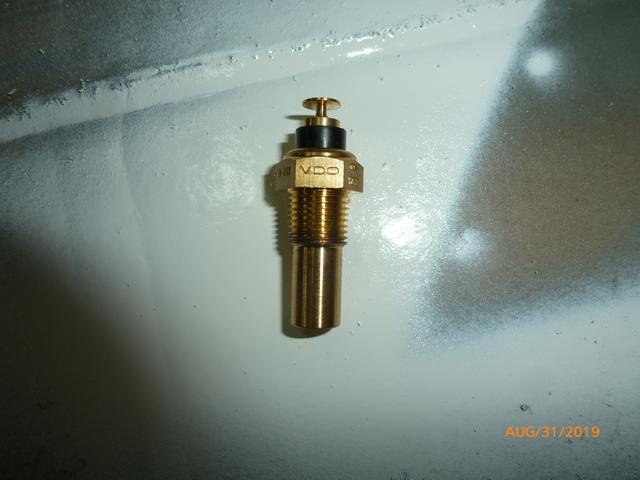
Most of us just buy one of these and screw it in.
I don’t know exactly what you’re using. About the best I can imagine is a T/C inserted through a hole in a fitting and epoxied (thermally isolated) in place. That with the junction an inch or so beyond the back side of the fitting.
With an RTD bathed in oil, sounds like you have it licked.
Wes
1 Like
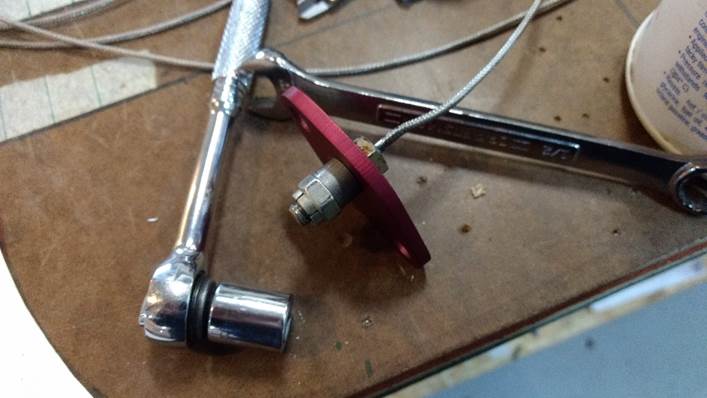
It’s in my DNA that I have to do things differently. I took an AN4 bolt and drilled it in the lathe most of the way through from the head side. Bonded the RTD in the bolt. Note the spacer so I could use a longer bolt. I had forgotten about that until I found the picture. The bolt has a gasket and permatex #3 sealing it. So it’s not a pipe thread making a good connection to the aluminum block off plate. Just a 1/4” hole. The aluminum block off plate is isolated from the magnesium case with a gasket and more permatex #3.
The RTD is under those threads sticking out of the nut.
1 Like