Cooling your AeroVee Heads

Cooling your AeroVee Heads

Posted: Mon Sep 27, 2021 12:30 am

by karmarepair

Head cooling is THE limiting factor in longevity of your engine. PARTICULARLY the area around the exhaust valves. While the oil can and does carry away a lot of heat from the heads, you need airflow through the fins to carry off more of it, or else your exhaust valve clearance goes away, until you run out of adjuster threads, the head snaps off inside the cylinder or the valves or seats burn and you lose compression.

Leaving aside leaks in baffling for a moment there are two big issues I see with AeroVee installations.

  1. No “heat deflectors” plugging the gap in between the heads. See here for a discussion of that https://bobhooversblog.blogspot.com/2006/12/vw-head-baffles.html. I’ll post later about how I dealt with this on my heads.
  2. Lack of air passage around the exhaust valves. I’m going to elaborate on that here.

This is what a bare VW cylinder head should look like (from Bob “Veeduber” Hoovers Blog):
http://bp1.blogger.com/_JU6RC7jJfRc/Rq8HjOwE0lI/AAAAAAAAAt8/R_4vb8FG88w/s1600-h/blog_head.jpg
And take a look at this head comparison for “Dune Buggies and Hot VWs” http://www.cfiamerica.com/images/pdf/Ho … _Heads.pdf
Now look at your heads. You can see by the comparison that not all heads are shot full of holes around the exhaust port like the stockers. Some are cast solid - which you can get away with on a drag strip running nitromethane.

It’s easier to fix this on a bare head, but at least on the forward cylinders, it can be done on an assembled engine, with 6 inch aircraft drills, chainsaw files, and patience. Veeduber talks about using a pneumatic riffler or a jig saw or hand saw. http://bobhooversblog.blogspot.com/2007 … s-101.html

Once I figure out how to post pictures, I’ll show you my work in progress.


Re: Cooling your AeroVee Heads

Posted: Mon Sep 27, 2021 12:40 am

by karmarepair

OK, this is the Starboard forward head, minimally worked on - I think I’ve already drilled one of the web I.E. there was only one, partially blocked, passage for air in this area!
https://drive.google.com/file/d/1gCb4SjWlMly4Pa4W_ZiDIBYCtcpPYs9R/view?usp=sharing

And here is the Port forward head, with a little more work done:
https://drive.google.com/file/d/1Bz-6JnIfI0wLOWphBGhgshH6RussGL7g/view?usp=sharing
That dark area to the lower left has, since this pic was taken, been drilled out. There is another head stud under the dark area just below the head stud you can see, that makes it hard to drill that area out. To the far right, and out of the frame to the right of the spark plug, are other passage I’ve either opened up or drilled through the existing casting flashing.


Re: Cooling your AeroVee Heads

Posted: Mon Sep 27, 2021 11:06 pm

by mike.smith

Just as a point of reference, I have flown 500 hours behind my AeroVee. No modifications to anything from the original build from the kit, including the super tin, baffles and cylinder fins. No cooling issues even in the dead of summer. I borescope my valves at every annual, and so far they look as they should, with no burns or abnormal conditions. There is nothing inherently wrong with the construction and cooling of the stock AeroVee. If someone wants to make improvements, fine, but as a general rule it’s not necessary, and may just add time and money.

A VW will run hot during the first 25-50 hours. That’s normal. After that is should settle in. If not, then you can look for problems to solve.

My 2 cents.


Re: Cooling your AeroVee Heads

Posted: Tue Sep 28, 2021 12:54 am

by karmarepair

mike.smith wrote:Just as a point of reference, I have flown 500 hours behind my AeroVee. No modifications to anything from the original build from the kit, including the super tin, baffles and cylinder fins. No cooling issues even in the dead of summer. I borescope my valves at every annual, and so far they look as they should, with no burns or abnormal conditions. There is nothing inherently wrong with the construction and cooling of the stock AeroVee. If someone wants to make improvements, fine, but as a general rule it’s not necessary, and may just add time and money.

A VW will run hot during the first 25-50 hours. That’s normal. After that is should settle in. If not, then you can look for problems to solve.

My 2 cents.

All good EXPERIENCE BASED observations/opinions. My engine/plane has not flown, yours has.

AeroVee changed head suppliers several times. When did you buy your engine? Can you tell who built your heads (usually there is identifying information cast into the rocker boxes, which you can see when you pull your valve cover to check the valve clearances)?


Re: Cooling your AeroVee Heads

Posted: Tue Sep 28, 2021 1:41 am

by karmarepair

So, I learned more about my heads today when I pulled the valve covers.

First, they are CB Performance 044s. CURRENT specs (my engine is 20 years old, so it MIGHT not have all this kit):

  • 12mm 3/4" Reach Spark Plug Holes
  • 40mm x 35.5mm SUPERGRIP™ 214N Single Groove S/S Valves with Stellite Tips
  • SUPERGRIP™ Chromoly Valve Spring Retainers
  • SUPERGRIP™ Single Groove Valve Locks
  • Performance 4 Angle Valve Job (30°, 45°, 60° & 75°) on seats
  • Manganese Bronze Racing Valve Guides
  • Tungsten Carbide Alloy Valve Seats
  • Single Hi-Rev Chrome Silicon Valve Springs

My heads are also fitted with “Elephant Foot” valve adjusters (GOOD) and ratio rockers (which means stock stamped steel valve covers won’t fit).

More as I learn more.


Re: Cooling your AeroVee Heads

Posted: Tue Sep 28, 2021 7:28 pm

by mike.smith

My airframe is 7 years old, so the engine is about 9 years old. I originally had the nickasil cylinders, but quickly had to replace those. Since then all has been fine. Nothing wrong with cleaning up if there is slag in some of the head openings, but even that I never did (didn’t know to even think of it at the time). All has been running fine, so never went back and did anything.


Re: Cooling your AeroVee Heads

Posted: Wed Sep 29, 2021 7:43 am

by GraemeSmith

I keep a spare head “ready to go”. In case I get an exhaust valve problem. Two are EMPI and one I am not sure. Whatever was supplied around 2014 to the builder.

I’ve done some porting and polishing, some rebaffling, checked the area of the exit slot, cleaned up fins, and I agree. Keeping No 3 cooler is harder.

But I don’t think it is all about airflow. I think another factor is mixture. Simple naturally aspirated engines are notorious for not producing even mixtures across all cylinders. Aircraft pitch, air swirling into the carb differently due to airflow across the cowl, turbulence bumps producing different G loads on the mixture. All make it tough to get an even mixture.

With one head (despite porting it some more but not over porting it - I hope) - when the head is in the No 3 position - it runs leaner (EGT) and so hotter than all the others. I’ve juggled the length of the intake tubes on left and right side of the engine and managed to even the mixture across all 4 a bit - but it’s not perfect. A different head in the same position - different result.

I also tried the Great Planes inlet manifolds so see if I could change things. Frankly - as I said at the time - what was supplied was junk and they made no real difference.

So yes - getting cooling air to the fins is part of the story. But I think getting even mixture is another part.

I suspect the folks experimenting with fuel injection will find it much easier to deliver consistent mixtures and so get more even EGT and CHT’s.


Re: Cooling your AeroVee Heads

Posted: Wed Sep 29, 2021 9:39 am

by pappas

I have been posting my trials and tribulations with CHT’s for my turbo for some time. I just replaced both MOFOCO heads with EMPI’s supplied by Sonex. 3 angle cut valve job on these and the casting is much more substantial. My #3 went from my hottest cylinder to my coolest right away. #1 and #3 are my coolest cylinders #4 is close behind and #2 is 25 deg hottest but still not more than about 365 or so in cruise.

The EMPI’s had almost all of the flashing between the fins already removed when I got them. I am not a fan of the MOFOCO’s after switching to the EMPI’s.


Re: Cooling your AeroVee Heads

Posted: Fri Oct 01, 2021 6:55 am

by skyrangernz

I have been battling temperatures ever since I installed the Aerovee screw-type senders that are attached to the head as close to the sparkplug as possible. I did this because I spent a fortune fixing or buying the old fashioned ring under the plug senders as I kept breaking them when I removed/installed the plugs. The ring CHT’s are consistently 100 F hotter than the Aerovee probes. At full power and 3200 rpm, I get 325 F on the Aerovee probe and 425 F on the ring under the plug probe. I am at a loss as to which one to believe as 400 degrees is the published limit.
Photos show temperatures. Photos were taken after a 5 minute run at 2000 rpm and then at shutdown. Engine top overhauled, piston/rings/barrels/Mofoco heads. Engine not yet run in, only a 13-minute test flight that was terminated when the ring probes wouldn’t get below 425 F.
Thanks in anticipation.
Wayne


Re: Cooling your AeroVee Heads

Posted: Fri Oct 01, 2021 10:15 am

by daleandee

skyrangernz wrote:The ring CHT’s are consistently 100 F hotter than the Aerovee probes. At full power and 3200 rpm, I get 325 F on the Aerovee probe and 425 F on the ring under the plug probe. I am at a loss as to which one to believe as 400 degrees is the published limit.

Wayne,

Many moons ago a few of us (Charlie Radford & I were two of the guys) were known as the “Hot-Head Club” as we continuously battled temps on the VW conversion. At the time Charlie did exactly what you are doing i.e. running the plug & a separate fin mounted probes. IIRC, his testing found something like 30ºF difference between the probes. Quite a lot of the accuracy of the fin probe depends on exactly where it is mounted and how much air blows over it.

The original specifications for the head temps (still currently used), as given by Sonex at that time, were for the “under the plug mounted” CHT probes. Using the later model probes gives a bit of advantage to those that want to see lower head temps. On my current engine (Corvair) I use the probes under the plugs as I believe that is where the most accurate and consistent readings will be found. YMMV but I doubt it. Seeing 425ºF during break-in on a VW is not uncommon.

VW engines run hot at the power levels required of them in this application. That is not to say the engine won’t work but attention to cooling set-up is paramount and flying the plane in a manner to aid cooling (step climbing is one example) is required. Do all you possibly can to keep the little engine as cool as possible, and perhaps have another set of heads on standby.

The temps will get lower after break-in. The best I could do (many years ago) with my VW on a warm day was 385ºF in cruise on the hottest cylinder. I wasn’t real happy with that but I did put 175 hours on it before selling it and building the plane I have now.

Re: Cooling your AeroVee Heads

Posted: Fri Oct 01, 2021 10:20 am

by Scott Todd

You have to think about whats going on. That spark plug is firing hundreds of times a second generating explosions in the thousands of degree range. Look up combustion temperatures if you like. But you can look at the EGT for a simple analogy. It is running around 1300F. So there is 1300 degree air feeding the head underside around the spark plug hole. A large gradient occurs as the heat travels thru the head and the spark plug threaded portion to the outer surface near the plug. Measuring the temperature there and assuming the entire head is that temperature is not very accurate. For example, if you countersunk the probe half way down next to the plug, you might read 600-700. That would be considered unacceptable and ground the engine. That’s why Sonex recommends the probes screwed onto the head near the plug but not against it. This has been established thru years of testing. If you put the probes where they suggest and limit the temperatures to what they suggest, you’ll be just fine. Its pretty easy to pull the heads at annual or after 100 hours and take them to a VW shop. Those guys will tell you exactly whats going on inside there. Your temperatures look really good. Keep flying!


Re: Cooling your AeroVee Heads

Posted: Fri Oct 01, 2021 6:17 pm

by Area 51%

Scott Todd wrote:That spark plug is firing hundreds of times a second

Actually, the plug fires 50 times a second at 3000 RPM. And out of those, only 25 are responsible for an explosion. Still damn hot though.

I too installed the probes under the plugs initially, and fretted over the same 425+ degree reading till I tried the recommended probe location. Didn’t get a 100 degree difference, but proved to myself the CHTs were within limits if not still running on the high side. Extra cooling exits (Van’s louvers) brought everything (CHTs and oil temp) down an additional 20-30 degrees.


Re: Cooling your AeroVee Heads

Posted: Sat Oct 02, 2021 10:39 am

by Scott Todd

I was too lazy to do the math. 11 year of college does that :wink:

I can’t say it enough, exit area is almost always the answer.


Re: Cooling your AeroVee Heads

Posted: Sat Oct 02, 2021 12:26 pm

by karmarepair

mike.smith wrote:A VW will run hot during the first 25-50 hours.

I can understand the oil temps being high, as various bearings and the rings find their Happy Place during Break In (which I plan to do ON THE GROUND, using a “hood” to direct prop blast through the existing baffling), but the HEADS? What physical mechanism would cause the HEADS to run hot?


Re: Cooling your AeroVee Heads

Posted: Sat Oct 02, 2021 2:49 pm

by AlexZ

Don’t do break-in on the ground!!. You’ll ruin your heads in no time. The prop doesn’t deliver enough air. You need airspeed to get enough air through the cowl by generating low pressure at the cowl exit. Keep ground running to a minimum. Adjust the Aerocarb as described in the manual and go flying.
The heads run hot because the original design was only 45HP and forced cooling. There’s simply not enough material to store the heat generated at full power during takeoff.
Secondly a new engine has tight tolerances. Breaking in requires more power which results in more heat.


Re: Cooling your AeroVee Heads

Posted: Sun Oct 03, 2021 11:48 am

by karmarepair

AlexZ wrote:Don’t do break-in on the ground!!. You’ll ruin your heads in no time. The prop doesn’t deliver enough air.

This is true for the stock cowl, assuming the upper cowl is ON. That is not my plan. I’ll be using a big hood over the top of the engine to force cooling air down. LIke this:
https://i2.wp.com/flycorvair.net/wp-content/uploads/2017/02/img_1189.jpg?ssl=1
This is an engine I did not build myself, and I’m not comfortable with the risk of the Sonex recommended procedure. If I have any problems, I want them to manifest ON THE GROUND. I do not suggest anyone else follow my path, but this IS My Path.

You need airspeed to get enough air through the cowl by generating low pressure at the cowl exit.

William Wynne’s setup does not have a “lower cowl”. But you make a good point. This installation is well instrumented, with 4 CHTs (under the spark plugs, which I don’t like, but I’m going to keep them there for now) and if the temps get too high, I’ll shut down, and revise my plan.

Keep ground running to a minimum. Adjust the Aerocarb as described in the manual and go flying.

You’re not wrong, and for most projects/builders, this is the right answer. It’s obviously worked for a lot of airplanes and engines.

The heads run hot because the original design was only 45HP and forced cooling.
Precisely why attention to detail in this area is important. The heads that were fitted to my engine would not, without cleanup, cool as well as stock.
There’s simply not enough material to store the heat generated at full power during takeoff.
This might be true, although I’d argue I don’t WANT to store heat, at all, for the transient condition you describe. I’ve read enough reports of engine that could not maintain CRUISE power settings, plus lots of exhaust valve troubles. Carrying the heat away is what I want to be doing.
Secondly a new engine has tight tolerances. Breaking in requires more power which results in more heat.
I can see hot BARRELS due to ring seating. I can see hot OIL as heat from tight rod and journal bearings gets dumped to the oil. I’m skeptical of your explanation that it’s the required power to turn the engine that makes the difference at break-in. The horsepower the prop absorbs is far in excess of the frictional and pumping losses within the engine.


Re: Cooling your AeroVee Heads

Posted: Sun Oct 03, 2021 11:50 am

by karmarepair

AlexZ wrote:Don’t do break-in on the ground!!. You’ll ruin your heads in no time. The prop doesn’t deliver enough air.

This is true for the stock cowl, assuming the upper cowl is ON. That is not my plan. I’ll be using a big hood over the top of the engine to force cooling air down. LIke this:
https://i2.wp.com/flycorvair.net/wp-content/uploads/2017/02/img_1189.jpg?ssl=1
This is an engine I did not build myself, and I’m not comfortable with the risk of the Sonex recommended procedure. If I have any problems, I want them to manifest ON THE GROUND. I do not suggest anyone else follow my path, but this IS My Path.

You need airspeed to get enough air through the cowl by generating low pressure at the cowl exit.

William Wynne’s setup does not have a “lower cowl”. But you make a good point. This installation is well instrumented, with 4 CHTs (under the spark plugs, which I don’t like, but I’m going to keep them there for now) and if the temps get too high, I’ll shut down, and revise my plan.

Keep ground running to a minimum. Adjust the Aerocarb as described in the manual and go flying.

You’re not wrong, and for most projects/builders, this is the right answer. It’s obviously worked for a lot of airplanes and engines.

The heads run hot because the original design was only 45HP and forced cooling.
Precisely why attention to detail in this area is important. The heads that were fitted to my engine would not, without cleanup, cool as well as stock.
There’s simply not enough material to store the heat generated at full power during takeoff.
This might be true, although I’d argue I don’t WANT to store heat, at all, for the transient condition you describe. I’ve read enough reports of engine that could not maintain CRUISE power settings, plus lots of exhaust valve troubles. Carrying the heat away is what I want to be doing.
Secondly a new engine has tight tolerances. Breaking in requires more power which results in more heat.
I can see hot BARRELS due to ring seating. I can see hot OIL as heat from tight rod and journal bearings gets dumped to the oil. I’m skeptical of your explanation that it’s the required power to turn the engine that makes the difference at break-in. The horsepower the prop absorbs is far in excess of the frictional and pumping losses within the engine.


Re: Cooling your AeroVee Heads

Posted: Sun Oct 03, 2021 12:42 pm

by Rynoth

For what it’s worth, if you go to 1hr 4 minutes in this old Aerovee Turbo Presentation by Sonex, you can see a picture of the shroud setup they used for ground testing.

https://youtu.be/T759DF_E8Ys?t=3840


Re: Cooling your AeroVee Heads

Posted: Mon Oct 04, 2021 5:29 am

by AlexZ

It are basically simple thermal principles.

  • The heads don’t have enough cooling capacity at full power. So during takeoff and climb out the heat builds up in the heads. After climb out at level flight it takes quit some time to get to ‘normal’ temps. I have graphs of temps building up while doing consecutive takeoffs at MTOW in short time. The next takeoff the temps started 10+ degrees Celsius higher. Downwind and final at low power where not long enough in time to get rid of the excess heat. We ruined (loose exhaust valve seat) a head doing that.
  • During break-in there’s more friction and that creates heat. It takes power to overcome friction. Let’s say the extra friction requires only 2 HP. All this will become heat and results in higher temps.

Re: Cooling your AeroVee Heads

Posted: Tue Oct 05, 2021 1:03 am

by karmarepair

Rynoth wrote:For what it’s worth, if you go to 1hr 4 minutes in this old Aerovee Turbo Presentation by Sonex, you can see a picture of the shroud setup they used for ground testing.

https://youtu.be/T759DF_E8Ys?t=3840

In my opinion, that shroud doesn’t go far enough out on the heads.

Re: Cooling your AeroVee Heads

Posted: Tue Oct 05, 2021 7:40 am

by Area 51%

AlexZ wrote:The heads run hot because the original design was only 45HP and forced cooling

Not sure where people keep coming up with this number. In 1965, the 1200cc engine developed 40hp. In “66” the 1300 was producing 50. The 1971 version spat out a whopping 60hp with pretty much the same heads we are using. Over-worked and under-paid to be sure, but 35% over is more realistic than 90%.


Re: Cooling your AeroVee Heads

Posted: Tue Oct 05, 2021 9:51 am

by Scott Todd

We’ve had this discussion before. It doesn’t matter what they were ‘designed’ for. These ‘original HP’ discussion and ones like “don’t have enough cooling capacity at full power” are just urban myths. As Alex eludes to, its just simple Thermodynamics. You can pump as much heat into them as you want as long as you have sufficient cooling on the other side. This has been proven OVER and OVER and OVER…Tiny inlets, not enough exit area, too much blockage from fin cast flashing, improper baffles, etc are the real problems.

People like John Monett and thousands of car enthusiasts have been racing these little engines and making much more than our 80 HP for decades. Make sure you have enough cooling air moving across the fins, and you can run them quite hard, for a long time.

My brand new AeroVee powered Onex can climb at full power until I decide to level off. My max CHT has been 384F. None of the other 3 Sonex airplanes I have test flown had cooling issues either. I made sure of that before they ever ran for the first time :slight_smile:

Scott


Re: Cooling your AeroVee Heads

Posted: Wed Oct 06, 2021 3:09 am

by AlexZ

Scott Todd wrote:People like John Monett and thousands of car enthusiasts have been racing these little engines and making much more than our 80 HP for decades. Make sure you have enough cooling air moving across the fins, and you can run them quite hard, for a long time.

In cars forced cooling does that. In the air it’s airspeed.

Scott Todd wrote:My brand new AeroVee powered Onex can climb at full power until I decide to level off. My max CHT has been 384F. None of the other 3 Sonex airplanes I have test flown had cooling issues either. I made sure of that before they ever ran for the first time :slight_smile:

Flying a Onex and single in a Sonex hardly ever gives cooling issues. A Sonex at MTOW does. Too long at a too low airspeed will kill your heads. No matter how perfect everything is under the cowl. High power and low airspeed. Pumping in heat and unable to get it out. A Sonex at MTOW is a bad climber, so climb out takes a wile.


Re: Cooling your AeroVee Heads

Posted: Wed Oct 06, 2021 9:11 am

by Scott Todd

You keep missing the point. It just needs to be cooled. Airspeed IS forced cooling. There are lots of Sonex’s that cool just fine at MTOW. The ones I tested did just fine at MTOW, in Phoenix! If its perfect under the cowl, and out of the cowl, its perfect!

High power and low airspeed. Whats does that even mean in numbers? Is 50 too slow? How about 60? Maybe 70 is the magic number. 90 seems to ring a bell. Its still about cooling air flow and cooling (fin) efficiency. Of course each airplane will present slightly different but Sonex’s can be made to work.

Clearly you are convinced a VW will NEVER cool properly in a Sonex. Perhaps you should try a different engine. Maybe we should tell Sonex their design is flawed.

“unable to get it out” says it all. Look at the people that have added the side outlets and their cooling problems were solved. Maybe they are on to something…


Re: Cooling your AeroVee Heads

Posted: Wed Oct 06, 2021 4:40 pm

by XenosN42

I have been following this thread with some interest. I have flown behind an AeroVee in a XENOS and now a OneX. I have had some cooling issues, but never had CHTs above the upper limit of 420°F. I’ve always been able to keep it below 405°F.

I’d like to present some real world numbers from my OneX. I picked an arbitrary recent flight with an initial climb of approx. 4,600 feet. I’ve stacked the graphs showing different flight and engine parameters.
https://jasflyer.com/OneX/AeroVee%20Performance.aspx

I’m not saying these engine numbers are perfect or achievable in all flight situations. They are just offered up as an example of the performance I’m seeing. Performance that I’m very happy with.


Re: Cooling your AeroVee Heads

Posted: Wed Oct 06, 2021 8:49 pm

by Scott Todd

Looks great Michael! I had my first flight today collecting data. Finally figured out the MGL protocol and format. Here is a quick screen grab. It had 3.1 hours at the start of the flight and has always been at full throttle for the entire first few flights. Today was the first time I pulled it back other than for landing. I was monkeying with the throttle and different air speeds until about 10 minutes. I was at full throttle from the 10-15 minute mark and then 3200 until I started my descent for landing. These are CHT’s. OAT was 69F. Stock Onex. Sonex recommended position for TC’s. Exit area using lip per latest Onex plans.

The Flight Data Viewer is awesome!


Re: Cooling your AeroVee Heads

Posted: Thu Oct 07, 2021 12:00 pm

by AlexZ

Scott Todd wrote:You keep missing the point. It just needs to be cooled. Airspeed IS forced cooling. There are lots of Sonex’s that cool just fine at MTOW. The ones I tested did just fine at MTOW, in Phoenix! If its perfect under the cowl, and out of the cowl, its perfect!

High power and low airspeed. Whats does that even mean in numbers? Is 50 too slow? How about 60? Maybe 70 is the magic number. 90 seems to ring a bell. Its still about cooling air flow and cooling (fin) efficiency. Of course each airplane will present slightly different but Sonex’s can be made to work.

Clearly you are convinced a VW will NEVER cool properly in a Sonex. Perhaps you should try a different engine. Maybe we should tell Sonex their design is flawed.

“unable to get it out” says it all. Look at the people that have added the side outlets and their cooling problems were solved. Maybe they are on to something…

I’m not missing the point. I know it needs to be cooled. With forced cooling I meant pressurized with a fan. Climbing out at MTOW with 60 to get some climb performance builds up heat in the heads, because of lack of cooling. The cooling efficiency of the fins is not enough in that situation. So in climb watch the temps and act accordingly. That keeps the engine happy. The Sonex at MTOW could use some more HP to improve takeoff and climb. Sonex acknowledged that and came up with the turbo. I’m seriously looking at another engine. Adding the turbo or swapping for a (used)Rotax ULS cost the same here in Europe.


Re: Cooling your AeroVee Heads

Posted: Thu Oct 07, 2021 1:51 pm

by Area 51%

XenosN42 wrote:I have been following this thread with some interest. I have flown behind an AeroVee in a XENOS and now a OneX. I have had some cooling issues, but never had CHTs above the upper limit of 420°F. I’ve always been able to keep it below 405°F.

My "“Error-V” assembly manual has the absolute upper limit at 450deg. It allows 420 for five minutes.


Re: Cooling your AeroVee Heads

Posted: Sat Oct 09, 2021 8:55 am

by GraemeSmith

Further to my comments about CHT’s tracking EGT’s and so my belief that getting mixture evened out is a factor:

Note that temps are in CELCIUS.. Scales are set exaggerated to show small differences.

This is pretty typical of a climb out


Re: Cooling your AeroVee Heads

Posted: Sat Oct 09, 2021 12:46 pm

by mike.smith

AlexZ wrote:With forced cooling I meant pressurized with a fan. Climbing out at MTOW with 60 to get some climb performance builds up heat in the heads, because of lack of cooling. The cooling efficiency of the fins is not enough in that situation. So in climb watch the temps and act accordingly. That keeps the engine happy. The Sonex at MTOW could use some more HP to improve takeoff and climb. Sonex acknowledged that and came up with the turbo. I’m seriously looking at another engine. Adding the turbo or swapping for a (used)Rotax ULS cost the same here in Europe.

With all the AeroVees/VWs flying, this is just completely untrue. The AeroVee/VW has plenty of cooling capacity with normal air flow through the cowl, and no need for tricks like fans. That is a fact, because it’s how all the AeroVees/VWs have flown, and continue to fly, successfully. It’s not conjecture; it’s proven. I have 500 hours behind mine, so I do know of what I speak.

Re: Cooling your AeroVee Heads

Posted: Mon Oct 11, 2021 2:32 am

by Kai

AlexZ wrote:The Sonex at MTOW could use some more HP to improve takeoff and climb. Sonex acknowledged that and came up with the turbo. I’m seriously looking at another engine. Adding the turbo or swapping for a (used)Rotax ULS cost the same here in Europe.
[/quote]

Alex,

I- with by now quite a few others, have been through the same deliberations.

Originally my Sonex Legacy #0525 SG DS had a 85HP Jab up front: a t/o on a grass field with two in the cockpit was an exercise only for the brave. So I put on a turbo (Aerocharger): the results were smashing! But the swap was very hard on pistons and cylinders, and when Jab more or less ceased production of specific gen 1, -2, and-3 spares, I had two choices: quit flying or install a R912ULS.

There is a lot written about this in ‘Actual Flying Rotax Installs’. A chap Down Under made a sort of square tube ring mount to mate his VW engine support to the Rotax: very nice!. As luck would have it I got hold of a surplus Jab 33A engine support (the Jab 22A mount would move the 912 too far forward), and to this I mated the Rotax ring mount. A chap in Sweden has a Sonex in the air with a mount he designed himself (which is beyond me!). And of course you have the beautiful Sonex ‘fit and forget’ solution- clearly less work if you want to spend the shipping costs for the new mount to Europe, fit to cause a cardiac arrest.

Indeed- a lot to think about! Feel free to PM me should you have some questions. And when all is said and done, and you are once more sitting there looking down the runway with an entity that has not yet been in the air, remember: the thing pulls to the left- HARD right rudder!!

Thanks
Kai


Re: Cooling your AeroVee Heads

Posted: Mon Oct 11, 2021 5:54 am

by AlexZ

Since a few don’t want to understand what I’m trying to explain about cooling capacity I’ll just let it go.

So back to my first reaction in this topic. - Don’t do break-in on the ground.
That’s what Sonex advises and I fully stand behind that. Also read this https://www.kitplanes.com/the-most-reliable-engine/ especially the chapter ‘Engine Break-in or Engine Breaking?’. Note the text under picture with the shroud on an Aerovee.


Re: Cooling your AeroVee Heads

Posted: Mon Oct 11, 2021 10:43 pm

by phenry

I agree that all the Aerovee needs is good airflow to keep the heads from overheating. I suffered with overheating issues for some time before I finally worked it out.
To get maximum air flow over the heads and thus optimum cooling the pressure differential between above and below the plenum must be at its greatest. To make this happen we create a vacuum using the shape of the cowl exit, we make the cowl exit sufficiently large to handle the expanded/heated air and we block any places we do not want air to flow at the plenum including where the plenum intersects with the cowl.
Having addressed all the above issues and still having heating issues that I had to manage carefully when flying, I finally concluded that the bottom mount oil cooler arrangement is a major problem in the air-cooling system.
If you have an extra hole in the front of the cowl below the plenum that is used to cool engine oil, then this airflow adds extra pressure below the plenum and the differential pressure is reduced.
The bottom mount cooler is more complicated requiring a special oil pump, additional plumbing, and expensive hardware. It can be way to efficient at cooling the oil, meaning oil temperatures are kept to cool and people must block up the cooler airflow to get good operational oil temperatures specially in the winter.
The moment I replace the bottom cooler with a top mount cooler everything came good. I permanently blocked the bottom cooler air hole and binned all that extra plumbing and the full flow pump. Now my heads are cooler, my oil temperature gets up to the correct values. Even here in Australia with our very hot summers oil temperatures are not an issue. In fact, I have about one third of my top mount cooler blocked off all year round.
So my advise is: Ditch the bottom mount cooler.


Re: Cooling your AeroVee Heads

Posted: Mon Oct 11, 2021 10:54 pm

by Scott Todd

I found it interesting the Onex evolved to the top mount oil cooler and larger inlets. They also revised the lip on the bottom for more effectiveness. And now the B models have even more exit area on the sides. There are all good lessons here for Sonex owners, especially in warmer climates.


Re: Cooling your AeroVee Heads

Posted: Wed Oct 13, 2021 1:08 am

by karmarepair

AlexZ wrote:So back to my first reaction in this topic. - Don’t do break-in on the ground.
That’s what Sonex advises and I fully stand behind that. Also read this https://www.kitplanes.com/the-most-reliable-engine/ especially the chapter ‘Engine Break-in or Engine Breaking?’. Note the text under picture with the shroud on an Aerovee.

That’s the sort the setup I’ll be using. I’ll post pictures when I’m done with it.

IF I had built this engine myself, I’d be much more inclined to do it the “Sonex Way”. But I did not. The original engine builder did some strange things, and then the engine sat for about 15 years. The massive amounts of white lithium grease they used as “assembly lube” stuck the oil relief piston in it’s bore and blew up two oil coolers before the problem was ID’d. This was AFTER an experienced VW aeroengine owner (1000 hrs in a VP-1) cracked the case to look around, and fixed a few things he saw he didn’t like. What OTHER surprises does this engine have? I want to find them ON THE GROUND, and I’m prepared to do what it takes to safely run this engine ON THE GROUND. CHT limit (and I have 4 probes) is 375 deg F for ground running, PLUS I have an infrared remote reading thermometer to cross check the under plug thermocouples.

Kerry Fores, the author of the article you cite, makes a good case for NOT doing extended ground running, and that advice is sound for most builders.


Re: Cooling your AeroVee Heads

Posted: Wed Oct 13, 2021 1:33 am

by karmarepair

phenry wrote:I agree that all the Aerovee needs is good airflow to keep the heads from overheating. I suffered with overheating issues for some time before I finally worked it out.
Having addressed all the above issues and still having heating issues that I had to manage carefully when flying, I finally concluded that the bottom mount oil cooler arrangement is a major problem in the air-cooling system.

That’s what I have, and I don’t like it. My Sonerai had a top mount oil cooler.

phenry wrote:If you have an extra hole in the front of the cowl below the plenum that is used to cool engine oil, then this airflow adds extra pressure below the plenum and the differential pressure is reduced.
The bottom mount cooler is more complicated requiring a special oil pump, additional plumbing, and expensive hardware. It can be way to efficient at cooling the oil, meaning oil temperatures are kept too cool and people must block up the cooler airflow to get good operational oil temperatures, especially in the winter.

The cast aluminum pump cover also is far less wear resistant than the stock cast iron, especially on an engine with no oil filter. That can be fixed with a better cover from Gene Berg…but I digress.

phenry wrote:The moment I replaced the bottom cooler with a top mount cooler, everything came good. I permanently blocked the bottom cooler air hole and binned all that extra plumbing and the full flow pump.

I’m still a believer in full flow, but I’d rather have an oil filter than a cooler IF I had to choose, me.

phenry wrote:Now my heads are cooler, my oil temperature gets up to the correct values. Even here in Australia with our very hot summers oil temperatures are not an issue. In fact, I have about one third of my top mount cooler blocked off all year round.
So my advise is: Ditch the bottom mount cooler.

I may do. I also hate how hard it is to change the oil or drop the sump with the bottom mounted oil cooler. But I want to get this airplane FLYING. I’m at roughly sea level, will rarely flow at MTOW, and it’s pretty cool here pretty much all the time, so I can fiddle around later.


Re: Cooling your AeroVee Heads

Posted: Wed Oct 13, 2021 2:10 am

by AlexZ

karmarepair wrote:IF I had built this engine myself, I’d be much more inclined to do it the “Sonex Way”. But I did not. The original engine builder did some strange things, and then the engine sat for about 15 years. The massive amounts of white lithium grease they used as “assembly lube” stuck the oil relief piston in it’s bore and blew up two oil coolers before the problem was ID’d. This was AFTER an experienced VW aeroengine owner (1000 hrs in a VP-1) cracked the case to look around, and fixed a few things he saw he didn’t like. What OTHER surprises does this engine have? I want to find them ON THE GROUND, and I’m prepared to do what it takes to safely run this engine ON THE GROUND.

There’s only one way to find the OTHER surprises! If you really don’t trust the engine you MUST REBUILD it. Even if it runs fine on the ground you’ll never sit relaxed behind it in the air.
Tearing it down only takes half a day. Inspect all the parts closely and order new for the ones you don’t like. A normal rebuild(when everything is okay) will cost you about $500 in parts. Read the manual at least twice before you start. Take your time to do it right and after 2 weekends of work you’ll have an engine you build yourself and, most important, trust.
The other things that count is the learning experience and the fun doing it.


Re: Cooling your AeroVee Heads

Posted: Fri Oct 15, 2021 8:06 am

by AlexZ

Last weekend I did a comparison between the ring TC and a screw-in TC.


TC-ring.jpg (8.96 KiB) Viewed 4057 times


TC-screw.jpg (4.53 KiB) Viewed 4057 times

I used the screw-in TC to clamp the ring TC. So they’re in the same spot with the difference that one is about 1/2 " in the head and one is on top.
The scew-in gave a 85℉ higher value and was reading 480℉.


Re: Cooling your AeroVee Heads

Posted: Fri Oct 15, 2021 9:16 am

by Scott Todd

I thought it would have been higher. 1/2" is a long way in :slight_smile: But it helps to illustrate the point to other curious builders. Just put it where Sonex recommends and go from there.


Re: Cooling your AeroVee Heads

Posted: Sat Oct 16, 2021 3:38 am

by karmarepair

Looking for something else (converting to top mount oil cooler) I found this great illustration of what I’m talking about
viewtopic.php?f=3&t=2804&hilit=casting+flash#p21394

Your heads will cool much more effectively if they look like the ones on the right of this photo.

Re: Cooling your AeroVee Heads

Posted: Sat Oct 16, 2021 1:00 pm

by Kai

Many ‘Oshes’ ago I attended an engine cooling forum held by the late Tony Bingelis. Among others he stressed three important points.

Engine air cooling is by convection- and only to a very small degree by radiation. This means that cooling air not in direct contact with engine metal/cooling fins, does not cool anything at all.

Cooling air inlet area openings are a function of engine power.
Cooling air outlet size areas are a function of airspeed. Very slow airplanes should have an inlet/outlet size with a ratio of about 1:3 (outlet area is three times the size of inlet area). On the really fast movers this relation could be brought back to 1:1.5

Cooling air can’t be pressed into the cowling- it must be sucked in by the vacuum created in the outlet area. This means you need to dump your cooling air in a low pressure area created by the cowling.


Re: Cooling your AeroVee Heads

Posted: Sat Oct 16, 2021 6:43 pm

by Scott Todd

“Your heads will cool much more effectively if they look like the ones on the right of this photo.”

I’m not sure this is a correct statement. It may need some kind of analysis. It may be taking available air from the fins. Engineers like to think of problems, or solutions, as limits. If we open up even more area for air to go thru, it reduces the air going through the fins. Think of the path of least resistance. We really want nice clean flow paths between the fins and as much of the available air as possible going thru there.


Re: Cooling your AeroVee Heads

Posted: Sun Oct 17, 2021 10:51 am

by NWade

Kai wrote:Many ‘Oshes’ ago I attended an engine cooling forum held by the late Tony Bingelis. Among others he stressed three important points….
3)
Cooling air can’t be pressed into the cowling- it must be sucked in by the vacuum created in the outlet area. This means you need to dump your cooling air in a low pressure area created by the cowling.

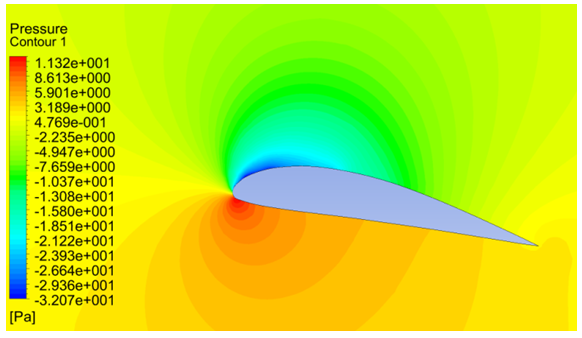
The above issue is why the side exits of the “B” model cowl work so well, compared to the original bottom exit. The Sonex fuselage is roughly airfoil/shaped, and if you’ve ever looked at the pressure distribution around an airfoil in a slight climb you’ll see there’s a region of high pressure near the bottom cowling exits:

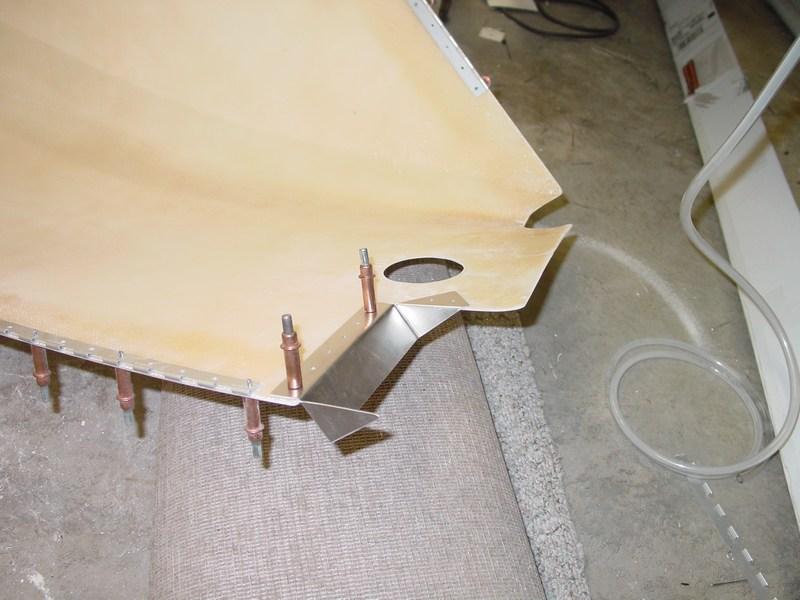
This is why most legacy Sonex/Waiex builders have put a “lip”/deflector at the leading edge of the bottom cowl exits. The deflector disrupts the high-pressure airflow along the underside of the cowl and creates a low-pressure zone behind it, helping to pull hot air out of the cowling (at the cost of a bit of added drag). Jeff Shultz’s site has a good image of what this lip/deflector looks like:

—Noel


Re: Cooling your AeroVee Heads

Posted: Sun Oct 17, 2021 11:18 am

by Scott Todd

That’s good NWade. Since I studied Aerodynamics in college, I’ve asked for nearly 40 years why exits are on the bottom. I think it was always aesthetics. Sonex did a good job on them on the B model. It was the first thing I noticed the first time I saw one.

I think Tony’s explanation is slightly skewed to help reach a more divers audience. In theory its the difference between Total and Static pressure. This is defined as Dynamic pressure which is usually associated with velocity. But in our basic engine cowls, its all about the pressure differential forcing the air thru the head fins. This is why its important to seal the upper baffles. We need to build up that pressure to force the air thru the fins. There are a few good research papers on cooling GA airplane engines.

For future readers, it ALWAYS comes down to sealed upper baffles, clean air thru the fins, and LOTS of exit area to pull, extract, or whatever you want to call it, the hot air out. It seem so simple yet so many people just miss the point :slight_smile:


Re: Cooling your AeroVee Heads

Posted: Sun Oct 17, 2021 12:24 pm

by Kai

4B1F9EE2-34FF-43AE-9DBA-7C82A6EEDF70.jpeg

Scott- I can offer no argument!

Slightly bothered by the Sonex Legacy cowling shape when operating #0525 with the aircooled Jab and associated high cht’s, I decided to branch out on my own when converting to a R912ULS. In my mind the cowling issue was mainly that the bottom of the cowling was a continuous curvature: the higher the angle of attack, the poorer the cooling capacity- lips or no lips!

So i went for a slightly deeper bottom cowling design. This made possible a flat section in front of and in the same plane as the bottom front alu sheet of the fuselage, and this is where I positioned the cooling air outlet channels, using as much of the cowling width as possible. In addition the side outlets were built into the cowling.

The result can be seen in the photo: and now the thing cools like there is no tomorrow!


Re: Cooling your AeroVee Heads

Posted: Mon Oct 18, 2021 10:10 am

by GraemeSmith

NWade wrote:This is why most legacy Sonex/Waiex builders have put a “lip”/deflector at the leading edge of the bottom cowl exits. The deflector disrupts the high-pressure airflow along the underside of the cowl and creates a low-pressure zone behind it,

That lip is vital at high angles of attack. Without the lip the exit slot is exposed to the airflow and actually pressurizes the output side of the cowl. That lip needs to be deep enough to maintain a vacuum when the plane is pitched steely up - like in a Vx climb.


Re: Cooling your AeroVee Heads

Posted: Mon Oct 18, 2021 10:48 am

by AlexZ

Scott Todd wrote:I thought it would have been higher. 1/2" is a long way in :slight_smile: But it helps to illustrate the point to other curious builders. Just put it where Sonex recommends and go from there.

After read-out of the highest temp measured it showed 268 degrees C > 515 Fahrenheit. So it was indeed higher at some point.


Re: Cooling your AeroVee Heads

Posted: Sun Jul 02, 2023 3:11 pm

by pfhoeycfi

Does anyone know what the approx differential pressure should be between the pressure plenum above the engine to the low side below the engine? I’m going to measure this on mine and would like an idea of what is acceptable and not.

Turbo Aerovee, Sonex B cowl.

Peter


Re: Cooling your AeroVee Heads

Posted: Sun Jul 02, 2023 7:57 pm

by Bryan Cotton

I don’t know that I’ve ever seen it posted before.


Re: Cooling your AeroVee Heads

Posted: Mon Jul 03, 2023 7:55 am

by pfhoeycfi

Bryan Cotton wrote:I don’t know that I’ve ever seen it posted before.

Looking at the Jab 3300 manual. It has a very good section on cooling and checking the DP and suggests that the DP should be no lower 2.4 " wc at 1.3 Vs. Of course the Jab arrangement isn’t the same as the Aerovee and the number might be something different. But I’m curious and will get measurements. Might buy a digital manometer…more tools.

I’m also wondering if a separate isolated air supply to the oil cooler using a NACA duct might help. Of course the air outlet of the cooler would need to be isolated and vented separately as well so as not to effect the cowl low side pressure. The air that was going to the cooler would then be available to the cylinders and heads. I’m sure someone has thought of this and tried it. Curious how it worked out.

peter

Re: Cooling your AeroVee Heads

Postby Bryan Cotton » Mon Jul 03, 2023 9:25 am

pfhoeycfi wrote:Of course the air outlet of the cooler would need to be isolated and vented separately as well so as not to effect the cowl low side pressure.

peter

This is what I’m working on. I’ll post it in my summer temperatures thread.

Bryan Cotton
Poplar Grove, IL C77
Waiex 191 N191YX
Taildragger, Aerovee, acro ailerons
dual sticks with sport trainer controls
Prebuilt spars and machined angle kit
Year 2 flying and approaching 200 hours December 23