Burp tubes
Posted: Sat Jun 28, 2014 6:53 pm
by fastj22
They simply work! My plane has burped when it gets warm on takeoff nearly every flight.
I finally installed the burp tube yesterday and really tested it today. Flew a long x-country for 4.5 hours and two stops and not one single burp. In Dalhart, Texas, it was 91 OAT and the plane heat soaked for a good 30 minutes while I refueled and used the facilities. Fairly long taxi. Normally, I would have expected a series of burps accelerating on takeoff, not a single one.
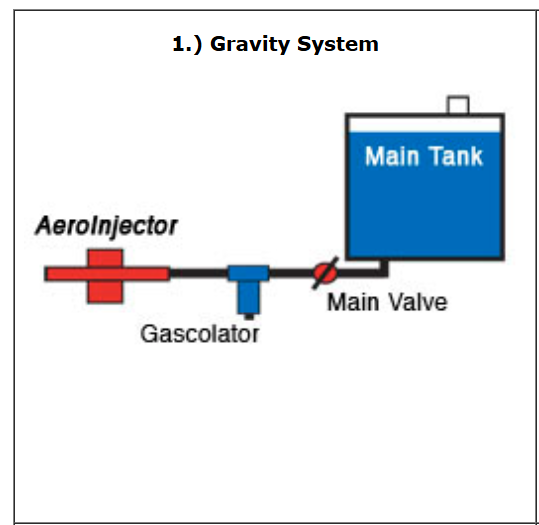
I use 3/8ths braided hose on AN-6 fittings from the gascolator, through the fuel flow sender to the carb. The burp tube consists of an AN-6 Tee F-M-M simply placed between the supply hose and the carb. Another hose comes out the top of the Tee and is looped up behind the distributors to the top of the cowl. I used a fuel drain valve on the other end of the burp tube. Opening the valve allows fuel to fill the tube to the level in the tank. Then its closed. Any bubbles heading down the fuel line will go up the tube, eventually replacing all the fuel in it. At that point, the burps will return until you refill it by opening the valve. One could route the valve into the fuel fill tray and burp it every time you fill up. Or alternately, just plumb it back to the tank vent leaving out the valve.
For those who can’t envision the setup, I’ll be happy to take some pictures.
Re: Burp tubes
Posted: Sat Jun 28, 2014 7:41 pm
by SvingenB
I can imagine it works, but wouldn’t you get a mega-purp if you have a negative g maneuver and the tube is filled with vapor?
Re: Burp tubes
Posted: Sat Jun 28, 2014 8:04 pm
by fastj22
SvingenB wrote:I can imagine it works, but wouldn’t you get a mega-purp if you have a negative g maneuver and the tube is filled with vapor?
A small trade off considering any extended inverted flight will create fuel starvation anyways. And only the bold will go inverted on takeoff, right? :lol:
Re: Burp tubes
Posted: Mon Jun 30, 2014 11:02 pm
by flyinbrian
I would like pictures.
Brian
Waiex N126YX
Re: Burp tubes
Posted: Tue Jul 01, 2014 12:05 am
by fastj22
I’ll take some pictures this weekend and post them.
Re: Burp tubes
Posted: Tue Jul 01, 2014 5:23 pm
by merle reppert
Some comments on the Burp Tube being I came up with it —It is installed on at least 5 Sonex’s in
California with the tube ‘T’ ed into the tank vent at the firewall—With this setup there is always fuel in
the tube at the same level as the tank–Hot fuel vapor’s ( not air ) travel up the tube through the fuel
in the tube and condense from being cooler or exit through the vent line .—No one has burps -----
One guy has capped his tube off at the top -----I prefer it T ed into the tank vent -----This guy
has a lot of hours on it with no problems but only one example ---------All of the installation’s
have gascolators--------No more pucker factor —
Good luck
Merle reppert
Re: Burp tubes
Posted: Tue Jul 01, 2014 7:07 pm
by fastj22
The reason I capped the end was I didn’t want it to siphon air into the fuel line at the carb. Probably won’t happen, but theoretically it could. I may end up removing the cap and tee’ing it into the vent at the top of the tank too.
Re: Burp tubes
Posted: Thu Jul 03, 2014 9:31 pm
by fastj22
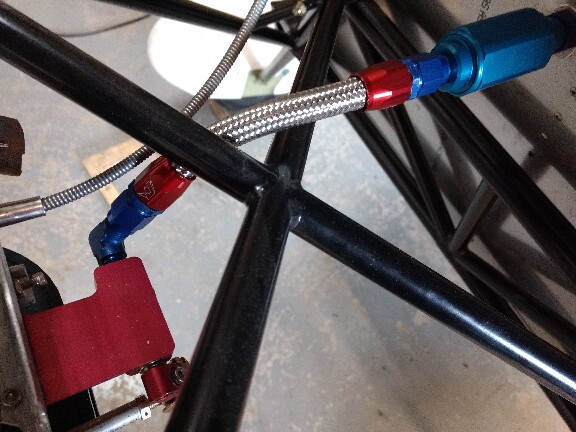
As promised, here’s a picture of the setup. the burp tube is the vertical hose. It routes up over the engine and is tied to the oil breather hose so I can burp it when checking the oil.
Re: Burp tubes
Posted: Thu Jun 16, 2016 4:51 pm
by XenosPilot
My Xenos is experiencing the burps lately, as it is heating up in SE New Mexico. I had a bad case of them yesterday at about 99 degF. I have a gascolator as well, and have NO insulation or heat shielding on my fuel line…yet. My exhaust pipes are wrapped in fiberglass, so that helps I’m sure.
My questions are as follows:
(1) Of those who have a burp tube installed, did you also insulate the fuel lines?
(2) If yes above, what did you use? (I’m looking at getting the fiberglass/silicone sleeves)
(3) Did you insulate the gascolator?
(4) Has anyone run into a delayed problem after insulating? I mean, will it still get the burps if remaining hot, but it will take longer to get them…and longer to get rid of them (cool down) as well…also due to the insulation.
Thanks,
Re: Burp tubes
Posted: Thu Jun 16, 2016 5:16 pm
by fastj22
- yes
- firesleave
- no
- I’ve only experienced the burps during acceleration down the runway. Once they stop, they stop.
Re: Burp tubes
Posted: Thu Jun 16, 2016 5:49 pm
by XenosPilot
Thanks. Mine began yesterday on climb out at about 1500 AGL. Once it begins, it just gets worse, unless I pick up the speed quite a bit, then it seems to help maintain, but not eliminate. The other day, they got worse on final, then almost unmanageable on taxi.
Re: Burp tubes
Posted: Thu Jun 16, 2016 6:04 pm
by fastj22
XenosPilot wrote:Thanks. Mine began yesterday on climb out at about 1500 AGL. Once it begins, it just gets worse, unless I pick up the speed quite a bit, then it seems to help maintain, but not eliminate. The other day, they got worse on final, then almost unmanageable on taxi.
Couple of questions…
MoGAS w/ethanol? Burps seem to be the worst with this.
Did you heat soak the engine/cowl prior to the burps? (after landing, leaving the cowl buttoned up while sitting in the sun?)
Three of us Sonex flew up to KBJC last summer for an airshow. The planes heat soaked all day in 100 degree sun. I was the only one who opened up my cowl to vent the hot air out during the day. All three of us experienced the burps on takeoff, mine stopped burping by the end of the runway, one continued burping for a few miles, one aborted departure returned to the airport due to burps. The one who aborted had MoGAS and no burp tube.
Re: Burp tubes
Posted: Thu Jun 16, 2016 6:23 pm
by XenosPilot
Fuel is 100LL. My first experience was a few weeks ago after flying to a nearby airport to fuel up. I parked facing away from the wind, then talked to a guy on the ramp for 40 mins or so. I noticed my cowl was VERY hot to the touch when I got ready to leave. About 1 minute into my taxi, it started surging really bad, then dying. I thought I got water in my fuel, since I had just fueled up. Eventually, I got to the hold short line, got out, and drained fuel from the gascolator (tank valve shut off). I was surprised how hot the fuel was when it started burning my finger! That was the first time I considered that it might be a heat issue in the fuel line.
Lately however, the outside temp has been higher and it is happening in the air. This is concerning to me, because I am led to believe that it is hot air coming from the engine that is causing the fuel temp to increase and vaporize. If I insulate the fuel line, it may eventually warm up to the same temp, it will just take longer to get there. Once it is there, it will be hard to cool off again. This is not necessarily true, since flowing fuel will cool off the line too.
Re: Burp tubes
Posted: Thu Jun 16, 2016 6:46 pm
by fastj22
Your first experience is classic heat soak/burp issues.
But if you are burping after flowing fuel through the line, I suspect if you insulate and perhaps put a blast tube on the gascolator (or remove it) the inflight burps will go away. But the heat soak ones will still haunt you. What size fuel line are you using? AN6? I think the bigger the line, the less vaporization you will have.
I changed out to a Rotec TBI with a pressure regulator built in last fall. I removed my burp tube during the install as we were going into the fall flying weather. Never had a burp yet. But its getting hot here too. If I start burping, I already have a plan to put in an electric pump to pressurize the fuel line and create a return circuit to the tank. But I’m waiting to add the complexity.
Re: Burp tubes
Posted: Fri Jun 17, 2016 2:29 pm
by vwglenn
I had burp issues. Removed the gacolator, installed a deflector plate behind the oil cooler, inline AN fuel filter, and insulated the lines with reflective sheilding. So far I haven’t had any issues. Outside temp has been hot enough to shutdown my iPad but no burps…yet.
Re: Burp tubes
Posted: Fri Jun 17, 2016 2:50 pm
by LarryEWaiex121
On my Waiex, with plans built fuel system (meaning gascolator plus Dynon fuel cube, AN6 line, firesleeve) and Aero-Injector, I had burps until I modified with a burp tube and some reflective tape on the fuel lines. My line is capped off instead of tied into the vent system.
I’ve never burped on the ground but have in extreme heat in the air and especially at high altitudes.
Normally, if I get some occasional burps, I simply enrichen the mixture a touch and that will stop them.
All this was with the Jab3300. Now, I’ve switched to the Camit and have just begun flight tests/break in on the Camit.
I didn’t change a thing on the Aero-Injector and already, I’m getting better fuel distribution on the Camit. I believe the plenum on the Camit has been modified somewhat? I’m seeing no lean condition on the rear 5 and 6 cylinders that I used to see on the Jabiru on the first flight of the day. After the engine was thoroughly warmed through and through it was less a factor.
My method for compensation was to simply pull about a half inch off the throttle and the rear egts would fall right in line.
I sure love taxiing with lights and radios working and no drop out do low voltage like the AC generator of the Jabiru. The alternator on this thing bumps the battery back up to full voltage in about 2-3 minutes of 1000rpm running.
I hope as time goes by I find even more things I like about this Camit engine.
Larry
Waiex121YX, Camit 3300, Skyview
Re: Burp tubes
Posted: Fri Jun 17, 2016 3:24 pm
by Fastcapy
Like John, after switching to the Rotec I have not had a single issue of the burps without changing a thing.
I do however still have an issue with the heatsoak causing my idle mixture to go rich when I am taxiing back after landing which makes for some rough running.
I am still trying to sort that out and I do wish that I could control the mixture at idle rpms from the cockpit on the Rotec like you can do with the Aerocarb but at least I am not getting the burps like I was with the Aerocarb.
Re: Burp tubes
Posted: Fri Jun 17, 2016 3:55 pm
by XenosPilot
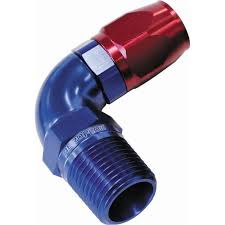
I took a closer look at my setup yesterday, and saw some glaring needs. None of this had occurred to me before, since I wasn’t having problems with it (throughout the winter). Attached is a picture that shows my current arrangement. The 90 degree elbow that ties to the throttle body is less than 2 inches from the exposed portion of the exhaust pipe. Tonight I plan on shielding the fuel line from firewall to throttle body, and the exhaust pipe as well if I can come up with some material (temporary).
Has anyone with the ‘burps’ determined the primary source of heat influx to the fuel? I am thinking about buying some thermocouples and strapping them to various spots on the fuel lines (gascolator, aluminum line, connection at throttle body, throttle body itself) and monitoring the temps to see if there is a glaring issue in any one place. Not only would that be educational, but it also tells me where to spend more effort and money to resolve the issue. I’m willing to, but highly resistant to simply changing parts or adding items without knowing why. I am thinking that in my case, the elbow next to the exposed exhaust pipe is probably where the fuel is vaporizing.
Re: Burp tubes
Posted: Sat Jun 18, 2016 10:09 am
by kmwoody
Start with the simple things first. I started with a cut to fit reflective 700 degree interior insulation, that I had left over from my 68 Mustang restoration, covering the gascolator and the flow meter, wire tied. Firesleve covering all fuel lines and elbows, aluminum tape insulation wrapped around the inlet side of the aerocarb and exhaust wrap, at least where the exhaust is close to the fuel line.
Ok maybe not real simple but I would do these before fabricating items.
JMHO
Ken W
Ex-Aerovee owner
Sonex 959 374 hrs
Camit 3300 44 hrs
Burp tubes
Posted: Sat Jun 18, 2016 8:42 pm
by Sonex1517
If anyone has installed a burp tube on an AeroInjector, and has e part numbers they used for the AN6 tee fitting I would appreciate knowing what the part numbers are. Thanks.
Sent from my iPad using Tapatalk
Re: Burp tubes
Posted: Sat Jun 18, 2016 10:57 pm
by fastj22
Just sent this to robbie in an email, thought I’d share it here.
Put this inline right before your carb so one of the T ends points up.
https://www.summitracing.com/parts/ear- … /overview/
Then put an AN6 line on the up end of the Tee and route it to the top of the engine where you can get to it during preflight. On the top end of it, put something like this. It will need to be air tight so as not to siphon air during flight.
http://www.aircraftspruce.com/catalog/a … ey=3008624
Idea is during preflight, open the valve to fill the tube with go juice from the tank. Close the valve. Go fly. As air bubbles form before the carb, they go up the burp tube and are replaced with fuel. Eventually the tube will have no fuel to replace the bubbles so that’s why you prefill it every flight.
Happy burping!
Burp tubes
Posted: Sun Jun 19, 2016 8:40 am
by Sonex1517
Thanks John!
Sent from my iPad using Tapatalk
Re: Burp tubes
Posted: Sun Jun 19, 2016 9:39 am
by Bryan Cotton
So do you put the valve next to the fuel filler for easy access?
Re: Burp tubes
Posted: Sun Jun 19, 2016 2:36 pm
by fastj22
Bryan Cotton wrote:So do you put the valve next to the fuel filler for easy access?
I routed mine to the oil filler door (Jabiru, front). Not sure where you AeroVee guys fill the oil. But anywhere you can get to it easily to pre-flight burp. If its lower than a full tank, stop when you get fuel coming out.
Re: Burp tubes
Posted: Sat Jun 16, 2018 11:31 pm
by gammaxy
Is everyone still satisfied with their burp tubes? It seems there’s lots of glowing reviews when people first switch. Has anyone had the burps return? Anyone end up totally giving up on the Aeroinjector?
I’ve mostly had a good experience with the Aeroinjector, but there are some situations where I can reliably create a stumble. On a hot day, if I take off and fly at a low power setting for a while, I will often get a stumble when I increase power. I imagine the fuel is flowing through the lines slower and has more opportunity to heat up and form bubbles. For whatever reason, the bubbles don’t seem to cause a problem until I increase power and the fuel flow increases and I imagine they get passed through the Aeroinjector. I wish lutorm would figure out how to give us x-ray vision into the fuel line to know exactly what’s happening. Every once in a while I’ll experience this sort of a stumble when I’m doing a touch and go. Practice engine failures also regularly end up with a stumble when I re-apply power.
Anyway, if the burp tube fixes these sorts of issues for everyone else, then it’s totally ridiculous I haven’t already installed it.
I’m considering adding a tube between the Aeroinjector fuel inlet and the fuel tank vent at the top of the firewall. Only thing holding me back is figuring out what combination of hardware I need.
Re: Burp tubes
Posted: Sun Jun 17, 2018 1:57 pm
by fastj22
My burp tube is not a complete cure for the burbs but it does help a lot. When heat soaked in 90+ temps and a long taxi, I still get them on rollout but not to the extent I got them prior to the tube. It basically has cured the burps in cooler temps. Running 100LL also helps a lot.
Re: Burp tubes
Posted: Sun Jun 17, 2018 2:37 pm
by pete 212
hi guys I made an aluminum tube 1nch I/d X 1" tall with 1/8"thread in and out at 90 deg in the bottom and one in the top, installed with a close nipple to the carb, then ran a 1/4 line to the breather out of the tank. Works like charm in AZ with D/A 6000+ and 100F temps. Pete212
Re: Burp tubes
Posted: Sun Jun 17, 2018 9:00 pm
by Sonex1517
Pete - could you post a photo of your burp tube setup?
Thanks
Robbie
Re: Burp tubes
Posted: Mon Jun 18, 2018 1:57 pm
by lutorm
gammaxy wrote:I wish lutorm would figure out how to give us x-ray vision into the fuel line to know exactly what’s happening.

Unfortunately I’m not going to be making much further progress on our Aerovee until we can find someone who can fly the plane… The original owner/builder CFI has lost his medical and he was going to instruct the other owners in it. None of the rest of us have PPLs. Any tail-wheel Sonex CFI that want to take a vacation in Hawaii? As a bonus, flight training can take place over flowing lava to make finding engine-out landing sites more interesting: https://volcanoes.usgs.gov/observatories/hvo/multimedia_uploads/multimediaFile-2249.mp4
Re: Burp tubes
Posted: Mon Jun 18, 2018 6:36 pm
by pete 212
[quote=“Sonex1517”]Pete - could you post a photo of your burp tube setup?
Thanks
Robbie[/quote
sorry no pics Pete
Re: Burp tubes
Posted: Sat Sep 21, 2019 11:49 pm
by gammaxy
I installed a burp tube between the Aeroinjector and fuel vent near the tank and now have about 5 flight hours on it. I’m very happy with it.
I used to get a stumble if I advanced the throttle too fast for takeoff or after a low power descent, especially on hot days. I haven’t had a stumble since. The only unplanned consequence so far is it takes a lot longer to shut down using the fuel valve while the fuel drains from the burp tube.
I held off on installing it because I didn’t want to add unnecessary complexity. Part of my problem might be that my inline filter is on the engine side of the firewall (clamped to a the cross-member on the engine mount) with right angle adapters before and after it, but otherwise it’s a pretty simple fuel system.
On an unrelated note… my happiness is tempered by having now replaced every ignition coil at least once. I’ve replaced both secondary coils twice and primary coils once.
Re: Burp tubes
Posted: Sun Sep 22, 2019 9:55 am
by WaiexN143NM
Chris,
Do you have cooling blast tubes for your coils? We have a jab3300 , and at the back of the baffleing tunnels ran blast tubes to each coil and the voltage regulator. No trouble after 5 yrs.
WaiexN143NM
Michael