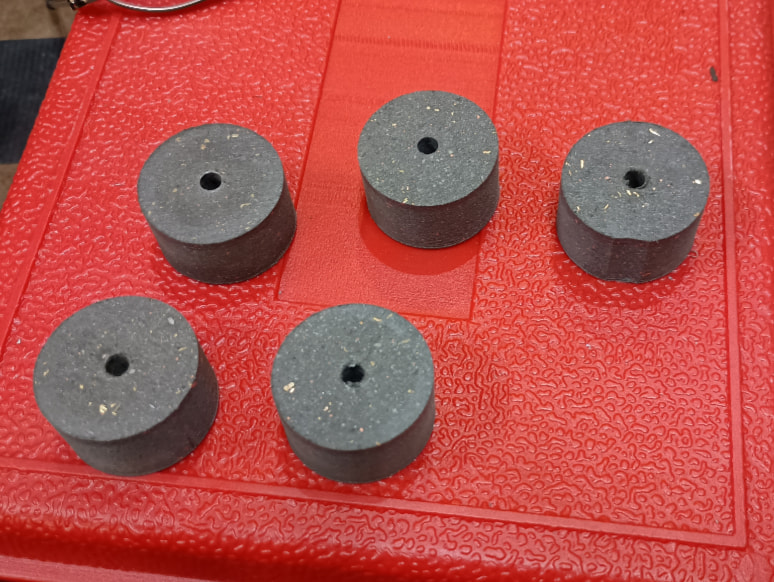
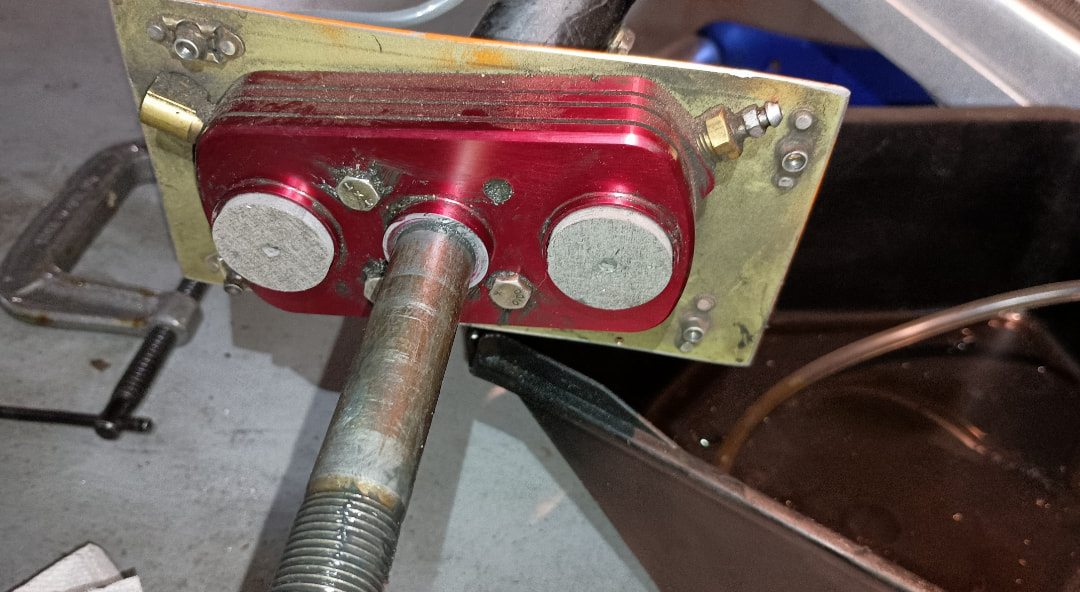
Source:
Instructions:
[To be updated]
(Thanks to @13brv3 for the information)
I’ve ordered a 7x7 sheet and an endmill for composites. I’ll post how it goes.
Thanks Bryan!
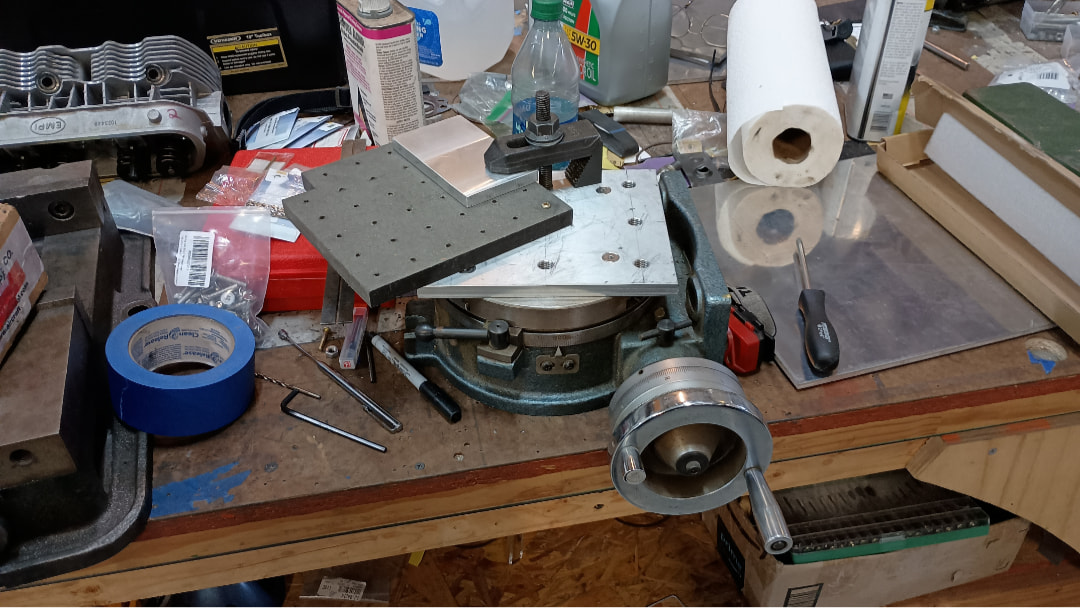
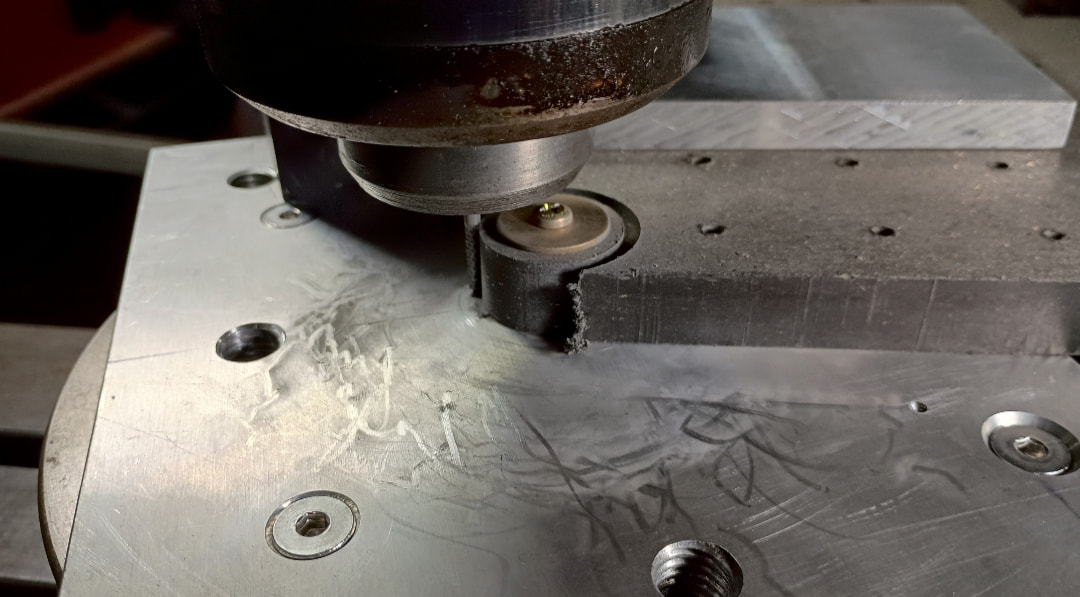
I just used a cheap 2 flute end mill that cut it pretty easily. The small hole in the middle is to hold it down, and I’m assuming that’s what they did too. Below are my notes from cutting some:
Rusty
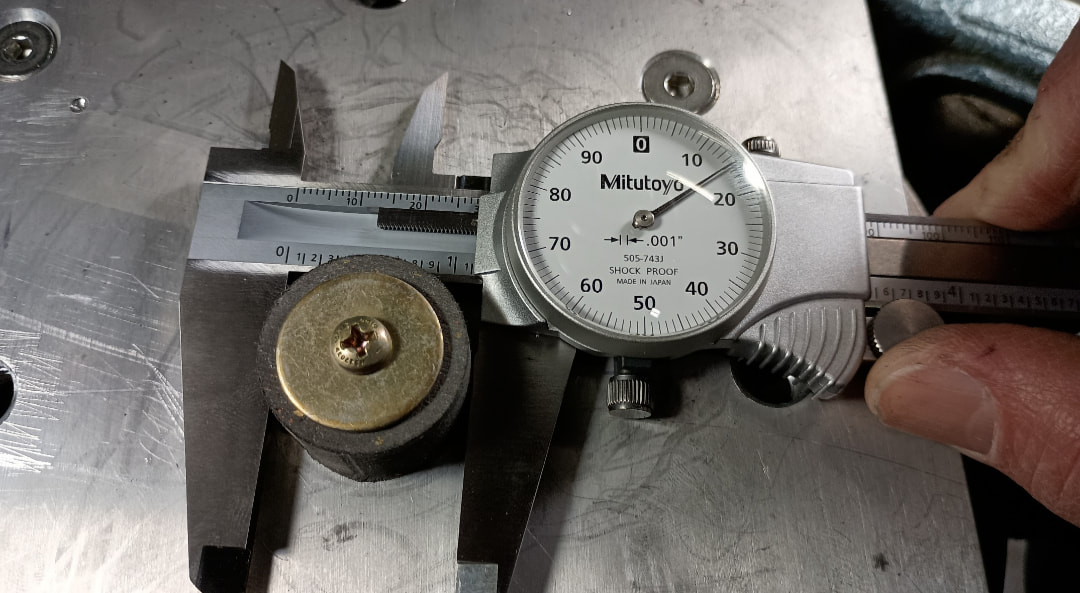
I initially cut the pucks at 1.125" diameter, and that gave me some dimensions that were up to 1.13". I measured the bore at 1.124". The pucks cut at 1.125" were a tight fit in the caliper bore, and won’t retract when the brake pressure is let off. I had to remove those and replace them with smaller pucks. I’m setting the OD in Aspire to 1.105" which is plenty small even with variations. It could potentially be closer to 1.12" if no dimensions are larger than that. I left the Aspire file at 1.11" OD and those will likely work very well. I fixed the others I had cut I believe, so I have plenty already. Test fit all pucks to make sure they move freely in the bore!
1X single brake puck.dxf (7.0 KB)
Very cool Rusty and thanks! What machine did you use to make them? We have the Bridgeport and a little CNC router.
I just used a CNC router for the pucks.
Rusty
News flash: do not cut this material with a bandsaw. It actually cut nicely, but after less than 2” the blade was toast.
Yeah, cutting friction material is just asking for trouble. I was surprised the cheap carbide end mills cut so well and never seemed to show any sign of being worn out.
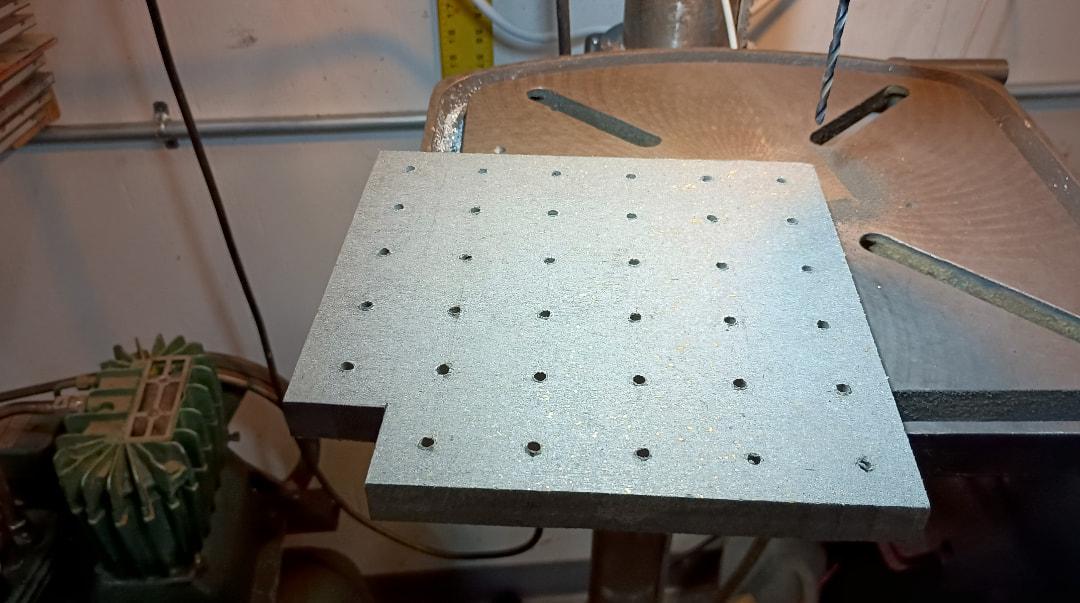
I wore out about 6 #30 bits for pilot holes, and one #19.
Need to get this on the Bridgeport and dialed in.
Bryan, thank you for this effort! A lot of us are going to need brake pucks….
I’m going to put a set on. Need to verify the fit anyway. The diameter is very consistent and they look good.
For the next batch I’ll make a 3d printed tool to ensure pilot holes location accuracy. You can see one puck overlapped the tool path of its neighbor.
Hi Bryan,
if sonex doesnt open back up, maybe we can buy these from you?
Sonex was selling them for $16.50 ea.
michael
Michael, I would probably sell the extras. I’d also be happy to have someone else make them, so to the community feel free to “compete.” It’s more of a community support exercise to me.
They look great Bryan. Awesome work!
Hi bryan, put me down for 4 pucks.
See you at airventure, at least at the bbq!
to all: pls sign up for bbq, i will have sonex tshirts
and a couple other suprises to give out.
michael.
Bryan
I really, really need pucks. Happy to pay, donate, pitch in….
I measured my old pucks and came up with 1.122”. So I made an adjustment on the X axis, shooting for that number, and got 1.120”. Still slides in really easily. I was going to move the table another 0.001” but I forgot to drop the table before I moved it and I busted my end mill. The production batch will probably be 1.120” or 1.122”.
I originally bought one of these bits:
Worked pretty good, however as mentioned in the previous post I busted it by accident. I had some cheapies on the way. The amazon link decodes poorly here, but search for this:
Cost about $24 for a pack of 5.
So they are both 1/8", however the first puck I made with the cheapo bits ended up at about 1.114", I took smaller passes and it was still around 1.115". These bits are bigger than the more expensive ones from McMaster. The problem is I’ll get really low yield, and since I drilled that friction material for 36 pucks, I can’t really change the spacing. So I’ve ponied up the bucks to buy 5 more of those McMaster bits, plus another sheet of brake material, and some carbide drills to put the holes in it. I bought a 1/8" carbide drill for about $20 and a #19 carbide drill bit for $27. My thought is the more expensive stuff should last longer, get more pucks, and I can pay for the investment by selling some pucks.
For those playing along at home, you could easily use the cheap router bits but just shoot for getting 25 pucks out of the sheet.
I did my first flight today with the new brake pucks.